A Summary History of Firearm Ammunition
Opinion by Alan Chwick
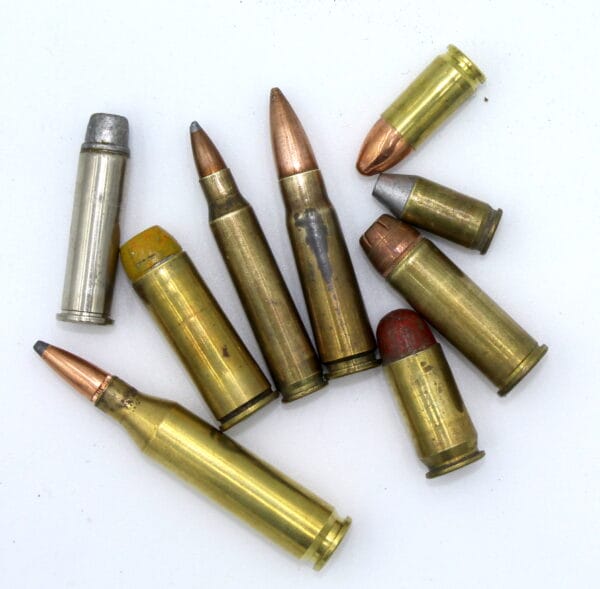
Firearm ammunition has been a fundamental component of both the evolution of firearms and the progression of military, law enforcement, and civilian practices throughout history. Ammunition is a versatile tool, an interface between the mechanics of firearms and the intended effects on targets. The history is intertwined with that of firearms, and influenced by advances in chemistry, metallurgy, military needs, and technological innovation.
The story begins with the discovery of gunpowder, which is a mixture of saltpeter (potassium nitrate), sulfur, and charcoal. The first recorded use was in China around the 9th century. The Chinese initially used the gunpowder for fireworks and explosives, but it quickly found its way into military applications, with the first firearm-like devices, known as hand cannons.
These hand cannons emerged during China’s 13th century, and were rudimentary in design, intended to hurl projectiles using the explosive force of the gunpowder. They were crude, consisting of simple metal tubes or barrels, and projectiles were often stone balls, iron pellets, or simple lead shots. The powder was manually loaded into the tube followed by the projectiles with a wadding to keep the charge in place. The ignition process was also rudimentary, with fire or a fuse being used to light the powder.
By the 15th century, the matchlock ignition system was developed, marking the first significant technological leap in firearm history. The matchlock used a slow-burning cord (a.k.a. the match) to ignite the powder that was in a pan, which in turn ignited the powder that was inside the barrel. These were barrel loaded like the Chinese hand cannons, i.e.: powder, wad, and then projectile(s).
During this period, the first instances of paper cartridges were introduced. These cartridges combined the gunpowder charge and projectile into a single pre-packaged unit. They were still ignited via the matchlock method. This innovation greatly sped up and improved the loading process by eliminating the need to load the powder and shot components separately.
Despite these advances, matchlock firearms still required manual ignition and were still relatively slow to reload. And the paper cartridges were very susceptible to the elements, as moisture could damage the paper and render the ammunition useless. Though these early attempts at simplifying firearm ammunition were important, they were far from the efficient, reliable cartridges that would later dominate the firearm world.
The 19th century marked the dawn of modern ammunition, with the development of the metallic cartridge. This advancement, in the mid-1800s, truly revolutionized both firearms and ammunition, by moving from loose powder, projectiles, and primers, which had to be loaded manually, like in the first cap firing revolvers, to a single, self-contained unit complete with powder, projectile, and primer, in a convenient container protected from the weather elements. These first true metallic cartridges were invented by Edward M. Boxall in 1849, who developed a brass case to hold the gunpowder and a primer to ignite it. Boxall’s design, however, was not widely accepted or adopted.
Later in 1860, B. Tyler Henry, working with Smith & Wesson, improved upon Boxall’s concept and created the .44 Henry rifle cartridge. This cartridge was the first widely successful metallic cartridge, and it became the standard for the Henry rifle used by the northern soldiers during the U.S. War Between the States. This Henry cartridge was a rimfire cartridge, meaning that the primer was placed in the rim of the case rather than in a pocket in the cartridges center. Though the rimfire cartridges were more convenient and, both simple and easy to manufacture, they were prone to misfires and were eventually replaced by the more reliable centerfire cartridges.
The introduction of metallic cartridges also led to the development of repeating firearms, which could store multiple rounds in a magazine and fire them in succession. This was a significant step forward from all the earlier single-shot muzzleloaders and marked the beginning of a new era in firearm technology.
Then, in 1884, the French chemist Paul Vieille invented smokeless powder, and ushered in a new era in ammunition. This new powder, unlike the traditional black powder which produced a large volume of smoke when ignited, the smokeless powder produced far less smoke and allowed for greater muzzle velocity and improved efficiency.
Smokeless powder now allowed for the development of smaller, more powerful cartridges, such as the 7mm Mauser, which was adopted by the Spanish army in 1893, and which featured a much higher velocity and greater range than its predecessors. Then, in 1906, the .30-06 Springfield cartridge was introduced, and it became the standard U.S. military rifle cartridge. These two cartridge designs influenced future military ammunition.
By the early 20th century, the process of standardizing ammunition became more widespread. Military forces began to recognize the importance of having standardized calibers and ammunition types for the ease of supply and maintenance. One of the most significant developments was the creation of NATO-standard ammunition, which allowed for interoperability between different countries’ weapons systems.
The 9mm Luger (a.k.a. 9x19mm Parabellum) cartridge, introduced in 1902, became one of the most important handgun cartridges in military and law enforcement use. The Luger P08 designed by Georg Luger became one of the most iconic handguns in history. The 9mm Luger’s compact size, manageable recoil, and effectiveness made it the preferred cartridge for semi-automatic pistols, widely adopted by military and police forces worldwide.
Live Inventory Price Checker
|
|
CCI Blazer Brass 9mm 115 Gr FMJ 1000 Rounds (Loose Packed in a Box) | Ammunition Depot | $ 307.49 $ 235.00 |
|
|
CCI - Blazer - 9mm - 115 Grain - JHP - 1000 | True Shot Ammo | $ 487.44 |
|
|
|
CCI Blazer 9mm 115gr FMJ Aluminum Case Ammunition, 50 Round Box - 3509 | Palmetto State Armory | $ 14.99 $ 12.99 |
|
|
CCI - Blazer - 9mm - 115 Grain - FMJ - Bulk Pack - 1000 | True Shot Ammo | $ 324.29 |
|
Military cartridges further progressed with the development of larger-caliber rifle cartridges, such as the 7.62x51mm NATO (adopted in 1954). This cartridge was designed to work in both automatic and semi-automatic rifles, such as the M14, which shifted from the .30-06 Springfield, then later the M16, which moved to a smaller and faster 5.56mm NATO (during the 1960s).
With the advent of modern warfare, specialized ammunition types began to emerge. Armor-piercing ammunition was developed to penetrate the armored vehicles and fortifications used during the wars of the 20th century. This round used harder metals such as tungsten or steel to breach armor.
The development of hollow-point bullets was a significant innovation in ammunition design. These bullets are designed to expand upon impact, causing more severe damage to the target. They became widely used for self-defense, law enforcement, and hunting. Their ability to transfer maximum energy to a target and minimize the risk of over-penetration, made them an ideal ammunition.
The rise of tracer rounds, ammunition that leaves a visible trace as it travels through the air, also revolutionized both military and training applications. Tracers allowed shooters to observe where their rounds were landing, making it easier to adjust their aim.
Modern Technical Ammunition Advances
The late 20th century saw the development of several further advances in ammunition, such as polymer-cased ammunition, Frangible ammunition, Lead-free ammunition, and Smart ammunition.
- Polymer-cased Ammunition: Replaced traditional brass with lightweight plastic casings. This not only reduced the weight of ammunition for military personnel but also helped reduce the environmental impact of ammunition disposal. The polymer cases are more resistant to corrosion and have been used in advanced ammunition for both military and civilian purposes.
- Frangible Ammunition: Disintegrates upon impact, which is particularly popular in training environments where safety is a concern. Frangible rounds are designed to prevent ricochet and limit collateral damage, making them ideal for use in close-quarters combat training.
- Lead-Free Ammunition: In response to increasing environmental and health concerns over the use of lead in ammunition, manufacturers began developing lead-free ammunition. This ammunition uses materials like copper or tin for their projectiles, thus reducing the environmental impact of spent cartridges. Many jurisdictions have adopted lead-free ammunition for hunting and shooting ranges due to concerns over lead contamination.
- Smart Ammunition (and Future Innovations): Smart ammunition is beginning to gain traction. These are rounds equipped with electronic components designed to enhance targeting accuracy. For example, guided projectiles can adjust their flight path mid-air, ensuring they hit the target with greater precision. Although these advanced rounds are still in the developmental stages, they hold great promise for future military applications, particularly in highly complex combat scenarios.
The history of firearm ammunition is a tale of continuous innovation and advancements starting from early gunpowder weapons to the cutting-edge designs of modern ammunition. The journey from manually loaded gunpowder and stone projectiles to highly engineered, self-contained cartridges has mirrored the development of firearms themselves. As technology continues to evolve, so too will ammunition, with future innovations likely to include environmentally friendly, more efficient, and highly precise ammunition.
References
- Hogg, Ian.The Complete Encyclopedia of Ammunition. 4th ed., 2001.
- Chamberlain, Peter, and Chris Ellis. The History of the Machine Gun. 1984.
- Perry, James. The History of Ammunition and Cartridge Development. 2015.
- Siverts, Lars. “The Evolution of Modern Ammunition.” Journal of Ammunition Science, vol. 21, no. 2, 2010, pp. 13-30.
- Sullivan, John, and Thomas S. O’Leary. Firearm Design and Ballistics: A Comprehensive Guide. 2nd ed., 1999.
About the author:
Alan J. Chwick, A.S., B.S., FL/NY/SC Paralegal is known for his involvement in legal articles usually related to firearm regulations and for his contributions to discussions on gun rights. Retired Managing Coach of the Freeport NY Junior Marksmanship Club (FreeportJuniorClub.org). Escaped New York State to South Carolina and is an SC FFL & Gunsmith (Everything22andMore.com).
[email protected] | TWITTER & TRUTHSOCIAL: @iNCNF