Welcome back to Front Line Friday. This week is an editorial on how active shooter response doctrine changed after Uvalde and what patrol officers are now expected to do differently on the street. Front Line Friday is brought to you by Dead Air Silencers, whose support keeps this column going every week.
For almost twenty years, the message to patrol was simple: if there is an active shooter, you go in. You do not wait for a team. You do not wait for a plan. Single officer, two officers, whatever you have, you move to the threat, and you stop the killing. That doctrine did not come from nowhere. It came from Columbine, where officers set a perimeter and waited while people died inside. The lesson everyone took from Columbine was that waiting kills. Uvalde showed that the lesson did not stick, or more accurately, that writing a doctrine and building the capability to execute it are two very different things.
This piece is not a play-by-play of what happened in that hallway in Robb Elementary. Other people have done that work, and the Department of Justice critical incident review runs over 500 pages. This is also not a condemnation of any individual officer who was there. It is about the gap between what active shooter doctrine says on paper and what patrol can actually do when the moment arrives. That gap is the whole story, and it did not close because a report got published.
What the Doctrine Already Said, and Why Uvalde Still Happened
Here is the uncomfortable part. The doctrine was already correct before Uvalde. Immediate action against an active shooter has been the national standard since the mid 2000s. ALERRT, the training center at Texas State that writes much of the country's active shooter curriculum, had taught the single-officer entry concept for years. Uvalde's policy was not wrong. The execution collapsed anyway.
The Texas House investigative report documented that 376 law enforcement officers massed at Robb Elementary. The gunman was in the classrooms for approximately 77 minutes—from about 11:33 a.m. until officers fatally shot him at 12:50 p.m.; officers entered at about 12:49 p.m. through a door that was likely unlocked. Think about those two numbers together. Three hundred seventy-six officers. Seventy-seven minutes. That is not a personnel shortage. That is not a shortage of guns. It is a failure of command, communication, and the assumption that doctrine written in a binder would translate into action under live fire from a rifle.
The failure was structural, not a matter of individual nerve. When 376 officers from different agencies arrive at one scene with no established incident command, no radio interoperability, and no shared understanding of who is in charge, you do not get 376 responders. You get a crowd. Officers deferred to a supervisor they believed was running the scene. The Uvalde police response was shaped by a mistaken belief that the gunman was barricaded or contained rather than an active shooter, which changes everything, because a barricade justifies waiting and an active shooter never does. The misclassification cascaded. Everyone downstream acted on a label that was wrong from the start.
The lesson patrol should take is not "those officers failed." The lesson is that a correct doctrine sitting on top of a broken command and communication structure produces a broken response. The operational consequence is direct: if your agency has an active shooter policy but has never tested it against a multi-agency, no-command, radios-not-talking scenario, you have a document, not a capability.
The Classification Trap: Active Shooter Versus Barricaded Subject
The single most important change coming out of Uvalde is not a tactic. It is a decision rule. The first question every arriving officer must answer is whether this is an active threat or a contained one, and the default has been reset hard toward active.
Here is the failure mode in plain terms: a barricaded subject has stopped actively hurting people and is now contained. That situation allows for negotiation, SWAT, time. An active shooter is someone still killing. The two call for opposite responses. The trap is that the second category can quietly slide into the first in an officer's head once the shooting pauses, once the hallway goes quiet, once nobody is screaming anymore. Silence feels like containment. It is not.
The revised doctrine treats any ongoing threat to victims as active until proven otherwise. If there are known or likely victims who can still be saved, the situation is active regardless of whether you can currently hear shots. This matters because the entire 77-minute delay in Uvalde ran on the assumption that the shooting had stopped; therefore, the threat was contained, and waiting was acceptable. Every one of those "therefores" was wrong.
No call category is inherently routine, and no scene is inherently contained just because it got quiet. Pre-labeling a situation as a barricade is itself the mechanism that produces delay. The operational consequence is that patrol officers must carry the presumption of active threat through the whole event and resist the natural pull toward the calmer, more comfortable classification that lets everyone slow down.
Single Officer Entry and the Weight It Puts on Patrol
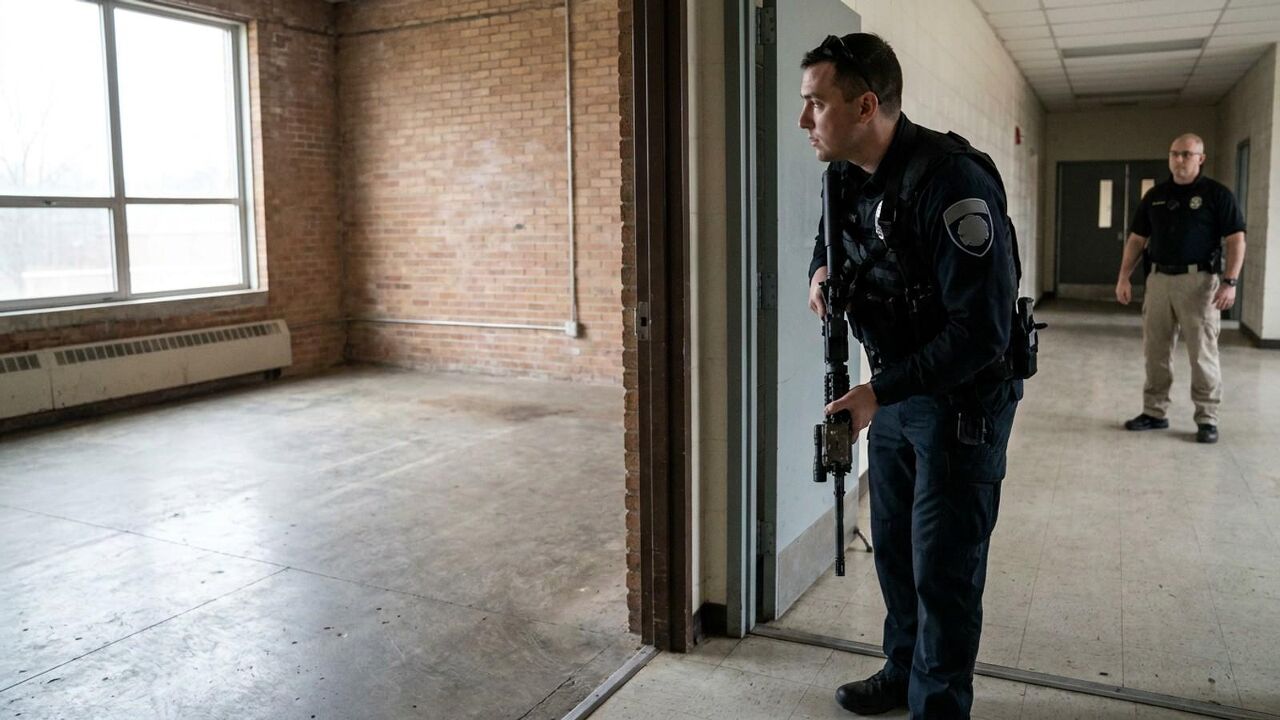
The doctrine many agencies have formalized since Uvalde is explicit: the first officer on scene enters. Not the first team. Not when backup arrives. The first officer, alone if necessary, moves toward the gunfire. That is a heavy thing to write into a policy, and an even heavier thing to ask a person to do.
Single officer entry against a rifle-armed shooter is one of the most dangerous things we ask anyone in this profession to do. The research behind it is sound. ALERRT's data shows that the faster the threat is confronted, the fewer people die, and most active shooter events are over in minutes, many before any team can assemble. Confronting the shooter even without neutralizing him often stops the killing, because the attacker shifts from hunting victims to dealing with the officer. The doctrine is built on real numbers, and it saves lives. All of that is true, and it does not make the task any smaller for the person doing it.
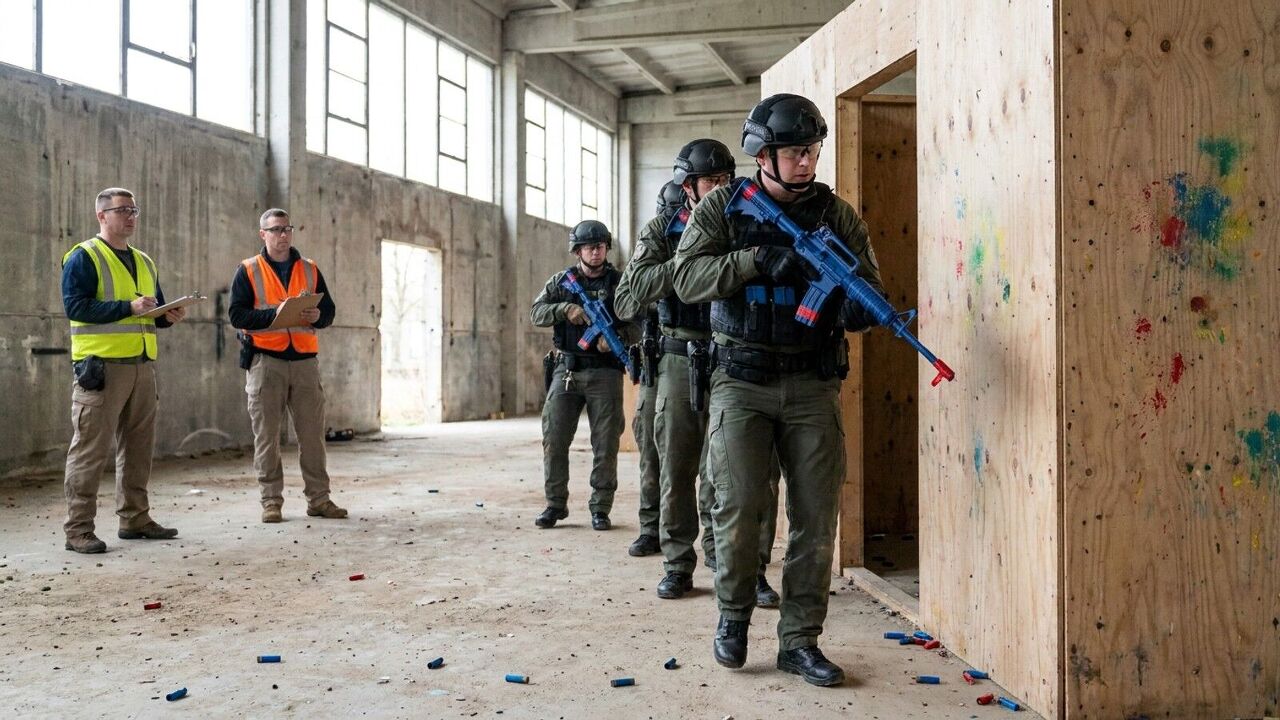
The failure mode here is not reluctance. It is capability. An officer willing to enter but equipped and trained to a patrol-rifle-qualification standard rather than a fight-your-way-to-a-shooter standard is being sent into a problem the agency never actually prepared him to solve. You cannot write single-officer entry into policy and then fund 8 hours of active shooter training every two years and call that preparation. The doctrine assumes a level of individual capability that most agencies have not built, because building it costs training days, ammunition, and overtime that budgets do not contain.
This is where the early decision compounds across a career. An officer who gets one real active shooter block in the academy and then nothing meaningful for the next fifteen years is not carrying a skill; he is carrying a memory of a skill. The capability decays. When the day comes, and for a small number of officers it will come, the gap between what the policy assumed and what the officer retained is the entire difference between stopping the killing and becoming another casualty in the hallway.
Rifles, Breaching, and the Equipment Reality Behind the Policy
Uvalde also exposed an equipment and logistics problem that nobody wants to put in a press release. Officers spent part of those 77 minutes waiting for a key to a classroom door and for a ballistic shield to arrive. Both are patrol-readiness failures dressed up as tactical decisions.
Start with the door. A locked interior door stalled the response in part because officers believed they needed a key. Patrol breaching isn't exotic. A rifle, a breaching tool, or a well-placed boot resolves most interior residential and school doors. The reason officers waited is that patrol breaching is rarely trained outside of SWAT, so when the moment came, nobody present was confident they were authorized or able to force the door. That is a training gap, not a tool gap.
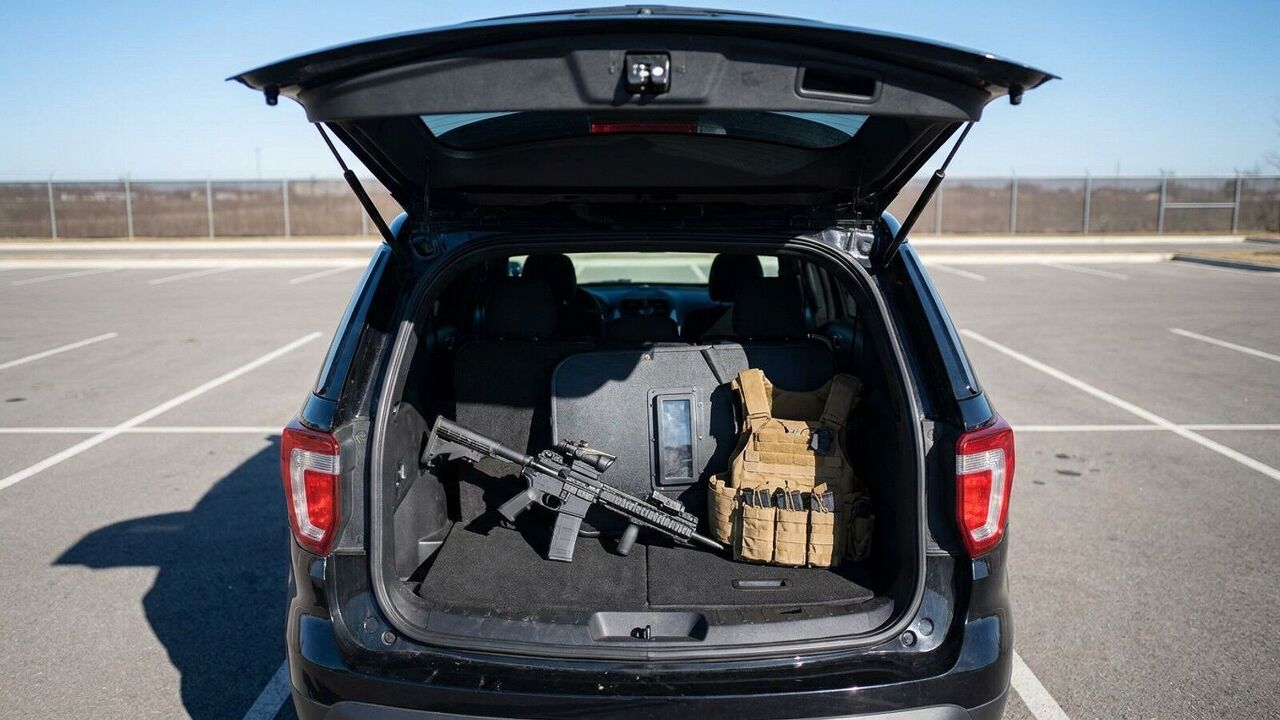
Next, the patrol rifle itself. The post-Uvalde doctrine assumes the responding officer has a rifle, can access it fast, and can fight with it. A rifle locked in a trunk rack that takes 40 seconds to access, plus a fumbled key, is not a readiness asset during an event measured in seconds. If your rifle isn't accessible from the driver's seat or close to it, the doctrine's timeline math doesn't work for you. I have covered rifle mounting and console layout in earlier installments, so I will not relitigate the mounting specifics here. The point is that the response doctrine is only as fast as your slowest link, and retrieval time is often the slowest link.
There is a hearing dimension to this that fits the column's regular beat and the sponsor's product space. A patrol rifle fired indoors, in a concrete hallway or a classroom, produces blast overpressure and sound levels that will damage an officer's hearing instantly and degrade his ability to process radio traffic and verbal commands in the middle of the event. We have covered blast overpressure and the Sandman X in prior weeks, so the detail lives there. For this piece, the relevant fact is that an officer who cannot hear a command, a second shooter, or his own radio in the thirty seconds after firing is operating with degraded information precisely when information matters most. That is an operational cost, not an audiophile concern.
Command, Interoperability, and the 376 Officer Problem
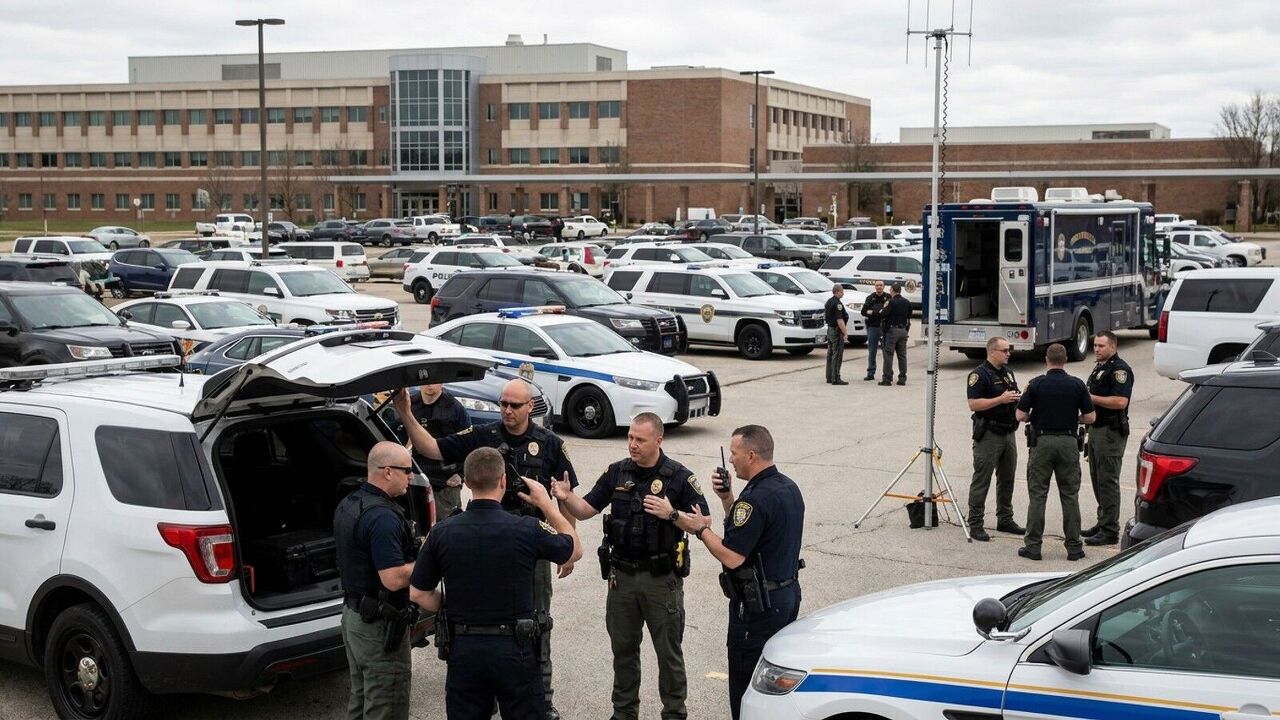
The individual officer entering alone gets most of the attention, but the larger lesson from Uvalde lives at the command and communication level. When a scene draws responders from school-district police, Uvalde police, sheriff’s deputies, state police, and federal law-enforcement personnel, including Border Patrol agents, the response is only as good as the structure holding them together. In Uvalde, that structure effectively did not exist.
Two specific failures repeat across almost every reviewed active shooter event, and they are both structural. The first is incident command. With no one clearly in charge, officers defer to whoever appears senior, and that person's first classification of the event becomes everyone's reality. The second is radio interoperability. Agencies on different frequencies and systems cannot share a real-time picture, so the officer at the door and the supervisor at the perimeter work from different information. I covered interoperability and command structure earlier in the series, so I will keep this tight: established active-shooter guidance emphasizes prompt unified command and dedicated tactical communications, but most agencies still have not drilled it with their actual mutual-aid partners.
This keeps failing not because commanders are lazy or officers are untrained. The incentive structure rewards having a policy on file for accreditation and audit purposes, not spending the money to test that policy against reality. Writing the policy satisfies the liability concern. Running a full-scale multi-agency drill costs overtime, facility access, and the political friction of admitting your partners' radios do not talk to yours. The cheaper path is always the paper path, and the paper path is exactly what collapsed in that hallway.
The operational consequence for a patrol officer is blunt. You may do everything right at the individual level and still end up in a response with no command spine and no shared radio picture. Your only hedge is to train with neighboring agencies before the day you need them, because mutual aid you have never practiced is a phone number, not a capability.
What a Certification Tests Versus What It Guarantees
Many agencies responded to Uvalde by sending officers to an active shooter course and checking the box. I want to draw a line here that matters. A completion certificate tells you an officer sat through a block of instruction and performed to standard on a given day in a controlled environment. It does not tell you he can perform the same task eighteen months later, alone, under rifle fire, in a building he has never seen, with his heart rate at 180.
The research on skill decay is not kind to the check-the-box model. Perishable motor and decision skills degrade substantially within months without reinforcement, and the complex, stress-loaded skills degrade fastest. A certification earned once and never refreshed is a snapshot, not a guarantee. The thing the agency is relying on, that the officer retains the capability, is exactly the thing the certificate does not measure.
This connects to a point I have hammered in the training installments: training transfer is the only metric that matters, and transfer requires repetition under conditions that resemble the real event. A square-range qualification and a one-time classroom block do not inoculate an officer against the chaos of a real active shooter scene. Scenario-based, stress-loaded repetition does. The honest version of the post-Uvalde standard is not "did the officer get the training"; it is "can the officer still do it today," and almost no agency measures the second question because doing so would reveal how much capability has decayed since the certificate was printed.
Fire/EMS Parallel: Warm Zone and Rescue Task Force
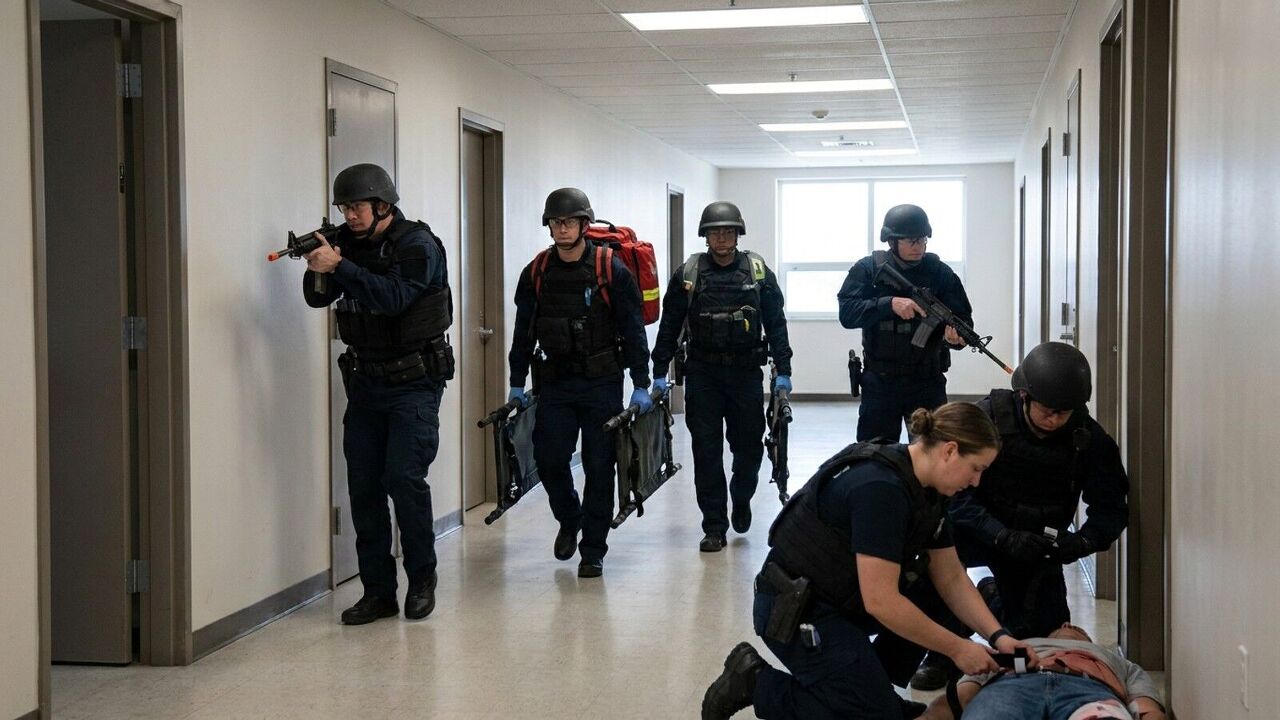
The active shooter doctrine shift is not just a law enforcement story. Fire and EMS carry a parallel evolution, and it ran into the same gap between policy and practice. The Rescue Task Force concept pairs medics with a law enforcement security element to enter the warm zone, the area that has been cleared of the immediate threat but is not fully secure, to begin treating and extracting the wounded before the scene is formally declared safe.
The logic mirrors the law enforcement side exactly. The old model held EMS at a staging area until the scene was fully secure, which in an event like Uvalde means wounded victims bled out in a warm zone while medics waited behind a cordon. The data on preventable death from hemorrhage is unforgiving: the window for a survivable extremity or junctional bleed is measured in minutes, and holding medics for 77 minutes is a death sentence for anyone with a survivable wound.
The same structural failure applies here too. Many fire and EMS agencies have an RTF policy on paper and have never drilled it jointly with their law enforcement partners. A medic who has trained warm-zone entry exactly zero times, with an escort team he has never met, is not a Rescue Task Force. He is a liability to himself and to the officers tasked with protecting him. The operational consequence is the same on both sides of the badge: the policy does not save anyone until the joint repetition makes it real.
Bottom Line / What to Do Monday
- Individual officer this week: Pressure-test your own rifle retrieval. Time yourself from seated in the driver's seat to rifle up and moving. If it is over a few seconds, that is your personal piece of the doctrine that does not work yet, and it is on you to fix the access, not the policy.
- Individual officer this week: Rehearse the classification call in your head. Active until proven otherwise. Quiet is not contained. Build the presumption now so you are not deciding it for the first time at a real door.
- FTOs and supervisors: Stop treating the active shooter certificate as the finish line. Build a short, frequent, scenario-based refresh into your cycle rather than one big block every two years. Capability that isn't reinforced is capability you don't actually have when it counts.
- FTOs and supervisors: Drill the single-officer entry decision specifically, including the hard part: a trainee resisting the urge to wait for backup when backup is minutes away, and the shooting is now. Decision reps, not just marksmanship reps.
- Agencies and procurement: Fund a full-scale, multi-agency active shooter drill with your actual mutual-aid partners, radios included, before the audit cycle, not after an incident. A policy you have never tested against a no-command, radios-not-talking scenario is a document, not a capability. Budget the overtime and the facility access as what they are: the price of the doctrine being real.
- Fire/EMS note: If your agency has an RTF policy, confirm when it was last drilled jointly with law enforcement. If the answer is never, you have the policy and not the capability, and the warm-zone extraction window will not wait for you to figure it out live.
Sign-off
That's Front Line Friday for this week: the post-Uvalde active shooter doctrine was mostly correct before Uvalde, and the lesson of that hallway is that a sound policy sitting on top of a broken command, communication, and training structure produces a broken response, so the work for patrol is closing the gap between the binder and the real building. If you have an active shooter training model that actually built lasting capability at your agency, I want to hear how you funded it.