AI Doesn’t Get Guns
Artificial intelligence (AI) isn’t good at rendering firearms, and that’s probably not a bad thing, for reasons that will soon be explored. It should also be noted that while AI rendered guns isn’t good yet, it is likely to improve. That might not be a good thing either.
First, we need some background on what exactly AI is, or more accurately, what is generative AI. It has been in development for decades, but it was only in 2022 that generative AI entered the public consciousness with consumer-friendly programs.
Suffice it to say that generative AI, which includes OpenAI’s ChatGPT, Anthropic’s Claude, and Google Gemini, among many others, is the evolution of technology that emerged in the 1960s and is something that is now used every day, again both for good and bad.
That’s not just in how it renders firearms.
AI can create visual artwork, compose music, write papers and stories, and produce other content. Students are using it as a shortcut with homework, and anyone who has been on social media has likely seen images and videos of varying quality. With a few prompts, which are written instructions, AI can generate content that just a few years ago would have taken design teams days, even weeks to produce.

However, there is a lot of “AI slop,” as in low-quality, mass-produced digital content that shows a lack of human effort. Such content is seemingly created – if created is really the right term – by those seeking to flood the Internet to exploit algorithms and to generate quick ad revenue on some platforms.
How AI Works
It is important to understand how AI images are generated. How “intelligent” AI actually is remains a matter of debate.
Generative AI is based on “Large Language Models” (LLMs), which are trained on massive datasets of text and code to recognize patterns. Although they can be effective at parsing data, solving logic puzzles and even summarizing lengthy documents, LLMs can also produce factually incorrect, nonsensical, or made-up information that may seem plausible.
AI generates images by “learning” patterns from billions of existing pictures and their accompanying text descriptions. This process is called diffusion. AI is very good at generating images of well-known objects, where the attributes, including dimensions, color, and other properties, are clearly described.
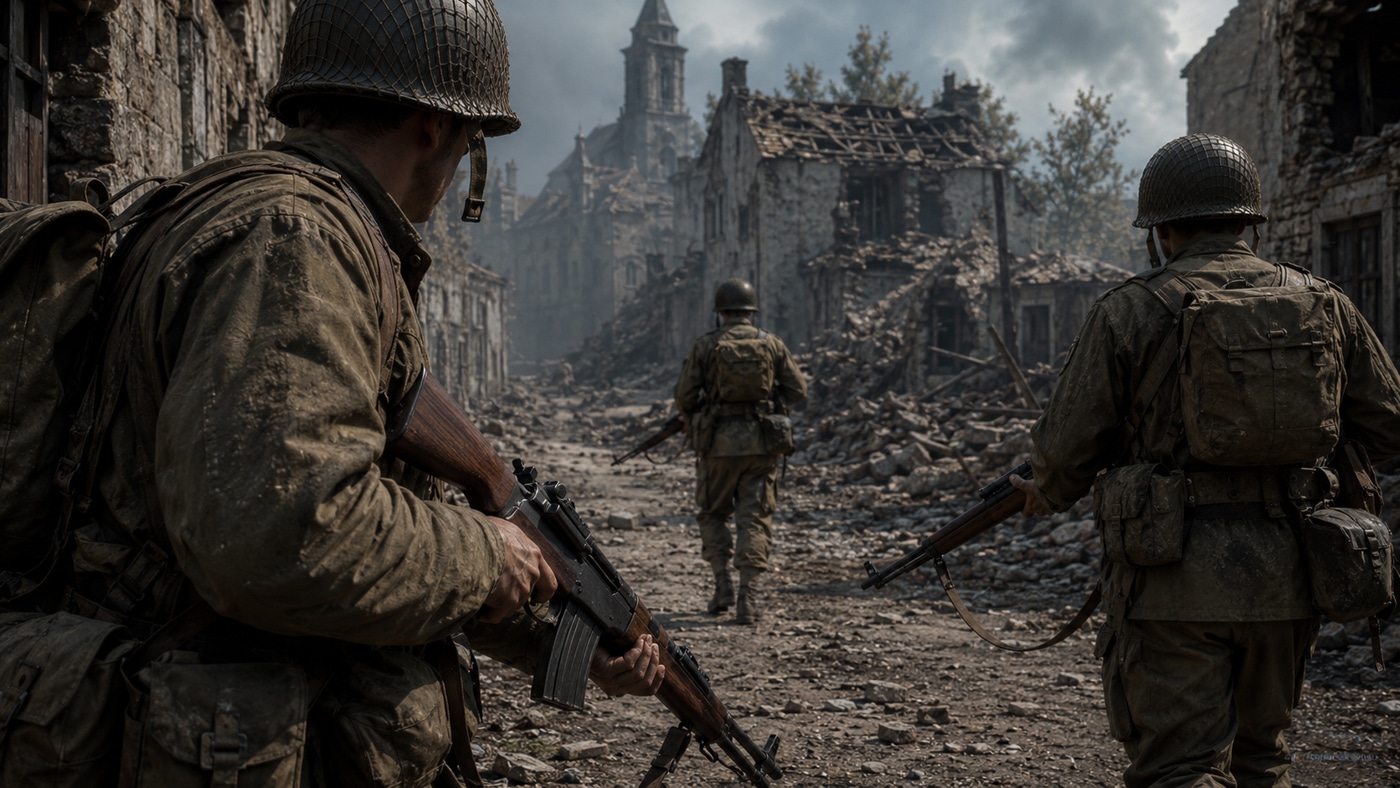
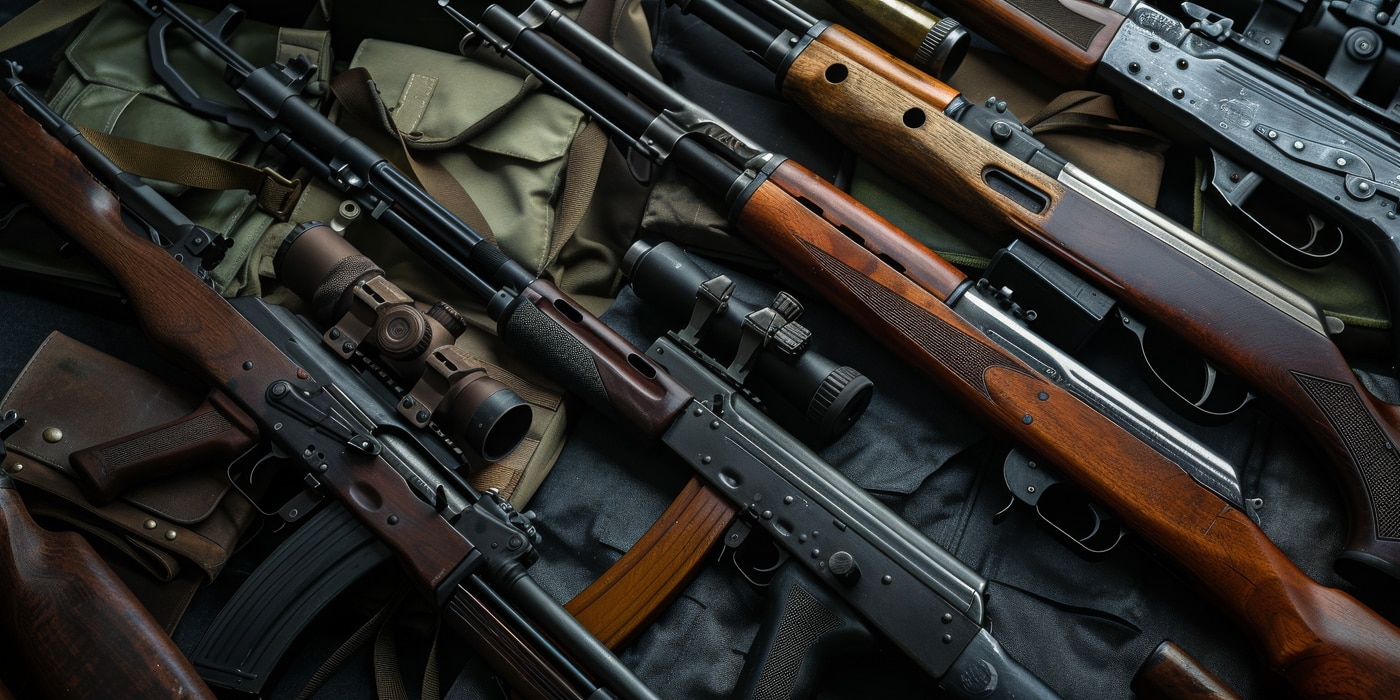
It would seem that AI, therefore, should be good at rendering firearms, but a search of social media tells a very different story. AI-generated images of firearms depict weapons that would be impossible to produce in the real world, much like the fantastical settings created by the late Dutch artist M.C. Escher.
In the case of firearms, LLMs and AI have no shortage of information to draw from, yet generative AI platforms still struggle because they lack a true 3D understanding of the underlying mechanics, resulting in nonsensical attachments, bent barrels, missing triggers, and incorrect magazine placement. AI is still treating firearms as abstract collections of shapes rather than focusing on the functional mechanisms. That has resulted in impossible geometry.
There are now Facebook Groups and Reddit subs devoted to sharing AI-generated firearm images that defy reality. Even when it gets the basics right, AI still misses some key details. Several factors are at play, but the most basic is that generate AI is based on algorithms, and many are far less “intelligent” than it might seem.
Guns And Media – It’s Never Been Accurate
It is further worth taking a step back and remembering that mainstream depictions of firearms have long been questionable. Consider firearms in comic books and video games as just two examples.

Writers of the former and developers of the latter would routinely ignore basic mechanics, notably magazine capacities and recoil, opting instead to treat firearms as versatile plot devices that are only as accurate or deadly as the story demands at any given moment.
Likewise, the World War II-based comic books of the 1960s didn’t bother to feature realistic depictions of the enemy. The Germans were often presented with big red swastikas on their helmets, carrying weapons that were not an accurate drawing of the MP-40. It was a version that fit the narrative, even if it was far from accurate.
Video games have, in recent years, gone to great lengths to get many details of modern firearms right, including the look and sound, yet other attributes are often still very wrong, notably the weight and recoil. The guns may look correct, but they way they are employed and operate is anything but accurate.
Lack of Instruction?
AI continues to struggle with firearms for some very simple reasons. There is an old saying among computer programmers: “Garbage in, garbage out,” which is the principle that the quality of a system’s output is directly linked to the quality of input. Flawed or low-quality data will produce equally flawed or useless results.

In the case of AI, the “garbage in” is the lack of clear instructions.
“One of the reasons that guns are not properly rendered in AI is in the details,” explained Roger Entner, founder and principal analyst at Recon Analytics. “AI is only as good as the instructions you give it.”
AI often needs more information and details than it is given. It can get the basic shapes right, but it still doesn’t understand the mechanics.
“Guns are such intricate tools, with minuscule differences that are huge,” Entner told The Armory Life. “Gun owners may know these things so intricately, but AI does not.”
That is a key point to consider. There is already massive confusion in the mainstream consciousness about the differences between a commercial AR-15 and the military M16, so how can we expect AI to know better?
AI doesn’t just fall short with firearms, but all sorts of things.
“AI isn’t good at depicting a Cadillac XTS from a Chevrolet Malibu,” said Entner.
There is also the issue of bias, and it is firearm enthusiasts who are likely to notice the rendering problems of AI when it comes to guns.

Live The Armory Life. The latest content straight to your inbox plus an automatic entry to each of our monthly gun giveaways!
I have read and agree to the terms & conditions.“AI really does render firearms poorly. Many details range from implausible to outright wrong. But in perspective, AI renders many objects poorly,” noted Dr. Jim Purtilo, associate professor of computer science at the University of Maryland. “If someone in the firearm community notices it with guns more than with other objects, then this could well be another example of a selective attention bias, which is where people with a decided interest in a given object will be much more inclined to notice when details are wrong. Show a young man the photo of a pretty young girl, and he will never notice what is in the background. ‘What monster?’”
Such a selective attention bias has cropped up in cinema for years.
“Show an old war movie and the gun enthusiast will complain, ‘that’s not a rifle they used,’ the history aficionado will say, ‘that’s not how it happened,’ and the linguists will lament that characters used words that didn’t become common until the modern era. This illustrates our biases,” Purtilo told The Armory Life.
Still, the implausible images result from how AI generates them today. There is ample data on firearm attributes, but few descriptions of how everything connects. AI’s LLMs make a best guess, often with comedic results.
“Pictures are tougher for AI than we understand,” added Entner. “Generic descriptions of something to AI will generate a generic description. It is like asking a five-year-old to draw a Single Action Colt.”
AI is thus like a child, and it may not provide all the details unless pressed. Even then, it may not fully appreciate how things go together without further explanation.
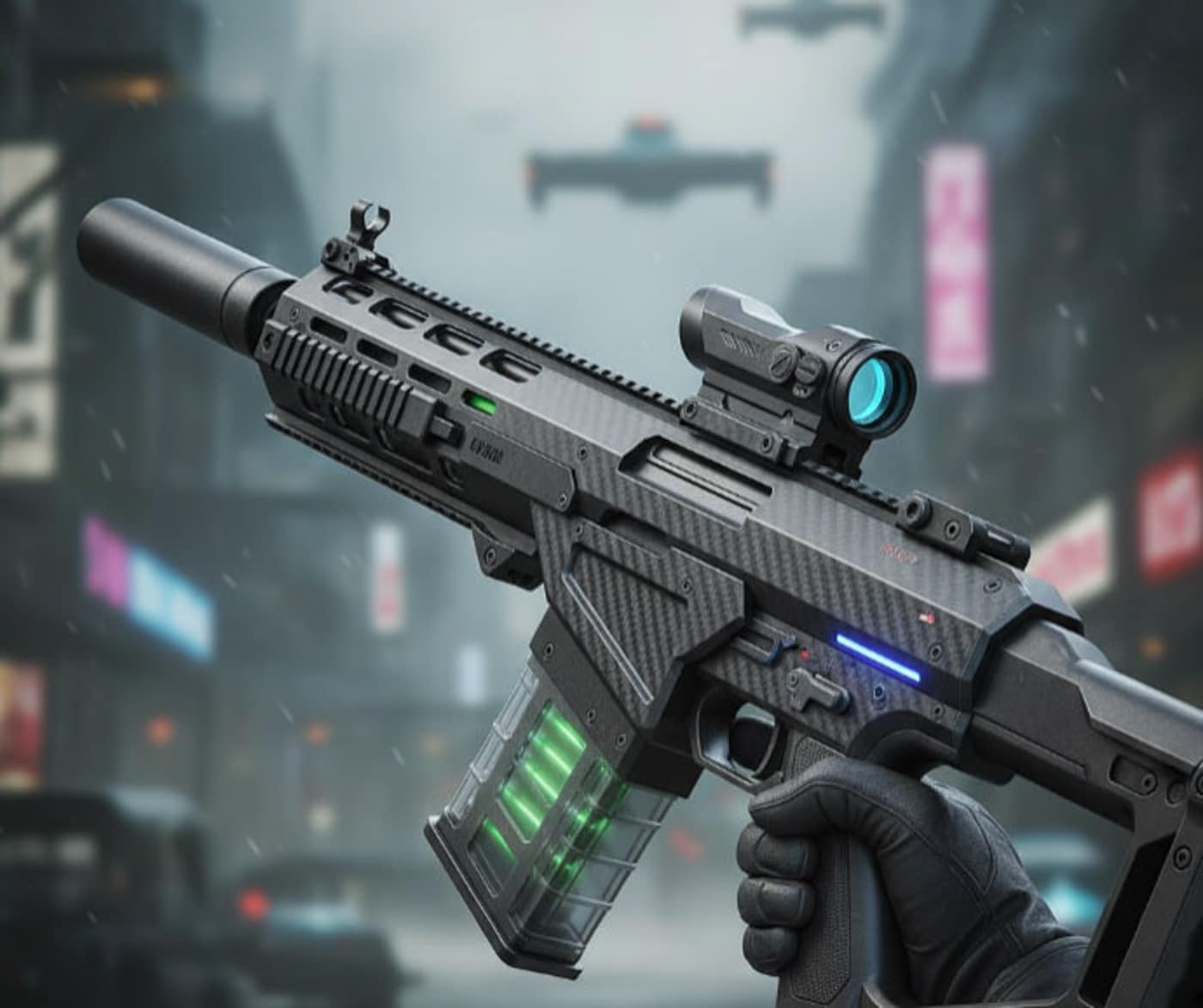
“Said simply, the program is averaging all the details of its training images when deciding which features to include,” said Purtilo. “It might know that a firearm has sights, a shoulder stock, and attachments, but it doesn’t know how these details might depend on one another. The average sight across all the images it analyzed might have been a scope, the average stock might have a pistol grip, and the average attachment might be a laser pointer – and that is how it gives you a Revolutionary War musket with pistol grip, high power optic, and laser pointer.”
The Barriers of AI
The current technical barriers are just one of the main reasons that AI is bad at rendering firearms. The other is policy. AI developers are already cautious about how AI can be used.
“On the technical side, guns are complex objects with very specific features. Because they are so specific and have many parts that can be rendered incorrectly, it’s easy for a human to identify them as incorrect, as AI is not good at replicating specific weapons,” said Dr. Cliff Lampe, professor of information and associate dean for academic affairs in the School of Information at the University of Michigan.

Lampe, who focuses on the study of misinformation in media, told The Armory Life that the policy reason is that many models specifically list firearms as a type of object to render poorly.
“You can imagine, for instance, that you don’t want to be able to have GenAI [generative artificial intelligence] create specific schematics for firearms. Different models may have different thresholds here as a matter of policy, but all of them will have some safety restrictions built in,” Lampe noted.
Microsoft’s Copilot and ChatGPT are now among the generative AI platforms that won’t even render a firearm if requested. Copilot won’t even render soldiers holding firearms. However, because of the rise in “AI slop,” it may be a good thing that AI can’t generate extremely accurate firearms in videos. No manufacturer would be happy to see their product – a car, gun, or something else – used irresponsibly in an AI-generated video.
For now, we may need to accept that AI doesn’t do guns well, just as comic writers and video game developers missed the mark in the past.
“I don’t know whether AI is more likely to generate silliness with firearms than other objects. But if so, then this may well reflect a selection bias in training materials,” Purtilo continued. “AI models are trained by ingesting a huge volume of raw content. The companies scrape pages from websites, books, social media, and more for this purpose.”
As Lampe noted, there is also the issue of policies that restrict many sites from including firearm images, which could impact how AI learns.
“This limits what material AI has for training,” said Purtilo. “If you can’t depict safe and responsible firearm use on the web, then no AI will be able to render images with safe and responsible use of firearms. Whatever it generates will be inherently gibberish.”
Editor’s Note: Please be sure to check out The Armory Life Forum, where you can comment about our daily articles, as well as just talk guns and gear. Click the “Go To Forum Thread” link below to jump in!
The post AI Doesn’t Get Guns appeared first on The Armory Life.