America’s Shotgun: How the Remington 870 Became the Best-Selling Shotgun of All Time
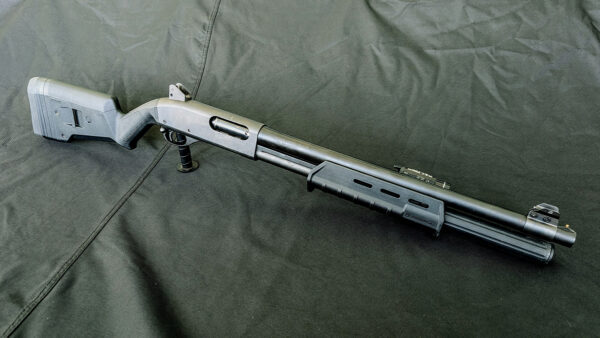
With more than 11 million produced, it’s safe to say Americans have a soft spot for the Remington 870. Long before it became my first shotgun, I knew I wanted one because of its exceptional reliability and hard-earned reputation.
At the time, I was fresh out of college and working at my local Gander Mountain, so money was a little tight. Most of the firearms I owned had been handed down from my father and grandfathers, but I wanted a gun that was truly my own—a versatile, do-everything shotgun that I could buy with my own paycheck.
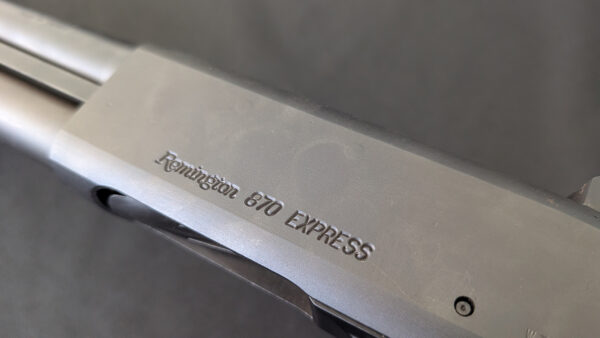
It didn’t take long to land on a 12-gauge Remington 870 Express. It was everything I was looking for: simple, dependable, and affordable at less than $400. With a single shotgun, I could shoot trap, chase spring gobblers, or head into the deer woods in the fall.
That same 870 still sits in my gun safe today, and after all these years, it’s still running strong.
The Remington 870 turns 76 this year and still maintains its position as the best-selling shotgun of all time. It continues to bust clays, take game, and serve with military and law enforcement agencies across the globe. For generations of shooters, it has been a staple of American gun collections and one of the most successful firearms in Remington’s storied history.
Live Inventory Price Checker
| Federal 12 Gauge 1.12 oz Podium Wad - 12P18 | Palmetto State Armory | $ 18.99 $ 13.99 |
|
|
| Federal 12 Gauge 2.75 1-1/4 oz 5 Shot (Box) | Ammunition Depot | $ 62.49 |
|
|
| Federal 12 Gauge 1 oz Podium Wad - 12P1 | Palmetto State Armory | $ 13.99 |
|
|
| Federal 12 Gauge 3 1-1/4 oz BB Shot 1450 fps (Box) | Ammunition Depot | $ 33.49 |
|
The Road to the 870
Prior to the 870’s inception, Remington already had a very serviceable shotgun in its catalog. The Model 31, manufactured from 1931 to 1949, was the company’s first side-ejecting pump shotgun. At the time, Winchester dominated the pump-gun market with its highly regarded Model 12, and the Model 31 was introduced to compete directly with it.
The Model 31 proved to be an excellent shotgun in its own right. So smooth and well-fitted was its action that Remington marketed it as the “Ball-Bearing Repeater.” However, that level of craftsmanship came at a cost. With more than 500 machined parts, the Model 31 was expensive to manufacture and carried a higher price tag than Winchester’s competing Model 12.
Remington recognized that if it wanted to keep pace with Winchester, something had to change. Rather than simply cutting corners on the Model 31, the company went back to the drawing board and developed an entirely new design. By embracing more efficient manufacturing methods and incorporating parts from existing models, Remington created a shotgun that would change the industry: the Model 870.

Creating a Classic
The 870 was created using the same principles that have guided many great firearms designs: it needed to be efficient to produce, easy to maintain, and dependable.
To achieve this, Remington’s designers incorporated components and design concepts from existing firearms. The receiver dimensions of the 16-gauge 11-48 semi-automatic shotgun were used for the 12-gauge 870, helping reduce production costs while also creating a lighter firearm. The receiver itself was machined from a steel forging, providing the strength and durability shooters expected from a hard-working pump gun.
Another important feature that set the 870 apart was the introduction of twin action bars. Many pump shotguns of the era relied on a single action bar, creating the potential for twisting or binding during operation. The dual-bar system eliminated that issue and contributed to the smooth, reliable action that would become one of the shotgun’s defining characteristics.
Borrowing additional design elements from Remington’s semi-automatic shotgun line, the Model 870 also utilized a trigger group that could be easily removed by driving out two retaining pins. This made maintenance and cleaning straightforward for the average owner.
Perhaps the feature that contributed most to the 870’s broad appeal was its interchangeable barrel system. By simply unscrewing the magazine cap and removing the barrel, shooters could quickly configure the shotgun for different purposes without requiring the services of a gunsmith. One shotgun could serve as a deer gun, turkey gun, waterfowl gun, or clay target gun simply by swapping barrels.
In 1950, the Remington 870 entered production in both Standard (AP) and Deluxe (ADL) models, marking the beginning of one of the most successful firearm designs in American history.
One Shotgun, Countless Uses
The quality and affordability of the 870 were only the foundation of what would ultimately make it the best-selling shotgun of all time.
From the beginning, Remington recognized that shooters wanted options. Upon its introduction, the company offered fifteen variants across 12-, 16-, and 20-gauge chamberings. The Model 870 AP Standard Grade sold for $69.95, roughly fifteen dollars less than a Winchester Model 12. That combination of being so versatile and cost-effective helped make the shotgun an immediate success.
Over the decades, Remington expanded the platform into a wide range of configurations. The 870 has been offered in all four traditional shotgun gauges as well as .410 bore, with chamber lengths ranging from 2¾ inches to 3½-inch magnums. Trap and skeet shooters enjoyed specialized target models. Hunters could choose variants tailored for deer, turkey, waterfowl, upland birds, and nearly every other hunting application. Law enforcement agencies adopted tactical versions, while collectors gravitated toward deluxe-grade and engraved offerings.
No matter the configuration, the underlying formula remained the same: a dependable shotgun capable of adapting to nearly any task, that fit nearly any budget.
America’s Pump Gun
Shotguns have long been among the most versatile firearms in America. For centuries, they have brought home game, defended homes, and served countless sporting pursuits.
The concept that made the Remington 870 America’s pump gun was remarkably simple: reliability, affordability, and versatility. It wasn’t made to be the fanciest shotgun on the market, nor the most complex. It simply worked, and it worked well.
For many shooters, their first shotgun was a Remington 870. Its longevity has allowed those same guns to be passed from one generation to the next. Few firearms have earned the trust of as many Americans or established such a lasting reputation.
My own 870 Express has been with me from shooting clays with friends to resting on my knee in the turkey woods waiting for a gobbler to sound off. One day, I hope to pass it down to my daughter so she can make her own memories with it. In many ways, that’s the true legacy of the Remington 870—not the millions sold, but the generations of hunters, shooters, and families who have relied on one.
About Ryan Hodges
Ryan is an outdoorsman and firearms enthusiast with over a decade of experience in the industry. He holds a B.A. in History with a concentration in Public History from Roanoke College and was an intern at the Cody Firearms Museum in Cody, Wyoming where he contributed to exhibit development and public education initiatives. He later worked with Taylor’s & Co. in Winchester, Virginia for 9 years, building expertise in historical and reproduction firearms.
An avid hunter and shooter based in Northern Virginia and the West Virginia panhandle, Ryan has a deep appreciation for the intersection of history, firearms, and the natural world. His primary area of focus is 19th-century American firearms, particularly those used during the Civil War and the era of westward expansion. Through his writing, he aims to educate and engage readers by connecting the historical significance of firearms with their enduring legacy in the field today.