Anti-Gun States Rush to Save Federal Handgun Mailing Ban
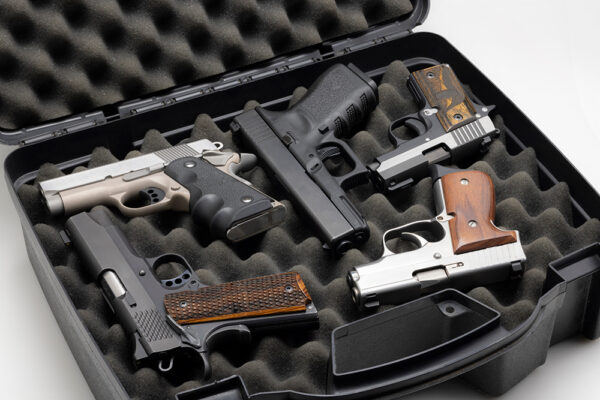
In a dramatic new chapter of Shreve v. United States Postal Service, a trio of anti-gun states has stepped into the legal fight over the federal ban on mailing handguns. This fight was reignited earlier this year, when the U.S. Department of Justice formally concluded that the nearly 100-year-old prohibition in 18 U.S.C. § 1715 is unconstitutional as applied to constitutionally protected arms.
In January 2026, the Department of Justice’s Office of Legal Counsel (OLC), led by Assistant Attorney General T. Elliot Gaiser, issued a memorandum concluding that the federal statute barring the mailing of pistols, revolvers, and other concealable firearms through the U.S. Postal Service violates the Second Amendment under the Supreme Court’s modern jurisprudence.
Section 1715, originally enacted in 1927 and later amended, generally prohibits mailing “pistols, revolvers, and other firearms capable of being concealed on the person,” with exceptions for military, law enforcement, and certain licensed entities. For decades, it has functioned as a categorical federal ban on ordinary citizens mailing handguns through USPS.
Applying the Supreme Court’s framework in New York State Rifle & Pistol Association v. Bruen, which requires firearm regulations to be consistent with the Nation’s historical tradition of firearm regulation, the OLC concluded that the statute substantially burdens conduct covered by the plain text of the Second Amendment and lacks sufficient historical analogues from the Founding era.
Importantly, the OLC opinion does not repeal the statute. Congress has not amended Section 1715. However, the executive branch has taken the position that it cannot constitutionally defend or enforce the ban against constitutionally protected arms. That marks a significant shift after nearly a century of federal enforcement.
Delaware, New Jersey, and New York Move to Intervene
Following DOJ’s decision not to defend the constitutionality of Section 1715 in the pending litigation, the states of Delaware, New Jersey, and New York have filed a motion to intervene as defendants in the case.
In their brief, the states argue that they have substantial sovereign and financial interests tied to the continued enforcement of the federal mailing restriction. They contend that if the statute is struck down, it could undermine aspects of their firearm regulatory systems and impose additional enforcement burdens on state authorities.
The states assert that because the federal government is no longer defending the statute’s constitutionality on the merits, their interests may not be adequately represented unless they are permitted to participate directly in the case.
In their motion, Delaware, New Jersey, and New York argue that invalidating Section 1715 would impose new burdens on their law enforcement agencies. They claim that if USPS begins accepting shipments of concealable firearms, states may face increased costs associated with enforcing their own firearm laws, particularly in jurisdictions with extensive licensing and transfer requirements.
According to the states, allowing individuals to use the mail to ship handguns could complicate enforcement of regulatory frameworks that rely heavily on controlled transfer points, typically involving federally licensed firearms dealers (FFLs).
At the same time, federal law governing interstate firearm transfers through FFLs would remain in effect unless separately challenged. The core issue in Shreve is whether the federal government may categorically prohibit the mailing of constitutionally protected arms, not whether states may enforce otherwise valid and constitutional firearm regulations within their borders.
The states also argue that they have independent sovereign interests in maintaining regulatory systems built around background checks, licensing schemes, and purchase restrictions. They contend that without intervention, a federal statute affecting those systems could be invalidated without a full adversarial defense.
The unusual posture of the case underscores the stakes. The Department of Justice, the entity ordinarily responsible for defending federal statutes, has concluded that Section 1715 cannot survive Second Amendment scrutiny under Bruen. Delaware, New Jersey, and New York are now seeking to step into that role to defend the law themselves.
Section 1715 remains federal law. It has not been repealed by Congress, and USPS regulations implementing it have not yet been formally amended.
The DOJ’s position means the executive branch has declined to defend the statute’s constitutionality in court, but until a federal court issues a ruling or Congress acts, the statute remains on the books.
If the district court grants the states’ motion to intervene, they will become full participants in defending the statute. If intervention is denied, the case could proceed without a traditional defense of the ban’s constitutionality — an extraordinary scenario in federal litigation.
Should the court permit intervention, Delaware, New Jersey, and New York will be able to file briefs, participate in hearings, and shape appellate strategy if the case advances to the U.S. Court of Appeals and potentially the Supreme Court.
A ruling striking down Section 1715 on constitutional grounds would represent one of the most significant post-Bruen developments in Second Amendment jurisprudence. It would address not merely possession or public carry, but the federal government’s authority to restrict lawful methods of acquiring and transporting protected arms.
Despite the DOJ’s constitutional assessment, practical changes are not immediate. USPS has not yet revised its domestic mail policies, and Section 1715 remains enforceable until a court says otherwise.
However, the combination of the DOJ’s opinion and the states’ intervention effort sets up a high-stakes constitutional showdown. For gun owners, the case could determine whether the federal government may continue imposing a categorical mailing ban on handguns, or whether that nearly century-old restriction will fall under modern Second Amendment scrutiny.
AmmoLand will continue to monitor Shreve v. USPS and provide updates as this significant case moves forward.
Supreme Court Signals Trouble for Federal Law Disarming Regular Marijuana Users