AR-15 to .22 LR: Is a Conversion Kit or Dedicated Upper the Better Choice?
Want to shoot your AR-15 without burning through expensive 5.56 ammunition? Brownells breaks down two ways to convert your rifle to .22 LR, and why spending a little more on a dedicated upper might be worth it.
One of the greatest advantages of the AR-15 platform is its versatility. From swapping uppers and changing calibers to configuring a rifle for hunting, home defense, or competition, few firearms offer owners the same level of customization. That versatility also extends to shooting inexpensive .22 LR ammunition through an AR-15 originally chambered in .223 Remington or 5.56 NATO.
With the cost of centerfire ammunition making frequent range trips expensive, converting an AR-15 to .22 LR is an appealing option for gun owners who want more trigger time without emptying their wallets.
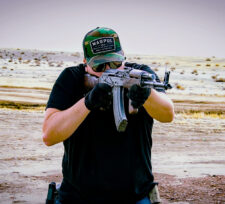
In a new video published by Brownells, Caleb walks through two approaches using CMMG rimfire components: a drop-in conversion kit that works with an existing centerfire upper and a dedicated .22 LR upper built around a purpose-made rimfire barrel.
Both accomplish essentially the same goal, but there are some important differences in cost, accuracy potential, maintenance, and convenience that gun owners should consider before spending their money.
The Cheapest Way to Shoot .22 LR Through an AR-15
For most AR-15 owners interested in occasional rimfire shooting, the CMMG Bravo .22 LR conversion kit is probably the most straightforward option.
The Bravo replaces the rifle’s standard centerfire bolt carrier group with a self-contained rimfire assembly. Its chamber adapter fits into the existing .223/5.56 chamber, allowing the rifle to fire .22 LR ammunition through its original barrel. The system uses dedicated .22 LR magazines that fit the AR-15’s magazine well.
Unlike a conventional centerfire AR-15, which relies on gas operation, the CMMG conversion operates through direct blowback. The recoil spring and operating components are contained within the conversion assembly, so the rifle’s existing gas system is not used to cycle the action.
The major advantage is that owners can use a compatible AR-15 they already have without investing in another complete upper receiver.
Brownells identifies ammunition cost as the biggest reason to consider this arrangement. Caleb mentions finding .22 LR for approximately seven to eight cents per round, illustrating how much less expensive rimfire shooting can be compared with 5.56 NATO.
That translates into more rounds downrange and more opportunities to practice fundamentals such as trigger control, sight alignment, and shooting positions using a familiar AR-15.
There are limitations, of course. A .22 LR conversion will not duplicate the recoil impulse or ballistic performance of 5.56 NATO. Shooters should also expect their point of impact to differ when switching ammunition.
Still, for recreational shooting and affordable practice, the CMMG conversion has plenty going for it.

AmmoLand Has Already Put the CMMG Bravo to the Test
This isn’t the first time AmmoLand has examined the CMMG Bravo. In his hands-on review of the CMMG Bravo .22 LR Conversion Kit, AmmoLand contributor Jim Grant tested the system across three different AR-platform firearms.
The test guns included a PSA pistol with a 10.5-inch barrel, a LaRue Tactical carbine with a 14.5-inch pinned-and-welded barrel, and a BCM rifle with a 20-inch barrel.
Grant fired 200 rounds through each firearm, totaling 600 rounds, using Winchester WildCat, CCI Standard Velocity, and older Federal military contract CMP ammunition.
The result? Zero malfunctions across all 600 rounds.
Accuracy was respectable, too. Grant reported groups hovering around 1.6 inches at 50 yards, which is more than adequate for recreational plinking and fundamental marksmanship practice.
Those results demonstrate that the Bravo can offer dependable rimfire performance without requiring a dedicated barrel. While every rifle and ammunition combination can perform differently, AmmoLand’s testing provided a strong endorsement of the conversion kit.
However, reliability isn’t the only consideration, especially for owners who plan to shoot thousands of rounds of .22 LR.
Why Brownells Prefers a Dedicated .22 LR Upper
While Brownells acknowledges that the drop-in conversion kit is the least expensive approach, Caleb ultimately favors a dedicated .22 LR upper. The biggest difference is the barrel.
A standard AR-15 barrel is designed around .223 Remington or 5.56 NATO ammunition. Although a conversion kit makes it possible to shoot .22 LR through that barrel, the chamber adapter and existing barrel dimensions are compromises compared with a purpose-built rimfire setup.
A dedicated .22 LR upper uses a barrel specifically designed for rimfire ammunition, paired with a matching bolt assembly and dedicated magazines.
Brownells points to the dedicated barrel’s greater accuracy potential as one reason to choose this configuration. Instead of accommodating .22 LR through a centerfire barrel and chamber adapter, the dedicated setup is designed around the rimfire cartridge from the beginning.
That doesn’t mean every dedicated .22 LR upper will automatically outshoot every conversion kit. Brownells doesn’t provide a controlled accuracy comparison between the two configurations, and ammunition selection, barrel quality, and other variables still matter.
Nevertheless, a purpose-built rimfire barrel makes sense for gun owners interested in getting more consistent accuracy from a wider variety of .22 LR ammunition.
Rimfire Fouling Is Another Consideration
Another advantage of a dedicated .22 LR upper is keeping rimfire fouling out of the rifle’s centerfire barrel and gas system.
Anyone who shoots substantial quantities of .22 LR knows that rimfire ammunition can be dirty. Lead bullets, bullet lubricant, and powder residue can accumulate during extended shooting sessions.
With a drop-in conversion, the rimfire ammunition travels through the rifle’s existing centerfire barrel. Although the conversion operates by blowback rather than using the gas system, fouling can still accumulate around the gas port and elsewhere in the barrel.
Brownells specifically recommends using copper-plated .22 LR bullets with the conversion setup to help reduce concerns about lead buildup.
A dedicated rimfire upper avoids exposing the centerfire barrel and gas system to that ammunition in the first place.
It also allows the owner to maintain the rimfire upper separately instead of dealing with the fouling associated with regularly switching the same barrel between rimfire and centerfire ammunition.
For owners who only shoot a few magazines of .22 LR occasionally, proper cleaning and maintenance may make this a manageable tradeoff. For somebody who plans to shoot hundreds of rimfire rounds every weekend, the dedicated upper becomes considerably more attractive.
Is a Dedicated .22 LR Upper Worth the Extra Money?
That ultimately depends on how frequently you plan to shoot .22 LR and what you expect from the rifle.
The CMMG Bravo conversion kit makes plenty of sense for somebody who already owns an AR-15 and wants an inexpensive way to practice or enjoy an afternoon of plinking. It requires fewer additional components, retains the existing upper, and offers the flexibility to return the rifle to its original centerfire configuration.
A dedicated upper costs more because you’re purchasing additional components, including a rimfire-specific barrel and compatible bolt assembly. However, the additional expense buys you a separate shooting configuration that can remain assembled and ready for range trips.
It also means you can set up an optic specifically for .22 LR without constantly accounting for changes in point of impact between rimfire and centerfire ammunition.
Brownells’ Caleb considers that convenience, combined with the accuracy and maintenance advantages, worth the investment.
There’s another practical benefit. A dedicated upper allows owners to tailor their rimfire setup to their shooting preferences while keeping their primary 5.56 upper configured exactly how they want it.
The AR-15’s Versatility Makes Both Options Worth Considering
The biggest takeaway from Brownells’ comparison isn’t that every AR-15 owner needs to buy a dedicated .22 LR upper. It’s that both options offer useful ways to get more out of a rifle many American gun owners already own.
If your goal is inexpensive practice with familiar controls, the CMMG Bravo remains a compelling choice, and AmmoLand’s previous 600-round test showed just how well the system can perform.
If you’re planning to shoot .22 LR regularly, want a purpose-built barrel, and prefer to keep rimfire fouling separate from your centerfire rifle, a dedicated upper is a sensible investment.
Either way, turning an AR-15 into an affordable rimfire range gun is another example of why the platform has become so popular among American shooters.
You don’t need to buy an entirely different rifle every time your shooting interests change. The AR-15’s modular design gives gun owners the freedom to configure their firearms around their own needs, budgets, and preferences.
And sometimes, that means turning an expensive afternoon of shooting 5.56 into a whole lot more trigger time with a brick of .22 LR.
About Duncan Johnson:
Duncan Johnson is a lifelong firearms enthusiast and unwavering defender of the Second Amendment—where “shall not be infringed” means exactly what it says. A graduate of George Mason University, he enjoys competing in local USPSA and multi-gun competitions whenever he’s not covering the latest in gun rights and firearm policy. Duncan is a regular contributor and editor-in-chief for AmmoLand News and is responsible for AmmoLand’s daily gun-rights reporting and industry coverage.