Ayoob: How To Shoot Micro Pistols Better
It’s not hard to see why “Micro Nine” pistols of the Hellcat genre are best-sellers today. Firstly, they’re chambered for 9mm Luger, almost universally recognized as a capable defense caliber with today’s best ammunition.
In addition, they are not only compact, but sometimes literally pocket-sized. Flat, to ride comfortably inside the waistband and conceal easily with maximum discretion. Carrying at least as many rounds as two of yesteryear’s standard, the “snub-nose .38.” And much faster to reload than those little revolvers.
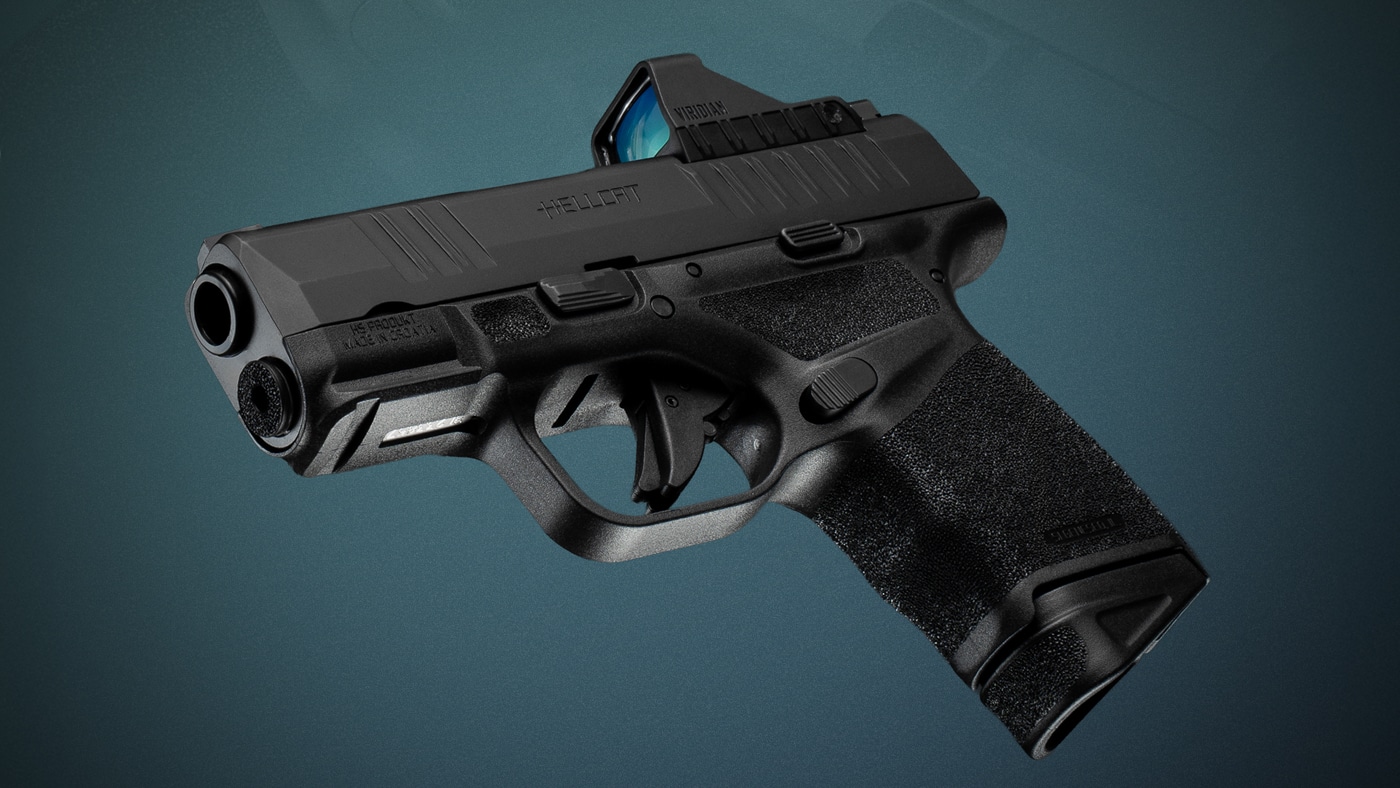
Nothing is perfect, and everything has “cons” to balance against the “pros.” The trick is to determine the balance of needs, that balance being achieved by going toward the strengths of the thing in question, and shoring up its weaknesses.
The biggest weakness of the small handgun is that it is generally perceived as more difficult to shoot. The smaller the pistol, the less flesh and bone of the shooter’s hand(s) can be wrapped around it to stabilize it on target through the shot, and then recover from recoil for the next shot.
Aiming
Historically, small carry guns came with terrible sights: tiny, almost vestigial, and hard to get on target with quickly. At one end of the spectrum were compact .32 ACP autopistols with no sights at all. For a very long time, popular snub-nose revolvers came with a front sight only one-tenth of an inch wide, and a correspondingly tiny rear notch to line it up with.
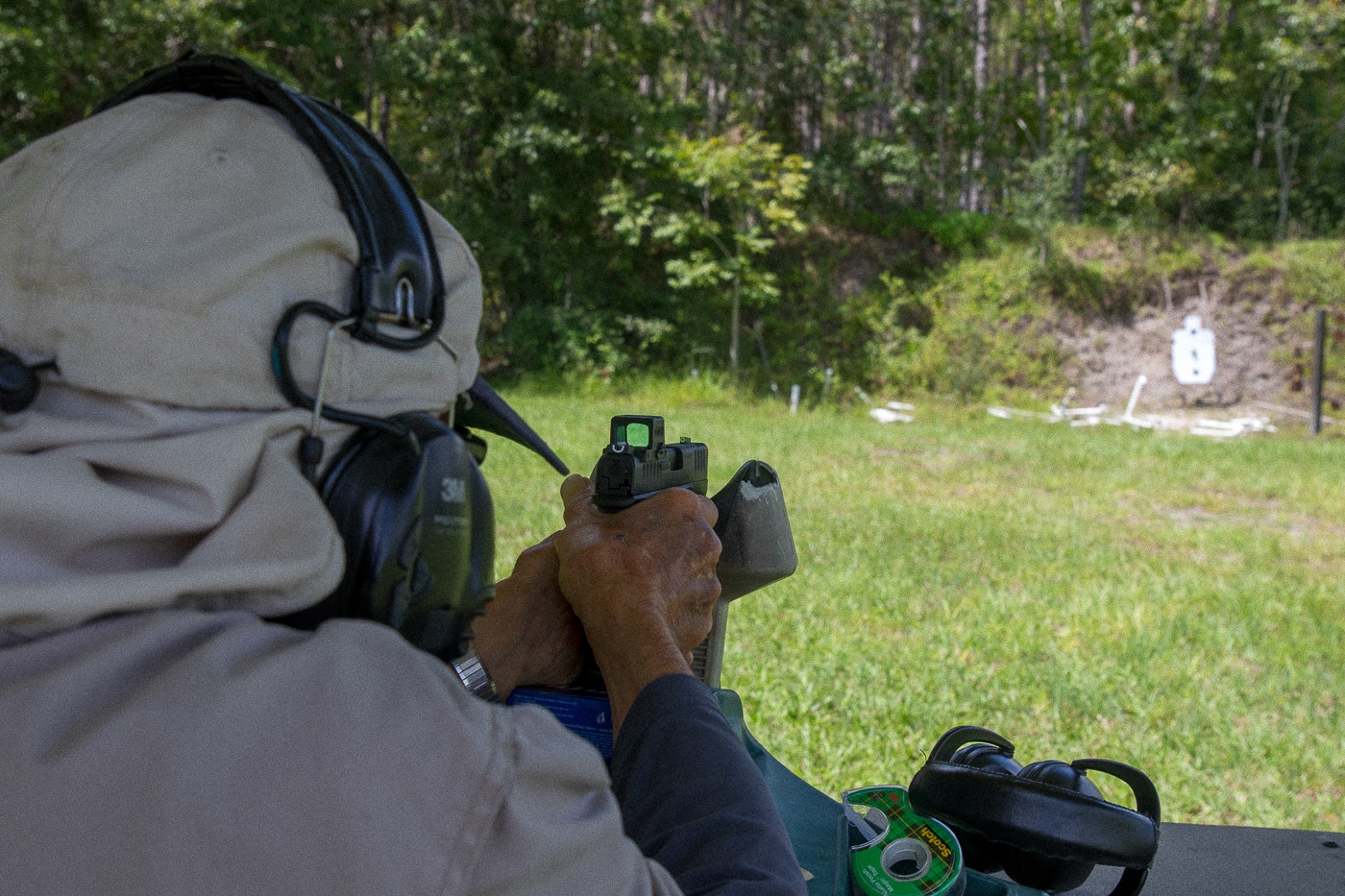
There are a few different ways to go with the aiming devices: iron sights, laser sights or carry optics. The latter offer precise aim and encourage focusing on the threat, but also increase the height of the pistol and can be more challenging in terms of concealability.
I associate with a lot of genuine gun experts, and don’t know a single one who carries an optic-sighted pistol in their pocket. This is not to say that you can’t effectively carry such a gun concealed; it simply means that pocket carry and to some degree ankle carry are contra-indicated.
It is not a coincidence that the increase in carry optics and the increased popularity of appendix inside the waistband (AIWB) carry occurred at the same time. When the gun is made higher top-to-butt with an optical sight, the broad expanse of the abdomen is a logical place to carry it, since there is more fabric draping down from the wearer’s chest.
Laser sights are great in the dark, but of limited use in bright light.
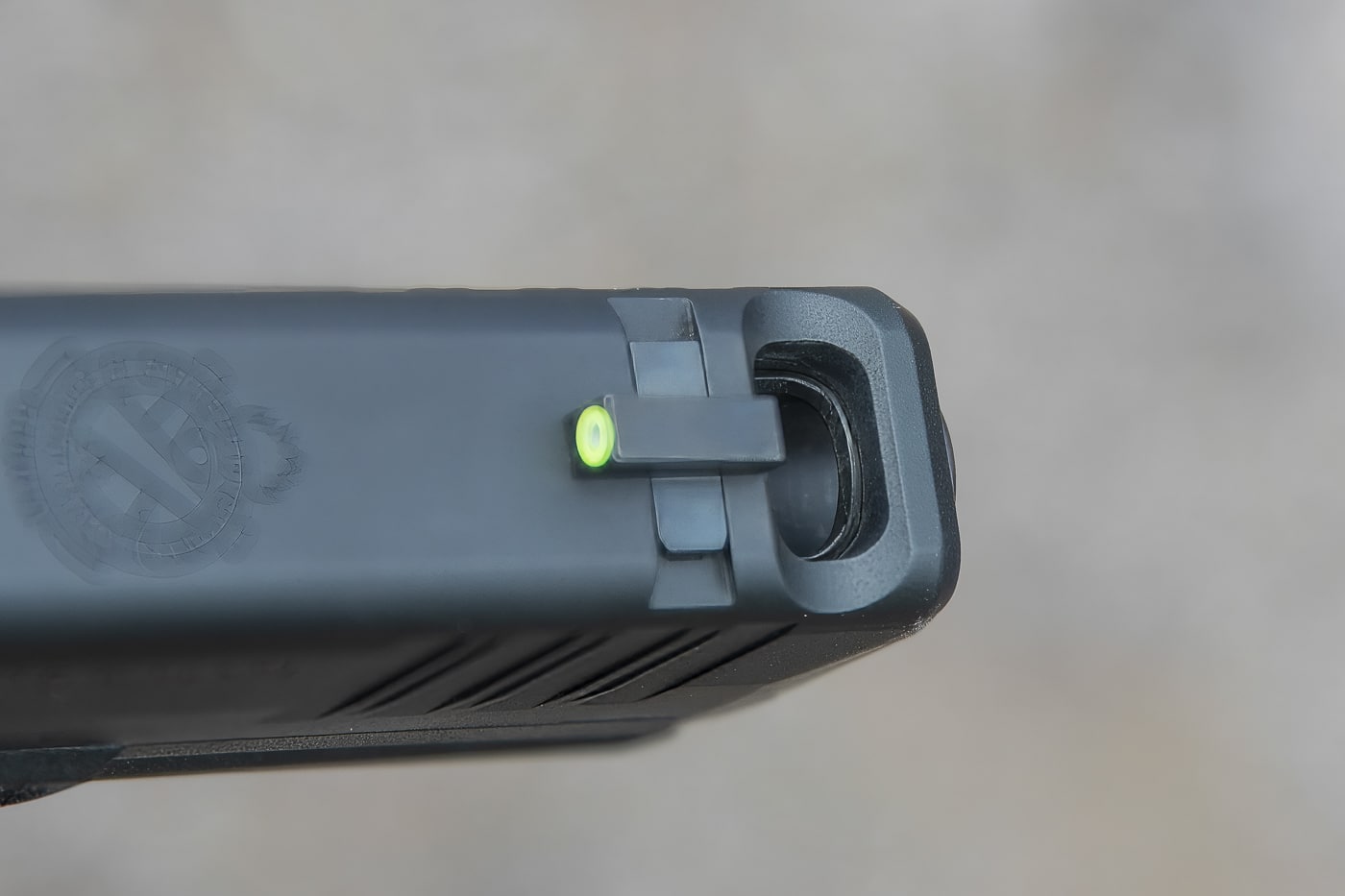
With iron sights, the pistol-packer has much better choices today. Consider the sights which come standard on the Springfield Armory Hellcat: a big U-notch rear mated with a large, glowing bulb of a front sight. Fast to index on target, accurate, yet not likely to snag on the draw or compromise concealability.
Grasp
We cannot change the laws of physics. Smaller, lighter guns are going to recoil more than big, heavy ones when the shooting starts. The recoil takes two forms simultaneously: rearward “kick,” and muzzle rise.

A smaller gun has less flesh in contact with its grip-frame, and may feel as if it is twisting in the hand upon recoil. How do we mitigate this?
One mechanical answer is a compact recoil compensator, as found on the Springfield Hellcat Pro Comp. As the pistol fires, expanding gases jet upward through the port on top at the muzzle, “compensating” for the recoil by pushing the muzzle in a downward direction. Caution: with the pistol high and tight toward the body when firing from retention position, this can direct those hot gases upward toward the shooter’s own face and eyes.
With compensator or not, you can mitigate both “kick” and muzzle rise with technique.
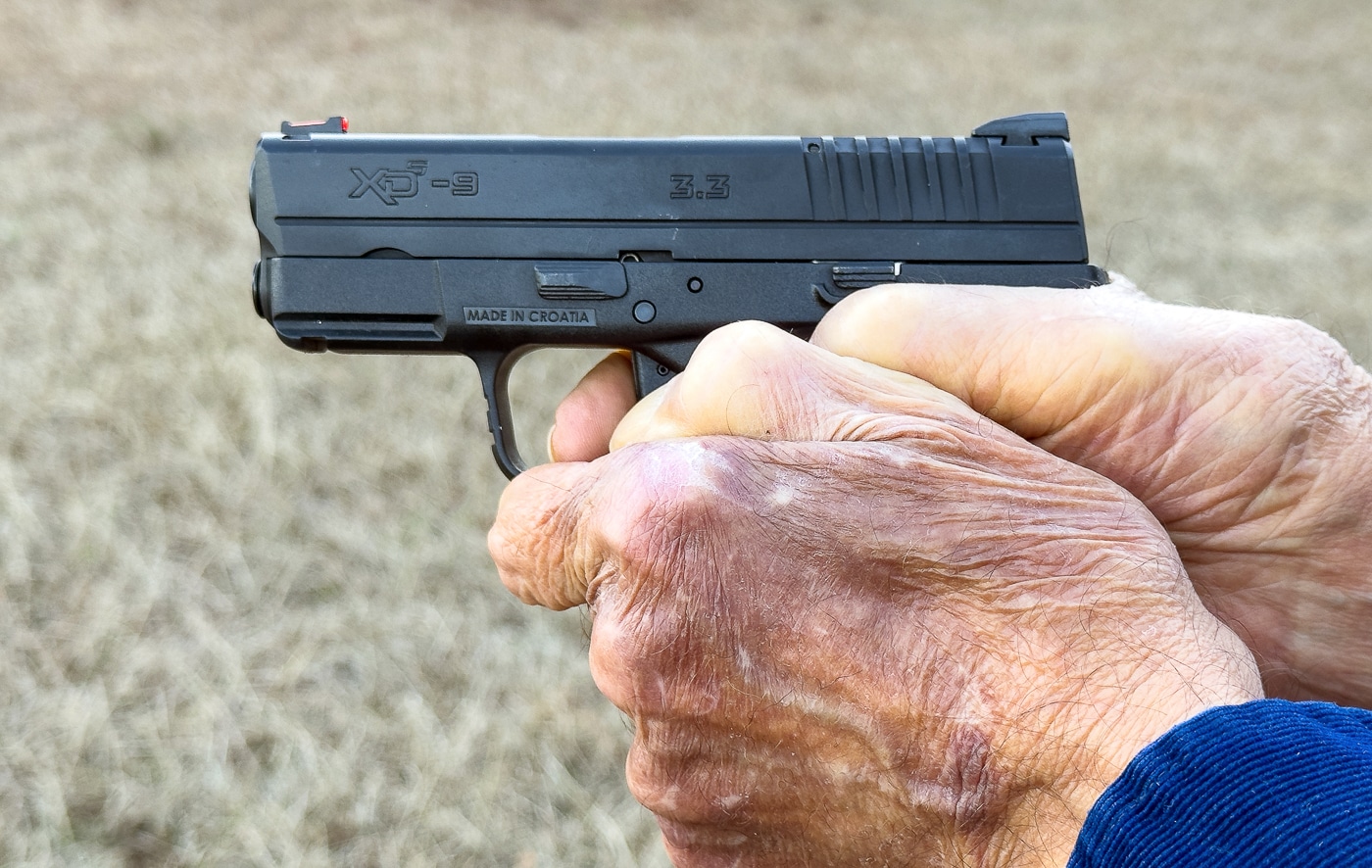
First, grip the pistol very firmly with both firing hand and support hand. The harder you hold it, the less it moves in your hand. In my shooting classes (http://massadayoobgroup.com) I encourage a crush grip, meaning maximum hand strength exerted.
In the after-class critique, one question asked is what techniques did the student find most useful. The single technique most often named is the crush grip. Many say it reduced the recoil This is not actually possible; what they are experiencing is that it reduced the movement of the pistol in their hand(s).
Combine that with upper body weight aggressively forward and “into the gun.” This helps to quickly snap the muzzle down from its recoil arc and back on target.

Live The Armory Life. The latest content straight to your inbox plus an automatic entry to each of our monthly gun giveaways!
I have read and agree to the terms & conditions.Although a hold with the thumbs straight forward works well with larger pistols, many shooters find that curling the thumbs down, particularly the thumb of their firing hand, improves their control. The reason is that the human hand’s opposing thumb, when clenched, tightens the grip of the whole hand. To see how that works, wherever you are reading this take your empty gun hand and, with the thumb up, tighten your fingers into a fist. Mentally measure your maximum strength.
Now, still crushing and still measuring, slowly close the thumb, bending it at the median joint and pointing the tip of the thumb straight down. You’ll feel it distinctly increase your hand strength over what it was before with your thumb up or in a neutral position.
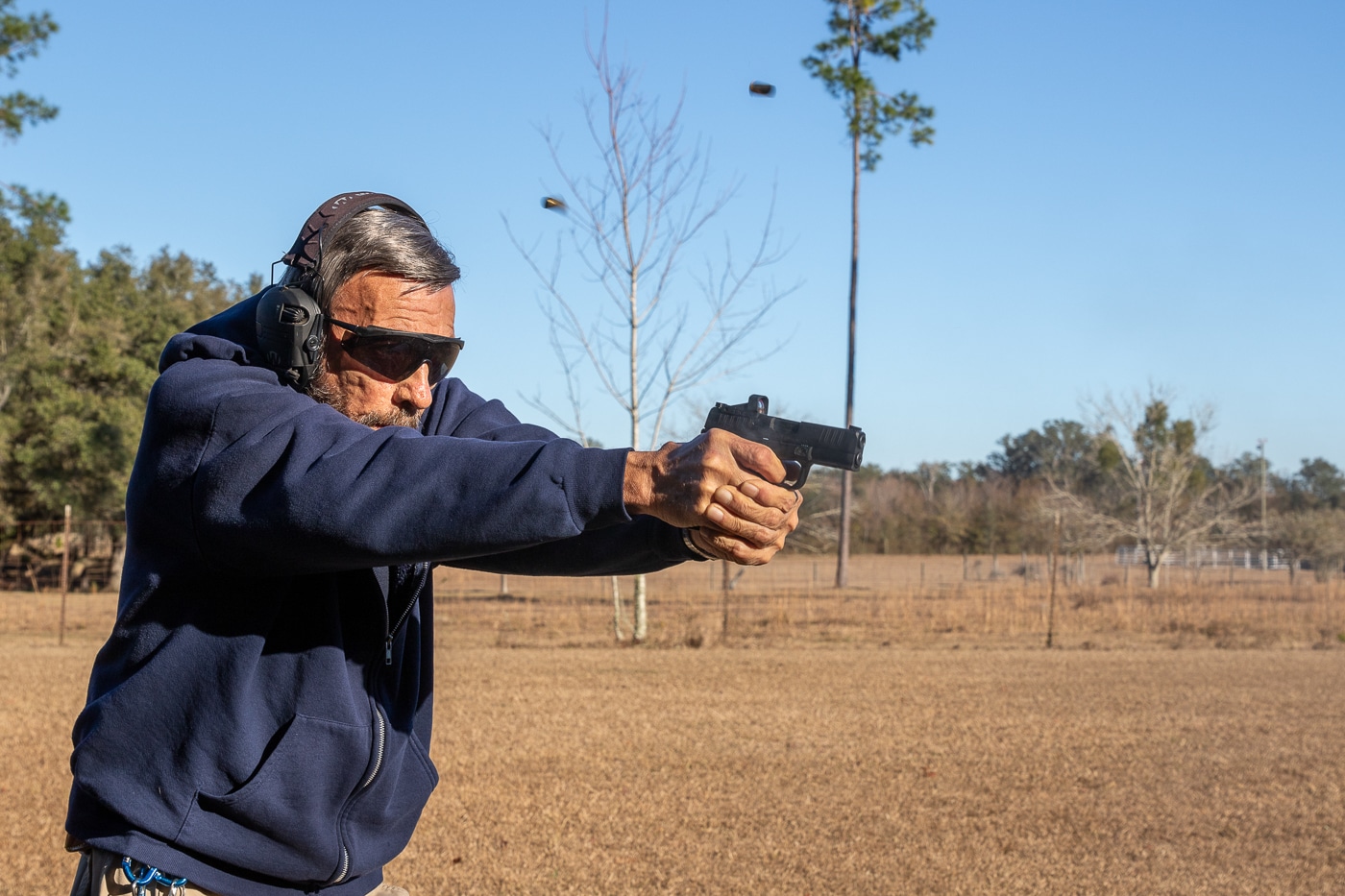
That added strength is particularly advantageous with a smaller/harder-kicking handgun. For a two-hand hold, simply put the support hand’s thumb over that of the firing hand and crush down similarly, thumbprint over thumbnail.
Three fingers away from that thumb is the “pinkie finger,” and its role in controlling a small pistol is greater than with a full-size service handgun. Now, you can always get an extended magazine with a sleeve that gives you the equivalent of a longer grip-frame, but that makes concealment more difficult. Many users will carry with the short mag and simply switch to the long mag at the end of the day when the concealment gun becomes the bedside gun.
The Short Grip and the Little Finger
With a full-size handgun, all fingers except the trigger finger are wrapped around the pistol’s grip. With a sub-compact, there probably won’t be room for the “pinkie” on the gun. Don’t just leave it floating. I’ve found that if you tuck that little finger tightly under the gun butt, it helps the other fingers to grip with maximum strength.
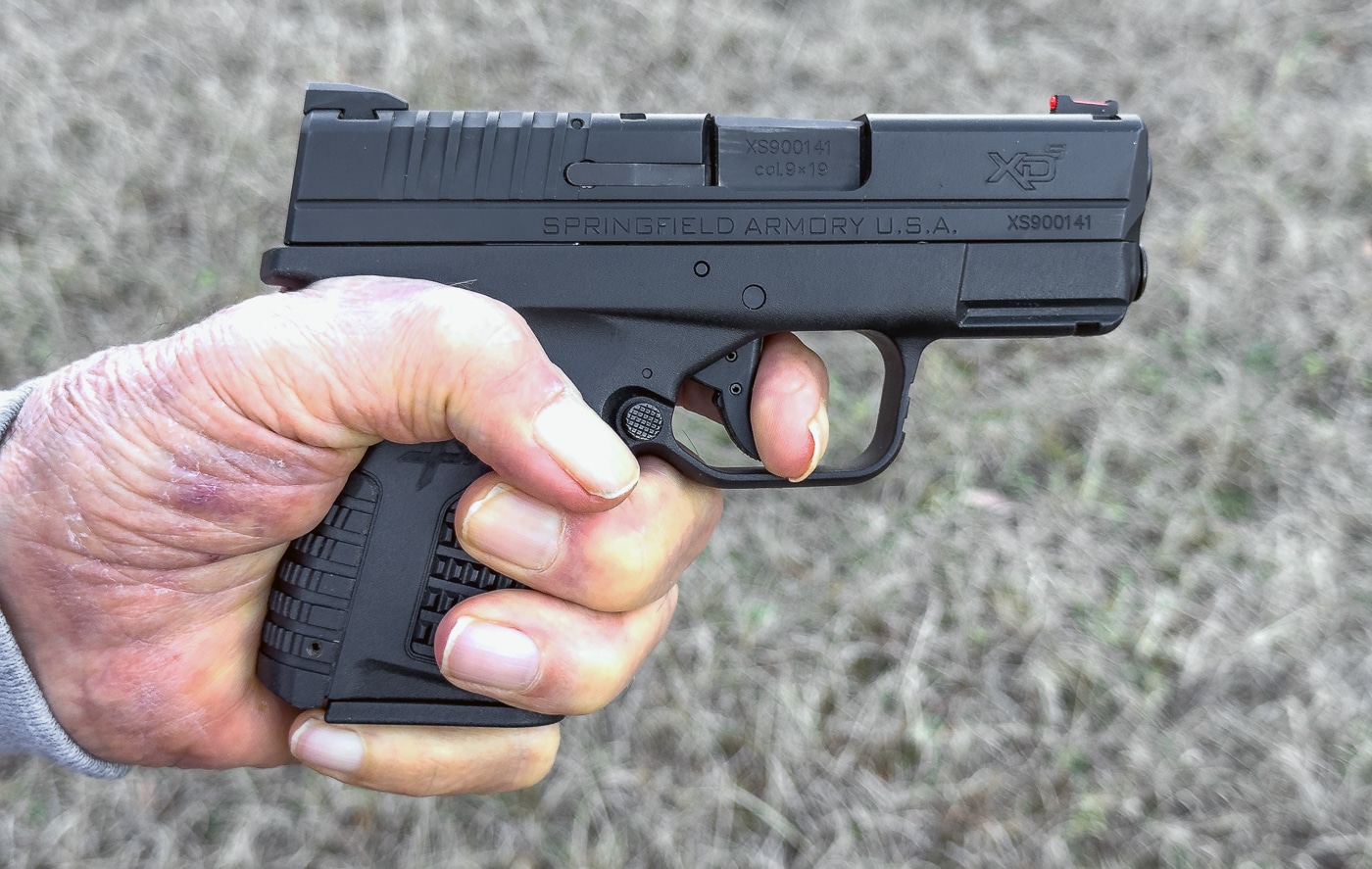
Remember, our fingers are sympathetic: they all want to squeeze together. It’s bad enough that we have to disarticulate the trigger finger to make it work separately; don’t increase the difficulty by relaxing that smallest finger.
With a short-butt sub-compact, that little finger can get in the way of a reload. It can cause at least three problems. (1) It can get in the way of the ejection of the empty magazine. (2) It can block the insertion of the fresh magazine, usually by catching on the front edge of the magazine’s floorplate. In the middle of a shootout, that could get a Good Guy or Gal killed. (3) Even if it’s only a match or a practice session, the trapped finger can be cut or subjected to a painful blood blister.
Solution: extend the little finger during the reload, the way you’d imagine someone holding their cup while having tea with a queen. It may look effete, but your pinky finger will thank you.
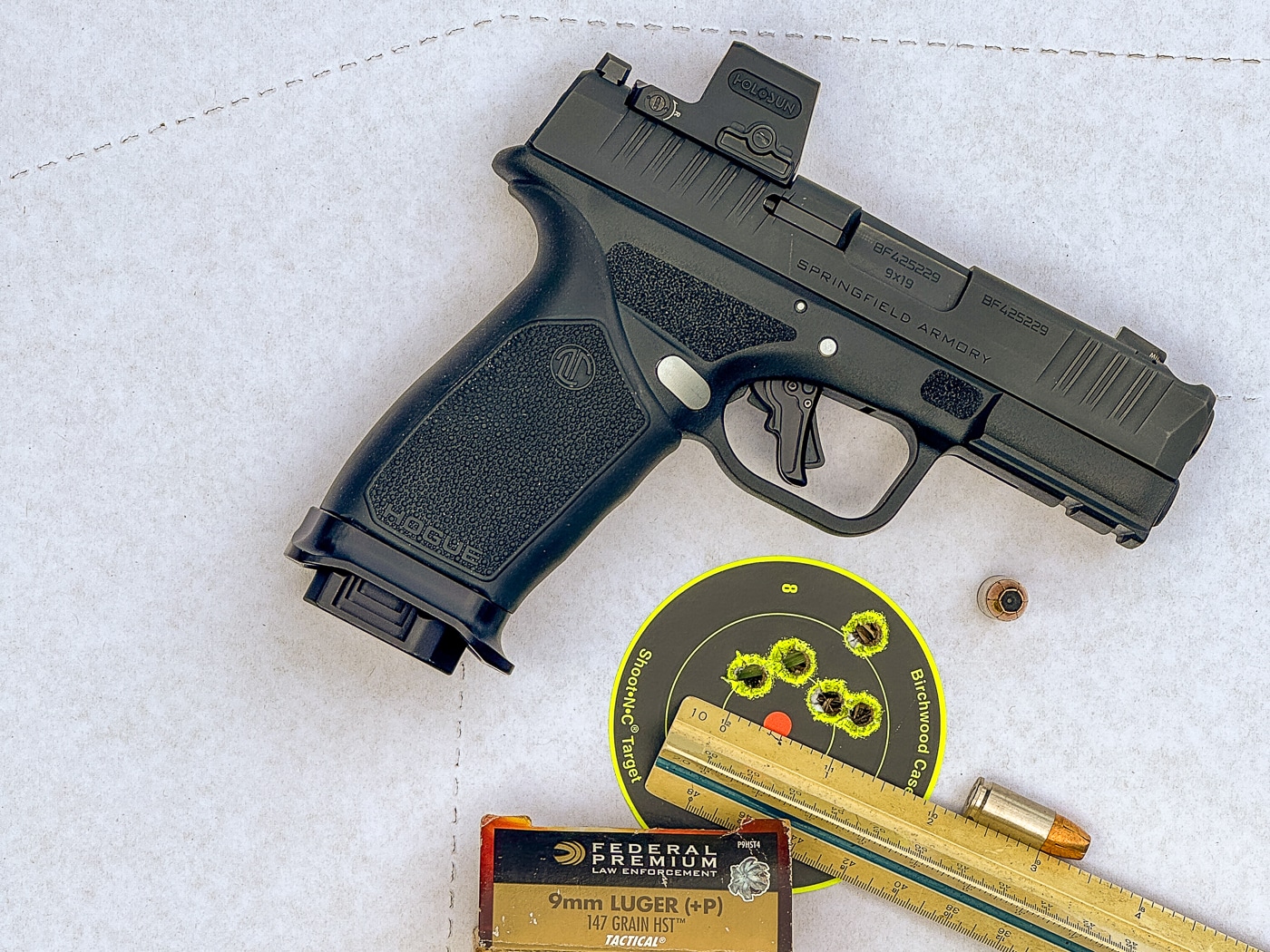
Another problem with the little finger and a short butt comes when you brace on a hard surface like a range table or auto hood. If the little finger is between the gun butt and the hard surface when the shot goes off, even with a 9mm it can feel like someone took a hammer and whacked your finger with it. How do I know this? Sigh…trust me. I know this.
Trigger Time
If your carry gun is a micro, don’t do all your training and competition with your larger pistol just because they’re easier to shoot well. Devote the time to the gun you’re most likely to be using to protect yourself and your loved ones.
These little guns can be surprisingly accurate. I hope the above tips help you to find your best potential with yours.
Editor’s Note: Please be sure to check out The Armory Life Forum, where you can comment about our daily articles, as well as just talk guns and gear. Click the “Go To Forum Thread” link below to jump in and discuss this article and much more!
Featured in this article
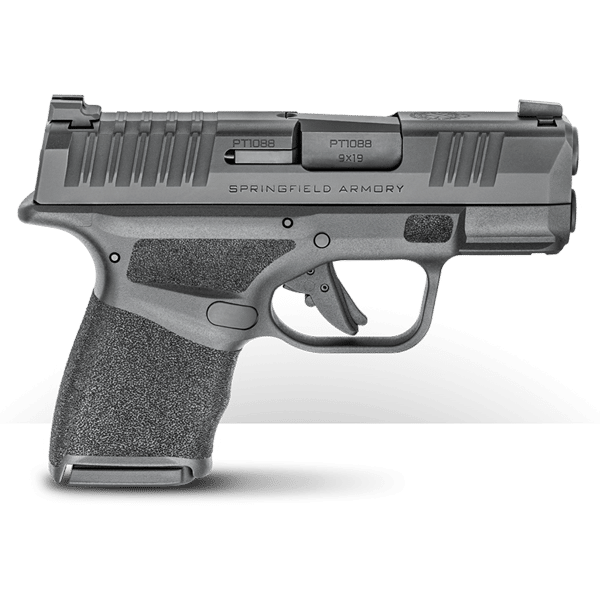
Hellcat® Series
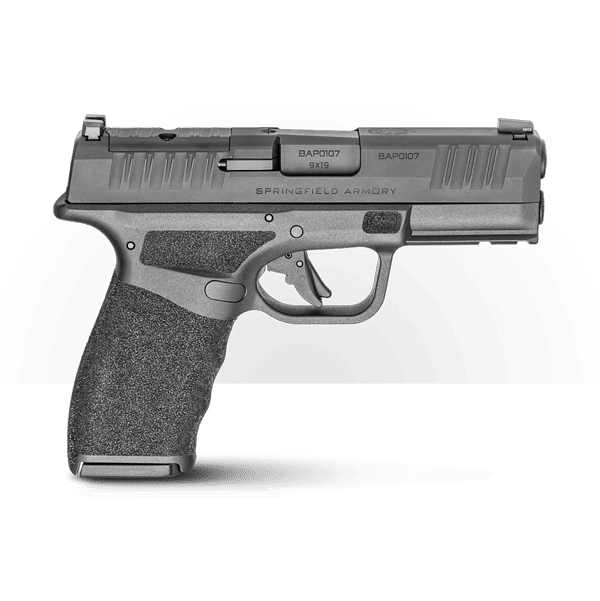
Hellcat® Pro Series
9mm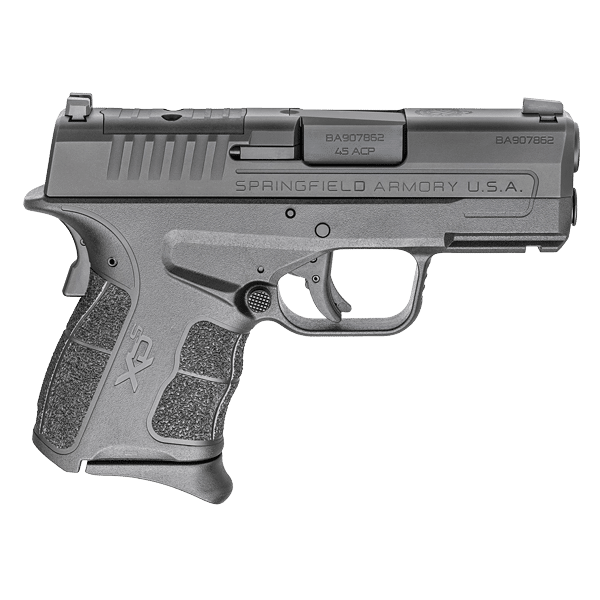
XD-S Mod.2® OSP™ Series
The post Ayoob: How To Shoot Micro Pistols Better appeared first on The Armory Life.