Ayoob: Was the 10mm Destined to Fail?
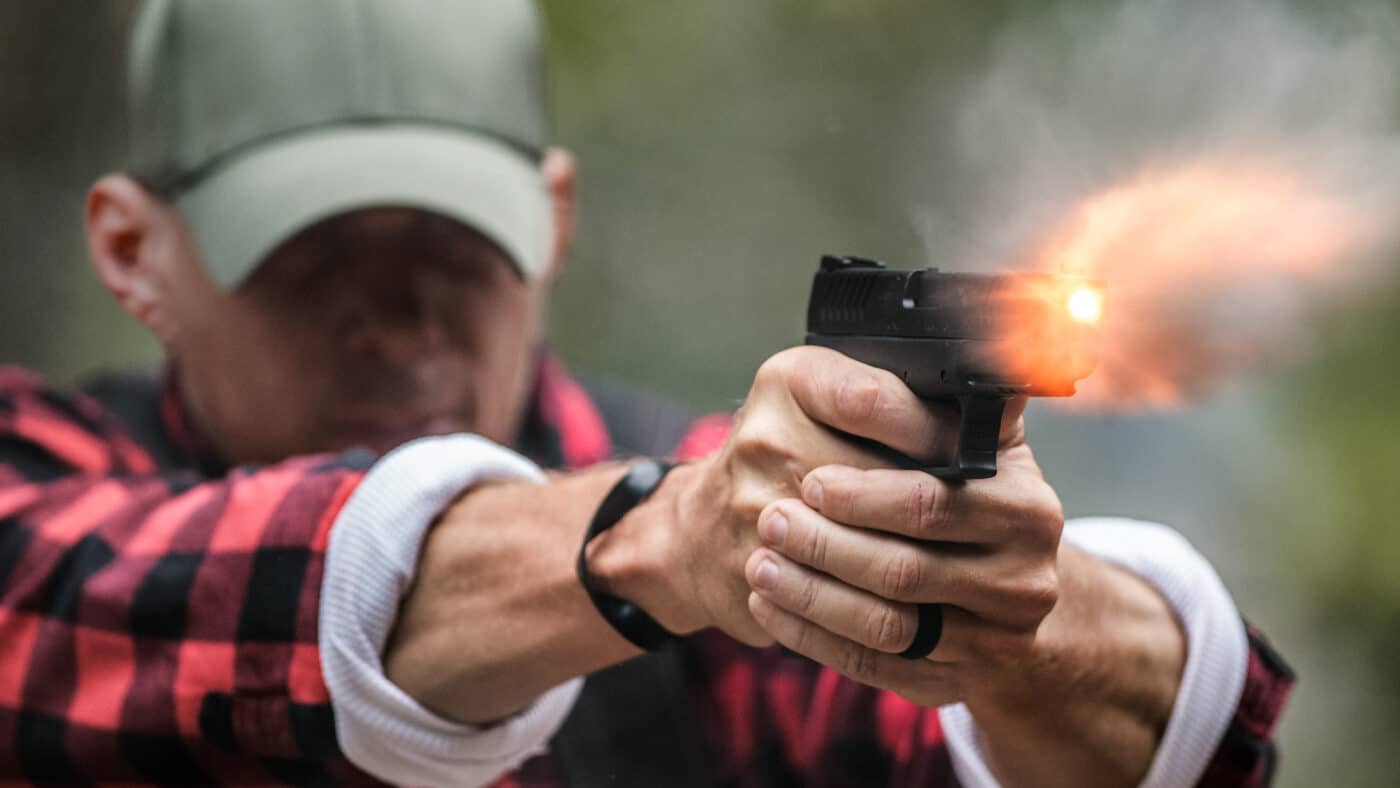
No other handgun cartridge has experienced quite as many ups, down and reinventions of purpose in so short a time as the 10mm Auto. Generally thought to have been a product of the 1980s, the 10mm’s whole story actually goes back further.
A Brief History of the 10mm
The mid-twentieth century saw the seeds for the 10mm planted. Established gun experts, including Elmer Keith, Bill Jordan, Chic Gaylord, and then-rising star Charles “Skeeter” Skelton, had all called for a handgun cartridge that came in somewhere between the .357 Magnum and the very hard-kicking .44 Magnum. The formula that kept coming up was a bullet of about .40 caliber and 200 grains in weight, at a velocity of about 1,000 feet per second.
The dream first manifested itself in the early 1960s, when Keith and Jordan convinced Remington to introduce the .41 Magnum cartridge. This revolver cartridge was initially offered in two formats: the “police load” (a 210-gr. lead semi-wadcutter at 1,050 feet per second) and the hunting load (a 210-gr. jacketed soft-nose at 1,500 fps). The latter proved too hard-kicking and penetrative for general police issue, and early versions of the police load leaded barrels badly. Despite an initial surge of interest, it never caught on in law enforcement, its original target market, and has existed ever after as a niche caliber for gun enthusiasts and handgun hunters.
On the autoloader side, one answer was the .41 Action Express. Credited to Evan Whilden and praised by gun experts like J. D. Jones, the .41 AE was introduced in the mid-1980s. With a 170-gr. JHP bullet, it generated 940 foot-seconds velocity, and threw a 210-gr. bullet at a bit under 800 feet per second. Its cartridge rim was rebated to work with a 9mm-size extractor system.
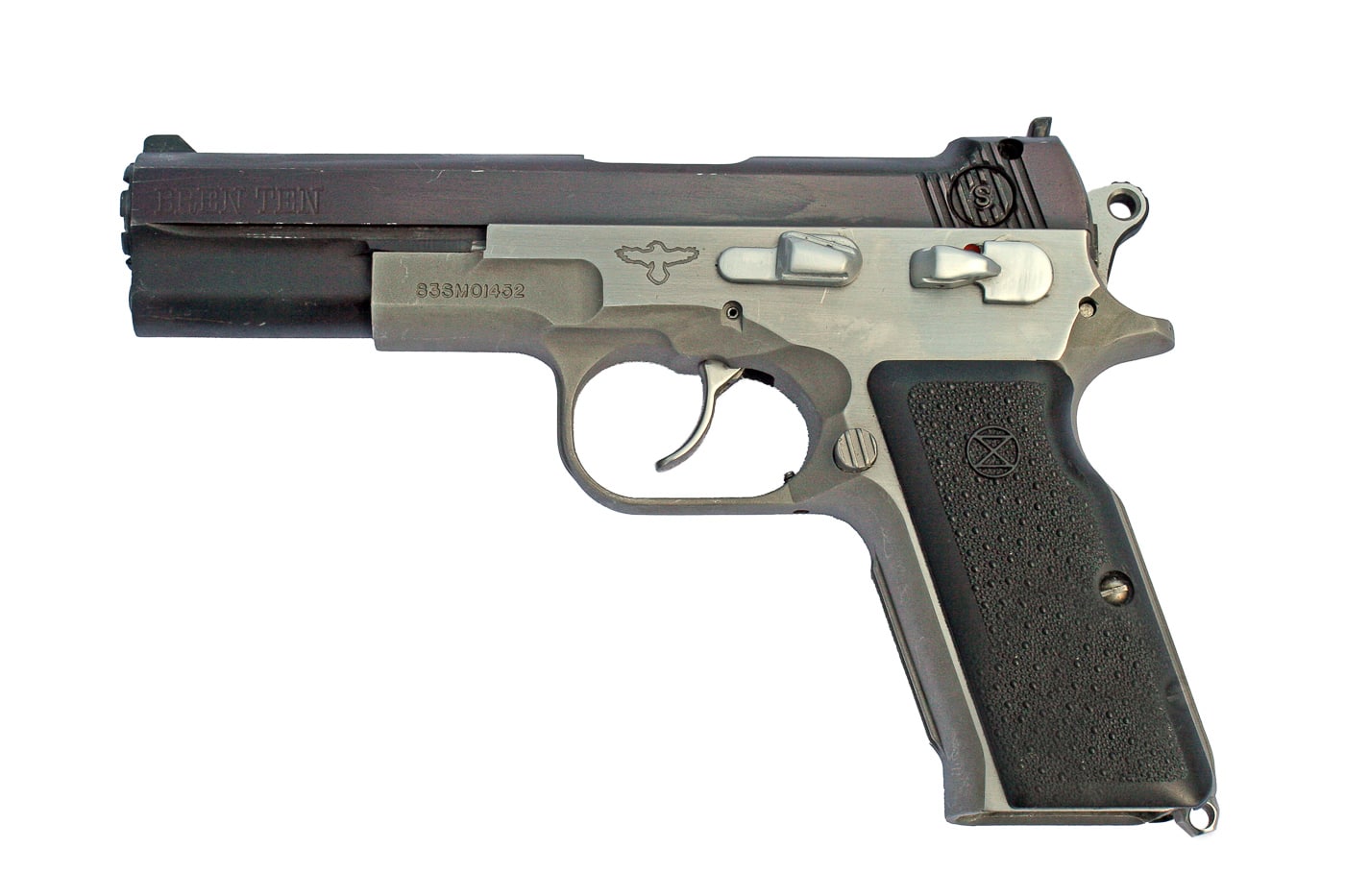
It was the 10mm Auto that got the publicity. Introduced in 1983, godfathered by Whit Collins and Jeff Cooper, its original ammo maker was Norma with a 200-gr. flat nosed full metal jacket at a whopping 1200 feet per second, and a 170-grain jacketed hollow point in the 1,300 fps velocity range. Its debut pistol was the Bren Ten, basically an enlarged CZ-75 produced by a new firm, Dornaus & Dixon.
Enter the FBI
D&D didn’t last long, but the 10mm didn’t die with the company. After the disastrous FBI gunfight in Miami in 1986, when a 9mm bullet hit the primary cop-killer’s arm in the chest but stopped before reaching the heart, allowing him to murder two FBI agents and inflict crippling injuries on three more, the Bureau looked intensely at new guns and ammo. The rest of the country was already switching to auto pistols for their police, and the lawmen themselves were split as to whether eight- or nine-shot .45s or 15- to 16-shot 9mms were the better choice.
John Hall, perhaps the FBI’s best in-house expert on Constitutional law and certainly one of its top gun experts, had been appointed head of the Bureau’s Firearms Training Unit. His assessment was that a .40-caliber bullet at about 950 feet per second would be ideal in terms of balancing controllability and recoil with power, and would have enough capacity to generate confidence in both those who wanted more bullets and those who wanted bigger bullets. The FBI, as the 1980s turned into the 1990s, adopted the 10mm with such a load.
For a while, the 10mm was the rage. American law enforcement listens to the FBI the way Fortune 500 companies listen to Harvard Business School. The state troopers of Kentucky and Virginia adopted the same 10mm pistol as the FBI. Kentucky went with full-power 10mm ammo, and Virginia went with the less-powerful FBI load that gun buffs dubbed the “10mm Lite” or the “10mm -P.”

Live The Armory Life. The latest content straight to your inbox plus an automatic entry to each of our monthly gun giveaways!
I have read and agree to the terms & conditions.However, 1990 — the year that saw the Bureau’s complete adoption of the 10mm — also saw the introduction of the .40 Auto. This shorter cartridge had the same ballistics as the FBI version of the 10mm, a 180-gr. JHP at 950 to 1000 fps, but since it was shorter could be put in a gun with less grip girth, or one holding a larger magazine. The double-action 10mm with features the FBI had specified turned out to have some problems, and by the turn of the 21st century, the Bureau had gone to 16-shot, polymer-framed .40-caliber pistols. So had much of the rest of American law enforcement by then.
The 10mm’s star had faded rapidly in law enforcement and armed citizen self-defense … but it was rising in another sector: that as an outdoorsman’s pistol.
10mm for Dangerous Game
In dangerous game country, it is wise to have on one’s person a powerful handgun whose bullets can drive deeply into a large, charging quadruped with a thick, sloping skull and equipped with either fangs and claws or, in the case of an angry moose, antlers and sharp hooves.
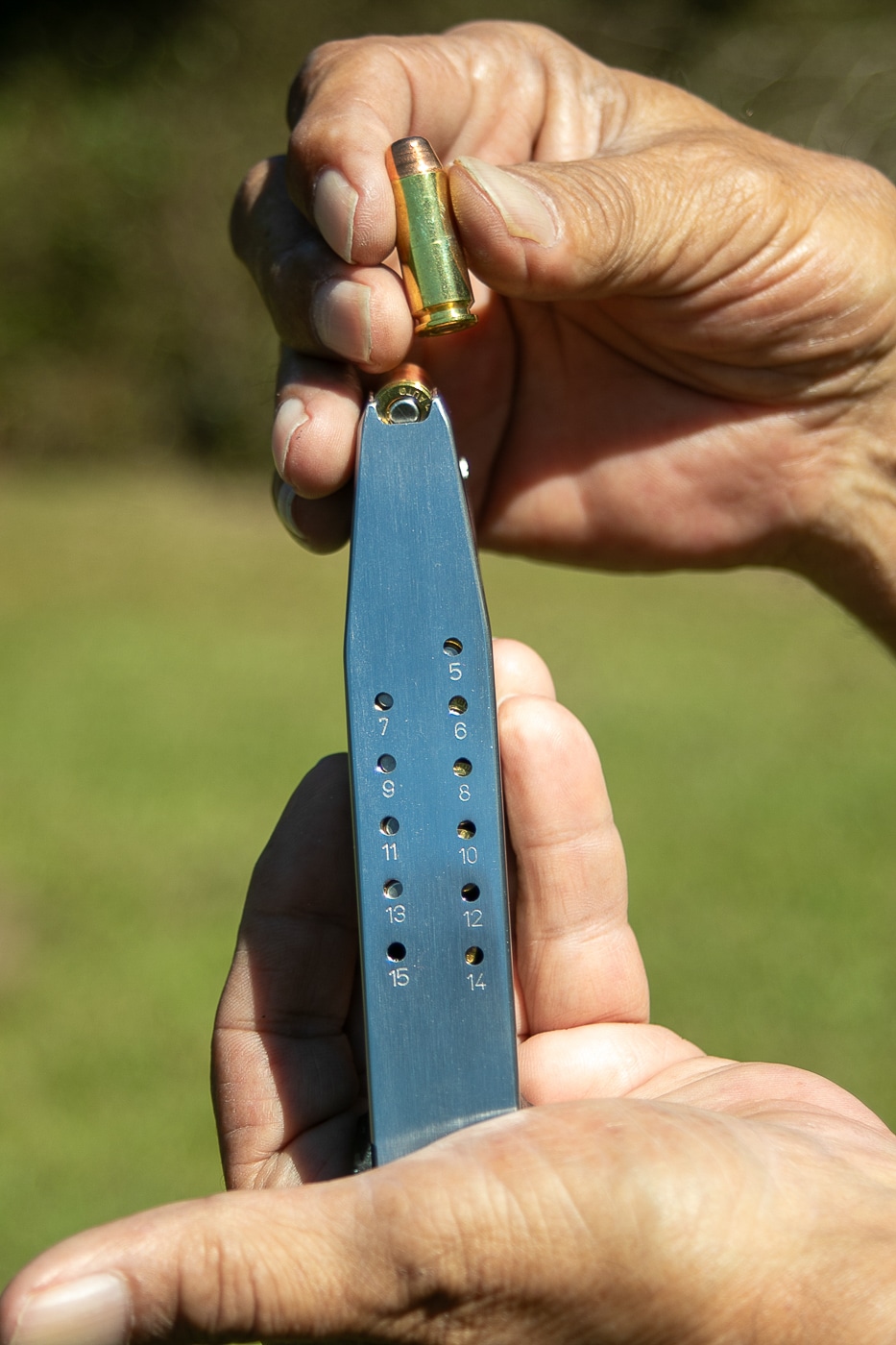
During the salmon runs, Alaskan anglers learned that they were competing with really big bears for food. A heavy six-gun, usually a .44 Magnum, had become standard gear for such fishermen. Famed Alaska State Trooper and gun expert Jeff Hall had once commented dryly that a .44 Magnum revolver was becoming almost the official Alaskan outdoorsman’s handgun.
But now, here was a semi-automatic pistol that could send a .40-something-caliber bullet deep into such a large, tough creature … and with the new generation of striker-fired polymer pistols, one could have a handgun that held 16 such bullets instead of six: that many more chances to stop several hundred pounds of charging doom. In such an emergency, it’s unlikely that there will be time to reload, and one doesn’t need to be a math major to figure out that 16 chances for survival beats hell out of five or six chances. A lot of people consider the 10mm the best cartridge for bear defense.
And that’s how the 10mm was reinvented: as the outdoorsman’s friend and protector. It is where it stands today.
10mm Auto: A Versatile Cartridge
The 10mm is versatile. How about as a self-defense round? Cor-Bon pioneered the 135-gr. jacketed hollow point at 1,450 feet per second, generating 630 foot pounds of energy. With 16 of those ready under your trigger finger, you have 10,080 total fpe instantly on tap. The late gun expert Chuck Karwan, who led A-teams in Vietnam and knew whereof he spoke, carried such a 10mm so loaded because he determined it was the most power one could carry in one’s own holster reasonably.
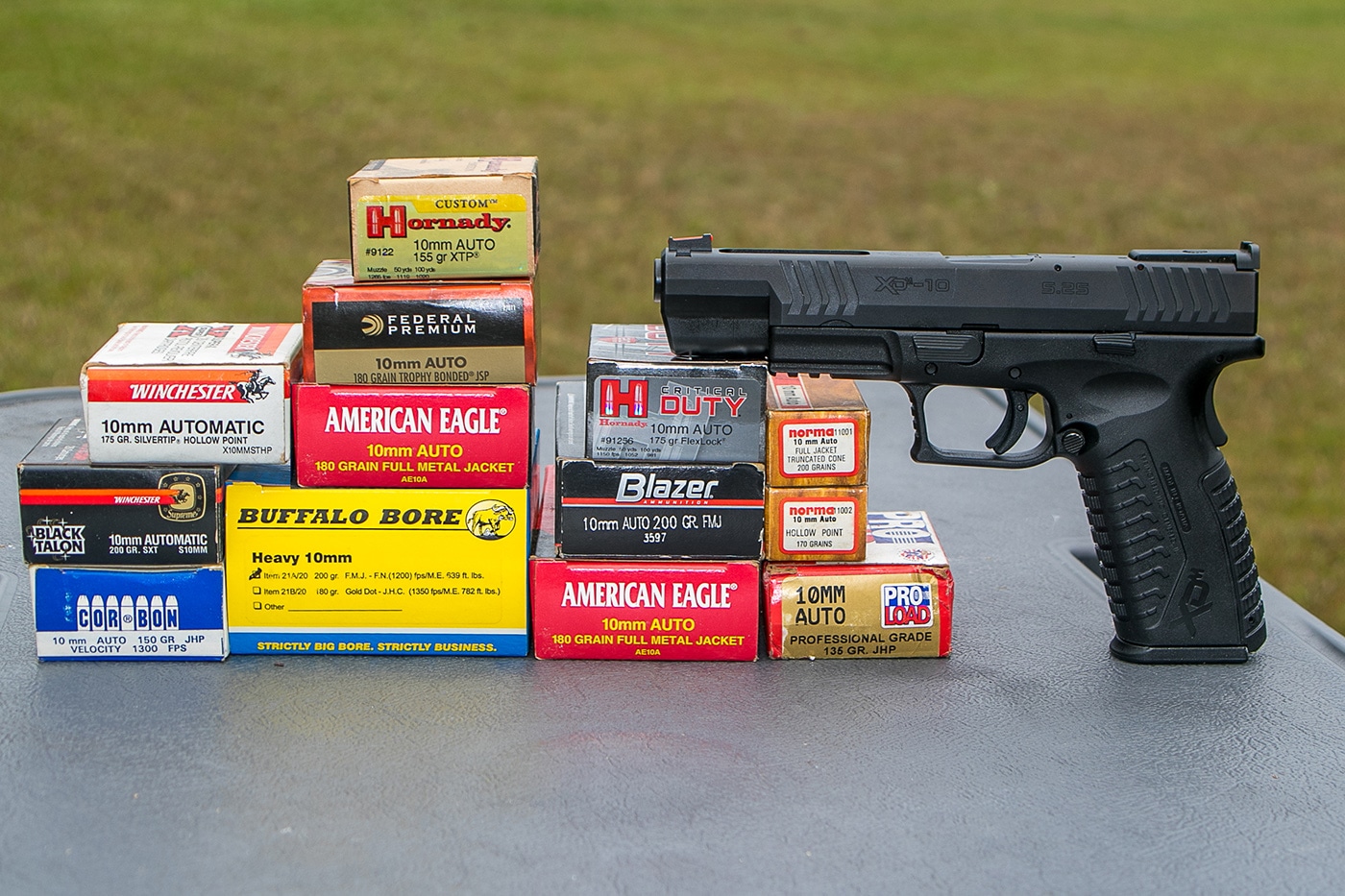
When rock star Ted Nugent was attacked by a crazed, moose-size giant antelope on his game ranch, such a 10mm saved his life. He credited his 16-shot 10mm because he went beyond six rounds to get the job done.
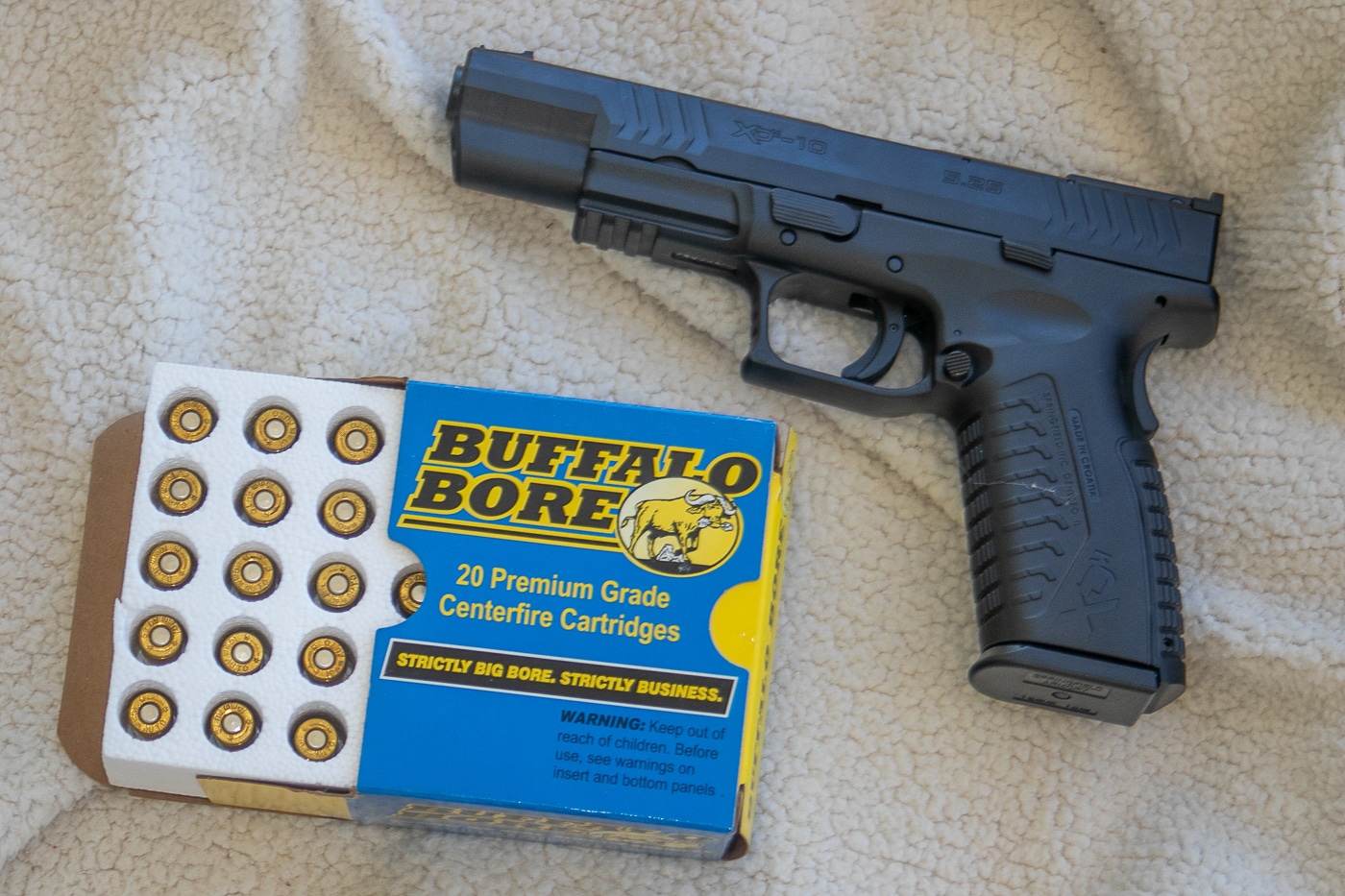
If you’re looking for a good all-around 10mm load, my own choice narrowed down to Black Hills’ 165-gr. JHP at 1300 or more feet per second. For the deep penetration, you need to ruin a bruin that’s coming at you headlong, 10mm 220-gr. hard cast lead bullets from Buffalo Bore are available with ballistics like with 1,200 fps velocity and 703 fpe.
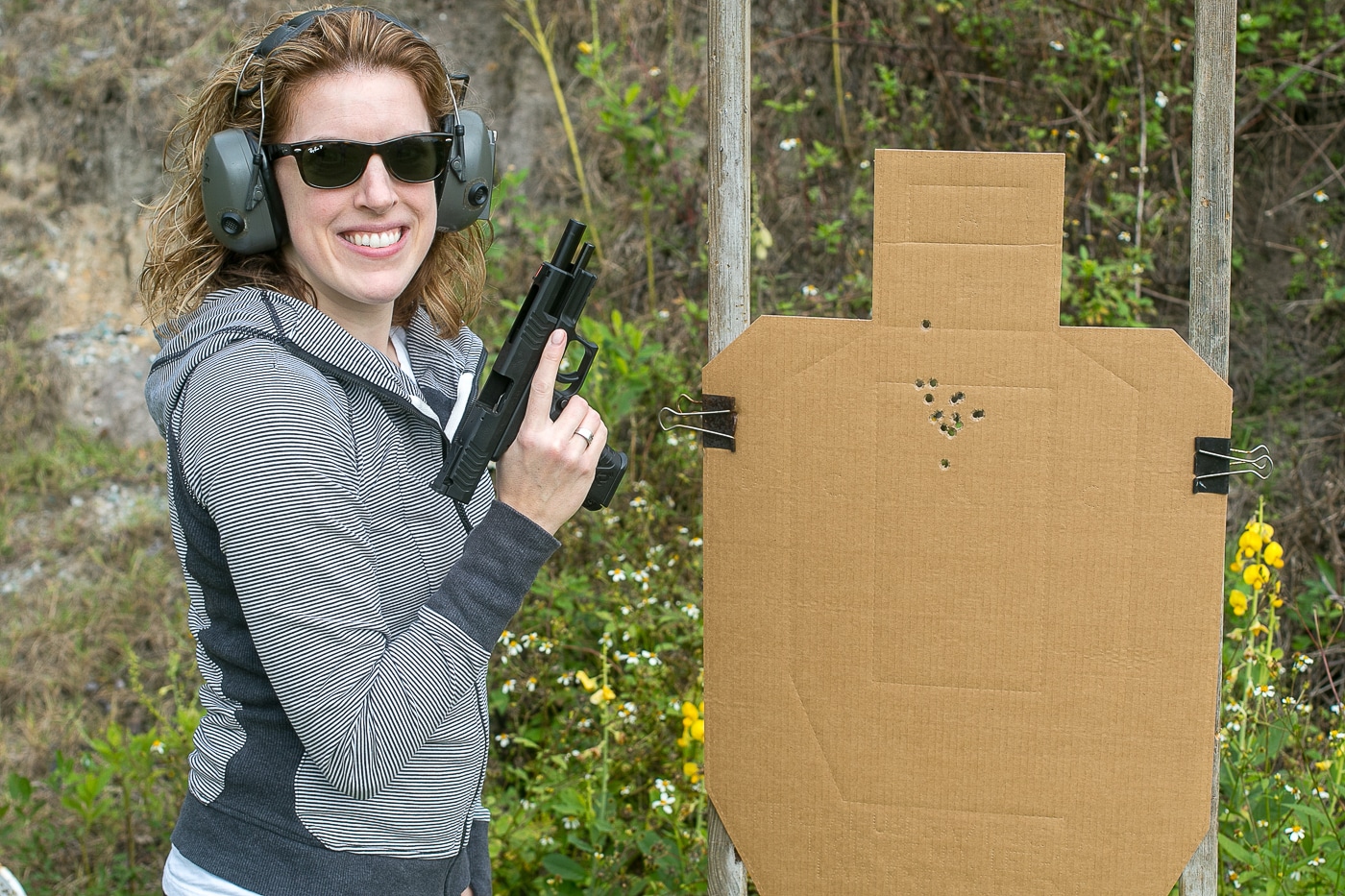
For practice, most 10mm ammo you’ll find on gun shop shelves in the lower 48 will be in the “FBI Lite” range — a 180-gr. full metal jacket running at a bit over a thousand feet per second. In 10mm pistols, these recoil relatively softly.
It took a while for the ammo makers to get the ammunition right for self-defense use. I debriefed the Washington gun shop employee who may have been the first armed citizen to use a 10mm for self-defense. He had to shoot the armed felon in question multiple times to stop him.
His 1911 had been loaded with PMC 170-gr. hollow points, none of which expanded and all of which went through and through the offender. Somewhere around the third hit, one of those bullets severed the would-be murderer’s spinal cord, ending both his rampage and his life. Those early PMC hollow points had jackets too tough to allow the bullets to open up, even at high velocity.
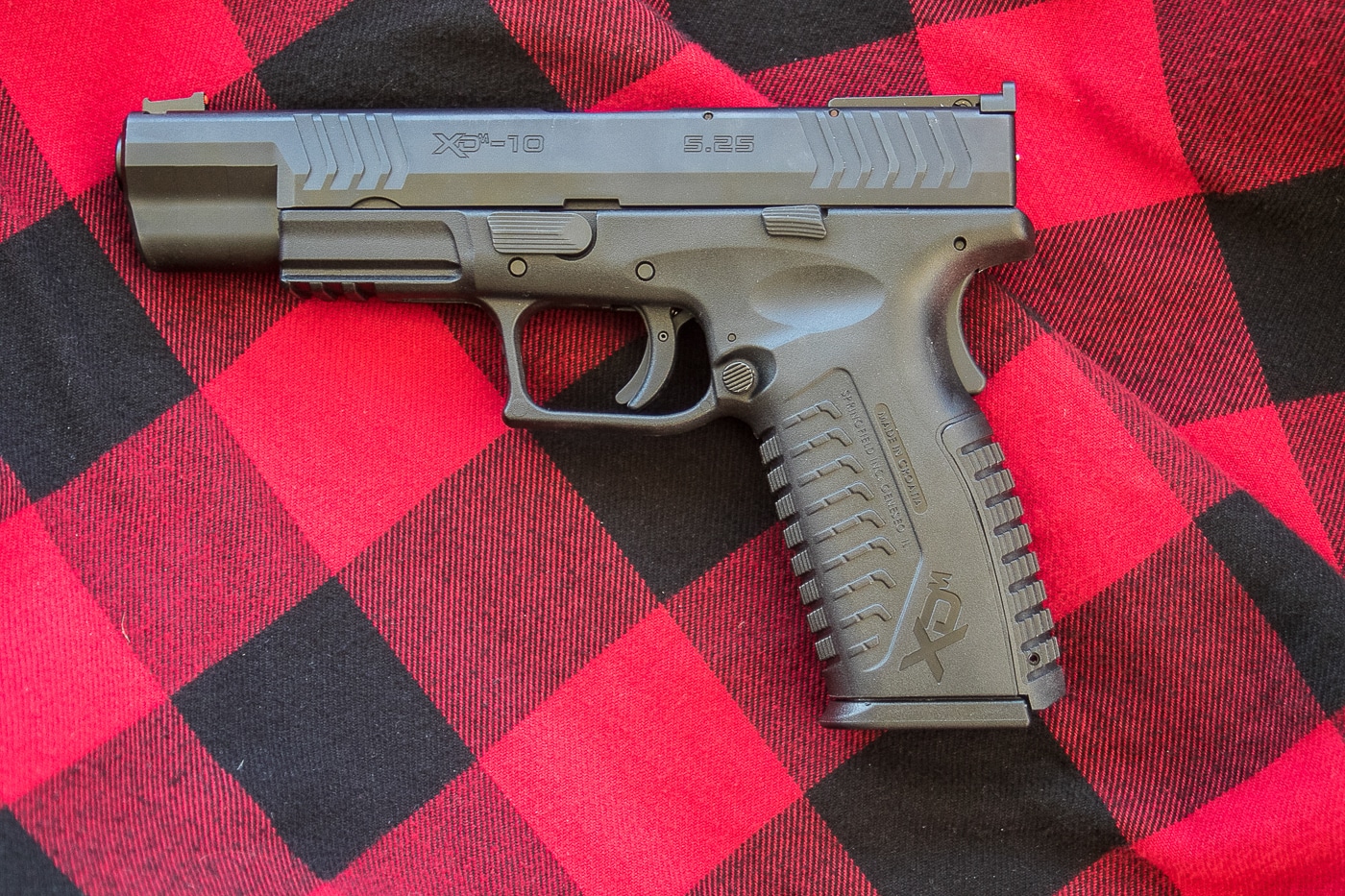
By the time rounds came along, like the 175-gr. Winchester Silvertip 10mm, which did perform well in the relatively few shootings on record, police and armed citizens who wanted this level of ammo performance were switching to the .40. Factoid: the old Winchester Silvertip line had a police load for .41 Magnum, downloaded from full .41 Magnum potential to 1,250 fps, and a hot-loaded 10mm of similar bullet weight loaded hot to 1,290 fps velocity. In testing, the 10mm actually outperformed the .41 Mag. between the two. I suspect this may have been one reason for the incorrect perception that the 10mm is equal to the .41 Magnum. With both cartridges loaded to full ballistic potential, the .41 Magnum will always exceed the 10mm Auto.
Naturally, a wide range of loadings will have different point of aim/point of impact coordinates. Thus, unless the gun is sighted in for one specific load and purpose, a 10mm benefits from adjustable sights.
Personal Perspective
I was intrigued by the 10mm as soon as it came out. Early reports on shootings with it weren’t encouraging: the first 10mm hollow points tended to have very tough jackets and sometimes failed to expand.
I debriefed one of the first armed citizens to use one in self-defense, a gun shop employee in Washington state. Multiple PMC 170-grain high velocity hollow points went through and through the armed robber with apparently no expansion, and he only dropped because one severed his spinal cord.
By the time the ammo makers got it right, with loads like the Winchester Silvertip and others, the market was already moving to .40 in lieu of 10mm. Virginia State Police, using the same ammo as the FBI, didn’t take long to switch to 9mm from 10mm and thence to .357 Auto. The Kentucky State Police, using a full-power 10mm hollow point, were much more satisfied with the 10mm’s ballistic performance and were the last big agency to go away from it in their pistols.
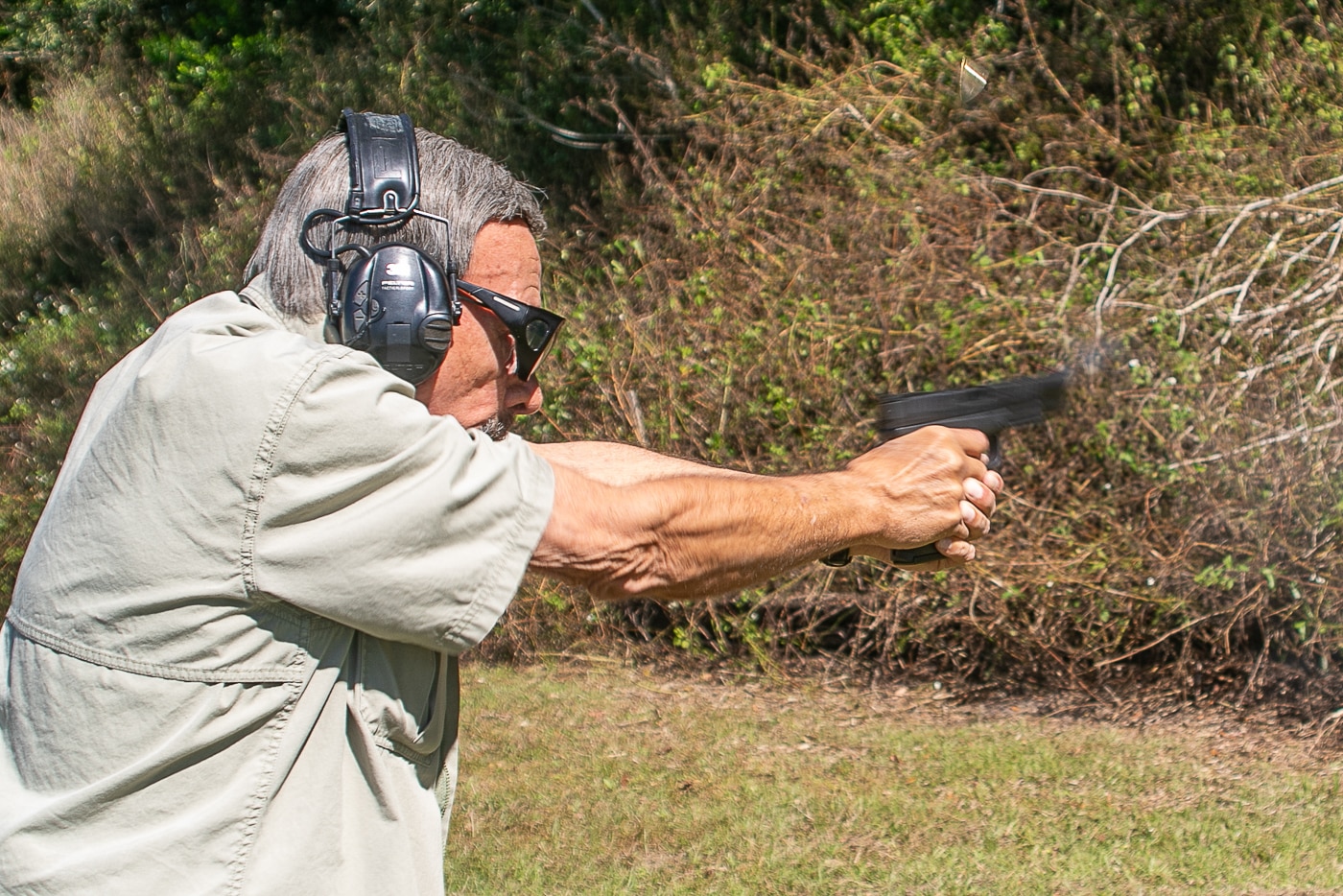
I bought a Bren Ten (“with two magazines,” he said smugly), found that it worked well in a Bucheimer Auto Draw duty holster, and carried it at work for a short while. A friend at the state’s Police Standards and Training Academy told me I was the first cop in the state to qualify for the record with a 10mm. It didn’t last long: I couldn’t get more magazines, and a .45 just seemed to make more sense at the time. When reports started circulating of Bren Tens cracking their frames, mine went to reside in the safe. In the late 1980s, I almost took one to Africa, but canceled that when I learned 10mm Auto ammo was virtually impossible to resupply in South Africa, while the .44 Magnum was always available there.
I had one 1911 10mm made up with a 6” Bar-Sto barrel for better accuracy and a bit more velocity, and sent it to Mag-Na-Port to have the protuberant inch near the muzzle ported. Founder Larry Kelly, one of the world’s most experienced handgun hunters, wanted to try it with my blessing. He dropped a humongous wild hog with a tough-jacketed Norma 200-gr. FMJ that went in through the brisket and all the way out through the back end, killing the animal where it stood. He donated the carcass for a barbecue at my all-time favorite match, the Second Chance bowling pin shoot. Over the years, full-power 10mm Auto became one of the more popular cartridges for that sport. (The last such event will be held next year, by the way: go to www.pinshoot.com.)
My favorite of the half-dozen 10mms I have now is a 1911 that Mark Morris rebuilt into one of his Carry-Comps. It works so efficiently with full power 10mm that the muzzle almost pushes downward. In 1998, I was shooting that gun when my thirteen-year-old daughter and I won the national champion parent/child team in the National Junior Pistol Championships in Michigan. (She shot a comped Springfield with +P .45 ACP.)
The 10mm remains viable as a special-purpose pistol; the most popular of those “between .357 and .44” compromises that the old masters of the handgun called for. So, while there have been some bumps in the road over the years, the 10mm is clearly a capable (if specialized) round with a long history ahead of it.
Editor’s Note: Please be sure to check out The Armory Life Forum, where you can comment about our daily articles, as well as just talk guns and gear. Click the “Go To Forum Thread” link below to jump in!
Featured in this article
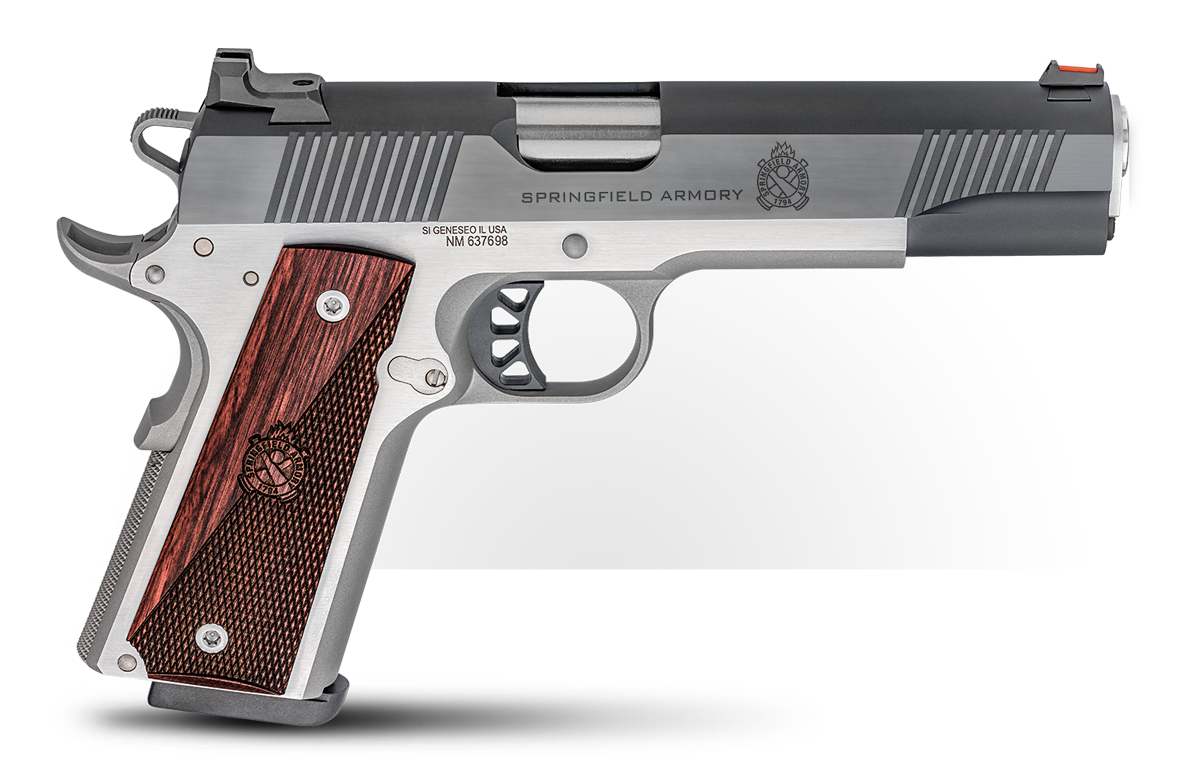
1911 Ronin® 5"
10mm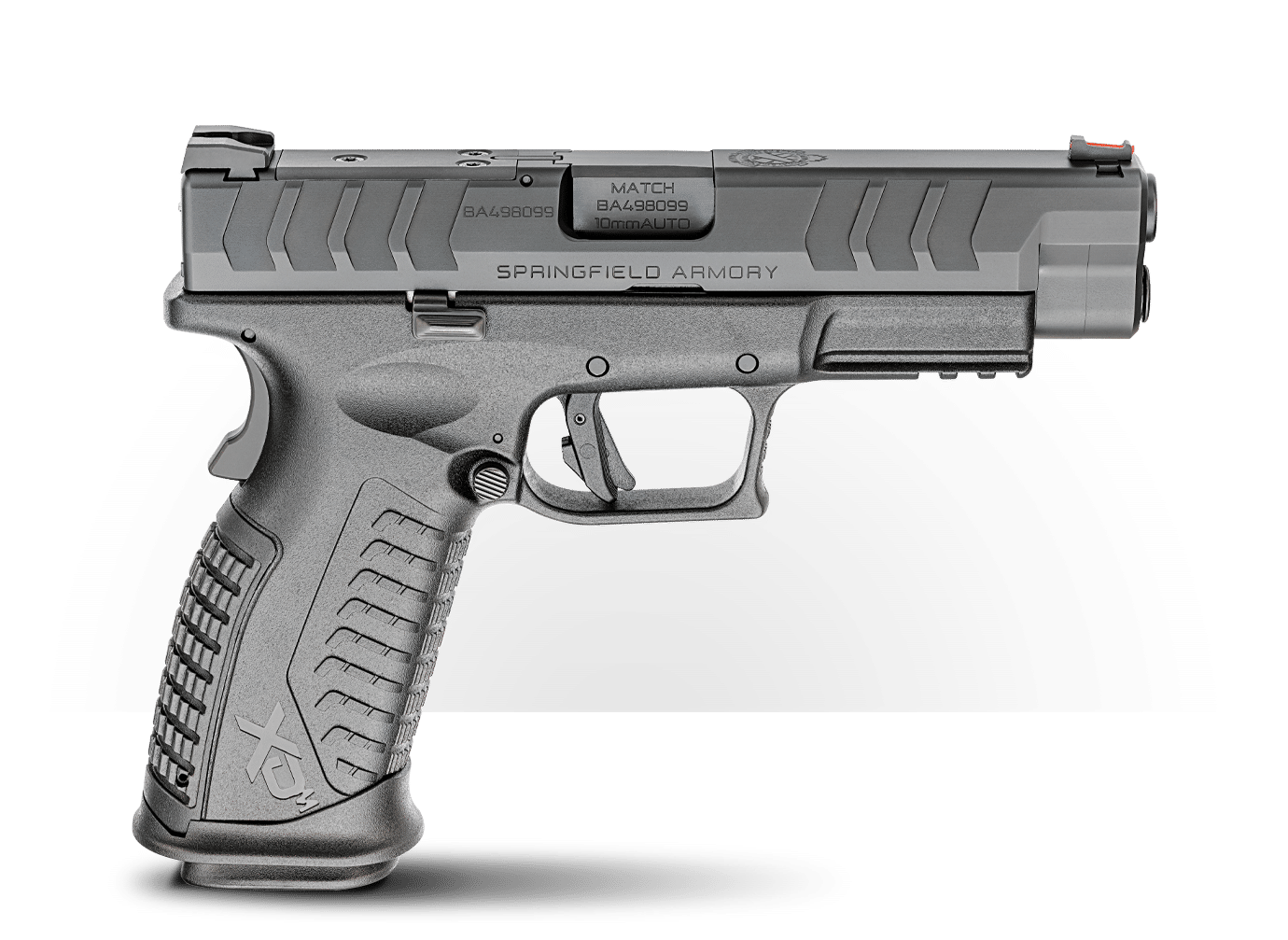
XD-M® Elite 4.5" OSP™
10mm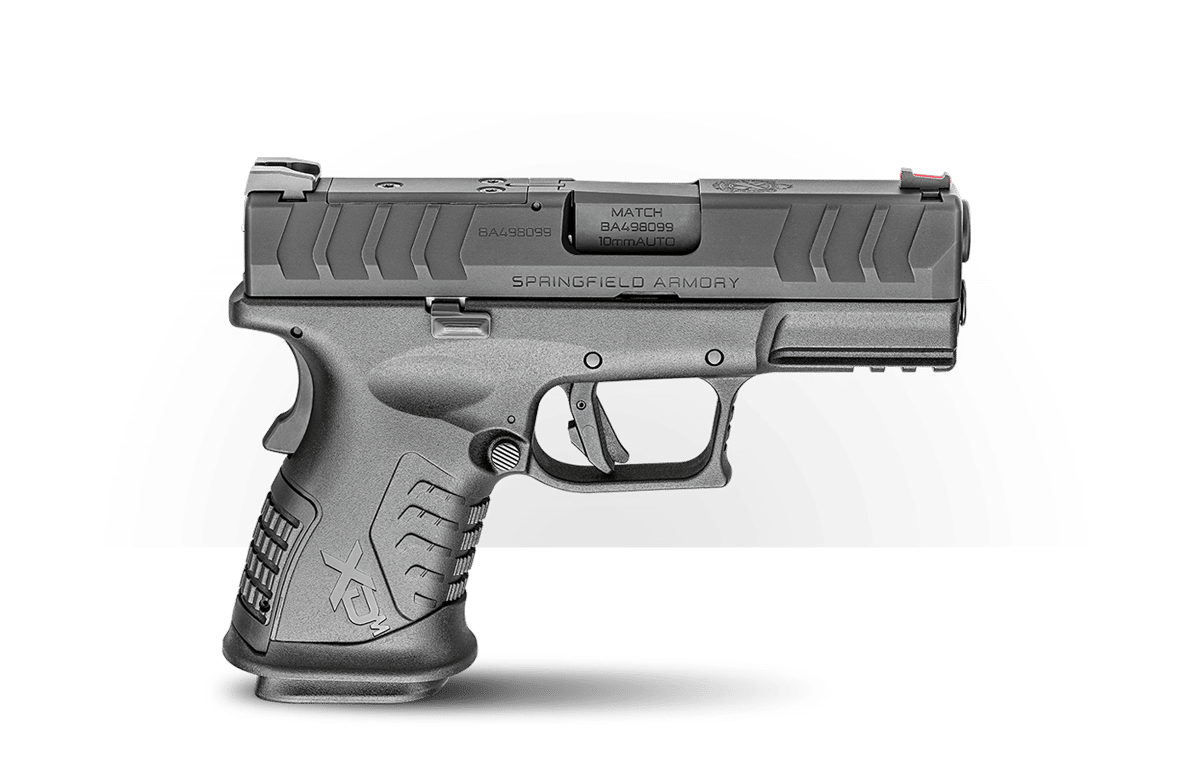
XD-M® Elite 3.8" Compact OSP™
The post Ayoob: Was the 10mm Destined to Fail? appeared first on The Armory Life.