Breek Arms’ Sledgehammer Charging Handle: Solving One of Suppressed Shooting’s Biggest Problems
Suppressors have become one of the fastest-growing segments of the firearms industry. Along with protecting hearing and reducing muzzle blast, they make shooting more enjoyable. They also introduce a challenge every suppressed AR owner eventually experiences: gas blowback.

Hot gas, carbon and debris have to escape somewhere. On a direct impingement AR-15, some of that gas makes its way back toward the charging handle, creating an unpleasant blast to the shooter’s face. Adjustable gas blocks, buffer tuning and flow-through suppressors can all help, but one of the simplest upgrades is often overlooked.
That’s where Breek Arms’ Sledgehammer AR-15 Gas Busting Charging Handle comes in. In the market for a charging handle that could handle some of this gas a bit better, we picked up one of Breek’s charging handles, and were suprised about how much it helped. As such, we reached out to Breek to discuss the charging handle a bit further…
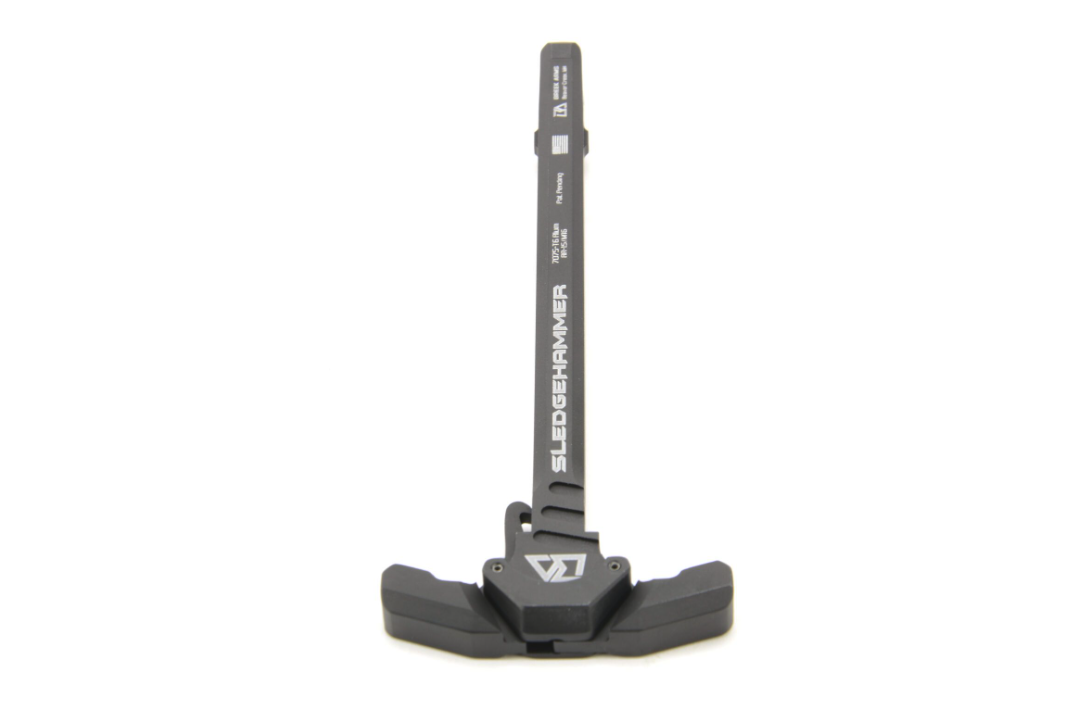
Breek Arms Sledgehammer AR-15 Ambidextrous Charging Handle
Designed specifically to redirect gas away from the shooter while improving the ergonomics of the standard mil-spec charging handle, the Sledgehammer incorporates multiple gas-mitigation features into a single component. For users who prefer a more compact profile, Breek also offers the LE Latch Sledgehammer, which retains the same performance while reducing the size of the latches for professional users working around body armor and other gear.
We recently sat down with the Breek Arms team to discuss why the company focused on the charging handle, how the Sledgehammer was developed, and why they believe it’s one of the smartest upgrades a suppressed AR owner can make.
ARBuildJunkie: Suppressors have exploded in popularity over the past several years. Why has gas blowback become such an important topic?
Breek Arms: Years ago, most AR owners weren’t shooting suppressed, so gas to the face wasn’t something people talked about very much. Today, suppressors are everywhere, and when you trap gas at the end of the barrel it has to go somewhere. Some exits through the ejection port, but some also works its way back through the upper receiver and around the charging handle.
There are several ways to address that. Adjustable gas blocks, different suppressor designs and tuning the rifle all help. But the charging handle sits right next to your face, so it’s one of the last opportunities to redirect that gas before it reaches the shooter. That’s why we focused so much attention on it.
ARBuildJunkie: A lot of builders spend money on triggers, optics and handguards, but rarely think about the charging handle. Why is it such an important upgrade?
Breek Arms: It’s one of the first controls you interact with every time you pick up the rifle. Before you ever press the trigger, you’re using the charging handle to chamber a round.
From an ergonomics standpoint, a larger ambidextrous charging handle is simply easier to operate, especially with an optic mounted over the receiver. It’s easier to grab from either side and easier to manipulate under stress or while wearing gloves.
On a suppressed rifle, though, it does something else. A properly designed charging handle can make the rifle noticeably more comfortable to shoot by helping redirect gas away from your face. It’s a relatively simple upgrade that doesn’t require a gunsmith or permanent modifications, but it can have a meaningful impact on the shooting experience.
ARBuildJunkie: What separates the Sledgehammer from other charging handles on the market?
Breek Arms: The Sledgehammer was designed from the beginning as a dedicated gas-busting charging handle. Rather than relying on a single feature, it uses multiple design elements that work together to redirect gas.
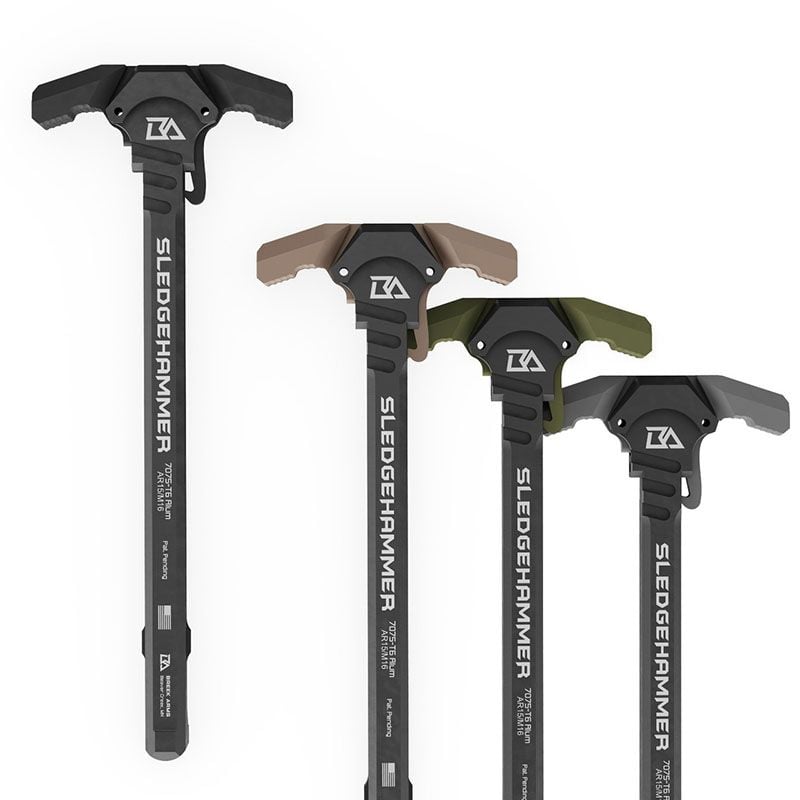
The charging handle incorporates five separate gas-mitigation features. A raised rear shelf creates a tighter seal against the upper receiver. An internal C-cut helps redirect gas forward. Three directional serrations along the top of the charging handle help push gas away from the shooter. Internally, the stem uses a baffled design that disrupts gas flow, while a relief port allows that redirected gas to exit away from the shooter’s face.
Instead of relying on one solution, the entire charging handle works as a system to manage gas before it reaches the shooter.
ARBuildJunkie: Does that mean the Sledgehammer is only intended for suppressed rifles?
Breek Arms: Not at all. Anyone can benefit from the improved ergonomics of an ambidextrous charging handle, but the biggest advantage shows up once a suppressor is installed.
That’s really when people start noticing how much gas is coming back toward them. The Sledgehammer was designed specifically with that environment in mind. If you’re running suppressed, that’s where you’re going to appreciate what it does.
ARBuildJunkie: The Sledgehammer is also offered in an LE Latch version. What prompted that model?
Breek Arms: The original Sledgehammer received very positive feedback, including testing through the National Tactical Officers Association. One comment that came back during evaluation was that some professional users preferred a slightly lower-profile latch when carrying rifles on slings or working around chest rigs and body armor.
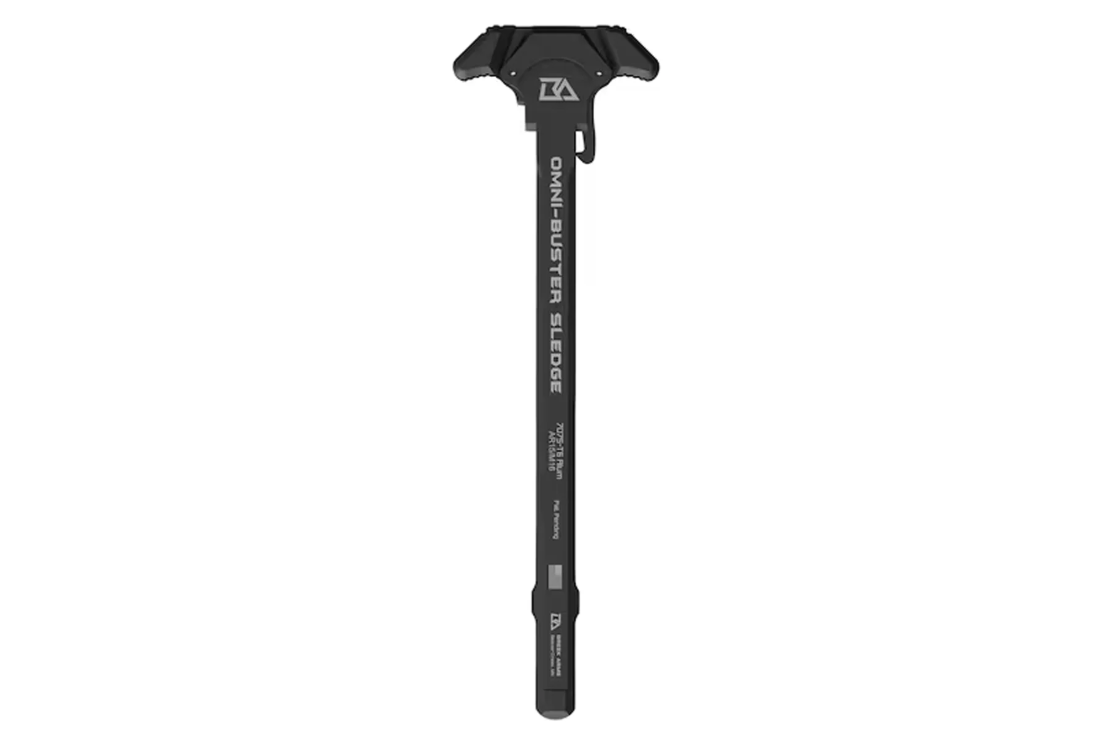
Breek Arms Sledgehammer OMNI-Buster LE Latch Ambi AR-15 Charging Handle
That led directly to the LE Latch version.
Mechanically, it’s the same charging handle. It offers the same gas-mitigation features, uses the same materials and delivers the same performance. The difference is simply the latch size. The shorter latches reduce the chance of snagging on equipment while still providing plenty of purchase to operate the charging handle.
For law enforcement officers, military personnel or anyone who spends time carrying a rifle with gear, it’s an option that addresses a very practical concern.
ARBuildJunkie: Durability obviously matters on a component that’s constantly being manipulated. What goes into the construction of the Sledgehammer?
Breek Arms: We build the Sledgehammer from 7075-T6 aluminum because we want it to stand up to hard use. It’s not a cosmetic accessory. It’s a working part that’s going to be used every time the rifle is loaded or cleared.
Before products leave our facility, we focus heavily on quality control and making sure everything meets our standards. We also back the charging handle with a limited lifetime warranty because we expect it to perform for the long haul.
For us, it’s about building products people can depend on, whether they’re heading to the range, using the rifle for home defense or carrying it professionally.
ARBuildJunkie: If someone installs a Sledgehammer for the first time, what do you hope they notice?
Breek Arms: First, we want them to notice how easy it is to operate. The ambidextrous design and enlarged latches make the rifle more comfortable to manipulate than a standard mil-spec charging handle.
If they’re shooting suppressed, we also hope they notice something else: they’re not thinking about gas anymore.
When people spend time comparing different gas-mitigating charging handles, the feedback we consistently hear is that the Sledgehammer simply works. The goal isn’t to eliminate every bit of gas generated by a suppressed rifle. That’s impossible. The goal is to redirect as much of it as possible away from the shooter and make the rifle noticeably more enjoyable to run.
Sometimes the best upgrade isn’t the one everyone notices at first glance. It’s the one that makes every range session a little more comfortable every time you pull the trigger.