Welcome back to Front Line Friday. This week is an editorial on the operational value of community trust: how relationships in the places you patrol provide intelligence, cooperation, and officer safety, and what agencies and individual officers do to build or burn that asset. Front Line Friday is brought to you by Dead Air Silencers, whose support keeps this column going every week.
This is not a piece about community policing programs, mission statements, or anything with a logo and a slogan. It is not about public relations, a feel-good photo op at the farmers market, or whether you personally like the people on your beat. This is about trust as a tool that works on calls, the same way a tourniquet or a radio does. The gap I want to name is this: agencies treat community trust as a soft outcome, a nice-to-have measured in survey scores, when in operational terms it is a hard input that changes how fast you get information, how calls resolve, and whether the second person on scene helps you or films you.
To be clear about intent up front: I am not arguing officers should be soft, should avoid enforcement, or should court popularity. I am arguing that trust multiplies force, and that burning it has direct operational consequences you pay for later, on calls that have nothing to do with the incident that burned it.
Front Line Friday @ TFB
Previous installments:
Trust Is Intelligence You Did Not Have to Pay For
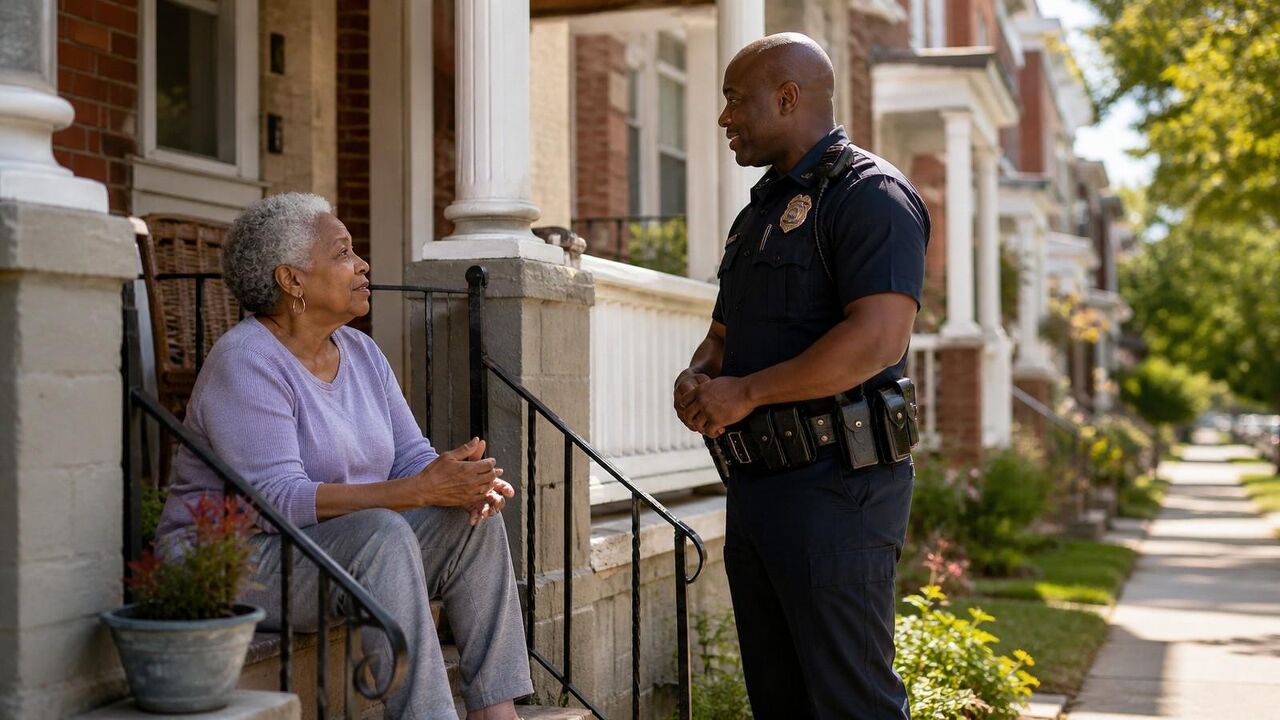
Most of what you know about a beat does not come from a briefing. It comes from people who, at some point, decided talking to you was worth the risk. That decision is the whole game. A resident who waves you over to say the house on the corner has new faces coming and going at 3 a.m. just handed you intelligence no license plate reader, fusion center, or shift briefing would have produced. The question is whether that resident calls you or deletes your number.
The research on this is not vague. A substantial share of cleared violent crimes are solved through witness and community cooperation, not forensics. Clearance rates for homicide nationally sit around 50 percent in recent years, and the difference between an agency clearing 70 percent and one clearing 30 percent is rarely the crime lab. It is whether people on the block will talk. When they will not, cases go cold, and the people most likely to be victimized next are the same people who did not trust you enough to call.
“The community will help you" is the kind of line that shows up on a recruiting poster and means nothing on a Tuesday. The useful version is narrower. Trust is the reason a 911 caller gives dispatch a description instead of hanging up. It is the reason a shop owner lets you pull footage without a warrant and a two-week fight. It is the reason a kid on a corner tells you which direction the runner went instead of pointing you the wrong way for sport. None of that shows on a stat sheet as "trust." It shows up as faster resolution, fewer open cases, and shorter calls. The operational consequence of eroded trust is simple: every one of those shortcuts closes, and you work harder for worse outcomes.
The failure mode here is the transactional read: the officer or agency that shows up only when they want something and treats every contact as extraction. People notice. A beat where the only police contact is enforcement contact produces exactly the cooperation you would expect: none. The fix is not complicated, and it is not a program. It is presence that is not tied to a complaint: the contact that happens when nothing is wrong is the deposit that funds the withdrawal later.
The Erosion Is Structural, Not Personal
It is tempting to frame trust as a function of individual officers being friendly or rude. That framing is comfortable because it makes the problem a few bad personalities. It is also wrong, or at least incomplete, because the biggest drivers of trust erosion are structural, built into how agencies staff, deploy, and measure.
Consider rotation. An agency that rotates officers through beats every few months, or runs them on power shifts that scatter them across the whole city, ensures no officer builds standing relationships anywhere. Residents never see the same face twice. Nobody is there to wave to because the officer who waved last week is three zones away tonight. That is not an officer failing to build trust. That is a deployment model that makes trust impossible to build, chosen for scheduling convenience and overtime math, not for outcomes on the beat.
Consider measurement. When an agency measures productivity primarily in counts- citations written, arrests made, contacts logged- it is telling officers exactly what to optimize for. Relationship work does not generate a count. The conversation on the porch does not go in a box on the daily sheet. So the structural incentive points officers away from the exact behavior that builds the asset, and then command wonders why clearance rates and community survey numbers both sag. The individual officer is responding rationally to the incentives in front of them. Fix the incentives or stop blaming the officer.
Consider staffing. A short-handed shift running call to call has no slack for anything that is not a dispatched call. There is no time for the unassigned contact because there is no unassigned time. Chronic understaffing does not just slow response. It strips out the margin where trust gets built, and it does so quietly, because nobody schedules "relationship building" and nobody notices its absence until a case will not clear. The operational consequence of running lean isn't just burnout. It is the slow decay of the information network you rely on.
I would watch for the agency that launches a community trust initiative with a new title and a new committee while leaving rotation, measurement, and staffing exactly as they were. That is the structural tell. You cannot program your way out of a deployment model that prevents the thing the program is supposed to produce.
Trust Shows Up as Officer Safety on the Call You Did Not See Coming
Community trust is an officer safety asset, and the people on your beat are often the first to tell you something is wrong, if they trust you enough to do it.
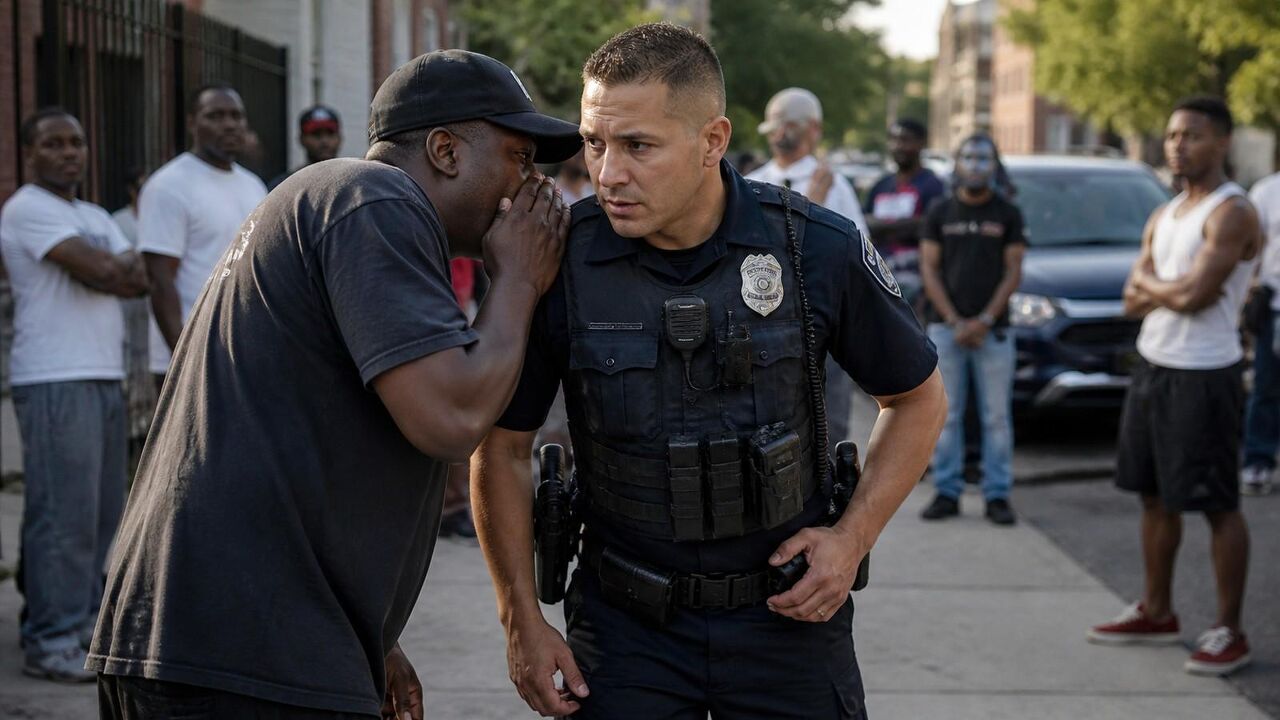
Think about how an ambush or a sudden escalation actually unfolds. Warning signs are often visible to people on the block before they are visible to you. The person who says "he's got a gun in the waistband" or "watch the back door, somebody went around" is handing you survival information in real time. That only happens if the relationship exists. On a beat where nobody will talk to you, you walk in blind to information that was available and simply not shared. That is a safety gap created by eroded trust, and it does not show up in any after-action as such.
The same dynamic runs through crowd behavior on a contested call. A scene where the surrounding people trust the officer tends to stay at a manageable temperature, because the default assumption among bystanders is that you are acting in good faith and the situation will resolve. A scene where that trust is gone escalates faster, draws a hostile crowd faster, and converts a two-party call into a crowd-management problem. The officer did not change. The trust environment did, and it changed the call's physics.
LEOKA data and the broader officer-safety literature keep pointing at situational awareness and information as protective factors. Trust is an information pipeline. When it is open, you get more warning and more time, and time is the whole currency of a dangerous call. When it is closed, you get surprised, and surprise is how people get hurt. I would not file community trust under public relations. I would file it next to backup and body armor, because in the moments that matter it does the same job.
None of this means you treat a known dangerous call as safe because the neighborhood likes you. I have said in prior installments that no call category is inherently routine, and that pre-labeling a call as low-threat is itself part of how officers get hurt. Trust does not lower the baseline threat. It raises the information you have about it. Those are different things, and conflating them is its own mistake.
What Actually Builds It and What Burns It
If trust is an operational asset, then the behaviors that build and burn it deserve the same seriousness as any other skill. The frustrating truth is that the biggest driver isn't warmth or charisma. It is procedural consistency: whether people believe they will be treated fairly and predictably, win or lose.
The procedural justice research is consistent on this, and it is worth stating what it actually found rather than paraphrasing it into mush. People's willingness to cooperate with and defer to police tracks less with whether they got the outcome they wanted and more with four things: whether they got a voice, whether the officer's decision-making looked neutral, whether they were treated with dignity, and whether they believed the officer's motives were trustworthy. A person who gets a ticket but got all four of those often comes away with their trust intact. A person who gets a warning but was treated with contempt comes away worse. The outcome mattered less than the process. That is a usable finding, because process is the part you control.
What burns trust fastest is the opposite: contempt, inconsistency, and the sense that the rules change based on who you are. The officer who explains the reason for a stop and lets the person speak is building the asset even while writing the citation. The officer who treats every contact as a contest to be won is spending it. And the burn is not local to that contact. A single ugly, filmed, publicly shared interaction does not just damage one relationship. It recalibrates how a whole neighborhood reads the next officer who shows up, who may have done nothing wrong and inherits the deficit anyway.
This connects directly to documentation, which I have argued before is a tool of officer protection rather than a bureaucratic formality. Thorough, honest use-of-force and contact documentation is also a trust instrument. When an agency can actually account for what happened, in detail, it has the raw material to defend the officer who did right and to be credible with the public when it says so. An agency that cannot account for its own conduct has nothing to offer but "trust us," and trust-us is exactly the currency that is already gone. Good records are not about covering anyone. They let you tell the truth with specifics when it counts.
The individual-level habit that does the most work is the one that generates no stat: follow-through. Telling a complainant you will check on something and then actually doing it. Returning the call. Showing up when you said you would. It is unglamorous, and it compounds. The person who learns that you do what you say becomes the person who calls you first the next time something is wrong on the block, which is the entire point.
Fire/EMS Parallel
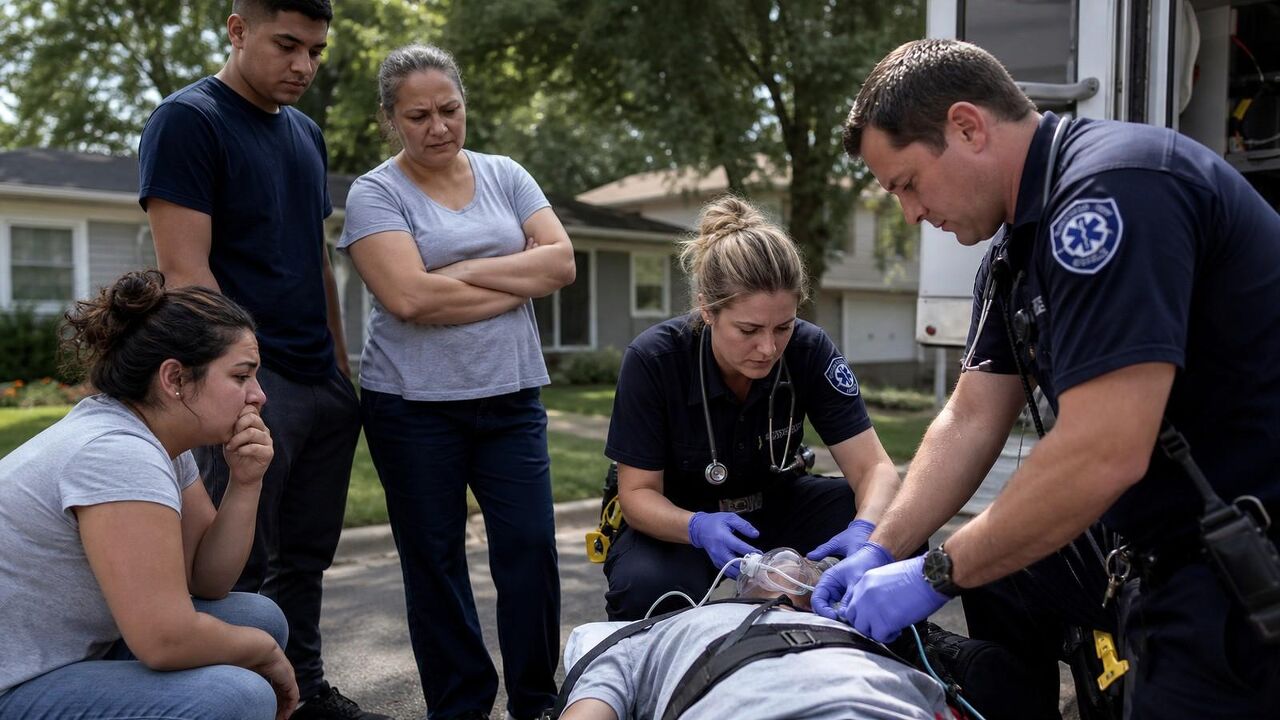
Fire and EMS start with a trust surplus that law enforcement has to earn, and that surplus is itself an operational asset worth understanding. People are generally glad to see the ambulance and the engine. That goodwill buys cooperation on scene, access to patients, and candor about what actually happened that medics and firefighters often take for granted.
That surplus is not infinite, and it is not guaranteed. In communities where fire and EMS arrive alongside law enforcement on volatile calls, or where billing practices have burned people, that goodwill erodes the same way. EMS crews that work the same district build the same kind of standing relationships, and the information value is identical: the family member who tells the medic about the overdose history, the neighbor who says the patient has a weapon, the bystander who flags down the engine before the crew sees the second victim. That is the same intelligence pipeline, running on the same trust.
The parallel failure mode is the crew that treats a scene as a transaction and a patient as a chart. Fire and EMS can burn trust with contempt and inconsistency just as police can, and when they do, the next crew walks into a colder scene. The lesson travels in both directions. Trust is a shared asset across first responders on a given block, and one agency's conduct spends down a balance everyone draws from.
Bottom Line / What to Do Monday
Trust is not a program. It changes how calls resolve, how fast you get information, and how safe the next scene is. Treat it accordingly.
- Individual officer, this week: Make one contact per shift that is not tied to a complaint or an enforcement action. The wave-over, the two-minute porch conversation, the business check-in. These are deposits, and you make the withdrawal on the call you cannot see yet.
- Individual officer, habit: Follow through on one thing you told someone you would do. Return the call, check the address, close the loop. The person who learns you keep your word will be the one who calls you first.
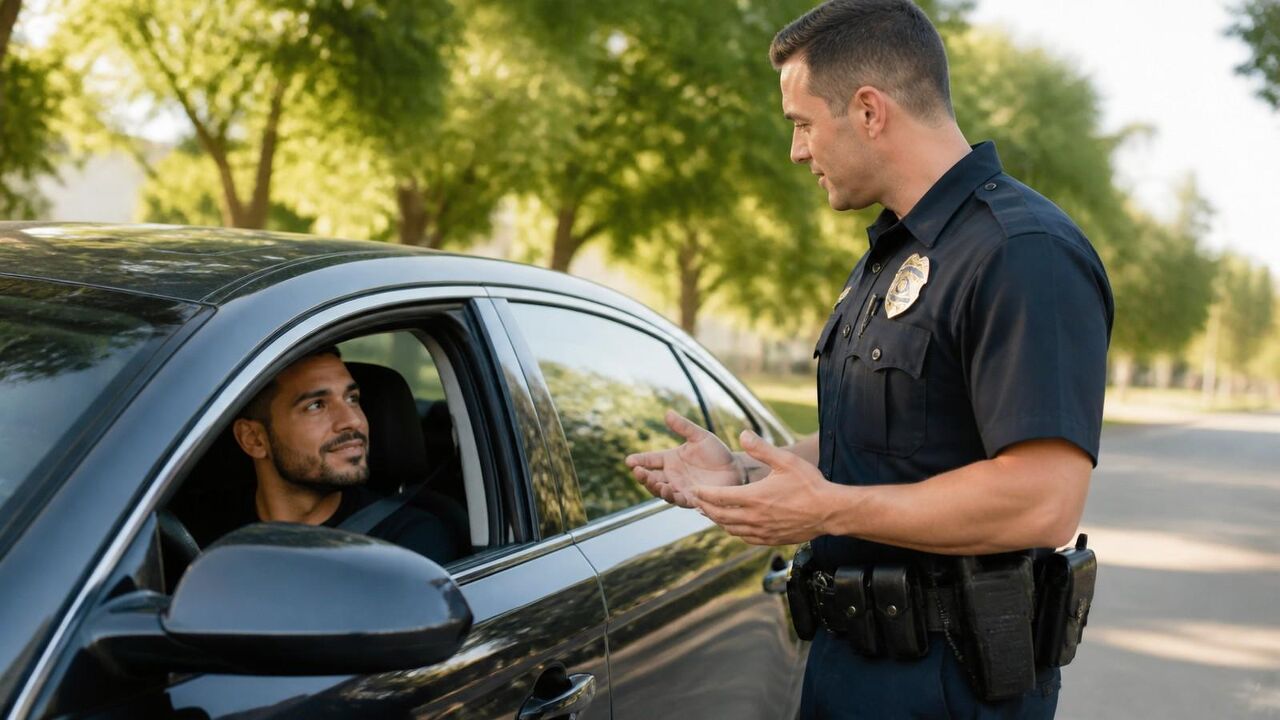
- On every contact: Give voice, show neutral reasoning, treat people with dignity, and make your motives legible. Do this especially when the outcome is one the person will not like. The process is what builds or burns the asset, and it's what you control.
- FTOs and supervisors: Stop measuring trainees only in counts. If the daily sheet rewards citations and arrests and has no place for relationship work, you are training officers to spend the asset. Build the unassigned contact into expectations and talk about it in debriefs the way you talk about tactics.
- Agencies and procurement: Audit your deployment model before you fund another trust initiative. Rotation schedules, power shifts, and chronic understaffing make standing relationships impossible, and no committee fixes a structural problem. If you want trust, staff and deploy so officers can build it consistently on the beat.
- Agencies: Treat thorough documentation as a trust instrument, not just a liability shield. The ability to account honestly for what your officers did, with specifics, is what lets you be credible with the public when it matters.
- Fire/EMS note: Do not spend the trust surplus you start with. Same-district crews build the same intelligence pipeline, and contempt on scene burns it for the next crew and for the cops who show up with you.
Sign-Off
That's Front Line Friday for this week: community trust is not public relations; it is an operational asset that functions as intelligence, cooperation, and officer safety, and the biggest drivers of its erosion are structural choices about rotation, measurement, and staffing, not individual personalities.