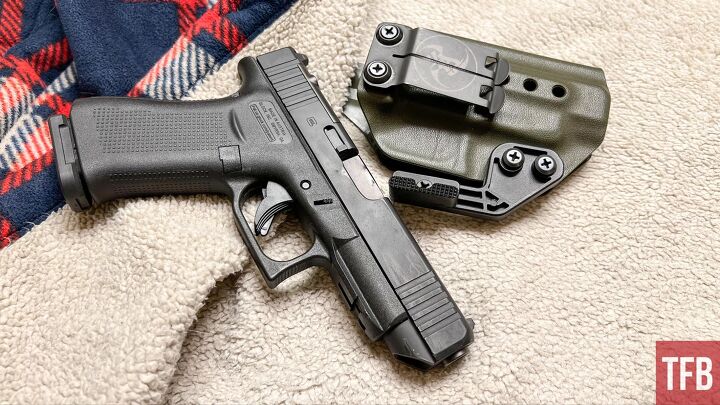
Welcome back to another edition of Concealed Carry Corner. Last week, we talked about some of the biggest problems when it comes to carrying a concealed firearm. If you happened to miss that article, be sure to click the link here to check it out. This week, I want to take a look at some ways to keep sharp when it's brutally cold out. Going to the range when it's well below zero is one of the toughest ways to train and if we are being honest, it can be counterproductive when you're wearing a ton of layers and heavy gloves. A few weeks ago, we talked about how carrying in extremely cold weather can make things tricky and going to the range in these conditions can be equally tricky.
Problems with Live Fire in Winter Months
Training at the range when it's brutally cold can actually do more harm than good. The biggest issue with heading to the range when the outside temperature becomes negative is being able to consistently train without gloves on. I do think it's important to train with your winter clothing, but if you want to go train just to train, your duration will be drastically shorter than it would be when you're shooting in warmer temps. I typically don't like to carry while wearing gloves and try to keep my hands free, even in colder months.
Being outside in negative temperatures without gloves will make your hands cold in minutes, typically, so your training time with no gloves is incredibly short. You may get 10-15 minutes of good training time before your hands start to lock up and go numb. Even with thin gloves, you only prolong your hands getting cold for another 10 minutes, truthfully. As a result, most people stay home during the winter months because it's just truly miserable and you have such a short duration that you can train. So what's the solution to stay on top of your game? Dry firing is really the best way to stay sharp when you can't efficiently train outside with live fire at the range.
Dry Firing and Drawing From Concealment
When it comes to training in the brutally cold months, nothing beats dry firing and working on the majority of skills from inside your home. To practice roughly 85% of the important skills, you can absolutely stay in your house and work on everything from drawing from concealment to dry firing and trigger control, as well as target transitions with multiple targets hung up on the wall. First thing you absolutely need to do is ensure your firearm is completely unloaded and the live ammo is separated from anything you'll be using for dry firing practice. Having 20 minutes to a half hour to put towards this a week is plenty of time. I recommend shorter periods of time but practice more frequently throughout the day.
I’ve heard of people dry firing during commercial breaks and when their show comes back on, they holster their handgun and watch the show. This allows you to use your spare time to train and keeps training short and sweet while being deliberate. The most important part of dry firing is drawing your gun from concealment, finding the sights and then practicing pulling the trigger with a smooth, consistent pressure. These are all important skills that will slowly, with enough practic,e become muscle memory. Getting to the point where you don't need to think and can just draw your firearm from its holster naturally is really the goal you want to finish at. Your eyes should naturally come to the sight and with enough practice, everything will come together and become one fluid motion. That's the end goal and after a couple of weeks of practice, you will be well on your way to getting to the muscle memory point, with your draw only becoming faster the more you practice.
Snap Caps
When it comes to training aids, the sky is the limit for dry firing. From laser attachments that will tell you where you hit on a target, to the Mantis training system that can tell you everything about your splits and how your accuracy is. While these are useful in their own way, one of the most basic yet useful tools I have personally found is just simple snap caps. These ensure you aren't dry firing on an empty chamber, which can be rough on certain firearm types and also allows you to practice reloads and malfunction drills for people who want to add in challenges to their dry firing practice.
These allow you to push yourself into more and can be a great indicator when practicing magazine changes. Having a snap cap not only protects your firing pin or striker system but also allows you to reload, clear a malfunction and ensure your gun is completely unloaded. They are relatively cheap and well worth the price to safely dry fire at home without worries of having any live rounds around your gun.
Overall Thoughts
While it's perfectly acceptable to go out and shoot at the range even in cold months, it can offer a number of challenges that may actually hurt your training more than help it. Changing that many variables, whether it's having heavy gloves, large jackets and fighting the ability to move your fingers effectively in cold weather, usually make me switch up my training style to dry fire more in the coldest parts of winter. Training aids like snap caps or laser trainers allow you to simulate live fire without actually firing a round. There are plenty of tools to keep you sharp when live fire is tricky at sub-zero temperatures.
What do you guys do to train during the bitter cold months? Leave your thoughts down in the comments below. If you have questions about carrying concealed or firearms in general, feel free to shoot me a message on Instagram @fridgeoperator. Stay safe out there and we will see you next week.
TFB’s Concealed Carry Corner is brought to you by GLOCK