Congress Presses ATF to Broaden NFA Relief While DOJ Debates Appeal
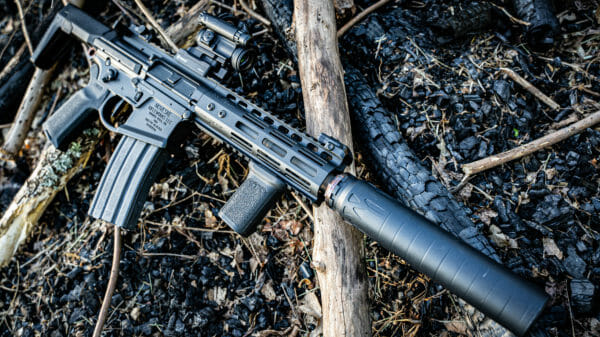
With the deadline looming for the United States Department of Justice to seek an extension of the stay in Silencer Shop Foundation v. Bureau of Alcohol, Tobacco, Firearms and Explosives (ATF), Congress, lead by Representative Andrew Clyde (R-GA) and Senator Steve Daines (R-MO) has sent a letter to the ATF urging the agency to use its regulatory authority to expand the injunction against enforcement of key provisions of the National Firearms Act of 1934 (NFA). Such action would effectively create broader protection approaching a de facto nationwide injunction.
The letter reads: “The DOJ should apply the court’s constitutional holding as its nationwide operating position. The court held that the challenged NFA provisions — governing registration, application, and transfer of untaxed firearms — are unconstitutional because they no longer rest on any valid exercise of an enumerated power. That holding does not turn on any fact particular to the named plaintiffs; it applies with equal force to every person subject to these same regulations. Therefore, the Bureau of Alcohol, Tobacco, Firearms and Explosives (ATF) should be directed to apply this ruling as its governing position to all transfers and makings involving untaxed firearms, regardless of whether the applicant is a party to this litigation, again effective immediately.”
“The DOJ should initiate rulemaking to formally rescind or amend the challenged regulations as they apply to untaxed firearms. Rulemaking is necessary to make this outcome permanent. We urge you to begin that rulemaking process without delay, so that the immediate, nationwide application of the court’s ruling is followed as promptly as the APA allows by a durable regulatory fix that does not depend on the discretion of any particular administration.”
Congress Tells DOJ to Stop Defending the Zero-Tax Registry
Congress Removed the NFA’s Constitutional Foundation
This development follows an ongoing internal debate within the DOJ over whether to appeal a Texas federal district court’s ruling that the NFA, as applied to short-barreled rifles (SBRs), short-barreled shotguns (SBSs), suppressors, and any other weapons (AOWs), is unconstitutional.
On August 5, 2026, U.S. District Judge James Wesley Hendrix of the Northern District of Texas (San Angelo Division) granted summary judgment to the plaintiffs in the consolidated cases of Silencer Shop Foundation v. ATF and Jensen v. ATF. The court held that once Congress reduced the making and transfer taxes on these items to zero dollars under the One Big Beautiful Bill Act (effective January 1, 2026), the registration, application, and related regulatory requirements lost their constitutional foundation under Congress’s taxing power. Neither the Commerce Clause nor the Necessary and Proper Clause could salvage them after the fact, the court concluded, because Congress had originally enacted the NFA exclusively as a tax measure.
If the ATF takes the stance the letter suggests, that could give clarity and safeguard the public. Right now, the injunction applies only to those named in the case, including businesses and organizational memberships. The judge did make it clear that it applies to all current and future members, but because of the Supreme Court’s decision in Trump v. Casa, he could not issue a nationwide injunction.
Judge Hendrix permanently enjoined the ATF and DOJ from enforcing the challenged provisions—primarily 26 U.S.C. §§ 5812, 5822, 5841, and 5861, along with corresponding regulations—against the plaintiffs. The injunction covers the named parties, their agencies and political subdivisions, organizational members (current and future), and customers of the commercial plaintiffs. The judge made clear that the relief extends to all current and future members of the plaintiff organizations. However, citing the Supreme Court’s decision in Trump v. CASA, which curtails universal injunctions, he declined to issue a true nationwide order. As a result, the practical reach depends heavily on membership in groups such as Gun Owners of America (GOA) or purchases from covered dealers.
The seven-day stay entered with the final judgment is set to expire on or about August 12, 2026, unless the government obtains further relief from the Fifth Circuit. If the stay lapses without extension, the ATF will face pressure to issue guidance to federal firearms licensees on how to process transfers and manufacturing of the affected items for covered parties. Enforcement against those parties would become effectively impossible in many circumstances.
Gun-Rights Groups Split Over the Best Strategy
Gun rights organizations hold differing views on the optimal path forward. Gun Owners of America, a lead plaintiff in the case, prefers that the Justice Department abandon the fight and decline to appeal. GOA views the district court victory as the first major step toward dismantling the NFA’s registration scheme. If the ATF follows the recommendation in the congressional letter and expands protection through regulation, broader coverage would follow without the risks of further litigation.
The National Rifle Association (NRA) has emphasized the need for greater clarity from the ATF on precisely who falls within the injunction’s scope. While the NRA supports clearer implementation, it does not regard a DOJ appeal as the preferred course.
The National Assocation for Gun Rights (NAGR) is also asking for the DOJ not to appeal the decision. They said they have been working behind the scenes to prevent an appeal of the decision.
“We believe the Department of Justice shouldn’t appeal this decision,” said NAGR Executive Director Taylor Rhodes. “We’ve used our considerable influence within the administration to communicate that message directly to officials in both the White House and the Department of Justice. The administration should let this important constitutional ruling stand rather than dragging the American people through more unnecessary litigation.”
Firearms Policy Coalition (FPC) takes a more aggressive posture. FPC CEO Brandon Combs stated: “Our intention and strategic objective is to end the NFA, full stop. This recent decision is an important and necessary first step in the process, but it’s only the first step. We are going to aggressively litigate these matters to their full and final conclusions. It would be legally and culturally beneficial for the U.S. Supreme Court to resolve these issues on their constitutional merits and agree that the NFA is unconstitutional.” FPC argues that an appeal culminating at the Supreme Court would ultimately provide gun owners the strongest and most durable protection.
The Second Amendment Foundation (SAF) adopts a measured middle ground. SAF Executive Director Adam Kraut indicated a preference for an appellate decision from the Fifth Circuit if the stay is not expanded.
“If my options are between appealed with a stay and appealed without a stay, yes,” Kraut said. “But I’d prefer an appellate decision.”
An Appeal Could Strengthen or Jeopardize the Victory
Which strategy proves correct depends largely on risk tolerance. Multiple attorneys consulted by AmmoLand News estimate roughly a 60 percent chance that the Fifth Circuit would affirm Judge Hendrix’s ruling, leaving a 40 percent chance of reversal. That assessment is complicated by recent Fifth Circuit precedent. In United States v. Peterson, the court upheld George Peterson’s conviction for possessing an unregistered suppressor in violation of the NFA. Peterson remains incarcerated. Although the factual and legal postures differ—the tax was still in effect at the time of Peterson’s offense, and the case centered on Second Amendment rather than enumerated-powers claims—the decision has raised caution among some Second Amendment advocates about how the Fifth Circuit might approach NFA challenges even under changed statutory conditions.
The coming days will determine whether the government seeks to freeze the injunction pending appeal, whether the ATF acts on congressional guidance to broaden relief, or whether the stay simply expires and the district court’s order begins to take practical effect for covered parties. Whatever the immediate outcome, the ruling marks the most significant judicial blow to the National Firearms Act’s registration regime since its enactment in 1934.
About John Crump
Mr. Crump is an NRA instructor and a constitutional activist. John has written about firearms, interviewed people from all walks of life, and on the Constitution. John lives in Northern Virginia with his wife and sons, follow him on X at @right2bear, or at www.crumpy.com.