DOJ Divided Over Appealing Court Ruling That Guts Key NFA Provisions
With the time for the government to ask for a stay to be extended in Silencer Shop Foundation v. Bureau of Alcohol, Tobacco, Firearms and Explosives (ATF) rapidly running out, a significant internal debate is unfolding inside the United States Department of Justice (DOJ) over whether to appeal a ruling that knocked down key provisions of the National Firearms Act of 1934 (NFA).
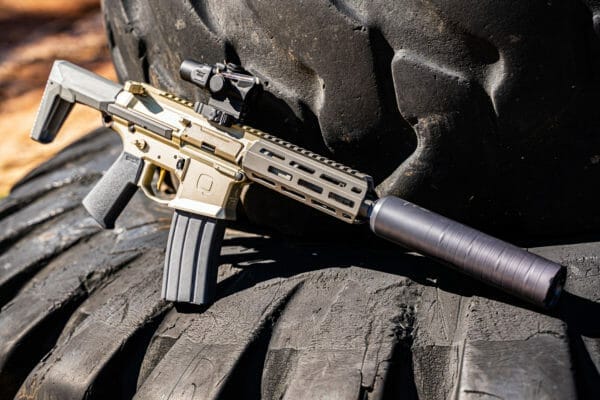
Last week, a Texas federal district court judge struck down NFA regulations covering short-barreled rifles (SBRs), short-barreled shotguns (SBSs), suppressors, and any other weapons (AOWs). The court reached this conclusion after Congress lowered the long-standing $200 tax stamp fee to $0. Because the NFA has long been justified as a tax statute, a characterization repeatedly affirmed by the United States Supreme Court, and because a tax must serve a genuine revenue-generating purpose, the court held that the challenged regulations lost their constitutional foundation once the fee was eliminated.
Without a valid tax, the registration, approval, and transfer requirements that have defined the NFA for nearly a century could no longer stand.
The court issued a permanent injunction against the regulations, effectively gutting large portions of the NFA as applied to the covered items. To give the federal government an opportunity to seek emergency relief, the judge stayed the injunction for seven days and indicated openness to a longer stay pending appeal to the United States Court of Appeals for the Fifth Circuit. That seven-day window expires on August 12.
Many observers expected the DOJ to move quickly for an extended stay. It has not. AmmoLand News reached out to sources inside the department to understand the delay and the internal discussions taking place.
According to those sources—individuals with intimate knowledge of the proceedings whose accounts have been independently corroborated by others—two distinct camps have formed within the DOJ.
The first group consists largely of career employees. They maintain that the Department’s institutional duty is to defend federal statutes against legal challenge. In their view, the proper response to an adverse district court ruling is to appeal and to seek a stay so that the law remains in effect while higher courts review the decision. This faction wants the government to fight the case to the end.
The second group takes a different position. These officials argue that the DOJ has no obligation to defend a law once it has been found unconstitutional on solid legal grounds. They contend that continuing to litigate in defense of provisions that no longer generate revenue and that rest on a now-invalid tax theory would be both unnecessary and contrary to the Department’s higher duty to the Constitution. If the decision were theirs alone, they would decline to appeal.
While United States Attorney General Todd Blanche would normally be expected to make the final call on whether to seek a stay and pursue an appeal, sources indicate the matter has drawn direct attention from the White House. That involvement does not automatically mean the White House will dictate the outcome, but it does signal that this is not a routine litigation decision. The DOJ typically operates with considerable independence from White House input on the day-to-day handling of cases. The fact that the White House is closely monitoring the internal debate underscores the political and legal sensitivity of the issue.
AmmoLand News also contacted sources familiar with White House discussions. Those sources confirmed that the administration is watching the DOJ deliberations carefully. They described intense pressure from gun rights organizations and the broader gun-owning public urging the White House to block any request for an extended stay or an appeal.
Many in the firearms community see the district court’s ruling as a rare and significant opportunity to roll back long-standing NFA restrictions without waiting for further legislative action.
If the stay is not extended, the ATF will be forced to issue guidance to federal firearms licensees (FFLs) on how to handle transfers and manufacturing of the newly unrestricted items. Although the permanent injunction formally applies only to the named plaintiffs and to current and future members of the plaintiff organizations, enforcement of the challenged NFA provisions is expected to become practically impossible. The government does not have access to the membership rolls of those organizations, making it difficult to determine who is covered by the injunction and who is not. In practice, that uncertainty is likely to produce a de facto nationwide effect even if the formal geographic or party scope of the order remains limited.
The broader implications are substantial. For decades, the NFA’s tax-and-registration regime has imposed significant barriers on the ownership and transfer of suppressors, short-barreled firearms, and AOWs. The combination of a successful legal challenge grounded in the tax nature of the statute and a congressional decision to zero out the stamp fee has created an opening that gun owners have sought for generations. Whether that opening remains open now depends on the DOJ’s next move.
Thanks to the lawsuits, gun owners stand closer than they have in living memory to dismantling major portions of the NFA. The remaining question is whether the Department of Justice will continue to defend the law in the courts or whether it will accept the district court’s judgment and allow those rights to return to the people.
About John Crump
Mr. Crump is an NRA instructor and a constitutional activist. John has written about firearms, interviewed people from all walks of life, and on the Constitution. John lives in Northern Virginia with his wife and sons, follow him on X at @right2bear, or at www.crumpy.com.