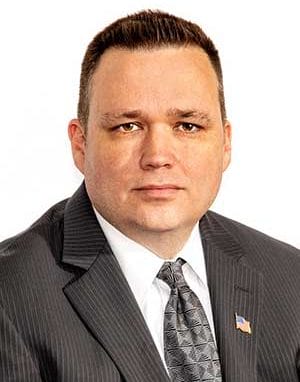
DOJ Revives Federal Firearm Rights Restoration After 30-Year Shutdown

United States Attorney General Todd Blanche finalized a federal regulation governing the restoration of federal firearm rights. The new process allows eligible individuals who are prohibited from possessing firearms to apply to have those rights restored.
“The Second Amendment is not a second-class right, and the federal government should not permanently deprive Americans of a constitutional right without regard to whether they pose a danger to public safety,” said Attorney General Todd Blanche. “This rule establishes a rigorous, common-sense process that protects the public while giving deserving Americans a real path to restoration.”
The signed rule has been transmitted to the Federal Register. DOJ cautions that the currently available text is unofficial until formally published.
A Restoration Process Congress Left Dormant for Decades
Section 922(g) prohibits certain categories of people (e.g., felons, domestic violence misdemeanants, unlawful drug users, fugitives, certain aliens, those under domestic violence restraining orders, etc.) from shipping, transporting, possessing, or receiving firearms or ammunition in or affecting commerce.
Section 925(c), however, has long authorized the Attorney General to grant relief if the applicant shows they “will not be likely to act in a manner dangerous to public safety” and that granting relief “would not be contrary to the public interest.”
The Bureau of Alcohol, Tobacco, Firearms and Explosives (ATF) previously administered this process by delegation. Still, Congress defunded it via appropriations riders starting in 1992, rendering the program inoperative for over 30 years.
In March 2025, DOJ issued an interim final rule withdrawing the ATF delegation. In July 2025, it published a notice of proposed rulemaking with detailed criteria. After receiving over 15,500 comments (roughly 91% supportive of restoring a workable process), the United States Department of Justice (DOJ) finalized the rule.
The program will now be operated through the Office of the Pardon Attorney rather than ATF, although the Attorney General retains the ultimate decision-making authority.
When Will Applications Open?
The rule becomes effective 30 days after publication in the Federal Register, but DOJ plans to roll out the application process in stages.
According to the Department’s current Federal Firearm Rights Restoration website:
- Thirty days after publication, DOJ will begin inviting candidates to apply.
- Seventy-five days after publication, the application will open to the public, beginning with the first 5,000 applicants.
- At 120 days, DOJ will accept another 500 applicants and begin collecting the application fee.
The Department directs prospective applicants to justice.gov/ffrr for updated eligibility information, application instructions, and the eventual online application.
Who Will Be Presumptively Disqualified?
According to the DOJ, the rule aims to protect Second Amendment rights while ensuring public safety. Relief is discretionary and guided by statutory standards.
Several offenses are presumptively permanent disqualifications. These include violent felonies (homicide, kidnapping, terrorism, stalking, and other crimes of violence), convictions involving brandishing or discharging a firearm, sex offenses requiring registration under SORNA that also trigger a § 922(g) prohibition, and felony-level domestic violence.
There will also be other time-limited presumptive disqualifications, including drug trafficking convictions or misdemeanor domestic violence: at least 10 years after completing the sentence (including probation/supervised release), and other felony convictions: at least 5 years after completing the sentence.
Other statuses that are presumptively ineligible are being a fugitive from justice (§ 922(g)(2)), unlawfully present aliens or certain nonimmigrants (§ 922(g)(5)), and persons subject to qualifying domestic violence restraining orders (§ 922(g)(8)).
The final presumptively ineligible status is being an unlawful user of or addicted to controlled substances (§ 922(g)(3)) — until the pattern of use ends. That final category seems to be at odds with the United States Supreme Court’s unanimous decision in Hemani. Still, the DOJ does not believe it is at odds because the Hemani opinion was narrow.
What the Supreme Court Held in Hemani
The Supreme Court held that the federal government could not prosecute Ali Hemani under 18 U.S.C. § 922(g)(3) based solely on evidence that he regularly used marijuana while possessing a gun in his home. The government did not allege that Hemani was addicted, intoxicated when he possessed the firearm, incapable of managing his affairs, or dangerous to himself or others. Nor did it claim that he had misused the gun.
The Court rejected the government’s attempt to treat anyone who regularly used any amount of a controlled substance as categorically dangerous. Historical laws dealing with intoxication and “habitual drunkards” targeted different conduct, operated differently, and generally required more than the mere regular use of an intoxicating substance.
The Supreme Court nevertheless described its decision as narrow. It did not decide whether the government may disarm people who are addicted or presently intoxicated. It also did not decide whether § 922(g)(3) could be applied when the government presents individualized proof that a person’s drug use makes him dangerous—or proof that a particular drug always renders its users dangerous. The Court expressly declined to pass on those questions either way.
In short, mere regular marijuana use, without more, was insufficient to support the government’s automatic and categorical ban as applied to Hemani.
DOJ Creates a Marijuana Exception
In response to Hemani and the large number of public comments addressing marijuana, DOJ amended the final rule to create an important exception.
For purposes of the rule’s drug-related presumption, DOJ’s definition of “controlled substance” does not include marijuana. As a result, unlawful use of or addiction to marijuana alone does not trigger the same presumption of ineligibility that applies to users or addicts of other controlled substances. The Department also removed proposed requirements that applicants and their character references affirm that the applicant does not use or is not addicted to marijuana.
DOJ acknowledges that excluding marijuana addicts, not merely marijuana users, goes beyond the facts presented in Hemani. The Department says distinguishing a marijuana “user” from a marijuana “addict” would require a highly fact-specific inquiry that could undermine the administrability of the restoration process.
That does not mean marijuana use automatically restores anyone’s firearm rights or removes a federal disability under 922(g)(3). The statute remains on the books, and the relief process itself remains discretionary.
Instead, an applicant whose only drug-related issue involves marijuana may apply without facing the rule’s extraordinary-circumstances presumption. DOJ may still consider the applicant’s marijuana use and other individual circumstances when deciding whether restoration would be consistent with public safety and the public interest.
For controlled substances other than marijuana, the presumption remains. Someone who continues to qualify as an unlawful user or addict will generally be denied absent extraordinary circumstances. Because that disability is status-based, an individual may ordinarily remove himself from the prohibited category by ending the unlawful conduct and breaking the pattern of ongoing use.
What Applicants Must Submit
An applicant must complete the required form and disclose all federal firearm disabilities for which relief is requested. Required materials may include:
- Electronic fingerprints or properly completed fingerprint cards.
- Certified or otherwise reliable court records.
- Charging documents, judgments, plea agreements, and presentence reports.
- Proof that every requirement of the sentence has been completed.
- State criminal-history records for each jurisdiction in which the applicant has lived or been arrested during the applicable period.
- Relevant military, mental-health, domestic violence, citizenship-renunciation, or foreign records.
- Affidavits from three qualified character references.
- Authorization for DOJ to obtain additional background information.
The final rule shifts responsibility for local law-enforcement notification to DOJ. The Department will notify the appropriate chief law-enforcement officer for the locality where the applicant resides and allow that agency to submit information supporting or opposing restoration.
The application fee is $30 once the fee stage begins, up from the proposed $20. DOJ will periodically review the fee and conduct an audit after the program has operated long enough to produce reliable cost information. Applicants may request a fee waiver or reduction, including for economic hardship.
How DOJ Will Decide Who Gets Relief
The Attorney General may consider the applicant’s entire record, including criminal history, dismissed charges associated with a plea agreement, conduct while incarcerated or under supervision, time since completion of the sentence, rehabilitation, threats, restraining orders, drug use, mental health, character references, and information supplied by local law enforcement.
Significantly, the final rule also allows the Attorney General to consider whether denying relief under an applicant’s individual circumstances would infringe the applicant’s Second Amendment rights.
If relief is granted, DOJ will publish notice of the decision and the reasons for it in the Federal Register. Any restoration applies only to the federal disability addressed in the application. It does not erase independent state or tribal firearm prohibitions, and it does not protect an individual from a new disability arising from later conduct.
An applicant denied relief may petition the United States District Court for the district in which he resides for judicial review.
About John Crump
Mr. Crump is an NRA instructor and a constitutional activist. John has written about firearms, interviewed people from all walks of life, and on the Constitution. John lives in Northern Virginia with his wife and sons, follow him on X at @right2bear, or at www.crumpy.com.