Halloween Safety for Gun Owners
Halloween lands on a Saturday this year. That means bigger parties, later nights, and more people on the street than a typical weeknight Halloween. Most of the night is exactly what you would expect. Kids in costumes, candy, and neighbors you only see a few times a year. But a few real risks go up on October 31, and they’re worth planning for.
When I was 18 yrs old and lived with my older brother and his family he told me that Halloween night we take the house to DEFCON 4. At the time it sounded fun to me. In hindsight I appreciate his prepared attitude.
What Actually Goes Up on Halloween
The biggest Halloween risks aren’t masked killers. They’re cars, alcohol, crowds, and empty houses.
- Property crime. Travelers reported 24 percent more property crime claims on Halloween than on an average day. According to the same Travelers data, as summarized by EMC Security, about 60 percent of those claims involved theft from the home, including break-ins. A dark house is an easy target for a burglar.
- Kids hit by cars. A study in JAMA Pediatrics looked at more than 40 years of U.S. crash data. It found pedestrian deaths were 43 percent higher on Halloween than on comparison nights. For kids ages 4 to 8, the risk was about 10 times higher.
- Drunk drivers. From 2019 through 2024, NHTSA counted 176 people killed in crashes involving a drunk driver on Halloween night (6 p.m. to 6 a.m.). Thirty-one of them were pedestrians.
- Violence at crowded, late-night parties. This one gets the headlines, and the pattern is consistent enough to plan around. More on that below.
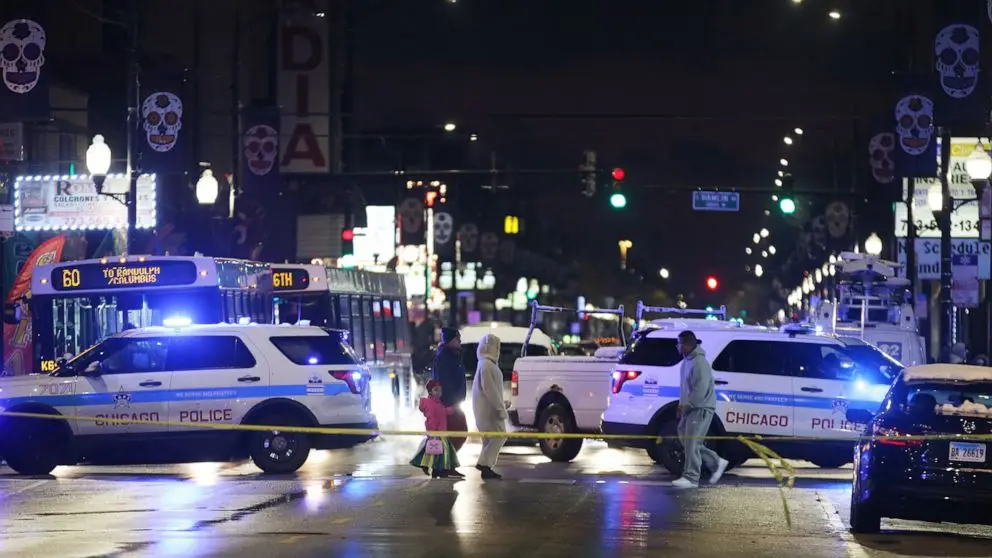
In this Halloween shooting a 7yr old was caught in the crossfire of a gang shooting
None of this means you should stay locked inside. It means, on average, the dangers are predictable and predictable dangers are the easiest ones to avoid.
Halloween Violence Follows a Pattern
Here are four Halloween-weekend shootings from the last three years:
- Robeson County, North Carolina (October 25, 2025). More than 150 people, many of them minors, were at a large Halloween party at a rural home outside Maxton. Shots were fired, killing a 49-year-old man and a 16-year-old and wounding 11 others. Afterward the sheriff pointed to the alcohol at the party.
- Downtown Orlando, Florida (November 1, 2024). Around 75,000 people were downtown for Halloween when a 17-year-old opened fire just after 1 a.m. Two people were killed and eight others were hurt: seven were shot and one was trampled in the panic. An Orlando officer tackled the shooter, and in August 2026 a jury convicted him of two counts of first-degree murder.
- Ybor City, Tampa, Florida (October 29, 2023). The bars had just closed and hundreds of people were in the street when a fight between two groups turned into a shootout. Two people were killed and 18 were injured. There were 50 officers already deployed in the area at the time.
- North Lawndale, Chicago (October 29, 2023). An unlicensed Halloween party drew more than 100 people. Police say an intoxicated man was thrown out for causing a disturbance and got into a fight with a security guard trying to get back in. He later returned and fired into the crowd, wounding 15.
Look at what these have in common. Big crowds of strangers. Alcohol. Hours well past midnight. Someone who’d already made trouble that night. None of them happened at a front door handing out candy.
The lesson isn’t that you need to be ready to win a gunfight in a costume (though it sounds like a good idea). It’s that you can skip most of this risk by choosing where you are at 1 a.m. If a party has outgrown the host’s guest list, or someone gets thrown out and storms off, that’s your cue to leave. Remember too that in many states it’s illegal to carry while drinking or in places that serve alcohol. A crowded, boozy party is exactly where your gun is least useful and your judgment matters most.
If You’re Home Handing Out Candy
Halloween is the one night of the year when you’re expected to open your door to every stranger who knocks. Almost all of them are just kids looking for a full-size candy bar. Here are some quick tips to minimize risk:
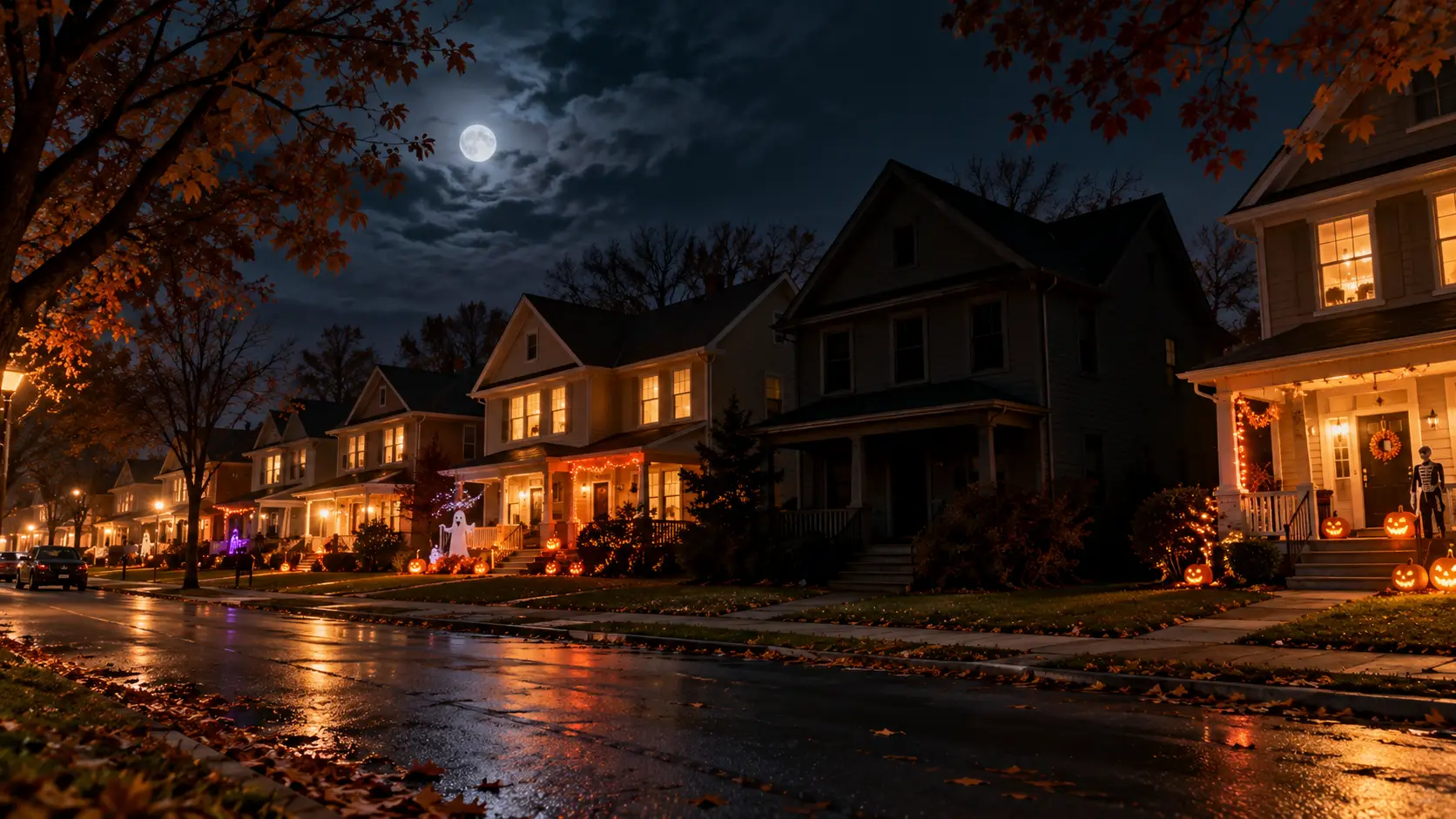
Image generated via AI for educational purposes. Don’t be the “dark” house on the street.
- Light the place up. Turn on porch, yard, and driveway lights and leave them on all night. A lit house tells people someone’s home, and it lets you see who’s on your porch before you open the door.
- Don’t fake an empty house. Turning the lights off and leaving a bowl on the porch invites strangers onto your property and advertises that nobody’s watching. If you don’t want trick-or-treaters, put up a sign and leave the lights on anyway.
- Carry at home. If you’d want your gun on you at the grocery store, you’ll want it on you when you’re opening your door 60 times in one night. Home carry beats a gun sitting in a drawer two rooms away. (Episode 144 of the podcast goes deeper on this.)
- Open the door with intention. Look before you open. Stand where you can step back and close the door if you need to. Watch for anyone older hanging back at the curb while kids come up to the door.
- Know when the night is over. Most trick-or-treating wraps up by around 8:30 or 9 p.m. After that, a knock at the door deserves more caution. Turn off the porch light to signal you’re done, and keep the yard lights on.
- Put the cars away. Park in the garage or where you can see your vehicles from inside, and lock them. Vandalism and car break-ins go up on Halloween too.
- Plan for the house you leave. If you’re out with the kids, leave lights on and a TV or radio playing, lock up, and ask a neighbor to keep an eye on things. A doorbell camera you can check from your phone helps.
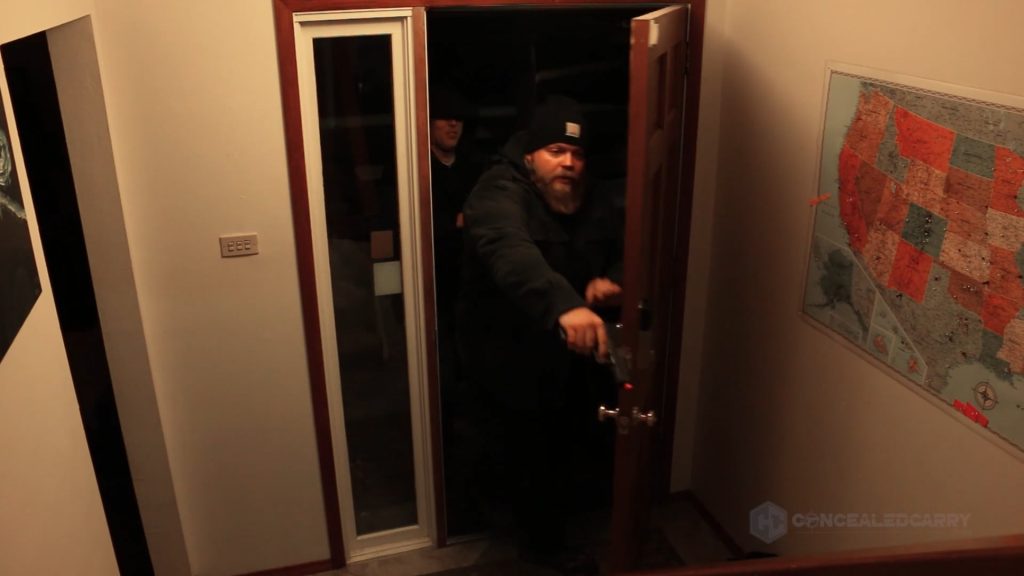
Our Complete Home Defense course covers the rest of the plan for defending your home, whether it’s Halloween or any other night.
If You’re Out Trick-or-Treating
Bring a real flashlight
In most of the country it’s dark before trick-or-treating is half over. And Halloween night is built for poor visibility: dark costumes, masks, kids darting out between parked cars. A good handheld light is the most useful piece of gear you can carry that night.
- Carry a handheld light even if your pistol has a weapon-mounted light. You’ll be looking at dozens of people in masks, and plenty of them will be kids. Never use the light on your gun to see who someone is. Your muzzle goes wherever your light goes, so lighting up a stranger with a WML means pointing a gun at them. Use a handheld light to find, identify, and see. Save the gun light for a situation where you’ve already decided you may have to shoot. Our breakdown of handheld vs. weapon-mounted lights covers this in more detail.
- Get enough light. A phone flashlight won’t reach across a dark street or through fog. A dedicated light with real output will. (Introduction to Tactical Flashlights)
- Use it to be seen, too. Light up the sidewalk ahead of your group. Give each kid their own small light, glow stick, or reflective tape. Drivers are the biggest danger of the night, so make your group hard to miss.
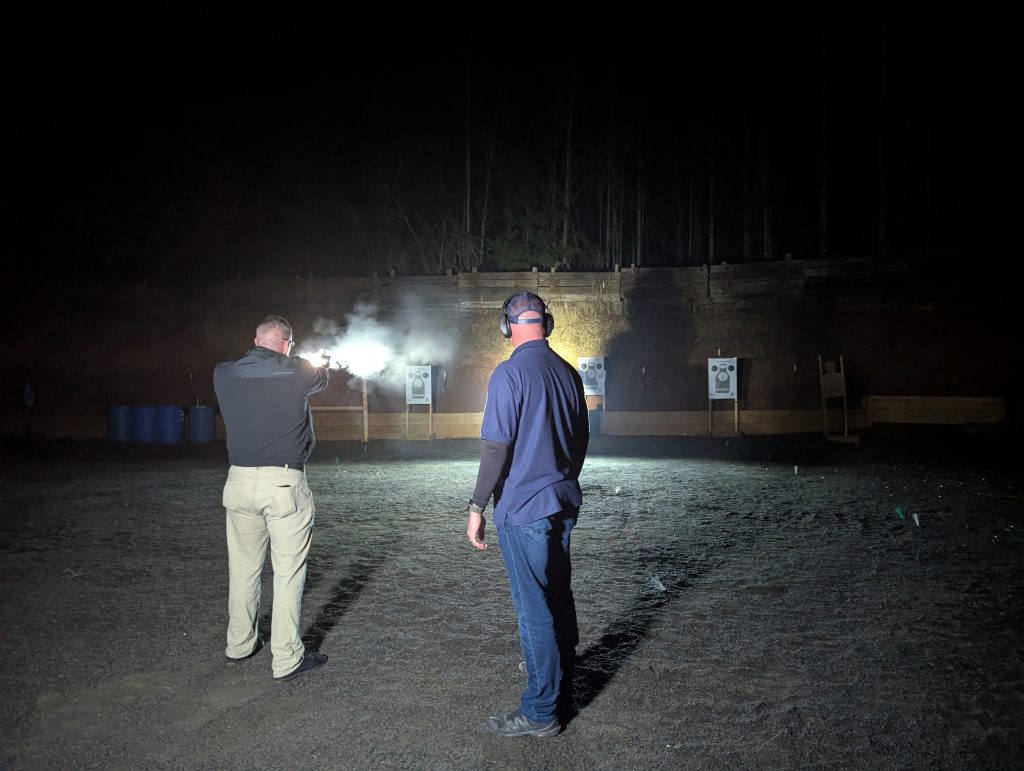
- Practice with it. If you’ve never drawn your gun while holding a flashlight, Halloween night is the wrong time to try it for the first time.
The rest of the list
- Walk the route in daylight. If you are new to the area do a little recon in advance to know where you’re going, which streets are busy, and where it gets dark. Set a time to head home.
- Stay between your kids and the street. Walk on the curb side, cross at corners, and watch for drivers backing out of driveways. The stats say a car is far more likely to hurt your family than a stranger is.
- Keep your carry setup normal. If you’re dressing up, make sure the costume doesn’t change how you draw or conceal. Skip masks, which cut down your vision and awareness, and use makeup instead. Never combine a real gun with a toy gun prop.
- Don’t overreact. Kids in masks will jump out and yell “boo.” Teenagers will act like teenagers. Pay attention, but save your reaction for real threats.
- Choose your parties carefully. Small gatherings where you know the host and the guests beat big parties full of strangers. If you’ll be drinking, leave the gun at home and have a sober adult in charge of the kids.
- Report anything that feels wrong, early. Police are stretched thin on Halloween, so response times may be slower than usual. Call early and keep your distance.
Use the Night to Get to Know Your Neighbors
There’s one Halloween safety tool most gun owners overlook, and it has nothing to do with gear: the people who live on your street.
This isn’t just a nice idea. In a landmark study of 343 Chicago neighborhoods, researchers measured how much neighbors trusted each other and how willing they were to step in for the common good. They called it “collective efficacy.” Neighborhoods that scored high on it had crime rates about 40 percent lower than those that scored low. Neighbors who know each other notice when something’s off, and they speak up.
We talk a lot about situational awareness. A street full of people who know each other is situational awareness that keeps working when you’re asleep, at work, or out of town. And Halloween is the easiest night of the year to build it, because everyone’s outside and every door is open.
- Learn names. Introduce yourself to the parents walking with their kids. Figure out which kids belong to which houses.
- Swap numbers. Start a group text or neighborhood group chat if your street doesn’t have one. That’s the fastest way to say “anyone recognize this car?” or “my package camera caught someone.”
- Move the candy to the driveway. Set up chairs and hand out candy with the neighbors next door. More adults outside means more eyes on the street, and it’s a lot more fun.
- Look out for the ones who are alone. An elderly neighbor or a single parent may not want to answer the door all night. Offer to keep an eye on their place or help hand out candy.
- Follow up. The goodwill you build on October 31 pays off the other 364 days. Wave, check in, and remember names.
Carrying a gun means taking responsibility for your own safety. Knowing your neighbors means you don’t have to do it alone. It’s also just a healthier way to live.
Have Fun, and Stay Ready
Halloween doesn’t call for a different mindset than any other night. It calls for the same mindset, with a little more planning. Light up your house. Carry at home. Bring a real flashlight. Skip the 1 a.m. crowd. Get to know the people on your street. Then enjoy the candy.
Time changes the night after Halloween this year, and from then on it’ll be dark by dinnertime for months. If low light is a gap in your training, Defense After Dark is a good place to start.
What’s on your Halloween checklist that we missed? Tell us in the comments.