When was the last time you owned an AR-7? Or handled one? If you haven't ever used one, you might want to check the AR-7 out. The current manufacturer, Henry Repeating Arms, went through a mid-production update a few years back, and it's much improved over the originals from other manufacturers. It's even much better than Henry's first-generation rifles. I would know, because I've owned both. And now there’s an updated version of the AR-7; Henry calls it the H2 U.S. Survival Rifle.
Henry's AR-7 Survival Rifle Has Come A Long Way, Baby
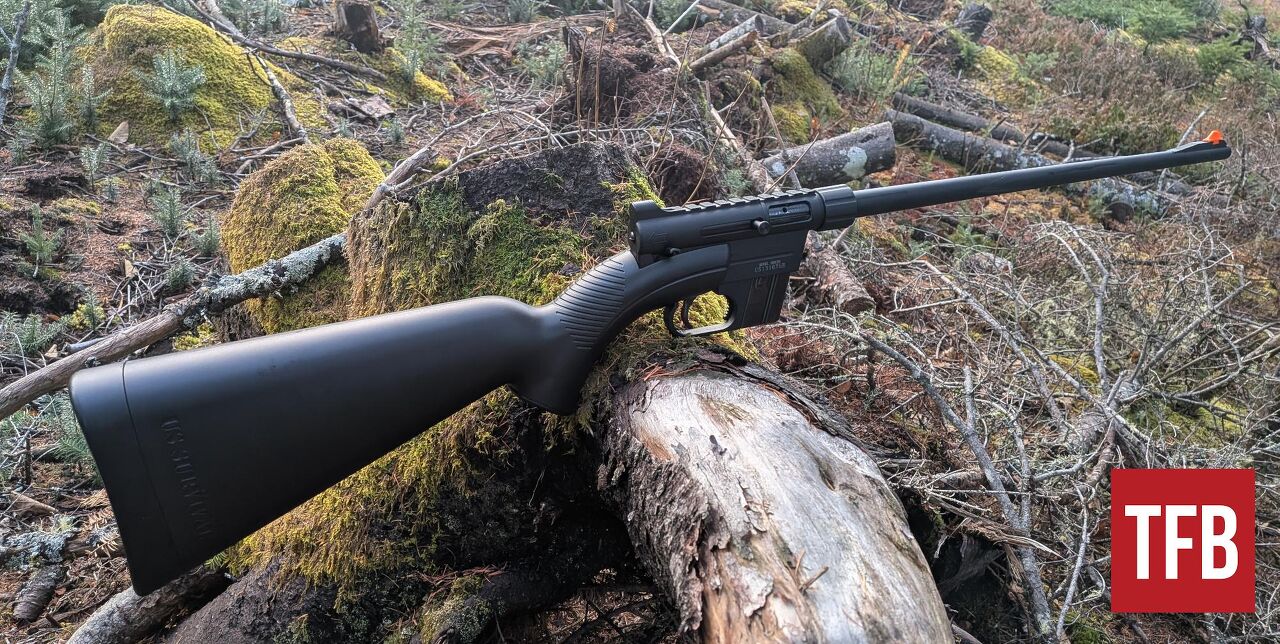
Henry’s made these for decades, and the design goes all the way back to 1959 with Eugene Stoner drawing it up for ArmaLite originally. [Zac K.]
What's an AR-7?
In case you've never seen one of these before, or read about them, the AR-7 is one of those Cold War firearms that was meant to help Uncle Sam's troops fight off the godless Communist hordes. Sort of. This .22LR survival rifle wasn't actually meant for combat; it was meant to keep fliers alive if they crashed in the wilderness. With the rifle’s magazines, barrel and receiver stored in the buttstock, the entire system was self-contained and you couldn’t leave anything behind, except spare ammo.
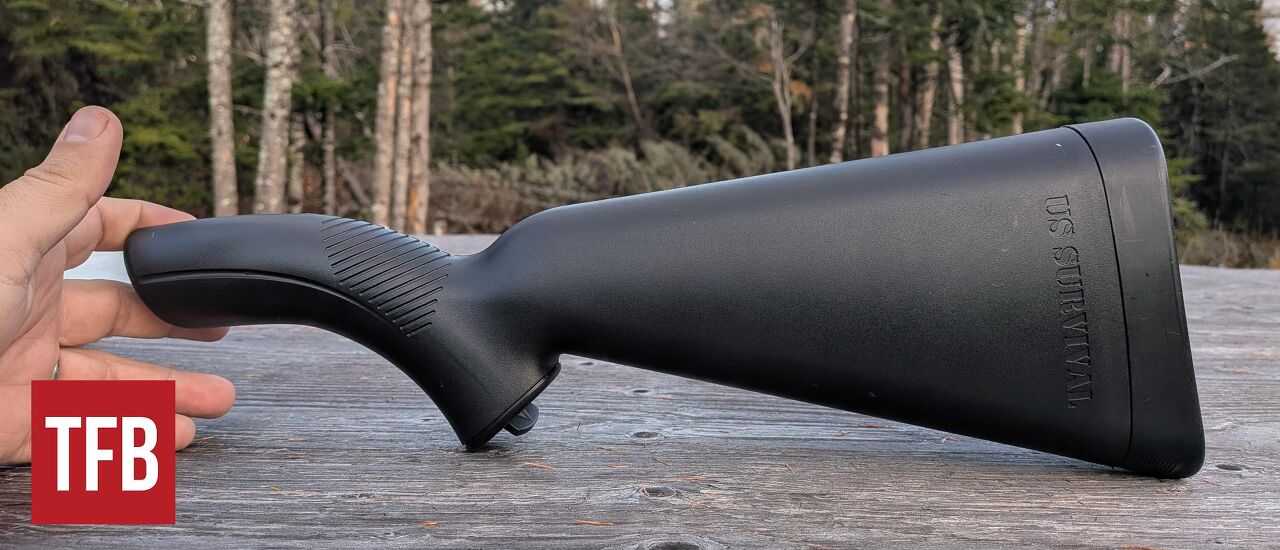
The idea was that pilots would keep this self-contained rifle package on their plane, to keep them alive after parachuting into the wilderness. [Zac K.]
In our days of missiles and drone warfare, it is easy to forget that NATO planners once envisioned aerial warfare all over northern Canada and Alaska. Fighters vs. bombers, ECW aircraft and helos too, probably—and some of those planes were going to be shot down. The aircrews would need some way to stay alive while they waited for rescue. The Canadian military issued EAL’s .303 bolt-action, perhaps because they envisioned bear attacks as a problem. Eugene Stoner designed the AR-7 for the same scenario, probably correctly figuring that food, not ferocious bears, was a more pressing issue, and that the AR-7 would be a good tool for filling the pot while you awaited rescue.
This was yet another ArmaLite design that the U.S. military passed on; maybe they figured they had enough M6 rifle/shotgun combo guns, and they also had the M4 around that era, and the option of buying the M5 design too. Adding the AR-7 to the mix would have just made things more complicated.
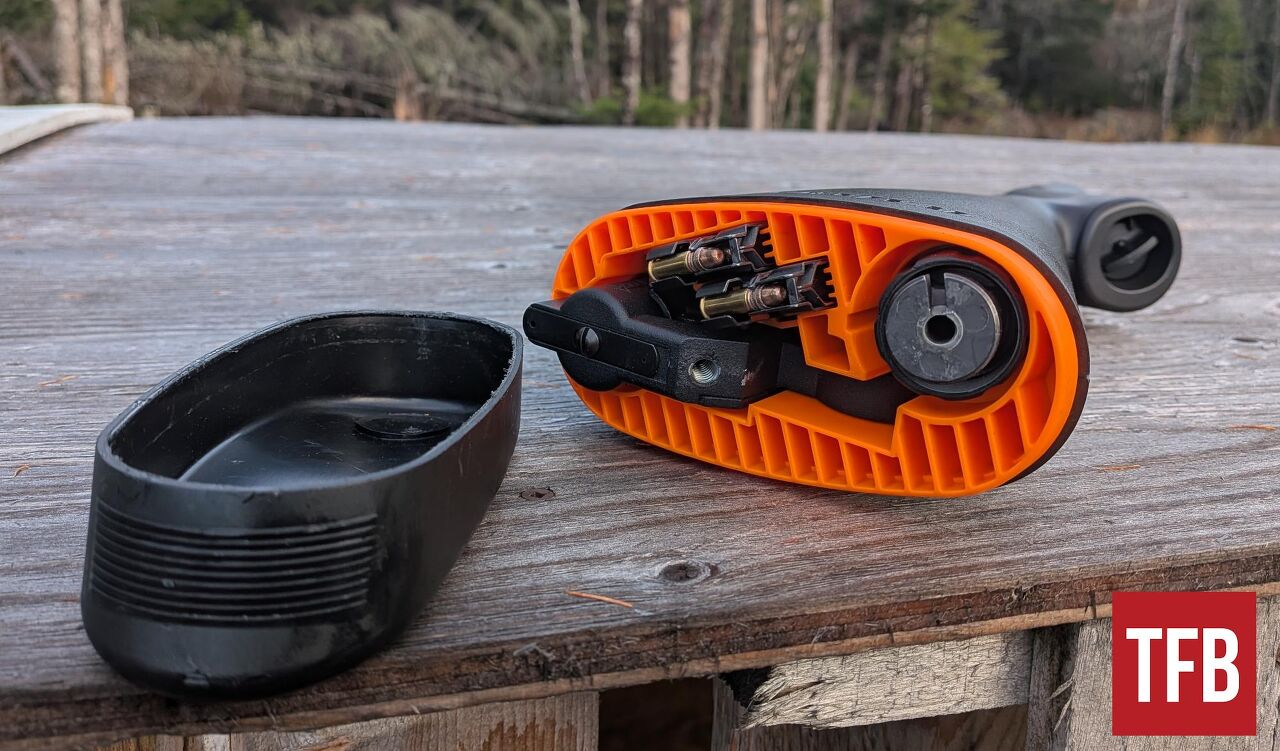
You can keep a third magazine inside the receiver when stored inside the rifle, but you might not want to keep it loaded, depending on your local regulations. [Zac K.]
The Israeli military did end up buying the AR-7 design and issuing rifles to their aircrews based on Stoner’s plans, except the Israelis used a wire stock instead of the voluminous full-size stock. This meant the end of the self-contained design, but perhaps the Israeli design was more robust.
ArmaLite sold the plans for the AR-7 to Charter Arms in 1973; in turn, Charter Arms built the design until 1990. Then, the plans went to smaller companies: Survival Arms in 1990-1997, and AR-7 Industries also built a version of the gun for a while. Henry bought the rights to make the AR-7 in 1997 (from Survival Arms), and they’ve been making the rifle until today.
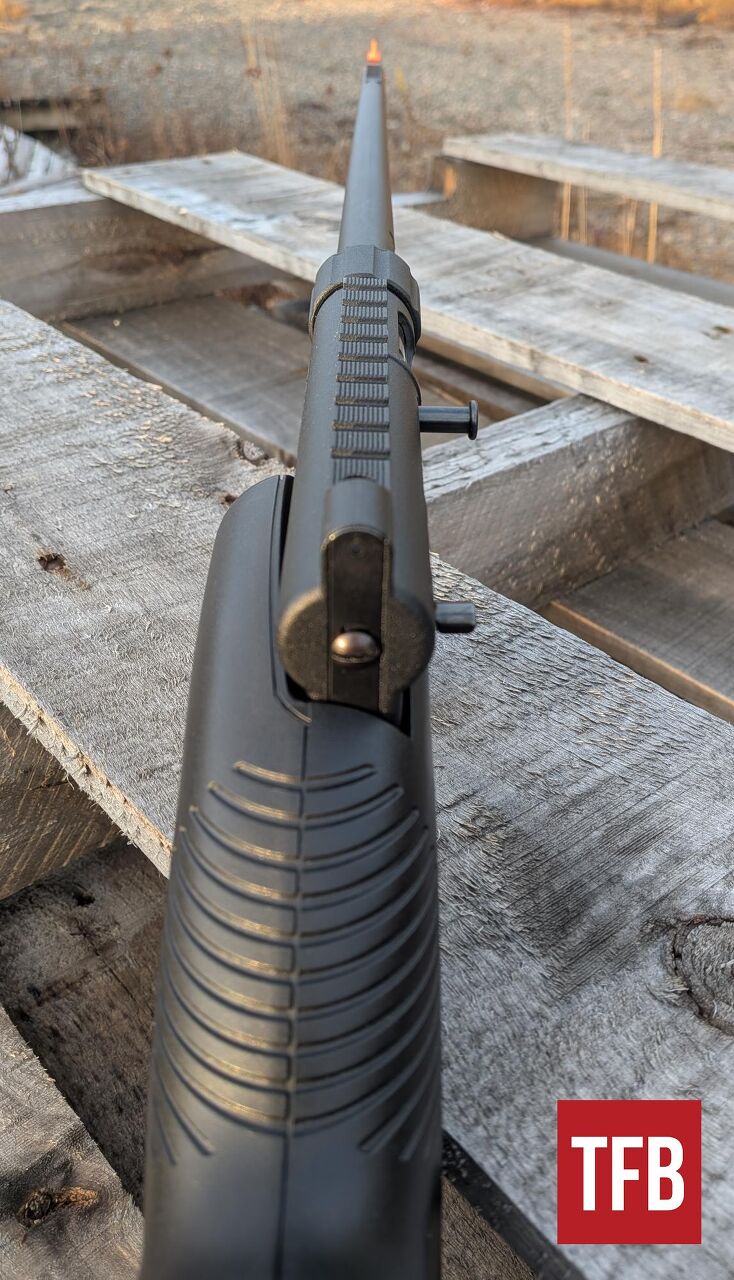
The iron sights are crude, but they work. Some owners put a scope on the rifle, but then you can’t store it all away inside the receiver. Note that it’s a simple rimfire dovetail atop the rifle, not a Picatinny rail. [Zac K.]
Shooting the AR-7
On TV and in the movies, the AR-7 is portrayed as a deadly sniper rifle, especially in James Bond films, where it appeared multiple times…
On Boston Legal, Denny Crane did indeed use it as a survival rifle, although in an unusual way…
And it’s been in plenty of other movies and shows, sometimes dressed up as other guns. Its on-screen popularity helped it become popular with soldier-of-fortune wannabes who assumed it was a good choice for illegal activity.
In real life, the AR-7 is no sniper rifle. It’s a simple blowback semi-auto .22LR with basic iron sights. But it does work reasonably well at its intended purpose, or at least the current one does—with a caveat.
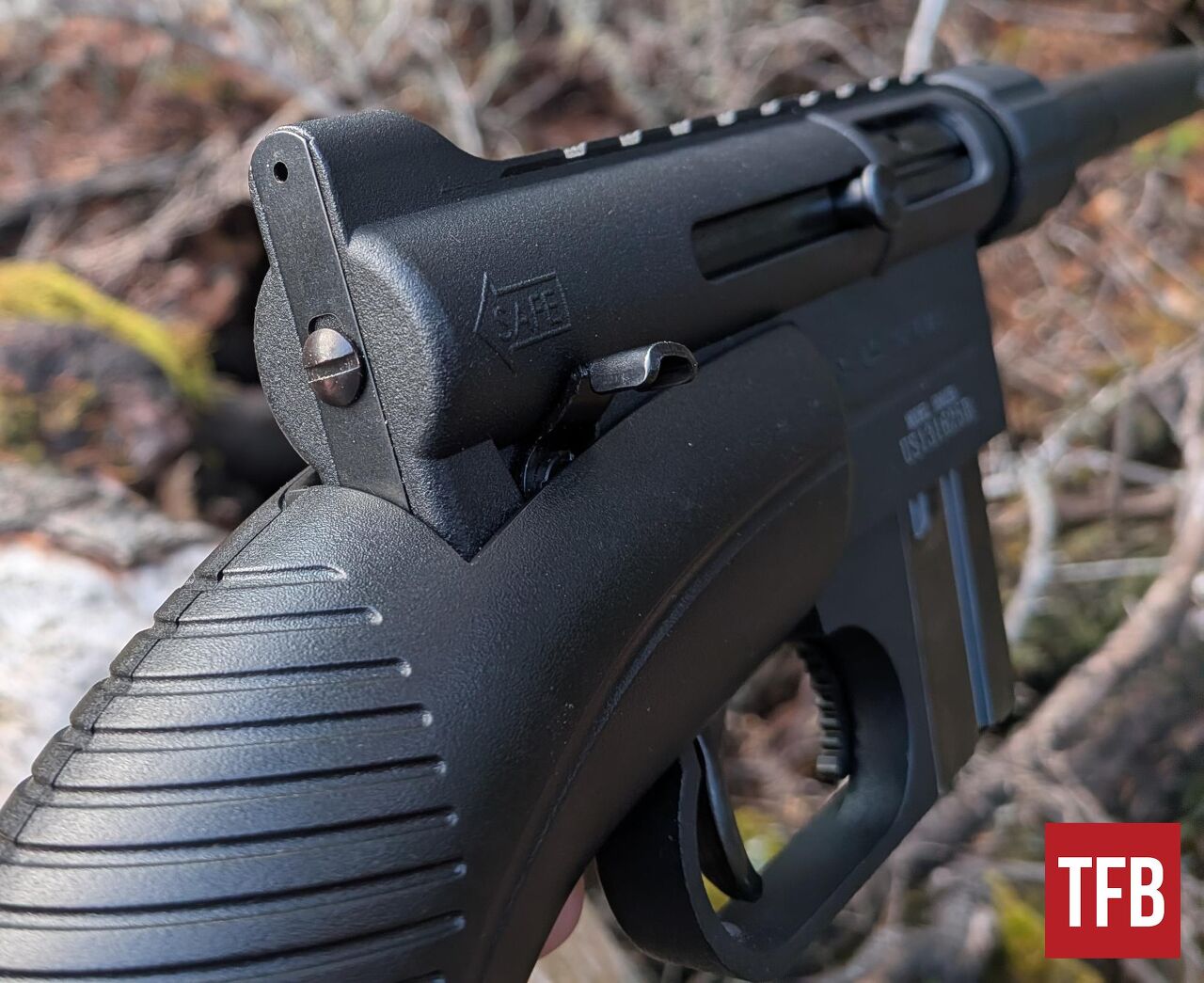
This is no elite assassin’s sniper rifle. [Zac K.]
The current-production AR-7 (or the H2 as it’s called now) has several improvements over the first-generation Henry models as well as the older Charter Arms and ArmaLite rifles. You notice them as soon as you assemble the rifle.
The AR-7 consists of three major components: The stock, a receiver and a barrel. To put the gun together, you take the receiver out of the stock and attach it to the stock via a captive screw that runs through the pistol grip. Then you take the barrel out of the stock and slot it into the receiver, attaching it via a threaded collar that screws into the front of the receiver. And that’s where the first important upgrade pops up. On earlier rifles, a plastic stud atop the barrel guided it into a slot on the receiver, ensuring alignment. That plastic stud could wear down, which would render the barrel useless or at least terribly inaccurate. On current-production Henry rifles, that stud is now made of metal and should last indefinitely.
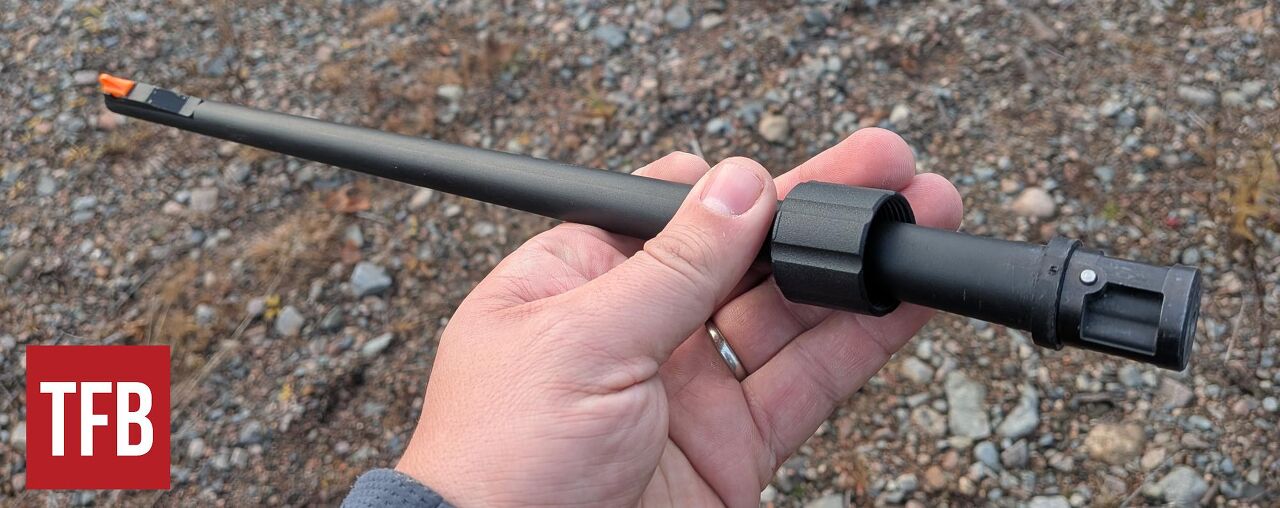
You can see the metal alignment stud directly over the barrel’s chamber, on the right-hand side of the photo. [Zac K.]
When you load up the magazines and start shooting, you notice another improvement. You can carry three of the factory 8-round magazines inside the AR-7’s stock, instead of two mags, like the original (there are slots for two separate mags, and you can keep a third inserted inside the receiver while it’s stored). Remove the mags, and as you load ‘em up, you’ll see a wire guide on the left-hand side of the magazines. This is also a new addition; it helps reduce jamming problems, something that earlier AR-7s were certainly known for. This means that extended magazines designed for earlier-production AR-7s are not desirable today; even if they fit into your rifle, they won’t store away in the buttstock, and they are much more likely to jam.
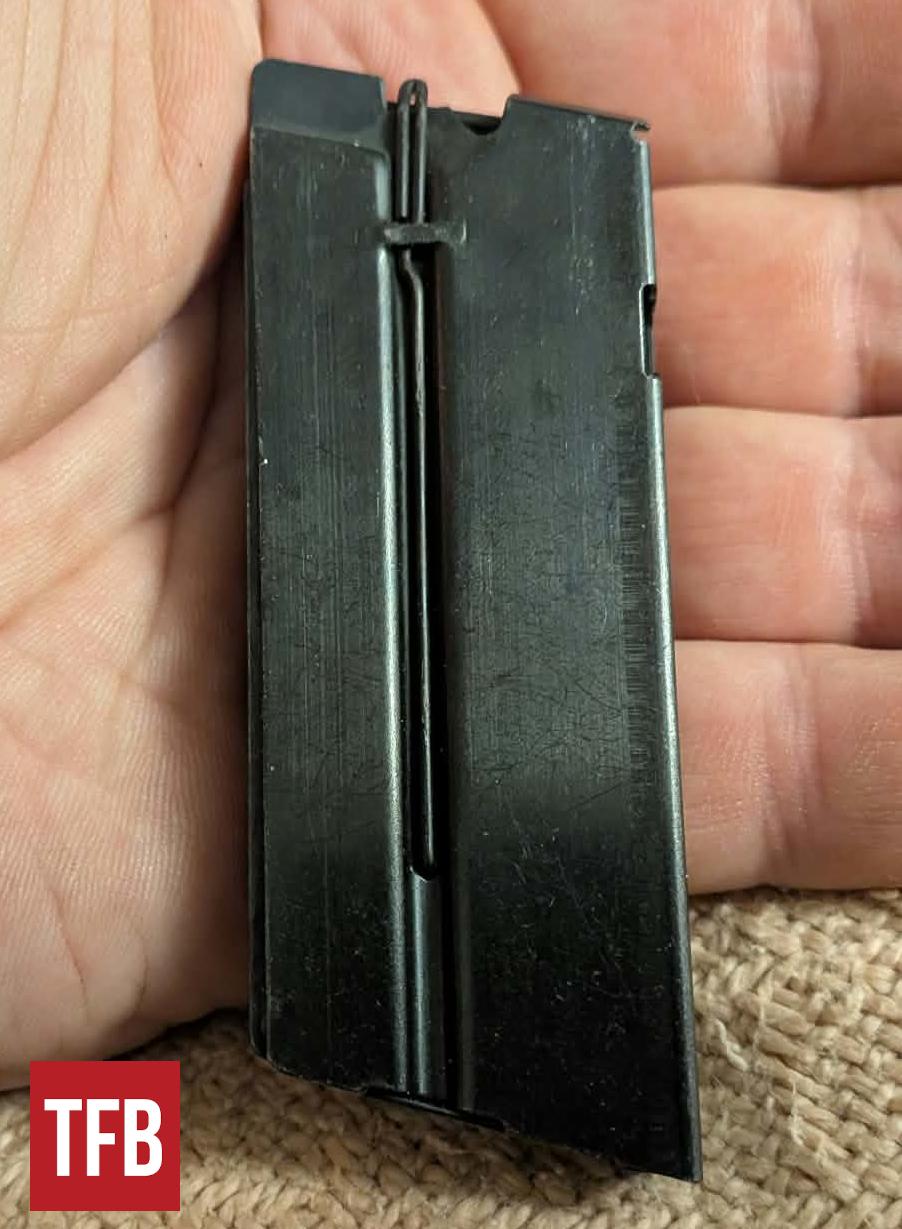
A piece of wire is a cheap fix for the mag, but seems to be quite effective. [Zac K.]
When you start shooting the AR-7, you’ll notice the sights are crude, but they will definitely work on small game at reasonable distances. The rear peep is adjustable for elevation with a simple slot-head screw; loosen it to move the sight in either direction. The front sight drifts side-to-side for windage adjustment, with no tools. In my opinion, the front sight is the weakest part of the whole design, as it can be moved laterally without realizing it. If you’ve only got a handful of .22LR shells to help you survive, the last thing you need is to accidentally bump your gun’s sights out of whack, meaning you miss that ptarmigan that might have kept you alive. If you actually plan to use the AR-7 for survival (say, you’re a bush pilot and you want a rifle in your kit), then you need to devise a way to better secure the front sight. If putting it askew would be a big problem, losing the blade would be even worse.
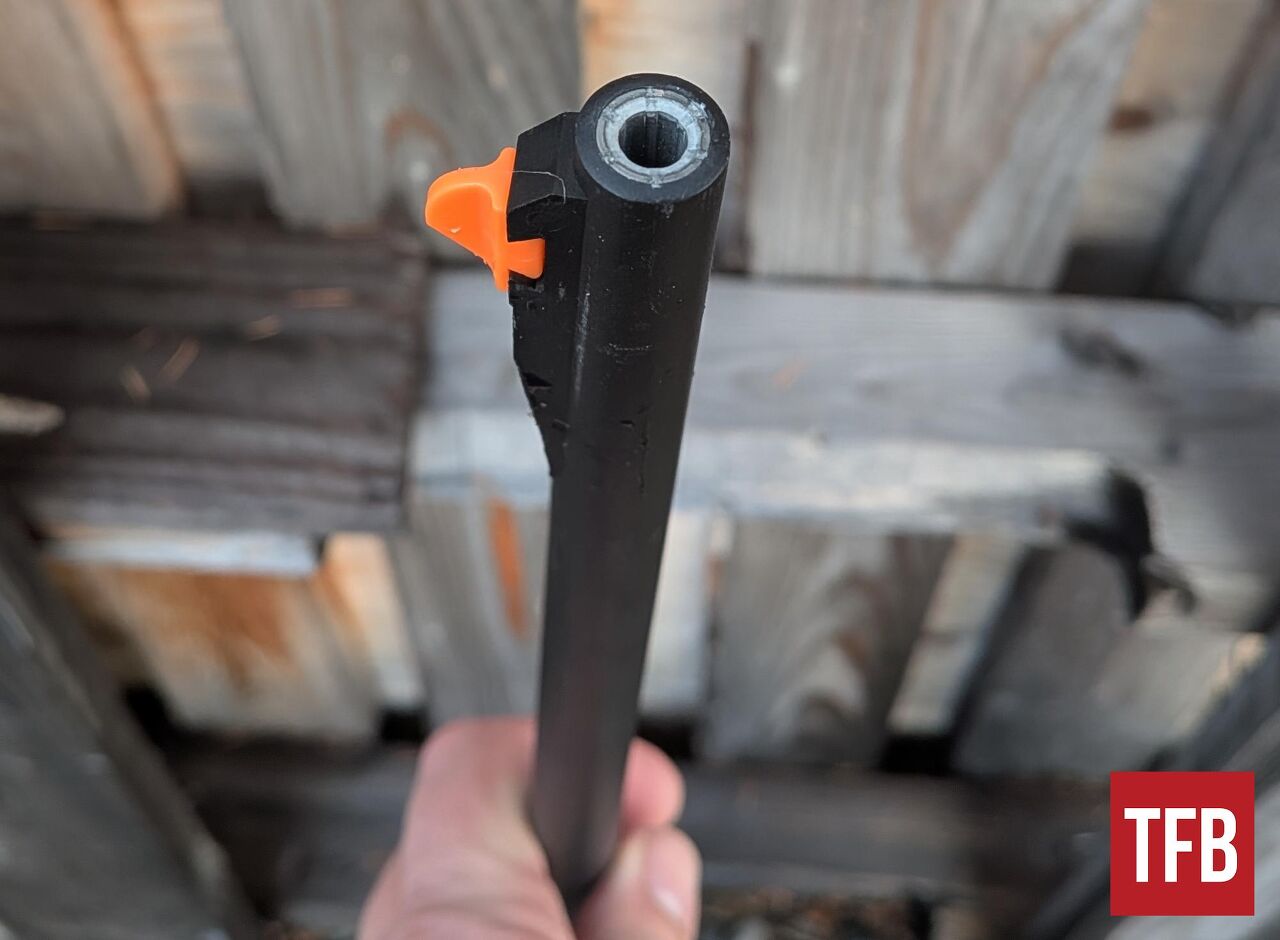
You can easily drift that sight side to side, maybe too easily. Note that much of the barrel’s bulk is a plastic outer layer. A steel inner liner provides rifling and strength to resist pressure. The plastic exterior of the rifle, including the barrel, means it’s quite weather-resistant. [Zac K.]
However, I will say that my rifle remained minute-of-a-prairie-dog-head accurate any time I shot it at small game targets at the range. In fact, when shooting after I bought it years ago, I was quite happy to see that my second-generation rifle was more accurate than the earlier one I owned. It had no trouble blasting the heads of small-game targets at the ranges you’d be shooting them at, and a body shot would, of course, be that much easier. If I had to stake my life on the AR-7 feeding me, I’m confident it would do the job. Surprisingly, the best-performing ammo I used was CCI Blazer—inexpensive and not too hot for the rifle (Henry recommends standard-velocity rounds). Other CCI ammo I used also worked well, but Blazer was best.
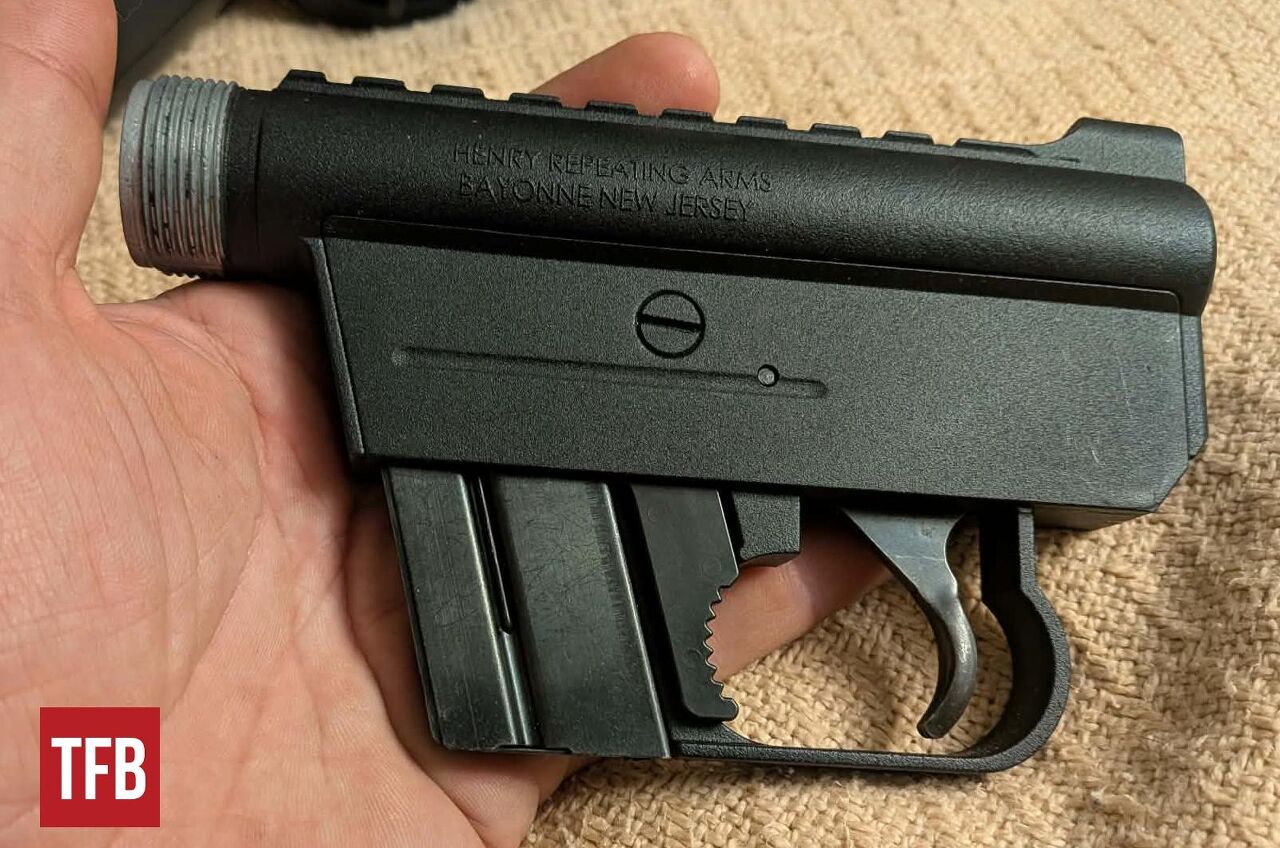
The magazine release at the front of the trigger guard can be activated accidentally. [Zac K.]
When the shoot is over, it’s time to pack the gun away into its stock again. Henry, when they started production, went to an ABS plastic stock instead of the fiberglass original design. It’s supposed to be tougher; I expect it is, but I still wouldn’t drive an ATV over it, and I wouldn’t expect it to float for very long if I threw it in a river (the originals were supposed to float, although I’m not sure it’s as big a feature as they say).
The updated AR-7
Currently, Henry sells the AR-7 as the H2 Survival rifle. Along with the standard black finish on the stock and the plastic barrel (it has a steel liner), they also offer a True Timber Kanati Camo pattern and True Timber Viper Western Camo pattern. They might look cool, but in my opinion they don’t add to the rifle’s survival utility.
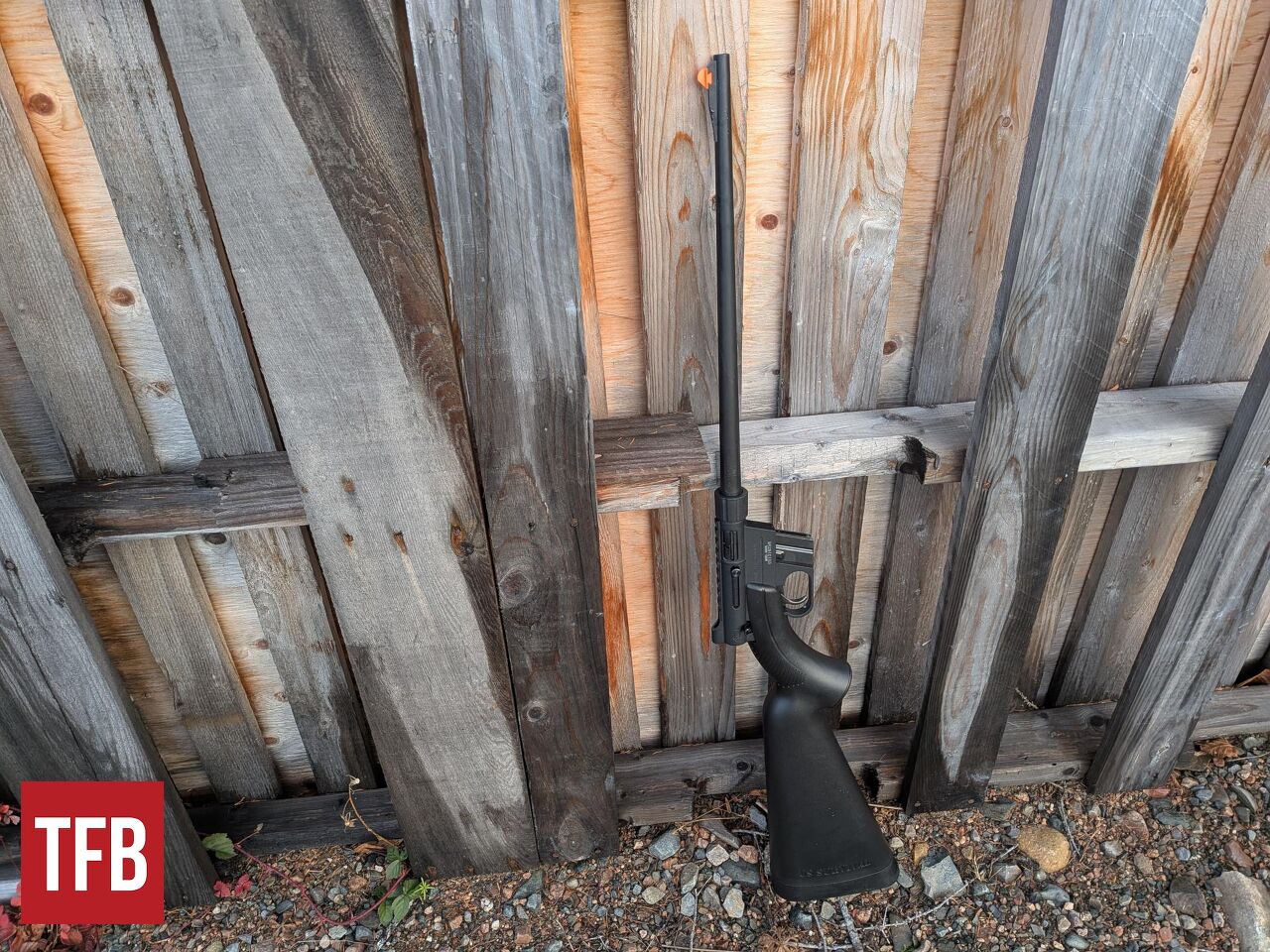
Despite all the takedown survival rifles of recent years, no other manufacturer has made a package quite as tidy as AR-7’s stowaway design. [Zac K.]
The bottom line
Over the past 50 years, the AR-7 has to be one of the most misunderstood guns in the world, thanks to Hollywood and survivalist magazines. That exposure might have sold the rifle at first, but when it didn’t live up to the hype from the James Bond films (and when sub-part manufacturing meant the gun broke down), frustrated buyers said the AR-7 was junk.
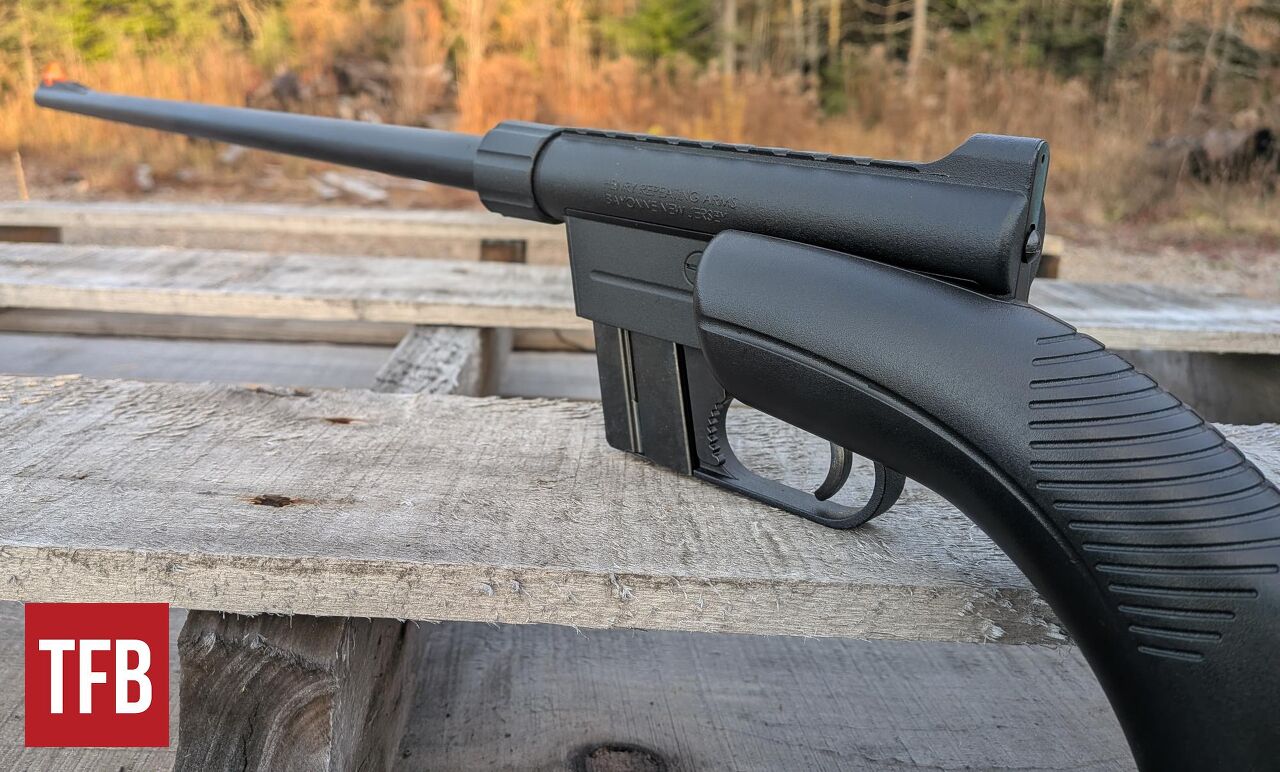
Maybe not a survivalist’s tactical gun, but for real-world life-or-death situations? The AR-7 is surprisingly effective. [Zac K.]
These days, the AR-7 (or the H2 Survival, as it’s been renamed) is not junk. It functions well enough for survival work, and if you have a problem, Henry has a lifetime warranty to take care of you. You will never use this to down an enemy agent’s helicopter, but even if you aren’t using it for survival, the AR-7 stows away handily in your car or ATV or motorcycle’s luggage compartment. It makes a great plinking rifle, and can even be used for small game hunting. There’s a lot to like here, if you’re willing to look past the reputations built by past, inferior versions of the rifle.
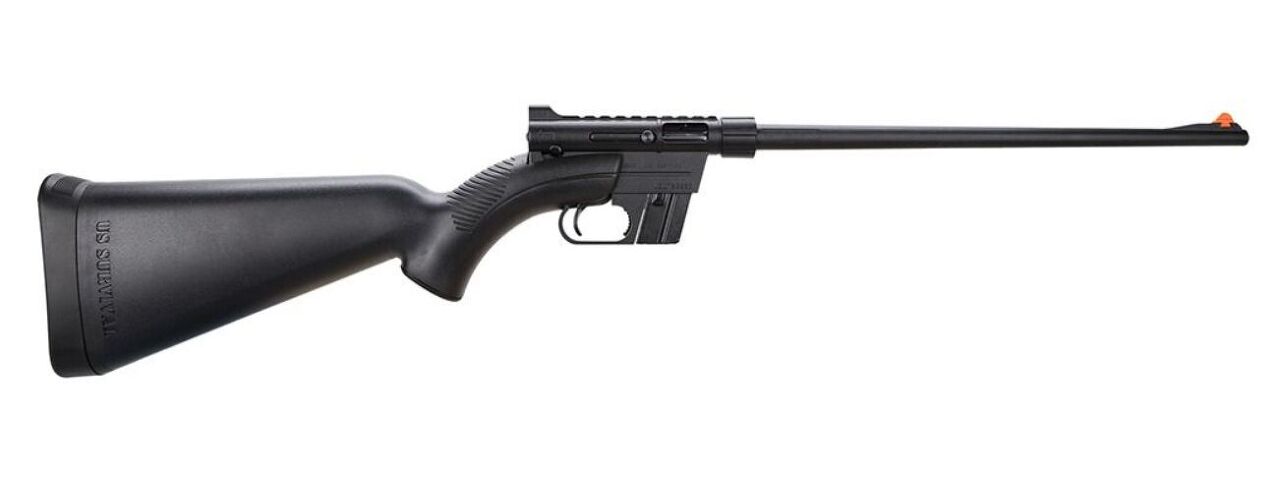
Henry H2 U.S. Survival Rifle
If this post has you ready to hit the range, head over to gunranges.com - a free directory to help you find shooting ranges near you, wherever you are in the United States.
We are committed to finding, researching, and recommending the best products. We earn commissions from purchases you make using the retail links in our product reviews. Learn more about how this works.
Related Topics: