Highland Park Lawsuit Subpoenas James Reeves, Treats Gun Reviews as ‘Advertising’

A lawsuit attempting to hold Smith & Wesson responsible for the crimes committed during the 2022 Highland Park parade shooting is now reaching beyond the firearm manufacturer and into the gun media.
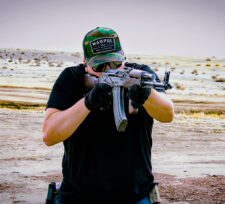
Firearms reviewer and attorney James Reeves disclosed on X that he was served with a subpoena demanding years of records and analytics concerning Smith & Wesson and reviews he has produced.
The most troubling part for firearm journalists and content creators is how broadly Reeves says the subpoena defines advertising. According to Reeves, the plaintiffs’ definition includes “even unpaid organic social-media content.”
In other words, an independent review of a lawful firearm could be treated as corporate advertising merely because the reviewer received, tested, or discussed the product.
That is a dangerous theory with implications extending well beyond Smith & Wesson or the firearm industry.
I was just subpoenaed in an anti-gun lawsuit…for being a guntuber. Link to the lawsuit is below. The case is Roberts v. Smith & Wesson, and it’s the same playbook, almost copy+paste, of the Soto v. Bushmaster “Sandy Hook” lawsuit against Remington, which put them out of…
— James Reeves (@jjreeves) September 14, 2026
Everytown Lawsuit Targets Smith & Wesson Marketing
The subpoena arises from Roberts v. Smith & Wesson Brands, Inc., No. 22-LA-00000487, pending in the Circuit Court for Illinois’s 19th Judicial Circuit in Lake County.
The case was filed by Keely and Jason Roberts, individually and on behalf of their twin sons. The family attended the July 4, 2022, parade in Highland Park when murderer Robert Crimo III fired 83 rounds from a rooftop, killing seven people and injuring dozens more.
The Roberts family suffered horrific injuries. According to the complaint, Keely Roberts was shot through the foot, one son was struck by shrapnel, and the other suffered catastrophic injuries that left him unable to walk.
Those facts are tragic. They do not, however, make Smith & Wesson or independent firearm reviewers responsible for the deliberate actions of a murderer.
The 78-page First Amended Complaint—signed by attorneys from Everytown Law and several private firms—names Smith & Wesson, Budsgunshop.com, Red Dot Arms, Crimo, and Crimo’s father as defendants.
The lawsuit advances 11 counts, including alleged violations of the Illinois Consumer Fraud and Deceptive Business Practices Act, deceptive trade practices, negligence, battery, assault, and emotional distress.
Its central theory against Smith & Wesson is that the company unfairly marketed the semiautomatic M&P15 to adolescent and young adult men through military imagery, appeals to excitement and adrenaline, first-person-shooter aesthetics, and social-media influencers.
The complaint repeatedly describes the M&P15 as an “assault rifle” and a “weapon of war.” It alleges that Smith & Wesson’s marketing influenced Crimo’s decision to select the rifle for his attack. That is an allegation, not a finding by the court.
Gun Media Named as Discovery Respondents
The complaint does more than attack Smith & Wesson’s advertising. It separately names Cybear Interactive, Watauga Group, and Clandestine Media Group as “respondents in discovery.” They are not listed as defendants.
The complaint contains only two paragraphs addressing these companies. It alleges that they may possess information “essential” to determining the parties or issues and asks that they answer interrogatories, produce records, and appear for depositions.
Reeves now says the plaintiffs have followed through by serving him with a subpoena seeking years of information concerning Smith & Wesson and his reviews.
AmmoLand reviewed the First Amended Complaint and Reeves’s public statement. The subpoena itself was not included with the documents reviewed, so its precise language and demands are being reported based on Reeves’s account.
According to Reeves, the requested material potentially reaches nearly any YouTube video discussing the M&P15 during the relevant period—even content produced independently and without payment from Smith & Wesson.
“If a manufacturer sends a journalist or creator a product to independently test, that does not magically transform the resulting review into advertising,” Reeves wrote.
That distinction should be obvious. A favorable firearm review does not become an advertisement merely because the manufacturer supplied a sample. Nor does a manufacturer control every conclusion, criticism, or demonstration published by an independent reviewer.
Treating journalism as advertising could allow plaintiffs to drag reporters and creators into litigation simply for covering firearms someone later misused.
Lawsuit Seeks Restrictions on Smith & Wesson Speech
The plaintiffs are seeking monetary damages, but they also want the Illinois court to impose sweeping restrictions on Smith & Wesson’s marketing.
The requested injunction would prohibit Smith & Wesson from targeting AR-15-style rifle marketing at children and young adults and from using military branding, imagery, or references. It would also require age gates on social media, warnings in advertisements, and disclosure whenever an advertisement features actors.
The complaint relies heavily on the claim that Smith & Wesson created a misleading association between its M&P rifles and the United States military. It further alleges that marketing rifles with military themes encourages civilians to engage in unlawful military, militia, or paramilitary activity.
The argument effectively treats ordinary images of lawful rifle use, tactical training, or military heritage as evidence of wrongdoing. Now, based on Reeves’s description of the subpoena, plaintiffs appear prepared to apply that same theory to independent firearm coverage.
Another Attempt to Plead Around the PLCAA
Reeves characterizes the case as another attempt to circumvent the federal Protection of Lawful Commerce in Arms Act.
Congress enacted the PLCAA to prevent firearm manufacturers and sellers from being held civilly liable for harm caused by criminals who misuse lawful products. The law contains specific exceptions, including cases involving defective products, negligent entrustment, and knowing violations of laws governing firearm sales or marketing.
Gun-control organizations have increasingly attempted to fit their cases within those exceptions by framing traditional product advertising as consumer fraud or unlawful marketing.
Reeves compared the Roberts case to the litigation brought against Remington following the Sandy Hook murders. He also connected the subpoena to his work on proposed state legislation intended to clarify and reinforce protections against lawsuits based on third-party criminal misuse.
Regardless of how the Illinois court ultimately rules, the effort to classify independent reviews as advertising should concern every journalist and content creator.
The Second Amendment protects the right to keep and bear arms. The First Amendment protects the right to speak, publish, and report about them. Anti-gun litigants should not be permitted to evade one constitutional protection by attacking the other.
Reeves advised firearm-media professionals who receive similar subpoenas not to ignore them—and not to delete records. That is sound advice. A subpoena is a legal demand requiring a serious and timely response.
It is also a warning that the gun-control lobby’s campaign against the firearm industry is expanding. The target is no longer limited to manufacturers and dealers. The people who review, explain, and report on lawful firearms are now being pulled into the fight.
About Duncan Johnson:
Duncan Johnson is a lifelong firearms enthusiast and unwavering defender of the Second Amendment—where “shall not be infringed” means exactly what it says. A graduate of George Mason University, he enjoys competing in local USPSA and multi-gun competitions whenever he’s not covering the latest in gun rights and firearm policy. Duncan is a regular contributor and editor-in-chief for AmmoLand News and is responsible for AmmoLand’s daily gun-rights reporting and industry coverage.