SCOTUS Leaves Maryland Gun-Free Zones Intact as Justice Thomas Questions Carry Bans
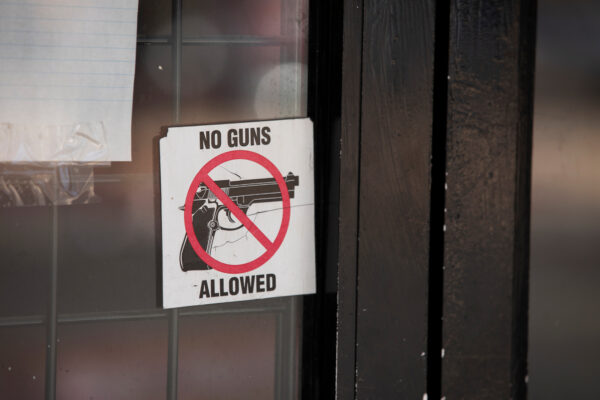
The U.S. Supreme Court declined to hear a challenge to Maryland’s sweeping restrictions on where law-abiding citizens can carry firearms, leaving much of the state’s expansive network of so-called gun-free zones intact. However, Justice Clarence Thomas issued a pointed statement questioning whether these prohibitions have any legitimate basis in America’s historical tradition of firearm regulation.
On November 16, 2026, the Supreme Court denied certiorari in Novotny v. Moore, No. 25-1324, allowing a Fourth Circuit ruling upholding Maryland’s challenged carry restrictions to stand. The decision is a setback for gun owners who argued that the state’s restrictions violate the Second Amendment under the Supreme Court’s landmark New York State Rifle & Pistol Association v. Bruen decision.
But the Court’s refusal to take the case was not an endorsement of Maryland’s laws. In a four-page statement accompanying the denial, Thomas expressed skepticism that the state’s restrictions could survive the historical test established in Bruen and suggested the Court should revisit the issue in a more narrowly focused case.
Maryland’s Sweeping Gun-Free Zones Remain in Place
Maryland’s restrictions prohibit lawful firearm carry across a broad range of public locations, including mass transit, public demonstrations, amusement venues, healthcare facilities, and establishments selling alcohol for on-site consumption.
The prohibitions also extend across tens of thousands of acres of state parks and forest land, effectively disarming citizens who would otherwise lawfully carry firearms for personal protection.
The restrictions were challenged under the Second Amendment, but the U.S. Court of Appeals for the Fourth Circuit upheld the provisions at issue in Kipke v. Moore, 165 F.4th 194 (2026), concluding that the locations qualified as sensitive places where firearm possession could be prohibited. The appeals court upheld all but one of Maryland’s challenged location-based restrictions.
The Supreme Court’s decision not to review the case leaves the Fourth Circuit’s ruling undisturbed. It does not, however, establish that Maryland’s restrictions are constitutional under the Second Amendment.
For Maryland gun owners, the practical result is that the state can continue enforcing the challenged restrictions, forcing lawful carriers to navigate an expanding patchwork of prohibited locations during otherwise ordinary daily activities.
Thomas Questions the Historical Basis for Sweeping Carry Bans
Justice Thomas, who authored the Supreme Court’s majority opinion in Bruen, took direct aim at the growing use of sensitive-place designations to restrict public carry.
Thomas explained that the Second Amendment protects a preexisting right to keep and bear arms, including carrying firearms in public for self-defense. Under Bruen, governments seeking to restrict that right must demonstrate that their regulations are consistent with the nation’s historical tradition of firearm regulation.
Historically, the Supreme Court has acknowledged a narrow tradition of prohibiting firearms in certain locations, including legislative assemblies, polling places, and courthouses.
That limited historical exception, Thomas argued, cannot simply be expanded to encompass every location where members of the public gather.
The distinction is critical. The Second Amendment does not become optional simply because a citizen enters a restaurant, visits a park, rides public transportation, or attends a public event. Yet that is precisely the result of the sweeping sensitive-place restrictions enacted by Maryland and several other states.
Thomas pointed to Maryland’s prohibitions as examples of restrictions that raise serious constitutional questions, although he stopped short of deciding whether any individual provision violates the Second Amendment.
His criticism reflects a fundamental principle established in Bruen: The government bears the burden of justifying restrictions on the right to bear arms through historical precedent, not through modern policy preferences about where citizens should be allowed to defend themselves.
Thomas Points to Gun-Free Zones in Other States
Maryland is hardly alone in using sensitive-place designations to restrict the carrying of firearms.
Thomas identified similar restrictions in New Jersey, New York, California, Illinois, and Hawaii, illustrating how states have expanded gun-free zones into ordinary public spaces.
According to his statement, New Jersey prohibits firearms in at least 25 categories of locations, including zoos, public libraries, casinos, and state-owned beaches. New York has designated 20 categories of sensitive locations, while California’s law identifies 29 gun-free spaces, including athletic facilities, financial institutions, and certain public gatherings.
Thomas questioned the historical foundation of these prohibitions and criticized their cumulative effect on the ability of ordinary citizens to carry firearms for self-defense.
The concern extends far beyond any single prohibited location. When lawmakers designate enough places as sensitive, the exception threatens to swallow the constitutional right itself.
A citizen might legally carry a handgun while walking down a public sidewalk, only to encounter restrictions when entering a restaurant, visiting a park, boarding a bus, or attending a public gathering. Each additional prohibition reduces the places where the right recognized in Bruen can actually be exercised.
Thomas also noted that federal appeals courts have largely upheld these modern restrictions, even as their historical justification remains questionable.
Why Thomas Agreed to Reject the Case
Despite his constitutional concerns, Thomas agreed with the Supreme Court’s decision not to hear Novotny v. Moore.
His reasoning was procedural rather than an endorsement of Maryland’s restrictions.
The lawsuit challenged numerous laws covering different types of locations, each potentially requiring a separate historical analysis. Thomas explained that addressing such a broad collection of restrictions in one case would complicate the Court’s review.
Instead, he suggested that a narrower challenge targeting particular sensitive-place prohibitions would provide a better opportunity for the justices to examine the limits of state authority under the Second Amendment.
That distinction matters because Thomas did not reject the constitutional arguments against Maryland’s laws. He questioned whether this particular case was the appropriate vehicle for resolving them.
His statement concluded by expressing serious doubts about the historical support for many sweeping location-based prohibitions and calling for the Supreme Court to examine specific sensitive-place laws in an appropriate future case.
The Constitutional Fight Over Gun-Free Zones Is Far From Over
The Supreme Court’s refusal to hear Novotny v. Moore is undoubtedly a disappointment for Maryland gun owners. The Fourth Circuit’s ruling remains in place, and citizens who lawfully carry firearms must continue complying with restrictions that Thomas himself believes raise substantial constitutional concerns.
However, the significance of his statement extends beyond Maryland.
Following Bruen, several states responded to the recognition of a constitutional right to public carry by expanding the list of locations where that right could not be exercised. Instead of accepting the Court’s protection of armed self-defense, these states sought to confine lawful carry through an increasingly extensive collection of gun-free zones.
Thomas’s statement highlights the constitutional problem with that approach. The historical sensitive-places exception was never intended to provide states with unlimited authority to disarm citizens throughout ordinary public life.
Whether the Supreme Court will ultimately confront these restrictions remains uncertain. Thomas’s statement does not guarantee that four justices will agree to hear a future challenge, much less that a majority will invalidate any particular law.
For now, Maryland’s restrictions survive. But the underlying constitutional question remains unresolved: How can states recognize a right to carry firearms in public for self-defense while simultaneously declaring so many public places off-limits?
That is a question the Supreme Court will eventually need to confront if the right recognized in Bruen is to mean anything beyond the boundaries lawmakers choose to leave available.
About Duncan Johnson:
Duncan Johnson is a lifelong firearms enthusiast and unwavering defender of the Second Amendment—where “shall not be infringed” means exactly what it says. A graduate of George Mason University, he enjoys competing in local USPSA and multi-gun competitions whenever he’s not covering the latest in gun rights and firearm policy. Duncan is a regular contributor and editor-in-chief for AmmoLand News and is responsible for AmmoLand’s daily gun-rights reporting and industry coverage.