Should You Switch to a 20-Gauge for Duck Hunting? We Field Tested the 12 vs 20 Gauge for Lethality
Take a look around the duck hunting world and you’ll see a lot of top “influencer” types shooting sub-gauge shotguns. That’s partly because it’s the trendy thing to do these days and partly because there are some good reasons to switch from a 12 gauge to a 20.
Shotgun companies have done a great job of offering a better variety of 20-gauge options. And up until very recently, ammo companies were rolling out all kinds of denser-than-steel pellet materials that promised to make the 20 gauge a true duck slayer. But now that bismuth and tungsten-based loads are scarcer and pricier, it’s worth reconsidering if a 20-gauge is the right choice for you.
In order to satiate my own curiosity on this matter, OL’s multi-media producer Roy Holdford and I set out to conduct a very unscientific field test. On the opening day of Minnesota’s duck season we hunted with a 20 gauge and on the second day of the season we shot a 12 gauge. We traded filming and shooting and took notes on our results. We wanted to see, at least anecdotally, if there was a noticeable difference in lethality when shooting a 20 gauge vs a 12 gauge.
Then we’d head to the range to do some patterning. We wanted to see if we could change up our load selection in a way that would give the 20 gauge downrange performance similar to a 12 gauge.
The Test Guns & Ammo

For this field test we shot two Browning A5s, both with 28-inch barrels and modified chokes. The 20-gauge camo version of this gun is, in my opinion, the perfect example of a sub-gauge duck gun. It is super light. If you’re going with a smaller platform you might as well go all the way. Plus, the A5s I’ve shot in the past have handled well and thrown great patterns.
In terms of ammo selection, in an apples to apples comparison the 12 gauge will smoke the 20 gauge every time (more on this later). So for our hunts I went with what I thought would be the most effective load for each gun in each situation. We were targeting early-season puddle ducks (teal, wood ducks, and mallards) at distances of about 15 to 45 yards. For 12-gauge ammo I went with Remington Nitro-Steel No. 4s with a 1 ⅜ ounce payload. For 20-gauge loads I chose Apex Ammunition Steel/TSS stacked load of No. 7.5 TSS and No. 4 steel and a 1 ⅛ ounce payload.
20 Gauge Advantages
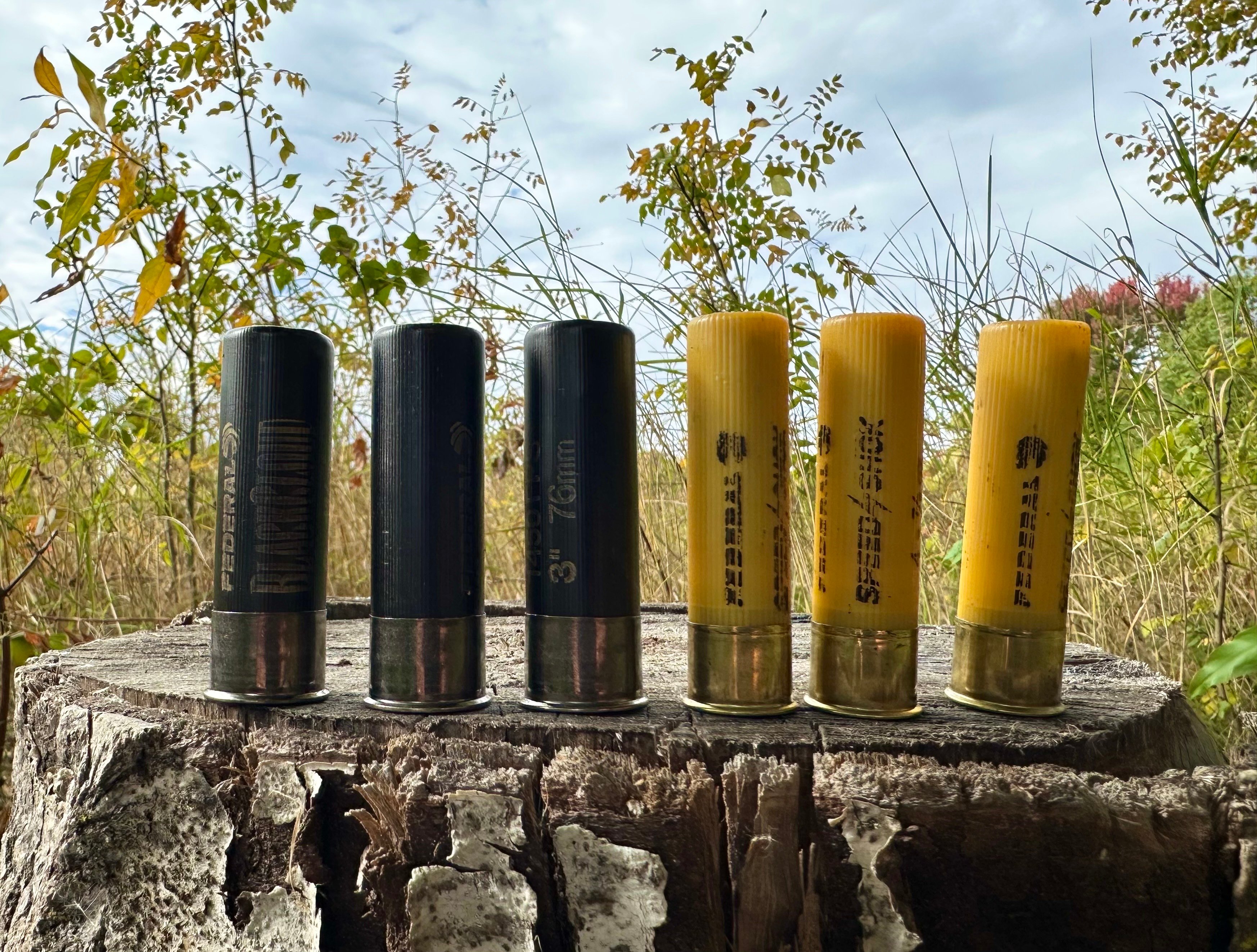
When you’re hunting with a 20 gauge the first and most obvious advantage is that the gun is lighter. How much lighter depends on the platform, but the Browning A5 20-gauge we shot weighs under six pounds. I have hunted with 12 gauges that weigh about 8 pounds, so the difference there is substantial.
The point here is that it’s easier to hold a light gun when you’re standing in the marsh, hunting out a natural hide like we were. People who hunt with heavy guns tend to put them down or sling them on their shoulder. This is fine if you’re in an A-Frame blind or a pit blind and you get to watch birds work before calling the shot. But when you’re hunting in the marsh for fast-crossing teal and wood ducks, your gun needs to stay at the ready or you’ll miss shot opportunities.
On the downside, lighter guns are often harder to shoot and swing well, especially on those fast crossing shots. Light 20 gauges can sometimes feel a little whippy. So if you’re going to hunt ducks with a 20 gauge, I’d recommend going with a 28-inch barrel.
The other major advantage of shooting a 20 gauge is less felt recoil. Even with this light 20 gauge, the recoil was substantially less than when shooting the 12 gauge. Some blowhard duck hunters will comment that if you can’t handle the recoil of a 12 gauge, then maybe duck hunting isn’t for you. But don’t listen to those meatheads. The real benefit of reduced recoil is that it’s easier to shoot follow up shots quickly and transition to a second bird more smoothly. This is especially true when you’re standing in muck or shooting from a boat — heavy recoil from a 12 gauge can nudge you off balance.
Also, when you shoot a heavy-recoiling shotgun day after day (think a weeklong hunt in Canada or North Dakota where you’re banging away constantly), there’s a tendency to not get your head down fully on the gun stock. Folks do this subconsciously to avoid that harsh recoil to the cheek, and the result is almost always bad misses. Often the shooter doesn’t know why they’re missing, which only makes things more frustrating. I think this happens less often when shooting a 20 gauge.
12 Gauge Advantages
The 12 gauge is still the king of the duck marsh when it comes to popularity. But there are some misconceptions about it. You’ll hear people talk about how a 12 gauge has more “knockdown power” but that’s only partly true. Pellets fired from a 12 gauge and 20 gauge at the same velocity have the same amount of lethality. Compare boxes of 12 gauge vs 20 gauge ammo and you’ll see similar velocities for both. Also, as shotshell expert Tom Roster wrote: “There is little to no ballistic improvement or lethality to be gained by going [with higher velocity].”
So there’s nothing extra deadly about a pellet flying out of a 12 gauge. But shot sizes and pellet materials being equal, 12-gauge shotshells pack a lot more pellets. It really all comes down to basic math. A larger shell means more volume for pellets. For context, 12 gauges usually shoot shells that have a payload of 1 1/4 ounces to 1 1/2 ounces and 20-gauge payloads are usually 1 ounce. Here’s a look at some typical waterfowl load pellet counts for 12 gauge vs 20 gauge ammo.
- 12 gauge, 1 ¼ ounce, Steel No. 4s = 240
- 20 gauge, 1 ounce, Steel No. 4s = 192
- 12 gauge, 1 ¼ ounce, Steel No. 2s = 156
- 20 gauge, 1 ounce, Steel No. 2s = 125
More pellets in the pattern means a higher likelihood of multiple hits in the vitals of a duck, especially at distance. Depending on your choke selection, there’s also a larger margin for error when shooting a 12 gauge at midrange.
Lastly, a lot of people find heavier, longer shotguns to be easier to shoot, especially on fast targets. That might seem counterintuitive but it’s why competitive clays guns always have long barrels and are relatively heavy. Those guns are easier to swing smoothly and they tend to keep swinging through the target at the shot.
Field Notes
On opening morning, Holdford and I hunted a midsized pond ringed with cattails. That weedy wetland was loaded with teal and wood ducks, along with a few local mallards. Legal shooting light came and ducks started buzzing our spread. As you can see in the video above, it was a dark, rainy morning. In low light, it’s harder to judge range, so I tried to be patient with my shot selection. But eventually opening day excitement got to me and I started blasting at crossing teal at the edge of the decoy spread. I missed a couple and killed a couple and then passed the gun to Holdford.
As the morning progressed and we downed more ducks for my old Lab to retrieve, we noticed that we were solidly hitting birds at about 30 yards and closer. When we shot at ducks that were beyond 35 yards, we were dropping them but not killing them cleanly. Thankfully we were hunting in a setup where we were able to recover those cripples (it was a self-contained pond with an open grass field around it). But that still meant more shots per duck, more work for the dog, and more messing around outside the blind.
The next morning, 12-gauge day, we hunted a mud flat within the bay of a little pothole. It would be a good, old-fashioned teal shoot in boot-sucking mud. Now the ducks we were shooting at the 40-yard range were going down hard. In one case I whiffed with my first two shots on a group of teal at about 20 yards. Then with my third shot I dropped one stone-dead at 45 yards.
Obviously this was a limited sample size. Between Holdford and I, we killed 12 ducks per gauge at a variety of ranges. We’d need to shoot many more and take down more thorough data points to approach any sort of conclusiveness. But both Holdford and I have shot a lot of ducks over the years and we both have a good sense of what gun/choke/load combination is killing birds versus what’s crippling them. By the end of the two hunts we both felt confident that 30 yards was the ideal max range for consistent kills with the 20 gauge and 40 yards was the max range with the 12 gauge — at least with the loads we were using and the types of ducks we were shooting.

Patterning Duck Loads
After hunting we patterned both guns with some common duck loads. We wanted to see if our theories from the field translated to data on the patterning board. And for the most part they did. To set a benchmark at 40 yards, I used 12-gauge 1 ¼ ounce No. 2 steel. I know that No. 2 steel can consistently kill ducks (because I’ve done it a bunch and shotshell expert Tom Roster says so) but I don’t think it’s wise to shoot steel beyond this distance. Here’s our patterning data from both gauges.
| Gauge | Ammo Brand | Payload | Shot Size | Range | Pellet Strikes (30″ Circle) |
| 12 | Federal Speed Shok | 1 1/4 ounces | No. 2 | 40 yards | 126 |
| 20 | Federal Speed Shok | 7/8 ounces | No. 2 | 40 yards | 90 |
| 20 | Hevi Hammer | 1 ounce | No. 3 | 40 yards | 116 |
| 20 | Apex WS3 | 1 1/8 ounces | No. 4 Steel & No 7.5 TSS | 40 yards | 152 |
| 20 | Hevi Hammer | 1 ounce | No. 3 | 30 yards | 126 |
There are a couple interesting points here. First, the 12-gauge No. 2s at 40 yards and the 20-gauge No. 3s at 30 yards threw the exact same patterns. These are both dense patterns that I feel very confident would cleanly kill medium-sized ducks and big ducks too.
The only 20-gauge patterns that could rival the 12 gauge at 40 yards were the smaller shot sizes of the steel and TSS blended loads, which are expensive ($60 per box) and sometimes tough to get your hands on. But more importantly, we didn’t see definitively clean kills with this ammo at 40 yards in the field. Since the majority of the payload is No. 4 steel, my assumption is that those lighter steel pellets have lost significant velocity at 40 yards and aren’t penetrating as well. In previous testing, I saw No. 4 steel pellets penetrate about 2.5 inches into ballistic gel at 40 yards. For comparison, steel No. 2s penetrated 3.25 inches at that distance.
Final Takeaways on 12 gauge vs 20 Gauge for Ducks
The fun part about duck hunting is decoying and calling ducks, and finishing them over the spread. If you’re the kind of dyed-in-the-wool duckman who shoots his birds close or not at all, then a 20-gauge shotgun is the obvious choice. The best and most experienced duck hunters I’ve been around want to shoot finishing birds, and they like shooting 20 gauges. Also, the sub-gauge duck gun is an ideal choice for anyone hunting ducks that will be finishing tight, like during hunts in flooded timber or on small rivers and creeks.
Go with quality steel No. 3s that pattern well out of your gun. Keep shots to 30 yards and in and you’ll kill ducks and be happy. If you intend to shoot ducks beyond 30 yards with your 20 gauge, you must experiment with smaller pellet sizes and denser-than-steel materials in order to get sufficient pattern density and penetration at distance. Start with Hevi Shot, Boss, and Apex ammo. And no matter what gauge, or choke, or ammo you go with, good shooting the key.
The post Should You Switch to a 20-Gauge for Duck Hunting? We Field Tested the 12 vs 20 Gauge for Lethality appeared first on Outdoor Life.