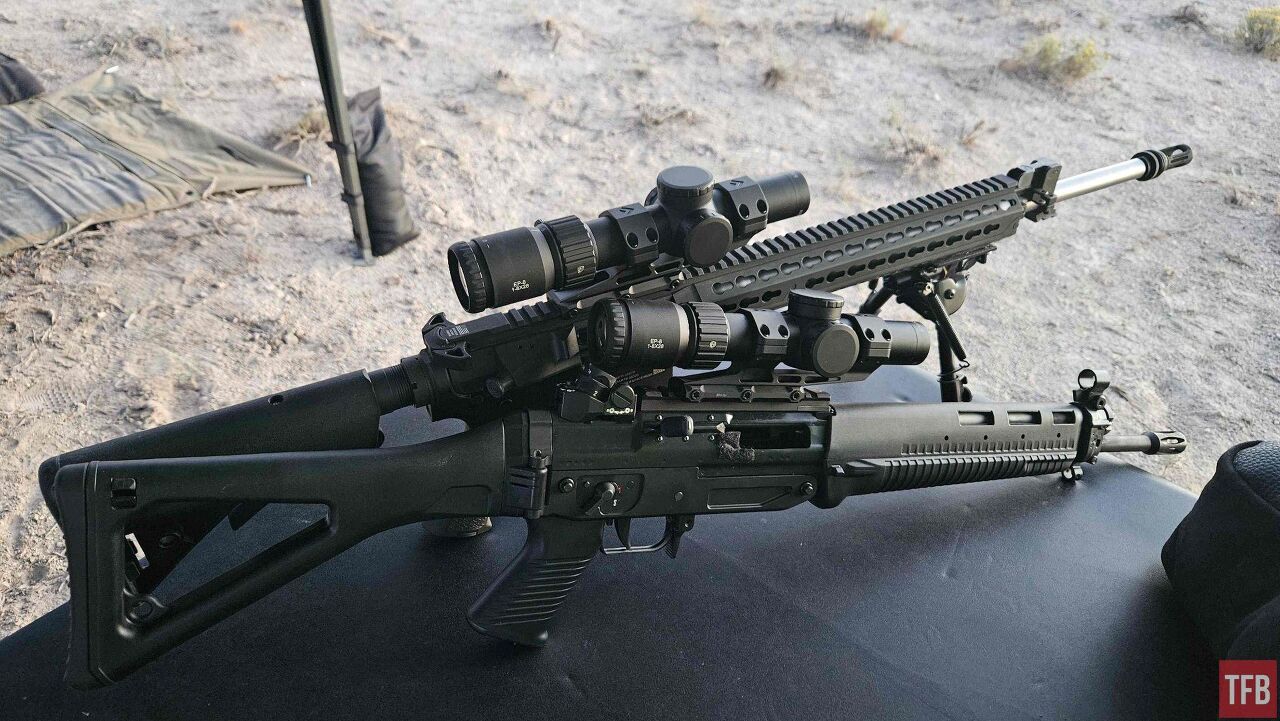
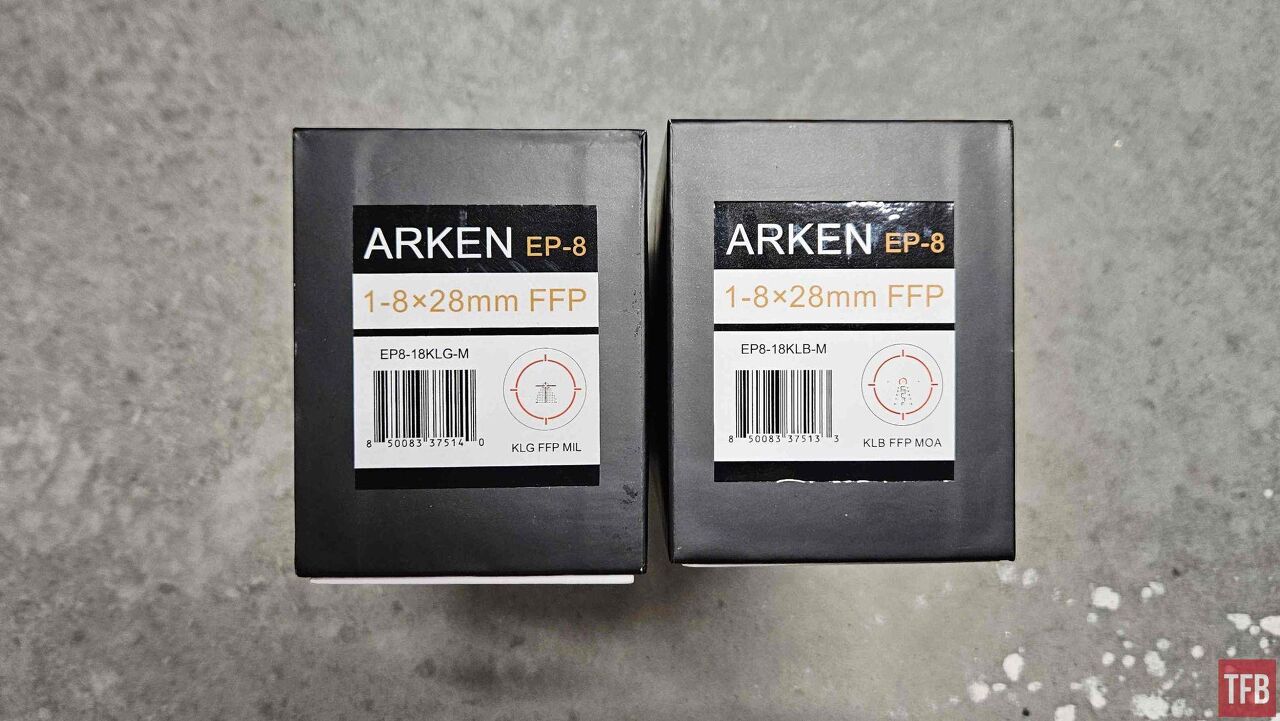
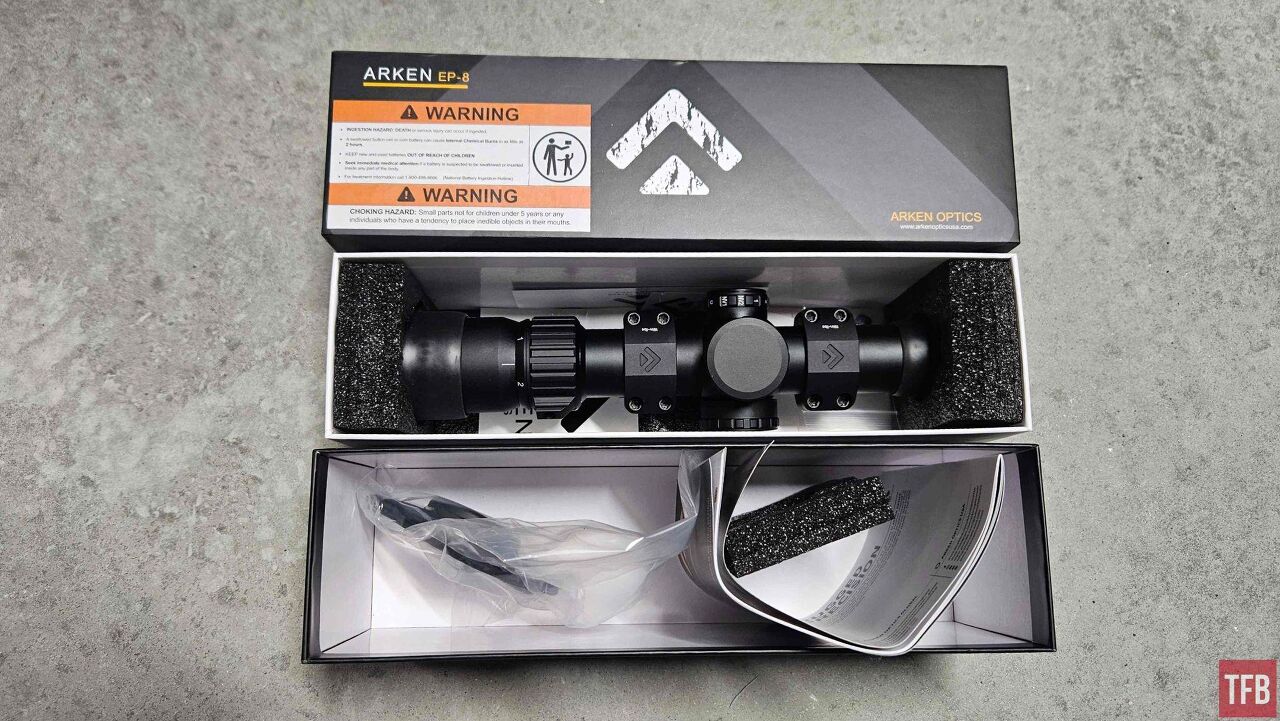
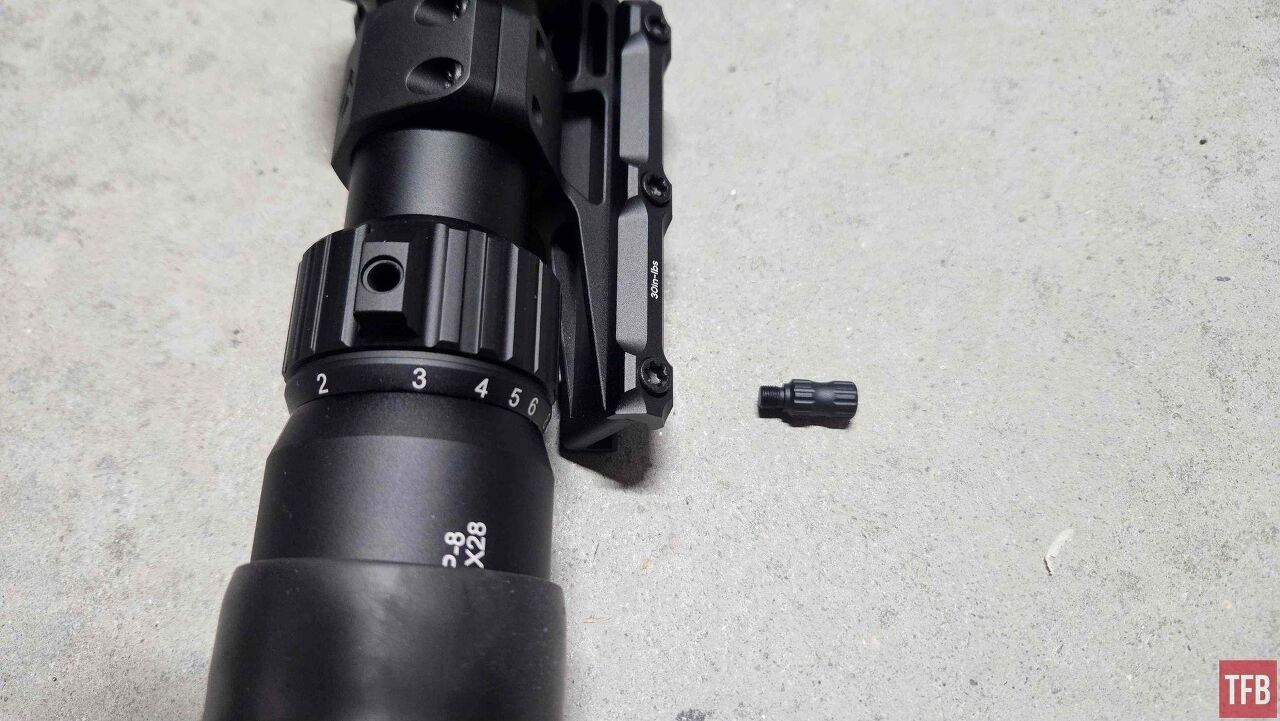
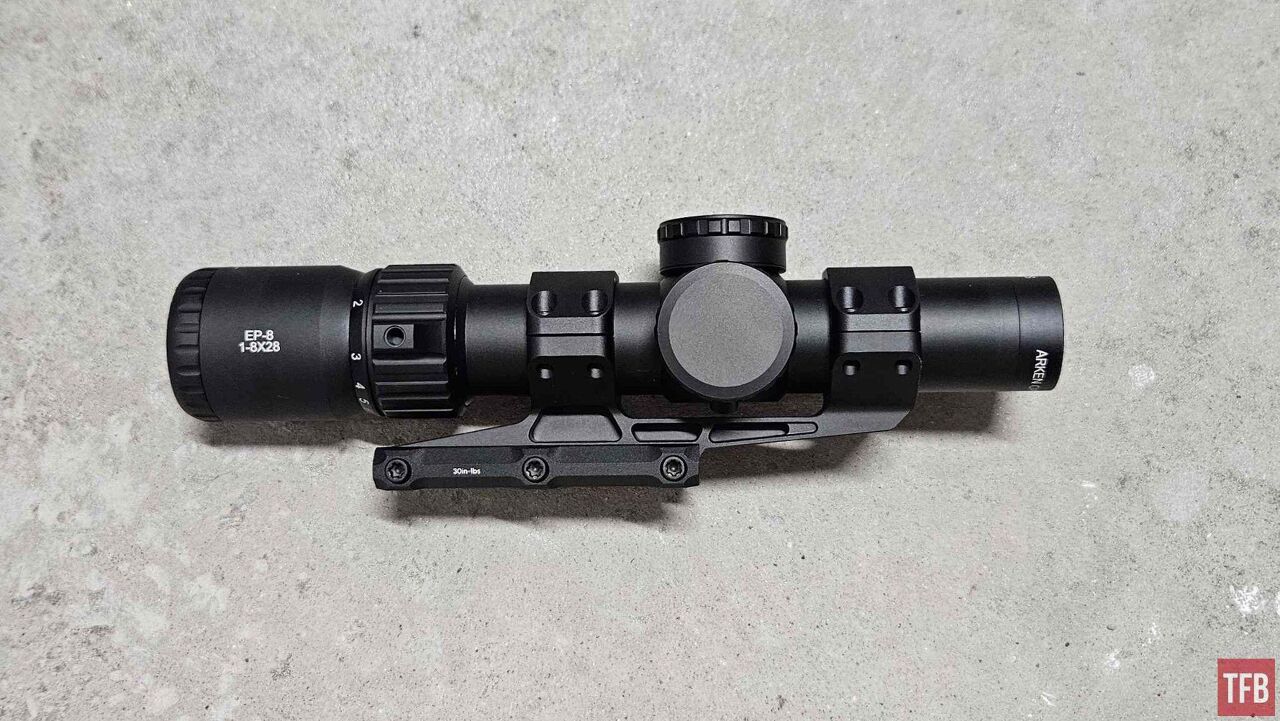
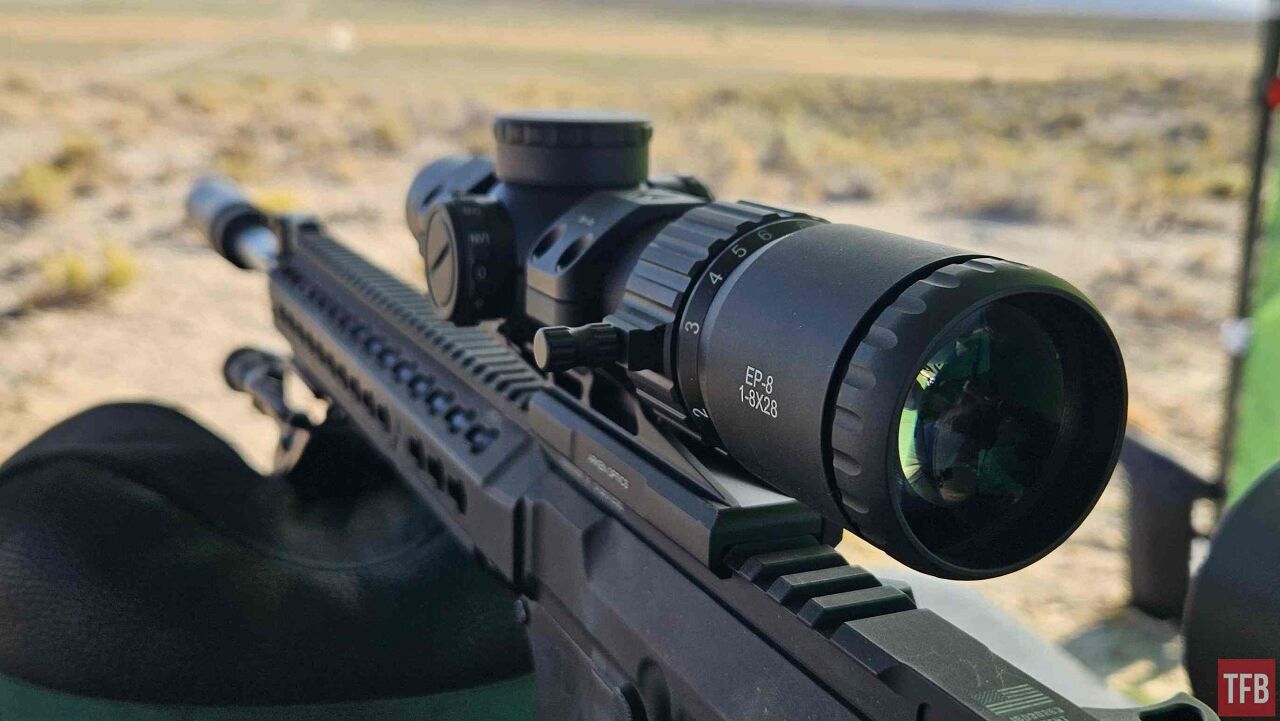
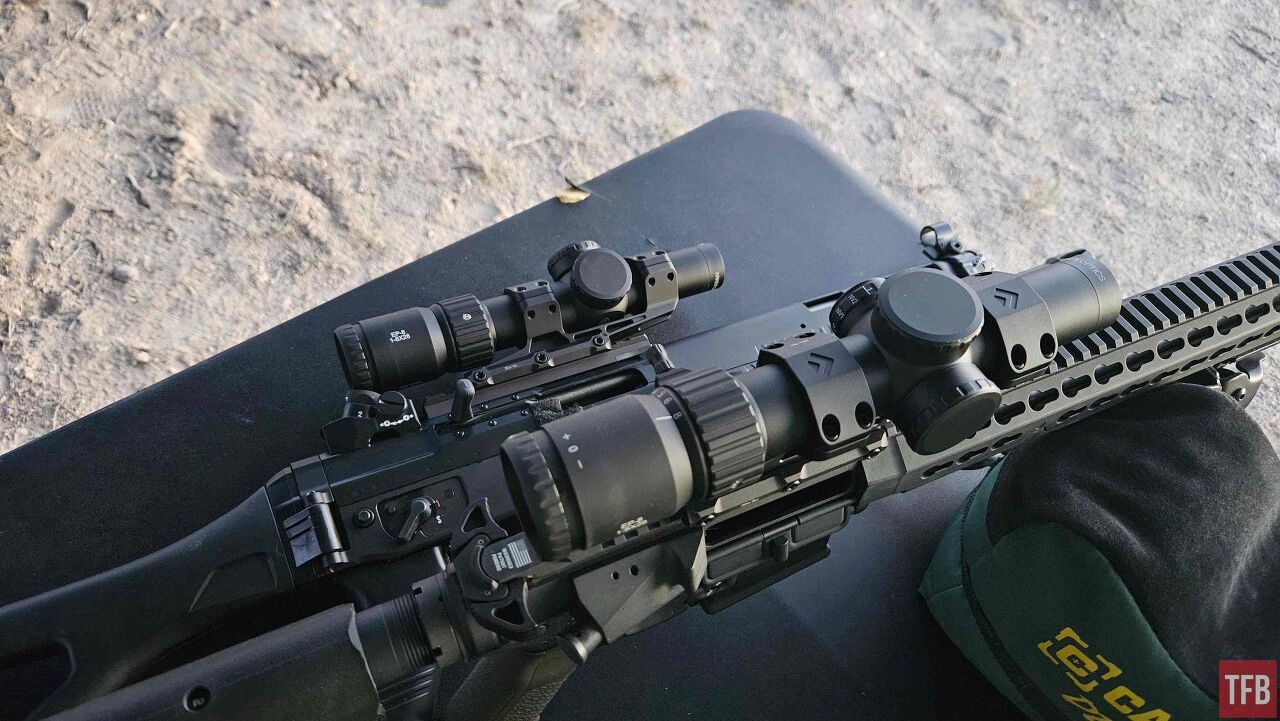
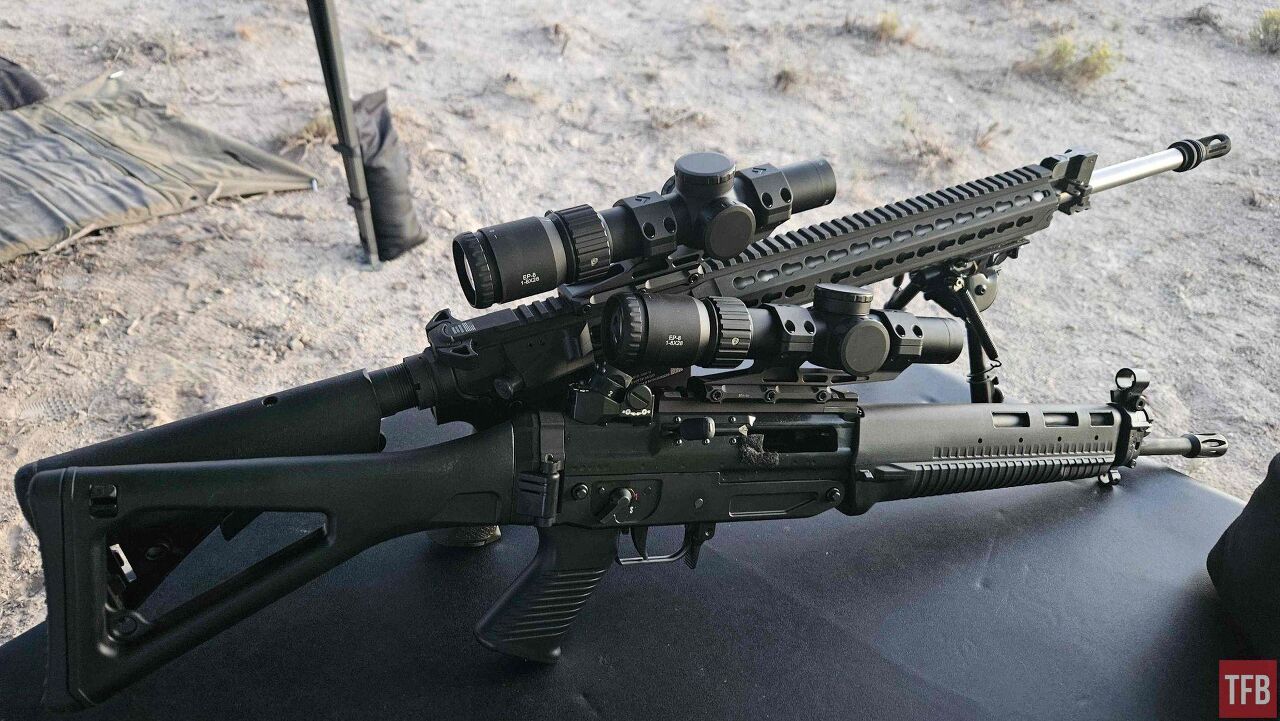
The Arken Optics EP-8 is one of the most-discussed affordable LPVO options. The company set me up with two of them to test out, representing the two reticle options. Here are my findings after putting them through the paces.
Optics Reviews @ TFB:
Disclosures: Arken provided these scopes for review. This is my first review of an Arken product.
Background & Features
Arken Optics is a newer entrant to the rifle scope market, but they have made an impact. If you ask online for a recommendation for affordable scopes, you are likely to hear Arken mentioned. Their line of products has steadily grown to include a full range of options from LPVOs to high-magnification options. The EP-8 was their inaugural LPVO design, and it is now offered in two reticle options.
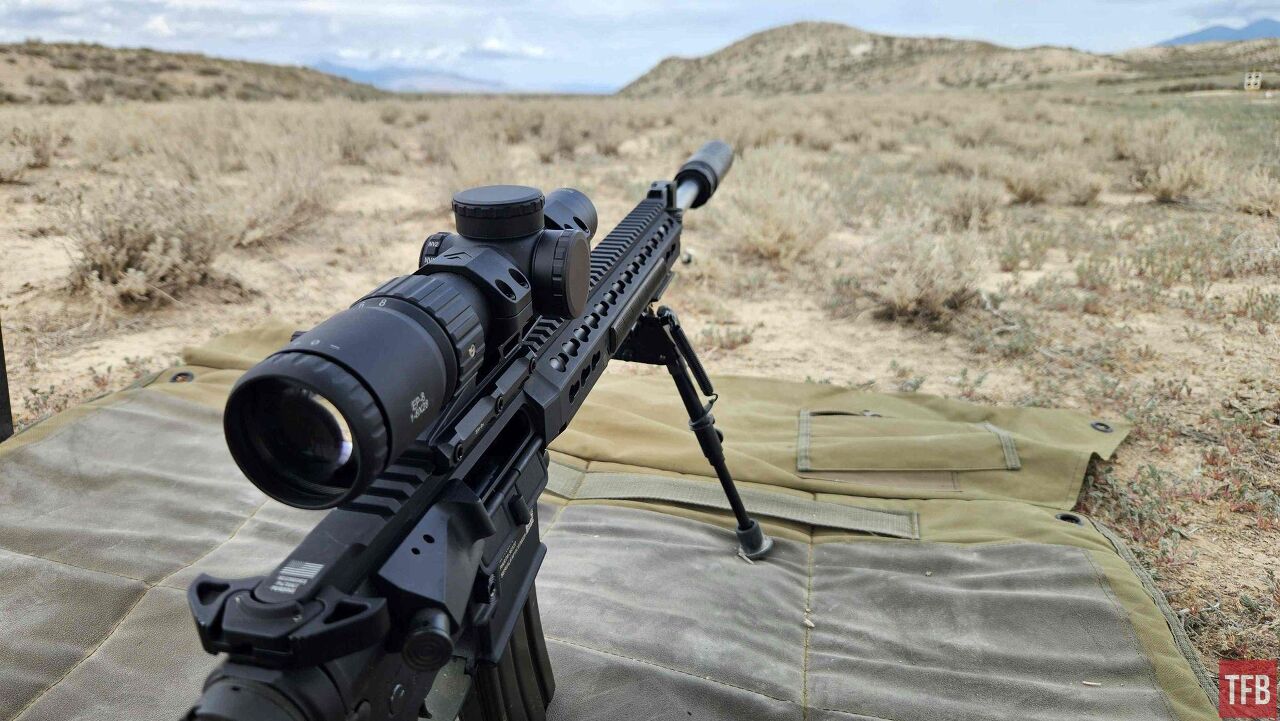
One feature I love with the current iterations of the EP-8 is the included mount setup. Arken’s approach of bundling the mount and the optic while keeping the package at an aggressive price point is an advantage for the consumer. Rather than trying to find the right size and height of mount, and then trying to level and torque that setup correctly, that work is already done. Getting out to the range requires only mounting the setup to the gun and basic boresighting.
On both of the primary guns from this test, the scope was on paper from the outset. I did not have to mess around with it to even get on paper, as has been the case with some other scopes I’ve reviewed previously. The rings were also tightened evenly. Often, factory-mounted scopes have very uneven gaps on the sides of the rings, indicative that the ring caps were tightened haphazardly.
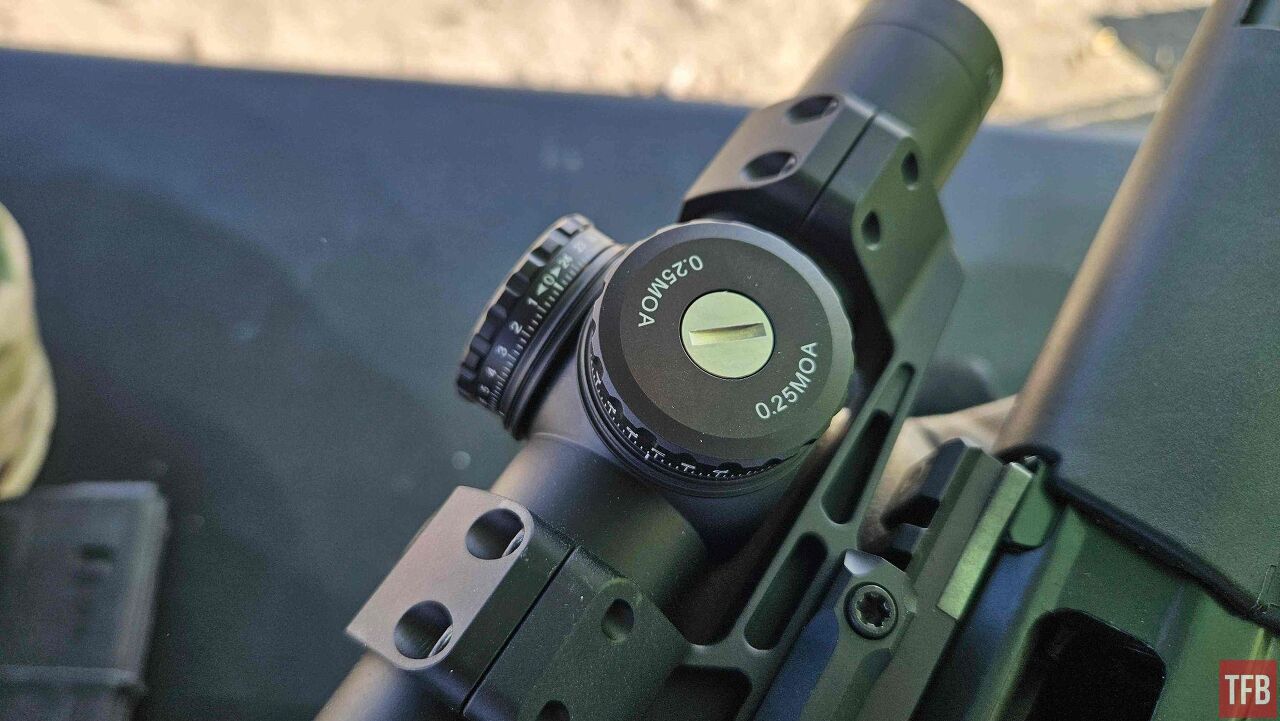
The two reticle options deserve some discussion. When the EP-8 was first released, it was only available with the KLBox or Killbox BDC reticle. This is a unique design with vertical and horizontal ranging elements on each 100-yard mark. The center of the reticle has a dot with a horseshoe outer ring. At low magnification, an outer ring is visible with hash marks at the 12, 3, 6, and 9-o'clock positions. The turrets on the KLBox have ¼ MOA clicks.
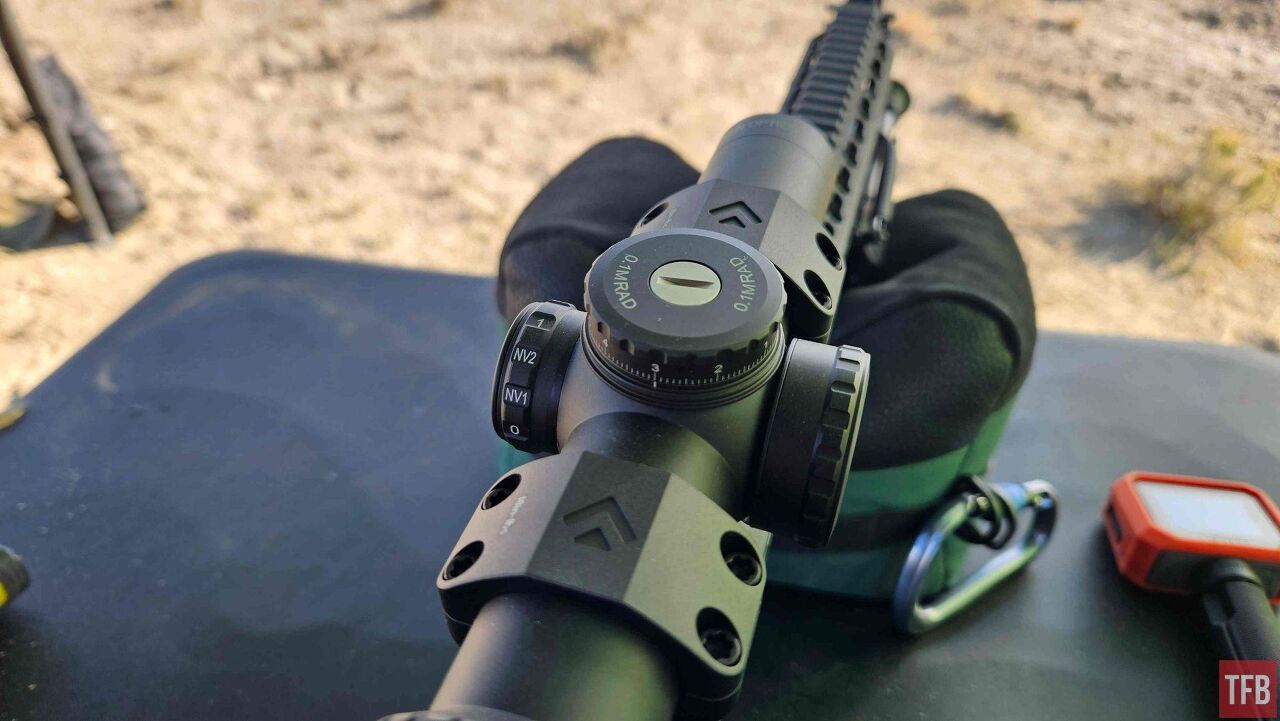
The new KLGrid reticle keeps that outer ring but swaps the BDC for a MRAD reticle. It has drop and windage dots in a Christmas tree shape descending from the center aiming point. Both of the reticles have illuminations on the outer ring and elements in the middle. On the KLGrid, the segmented circle around the centre dot also illuminates. The turrets on the KLGrid have 0.1 MRAD gradiations.
View Through The Glass
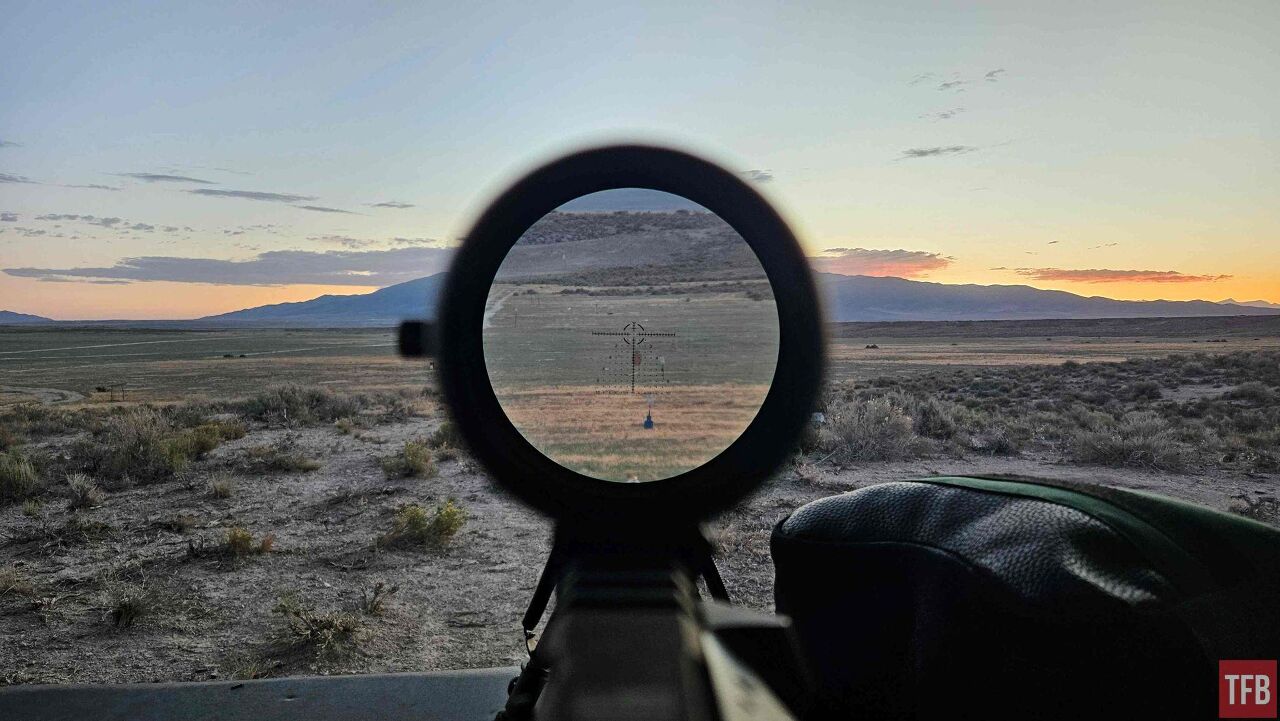
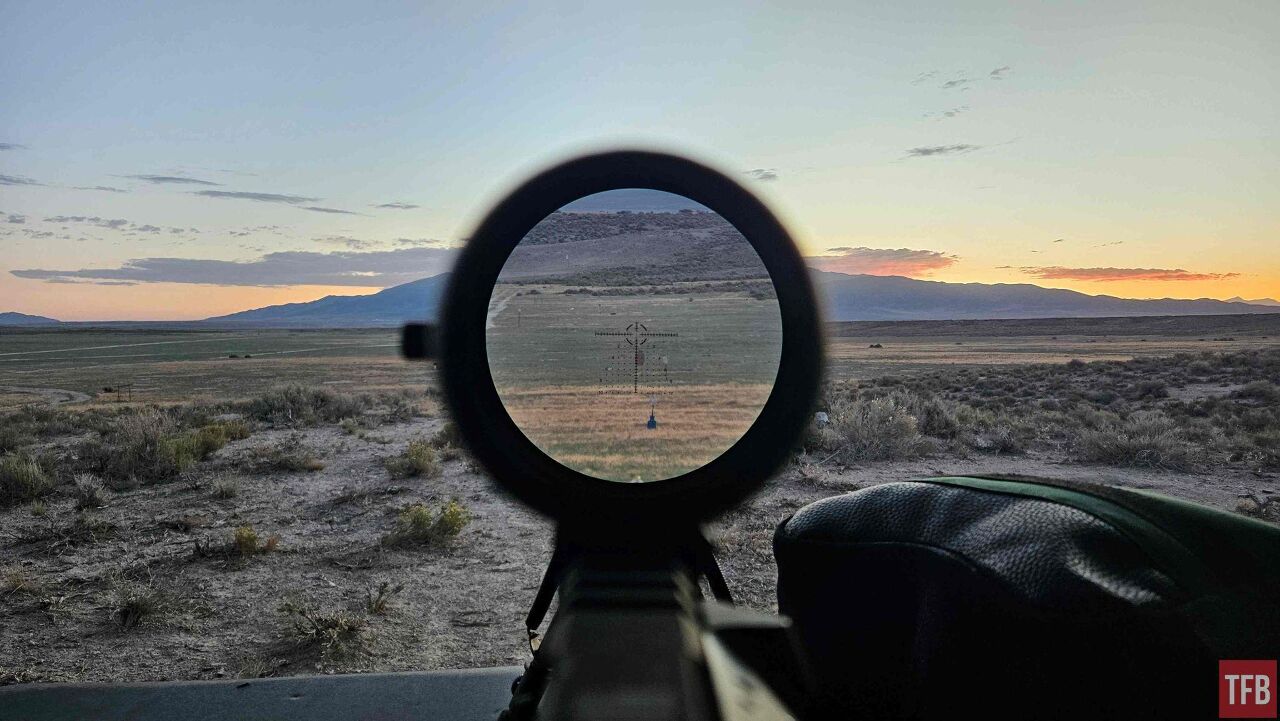
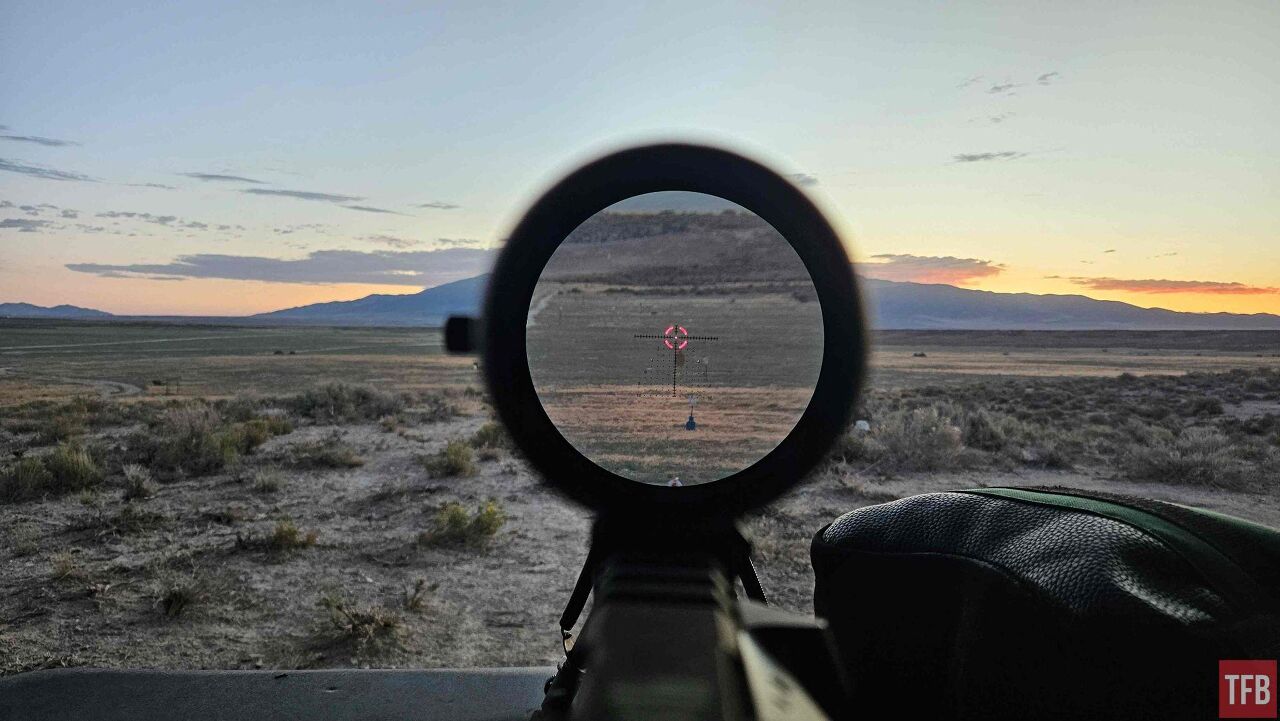
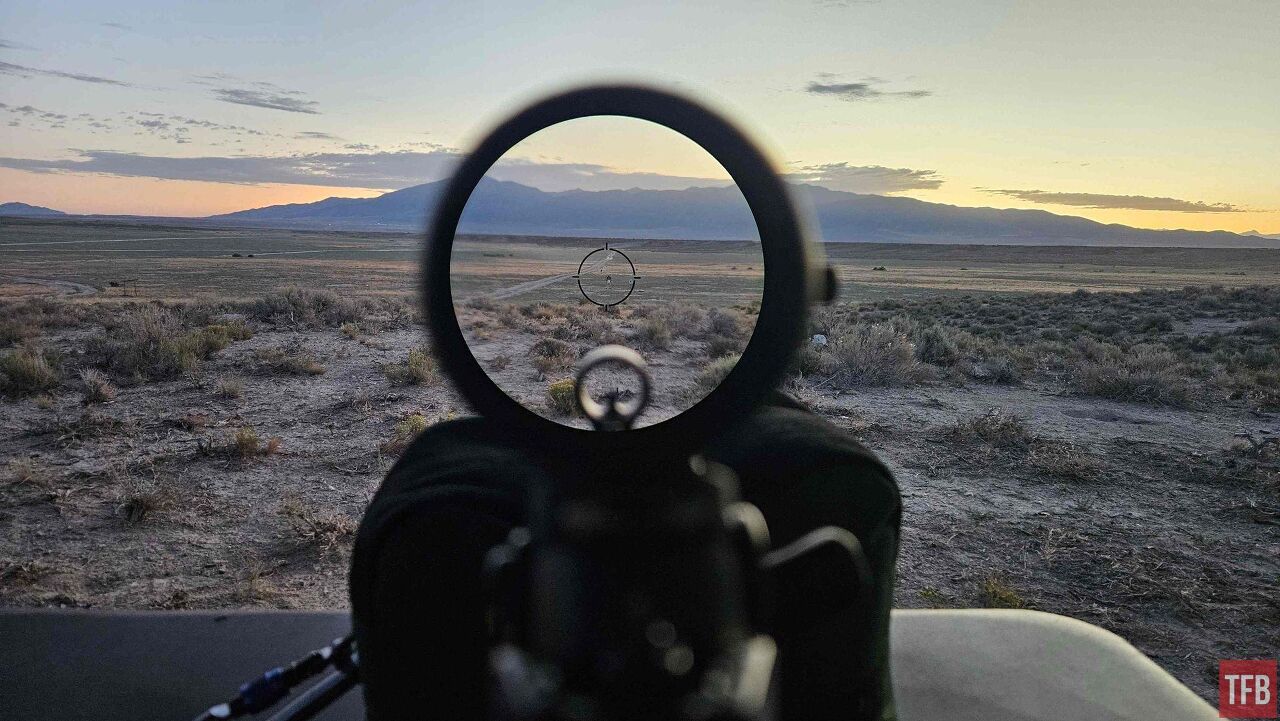
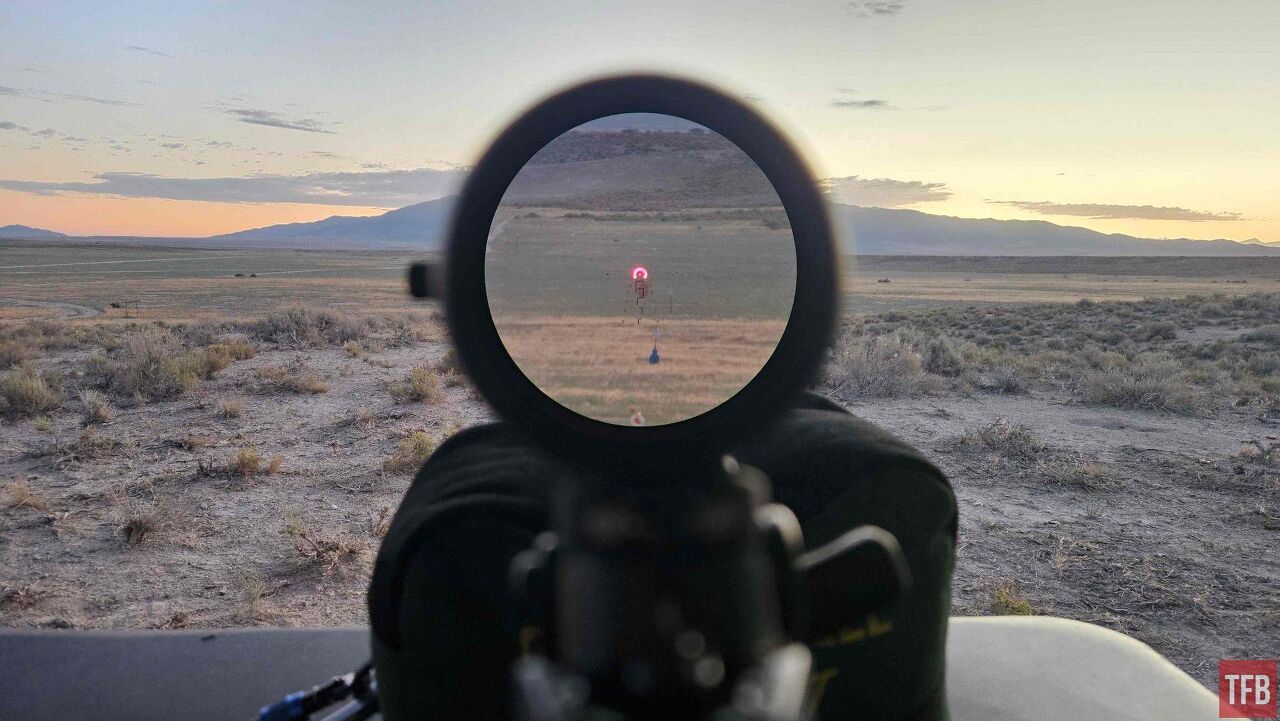
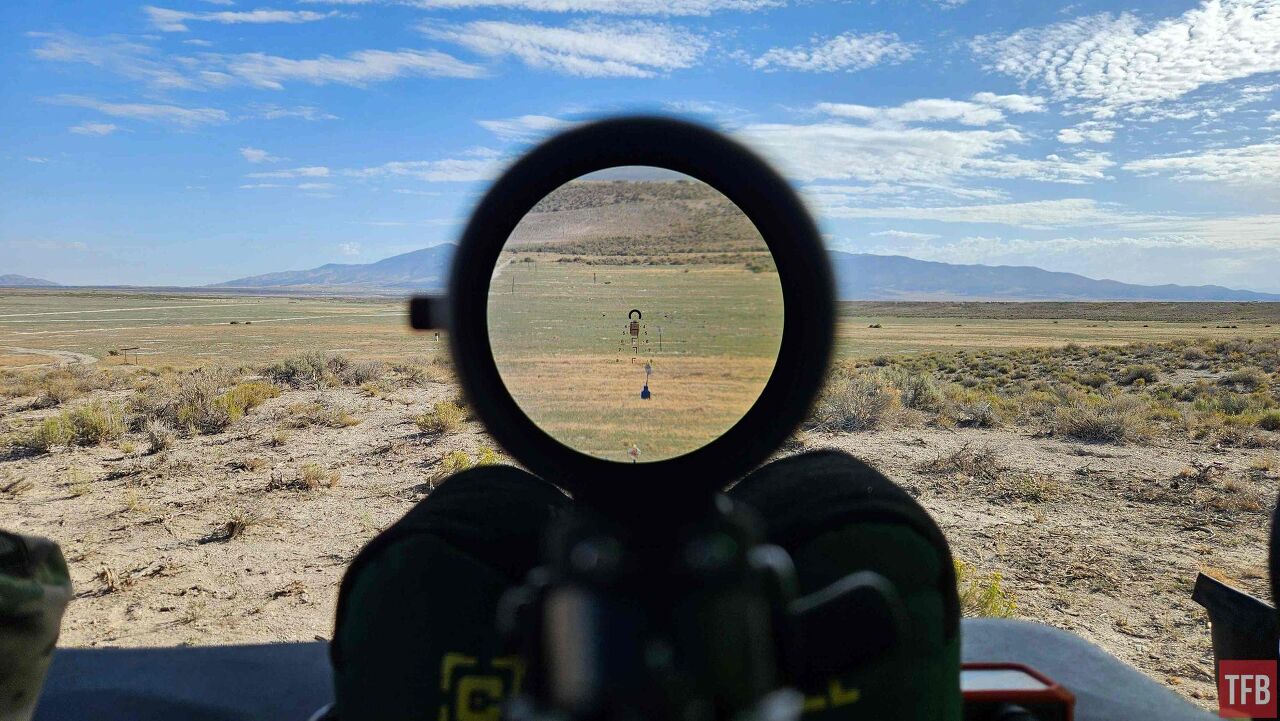
I always like to include the view through the scope as part of a review. The major caveat with taking pictures through a scope is that it will never be a perfect representation of how it looks to the shooter’s eye. Things like color and clarity can be slightly off because the lenses of the camera and the software that processes the image each make their own impact. But it is still a good way to provide a general impression of what it feels like to be behind the scope.
In an effort to compare these reticles against one another, as well as looking at the optical quality of the EP-8, I set up some USPSA cardboard torso targets at range. One was at 100 yards, and the other was at 323 yards. These pictures were taken about 15 minutes before legal sunrise. Without further adieu, here they are:
Here is the 100 yard target through the KLGrid:
Here is the KLBox reticle:
KLBox on the 323 yard target:
Overall, the view through the glass was good. These were not the most challenging lighting conditions, but they were representative of morning hunting light. Target identification was still easy, even with the reduced contrast between a brown cardboard target and sagebrush country.
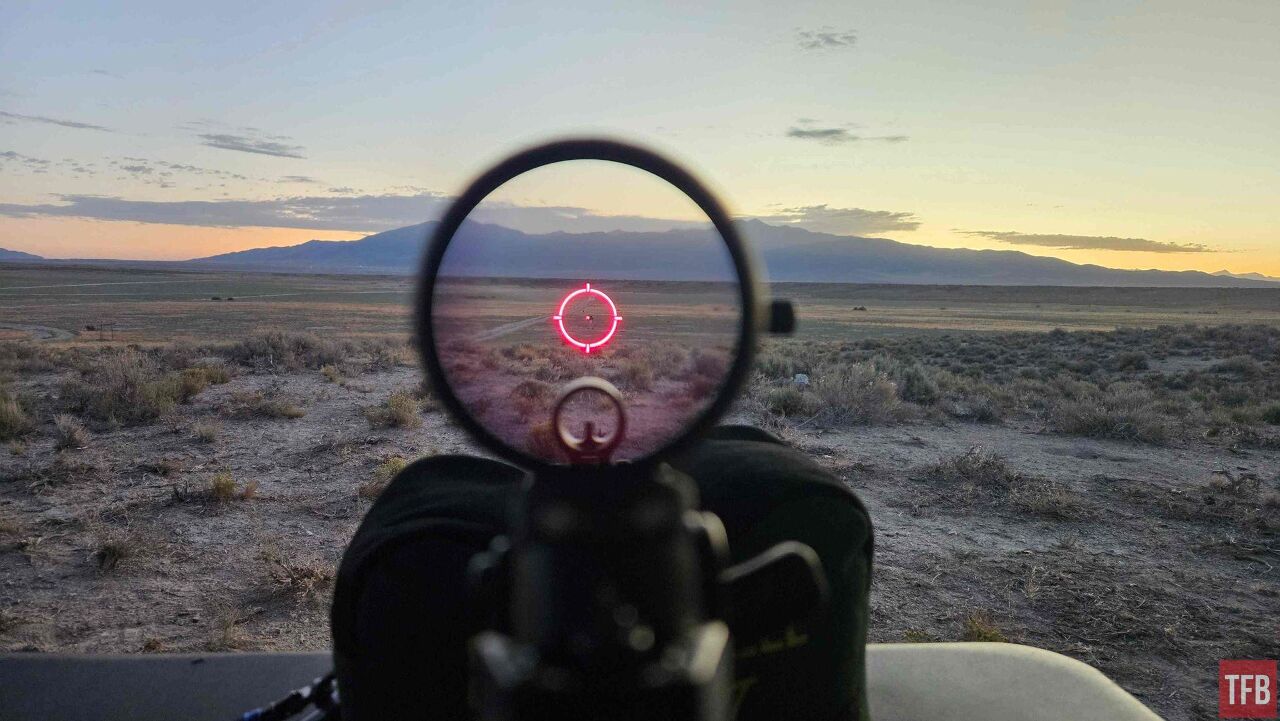
A little later in the day I took some more pictures of the KLBox reticle. Note that it lines up on both the horizontal and vertical measurement lines. This target is at 323 yards, and it fits nicely in the 400-yard portion.
So which reticle do I like more? The KLGrid. There is something to be said for familiarity. That reticle feels much more like home when I look through it. The KLBox gets points for creativity and for trying to create a more efficient ranging system. The trade-off is that the alternating and staggered left and right marks look kind of weird to the eye and can be distracting when attempting to hold off for wind. I live in a desert and I shoot longer ranges. Wind is a reality of life. The grid reticle is far easier to use to control for wind deflection. Now if your use case is different and you spend a lot of time needing to get quick and dirty range estimates off of standard torso size targets the KLBox might be a very good fit for you. Both reticles behave about the same at one power. Even looking back through my pictures as I was setting up this article I had to remember that the front sight of the SG551 meant it was the KLBox reticle.
On The Range
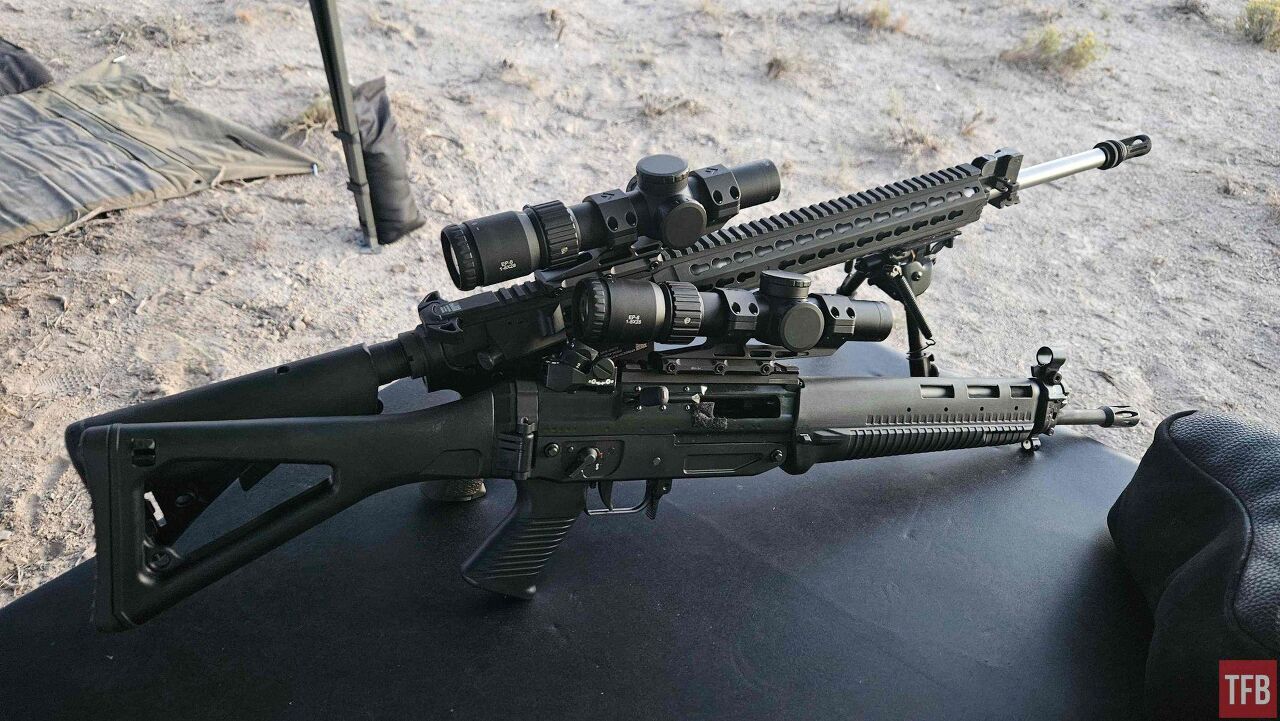
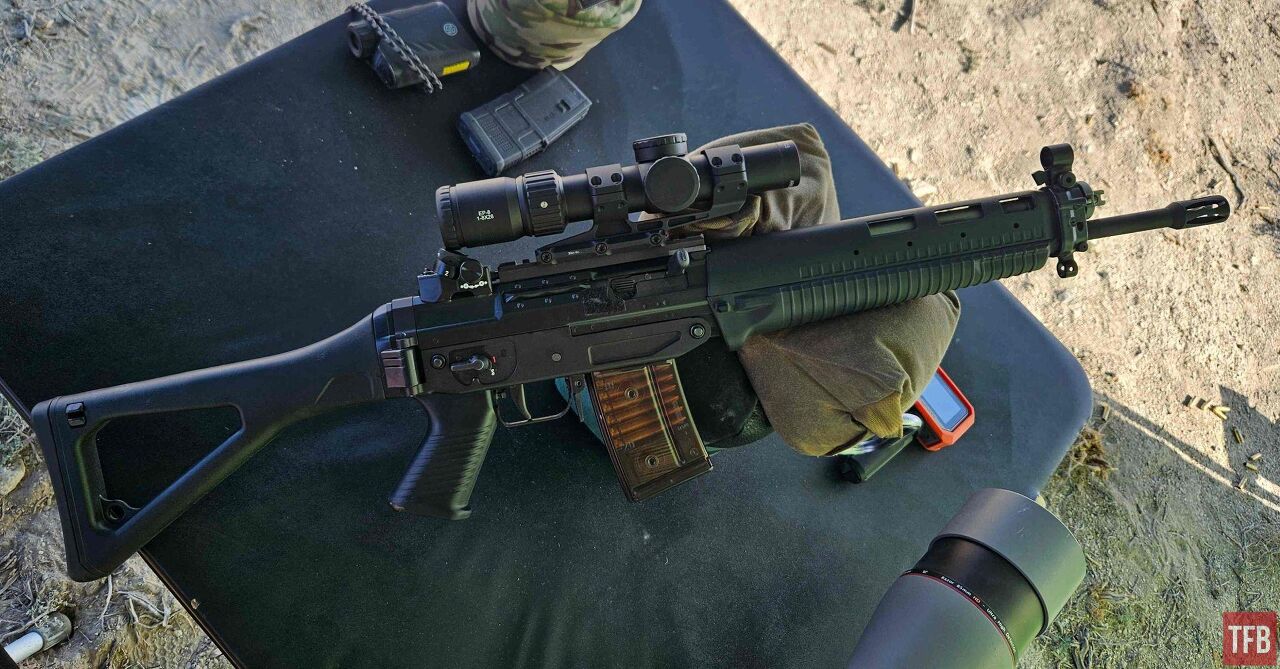
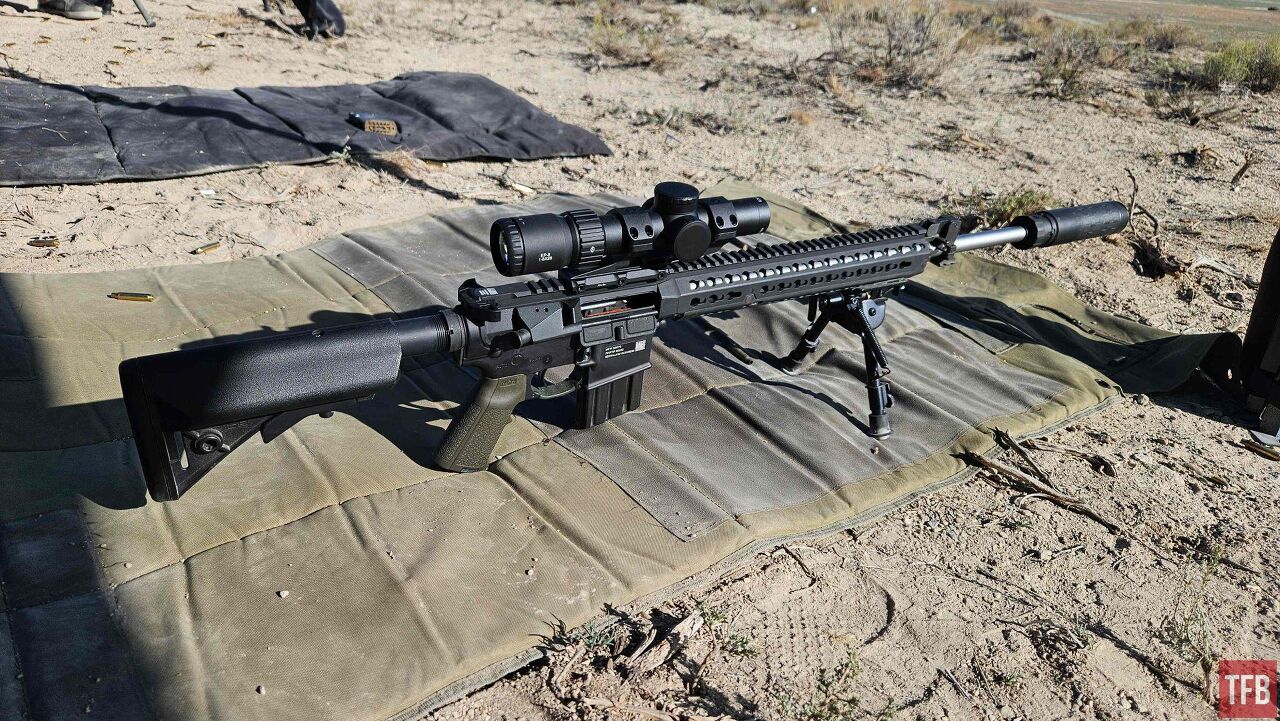
I use two primary host guns for this optic review: an M16A5 build and a Sig SG551. Both of these rifles are a good fit for a 1-8 power LPVO. The M16A5 is a little more precision oriented while the SG551 fits a more general carbine profile. On 1X the eyebox is forgiving and wide. The outer ring of the reticle feels an awful lot like shooting an EOTech donut of death. I ran a series of drills starting at 1X with some torso targets at about 15 yards. I would double tap those targets, turn, increase magnification and fire on targets about 200 yards away. This type of use is exactly what an LPVO is for. The ability to engage both close and fast on 1X then quickly dial up to increase magnification and engage targets at extended ranges. I made hits at 1,050 yards with the KLGrid on the M16A5.
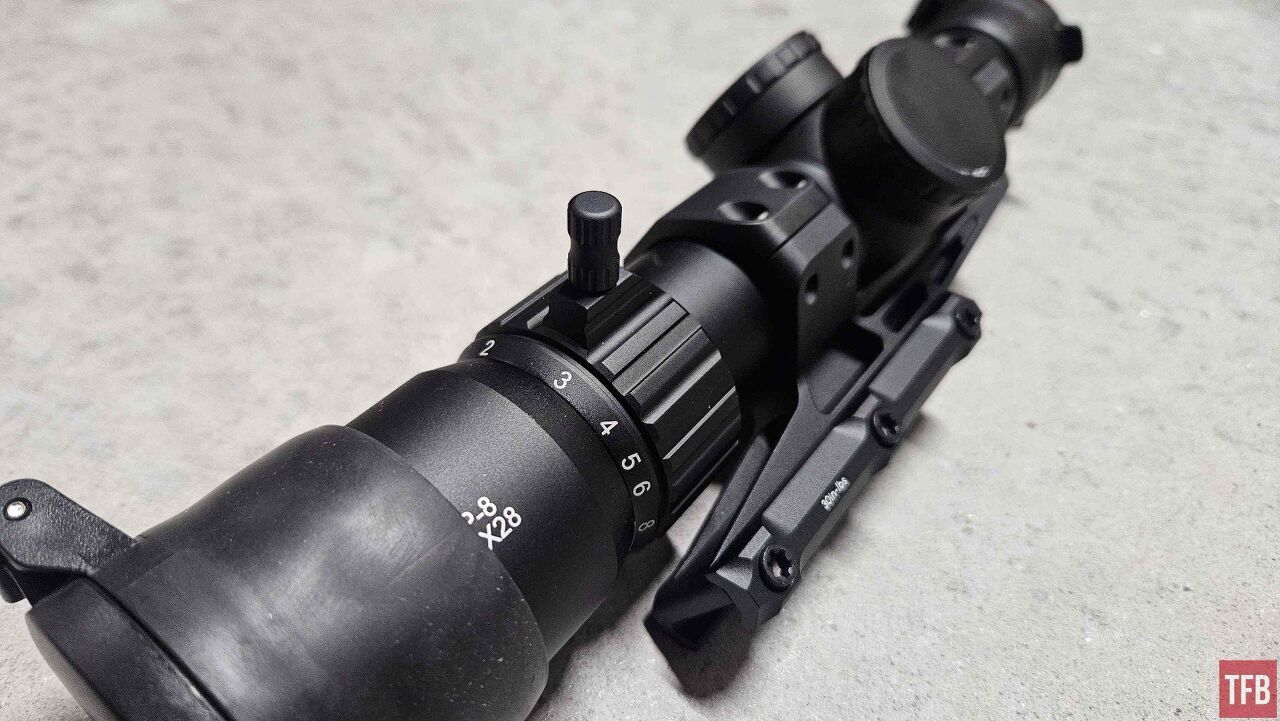
The included removable throw lever helps somewhat with rapid magnification adjustment. But a longer cat tail would be faster. Of course that has the trade-off of hanging up on more things and potentially snagging and breaking, but the throw lever could be 20 or 30% bigger without much downside.
Another small area of complaint is the illumination selector. The industry standard these days is an off position between each on setting. The EP-8 opts for the older style with the off position at one end of the rotation and maximum illumination at the other. More than once out of pure habit I dialed the knob back one position thinking I had shut off the battery only to come back later and realize the scope had been on for hours. Not a severe issue nor a deal-breaker, but one thing to remember.
Both versions tracked correctly, with the KLGrid moving in 1/10th MRAD increments and the KLBox in ¼ MOA increments. The turrets are not as tactile as the target turrets found on some other Arken scopes, but they are functional, and on a scope like this they are more than sufficient. Windage and elevation turrets stayed in place when capped.
Conclusion
Some online commentators are quick to laud affordable optics, and to make extraordinary claims that would make you think that every $300 scope beats out $3,000 options with ease. That is overselling the case, almost without exception. That is also the case with the EP-8. Claims that this scope is just as good as scopes costing five or 10 times as much are inaccurate. Glass quality is an area of diminishing returns, but there are still differences.
But that's not really the question. The question is what do you get at this price point. With the EP-8, the answer is quite a lot. This scope beats the tar out of what would have been a high-dollar LPVO 10 or 15 years ago. Optics have been getting much better very quickly over the last decade. A budget scope today can hang with high-end options from 10 or 20 years ago. Perhaps not in sheer glass quality, but in feature sets and overall quality per dollar. For $375 including the mount, the EP-8 is a great value, and emblematic of how far affordable scopes have come.