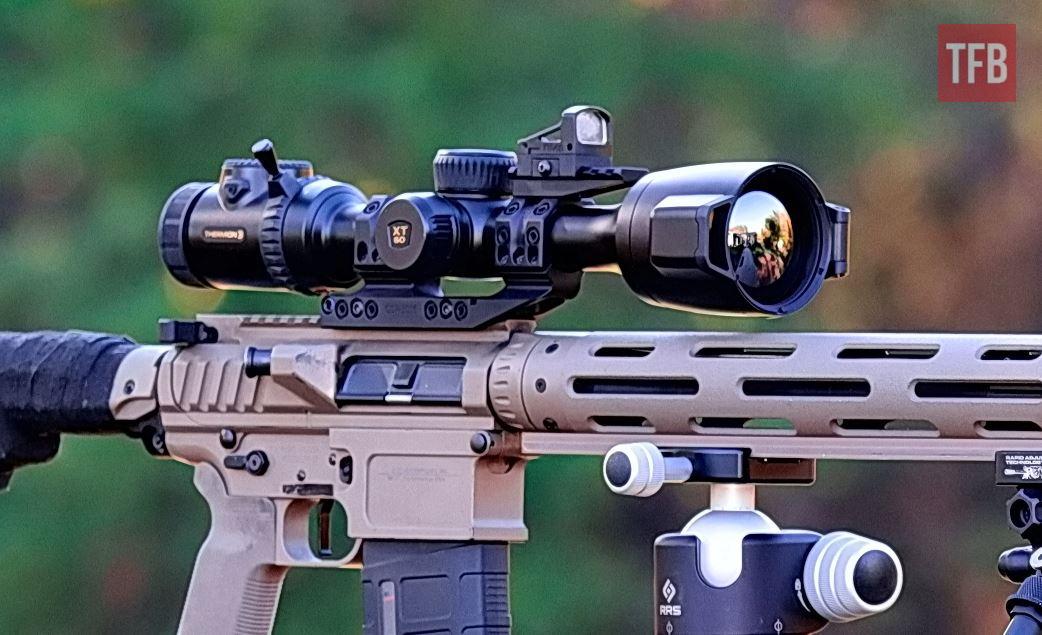
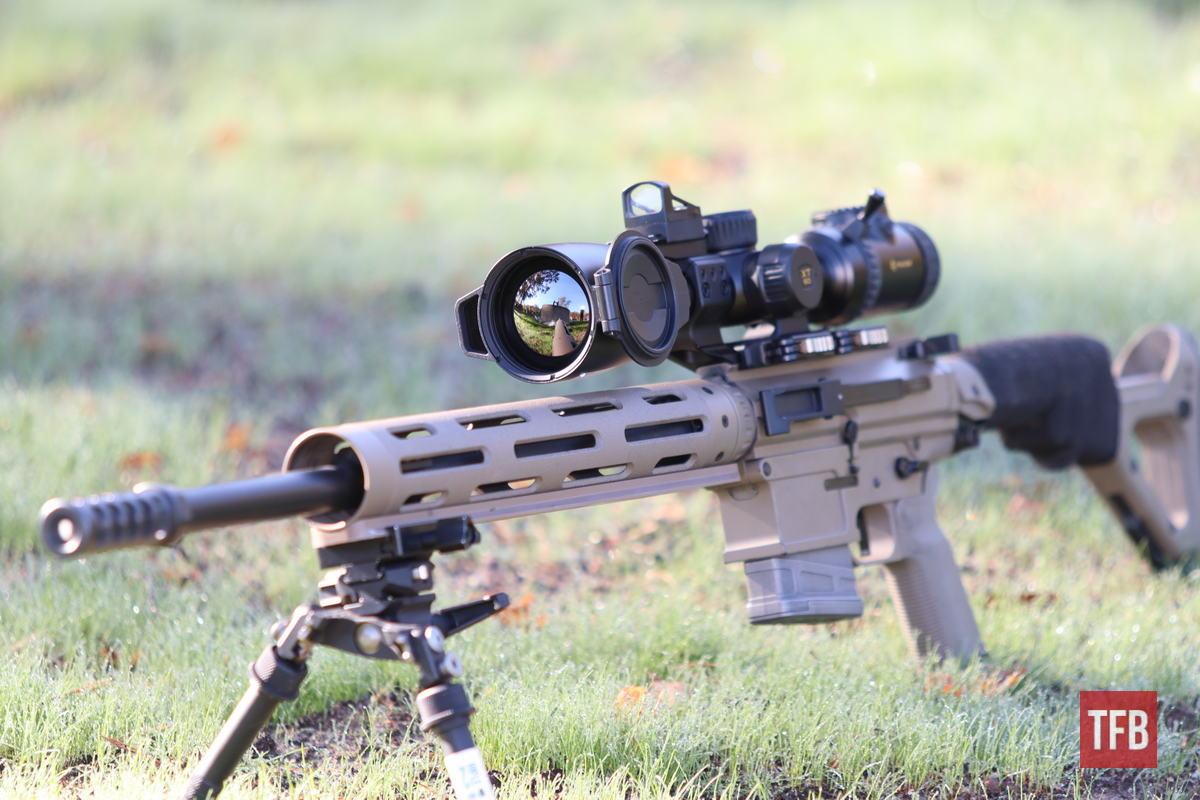
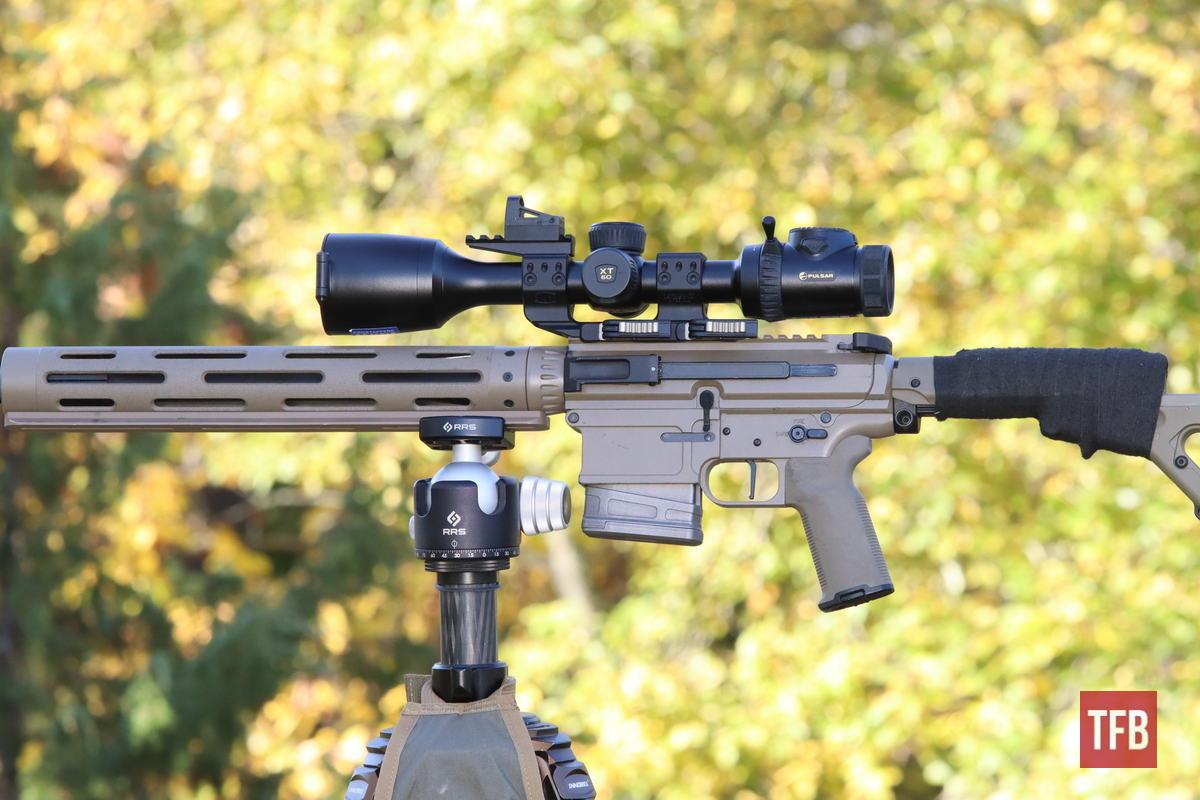
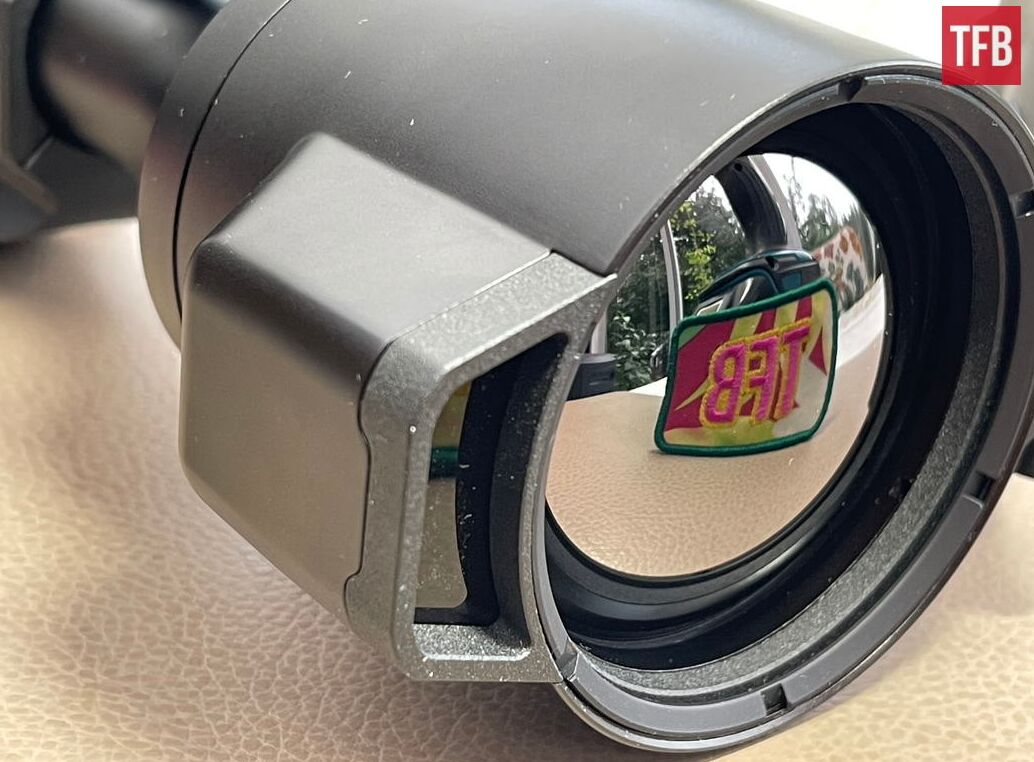
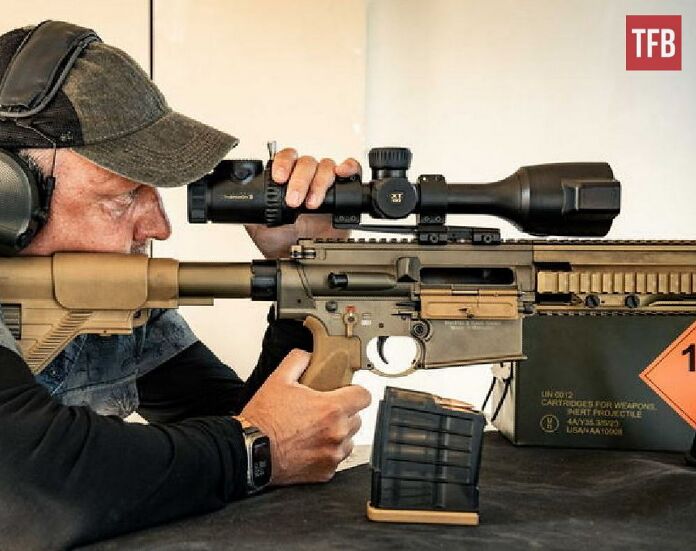
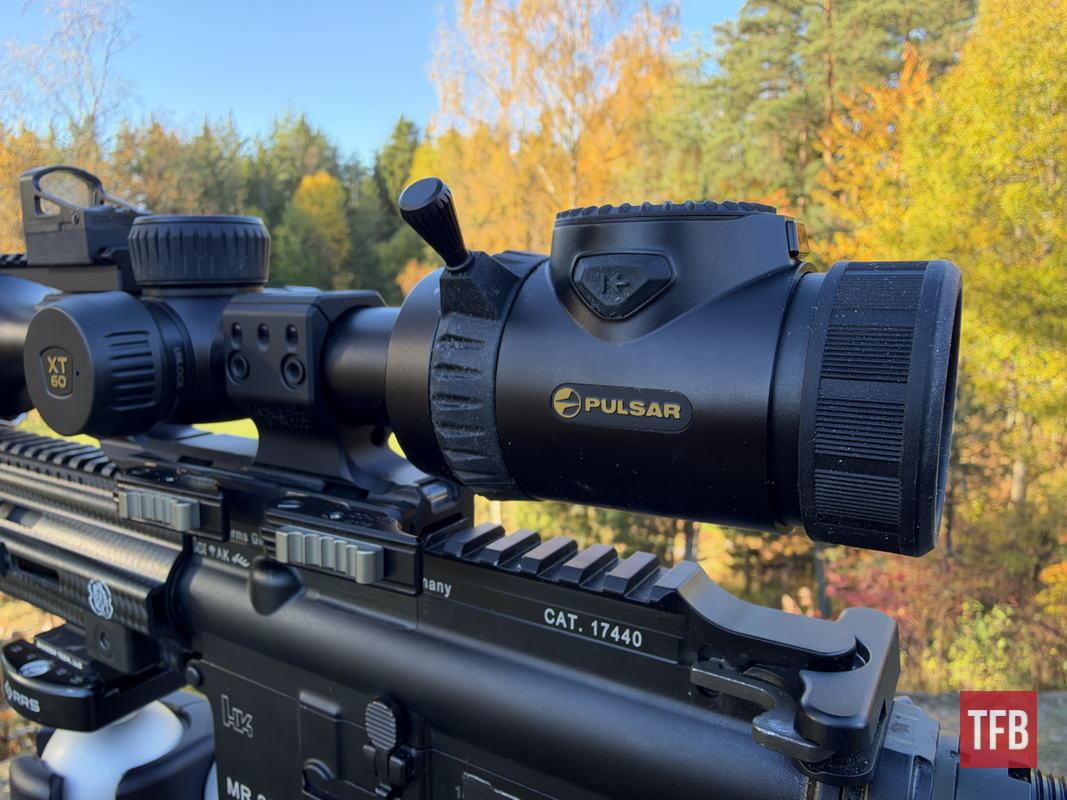
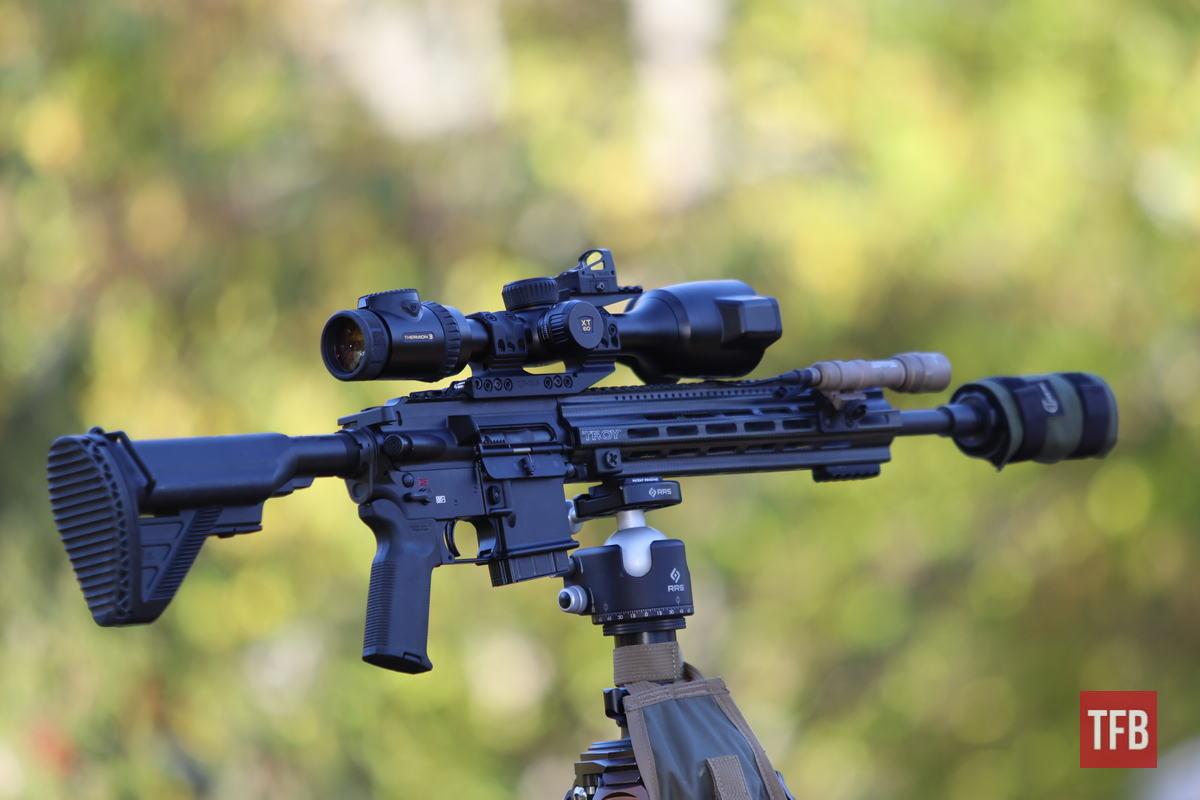
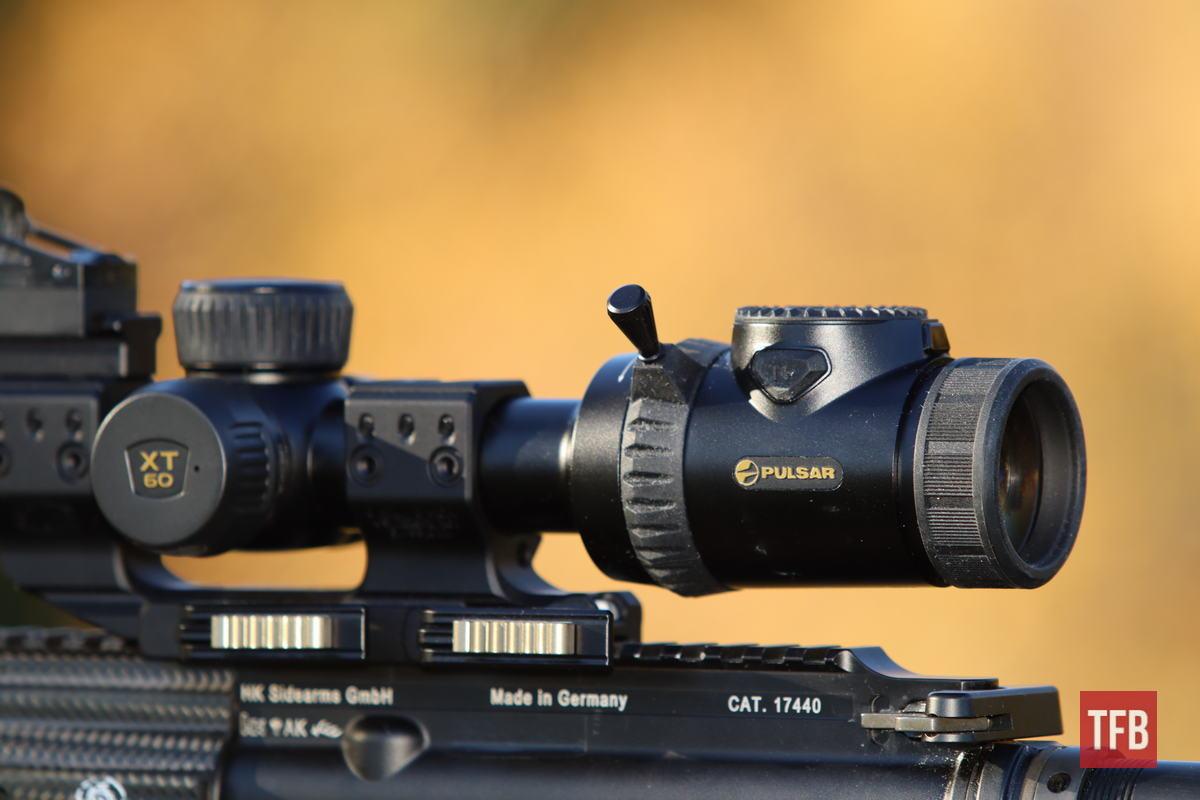
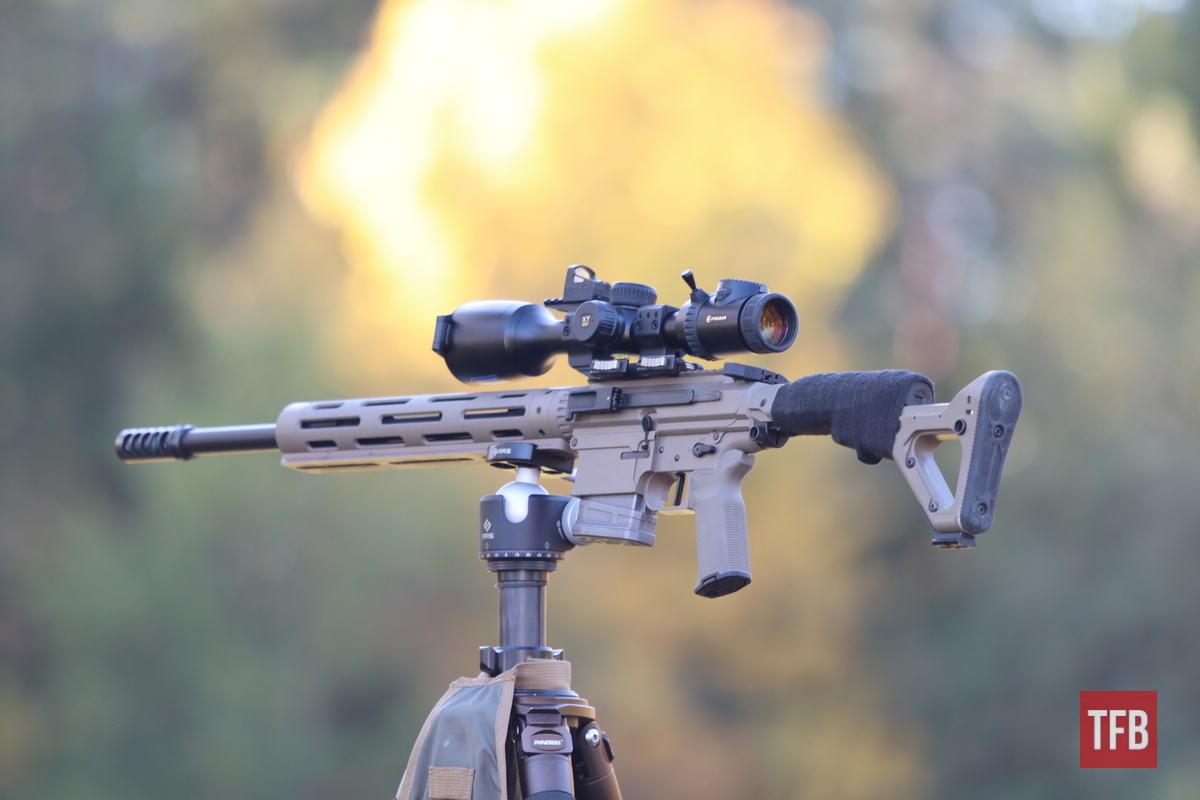
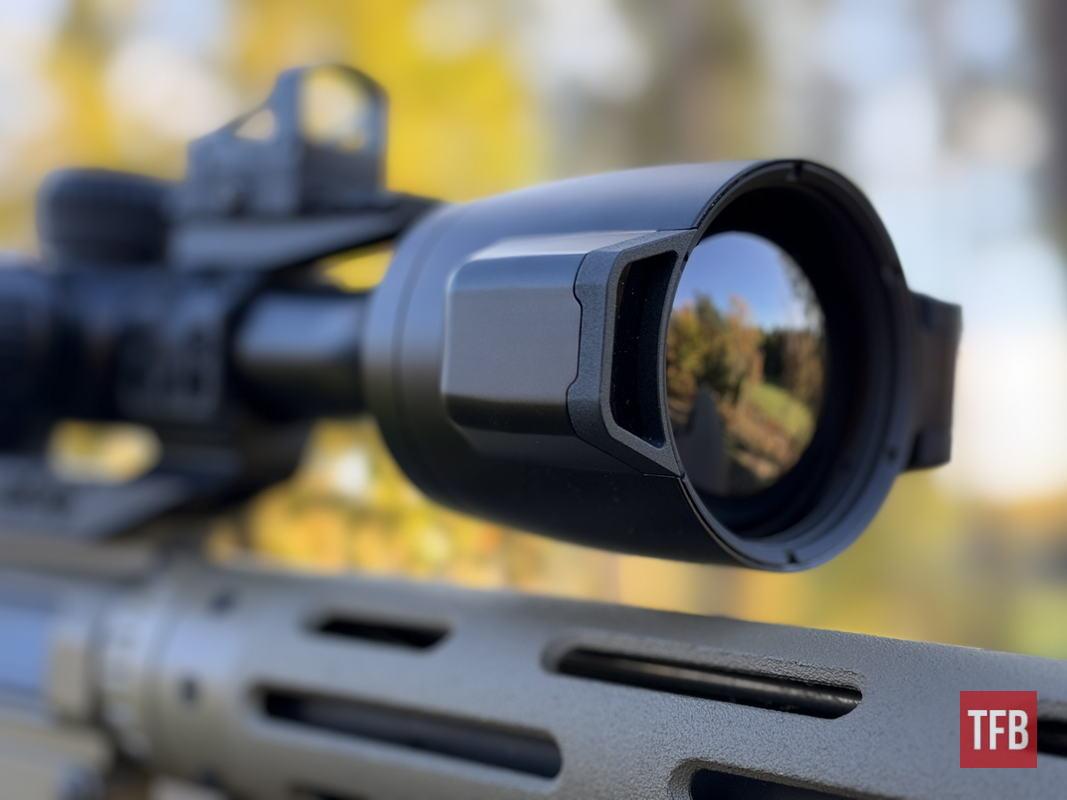
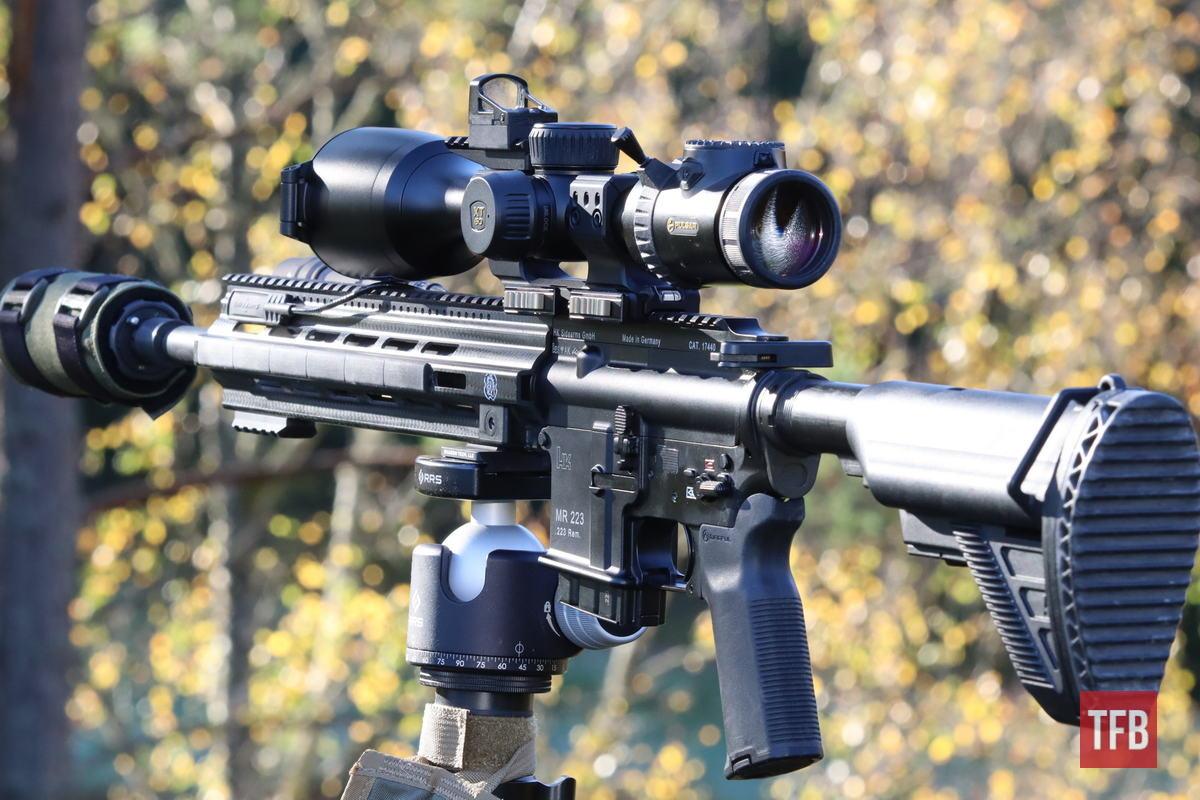
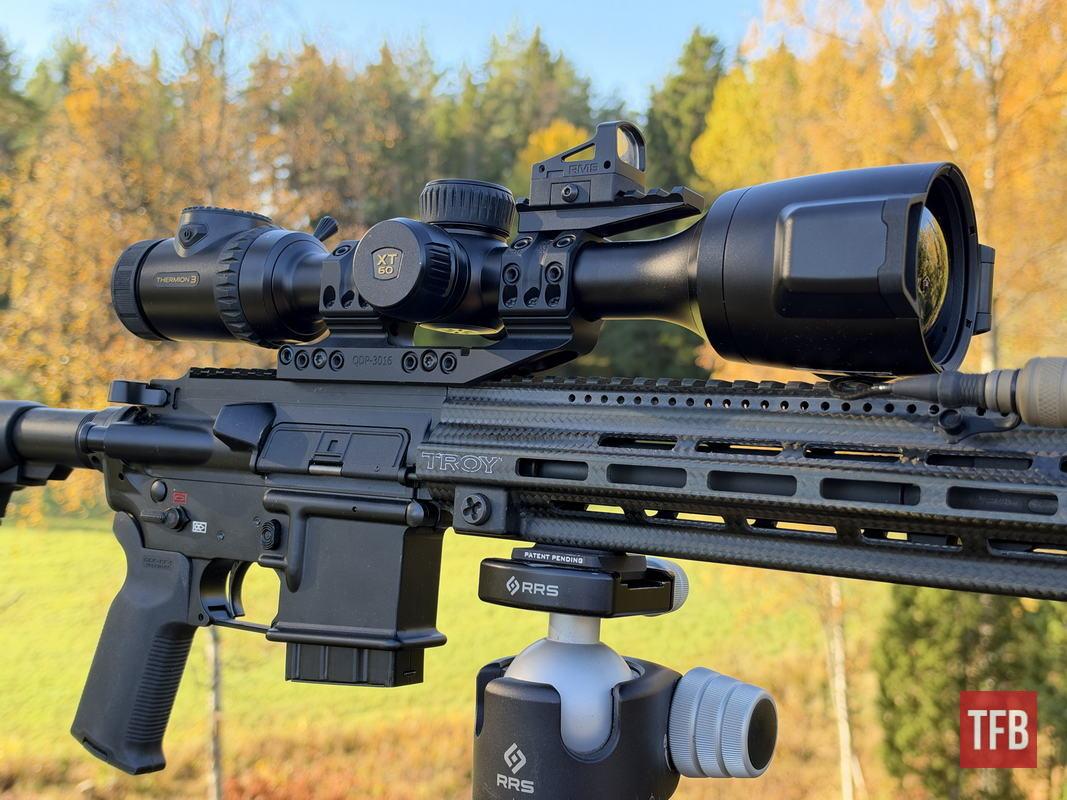
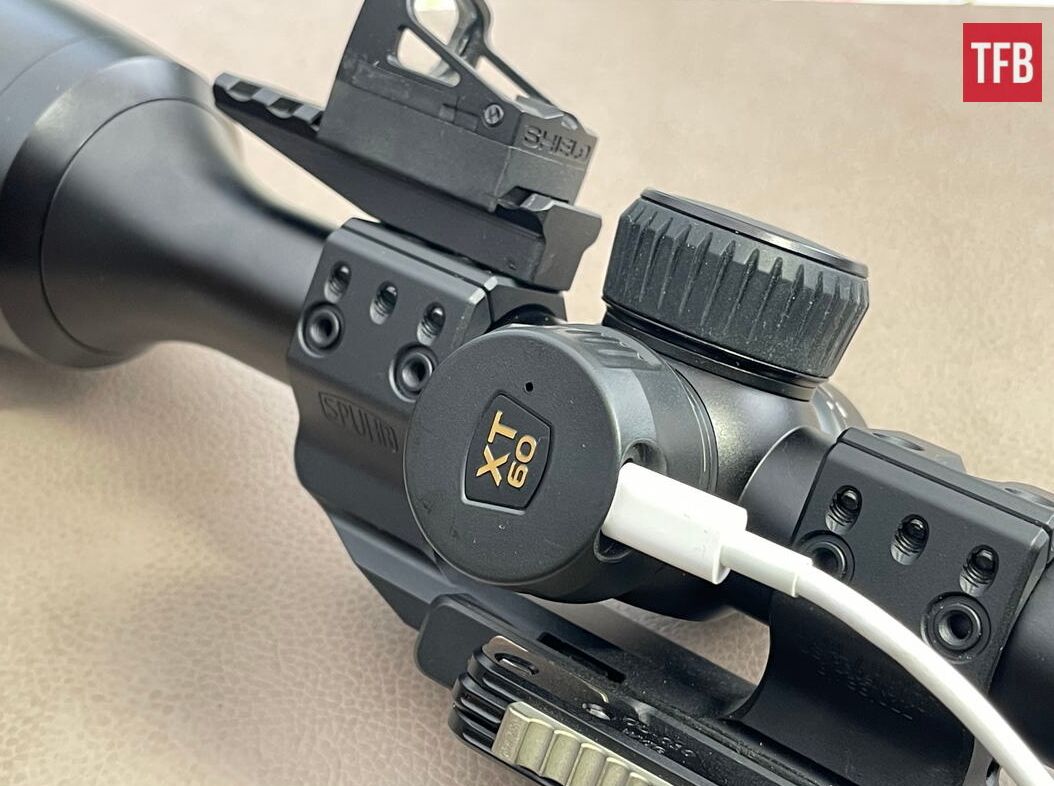
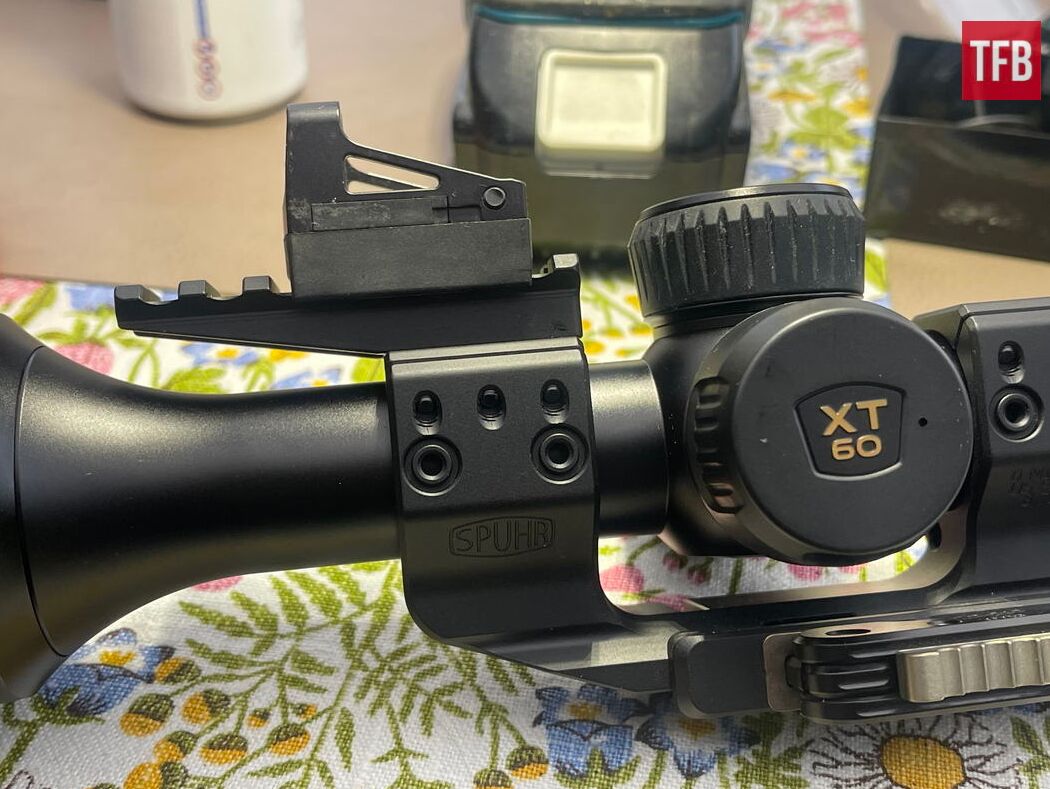
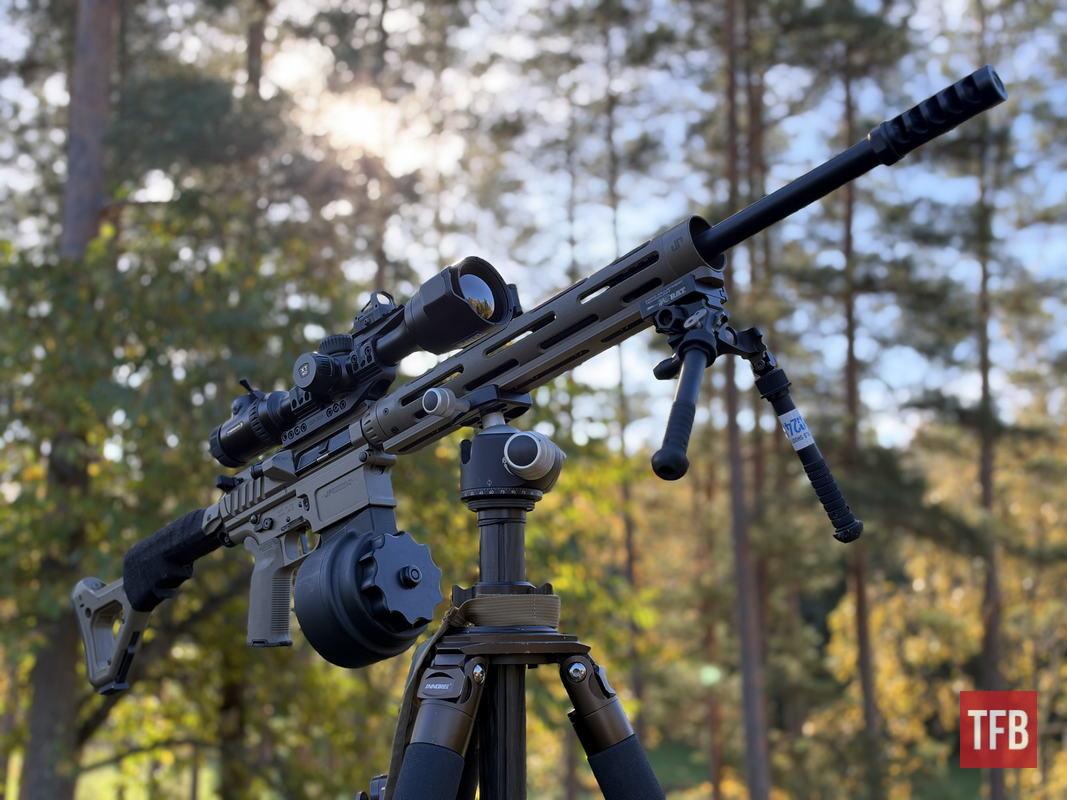
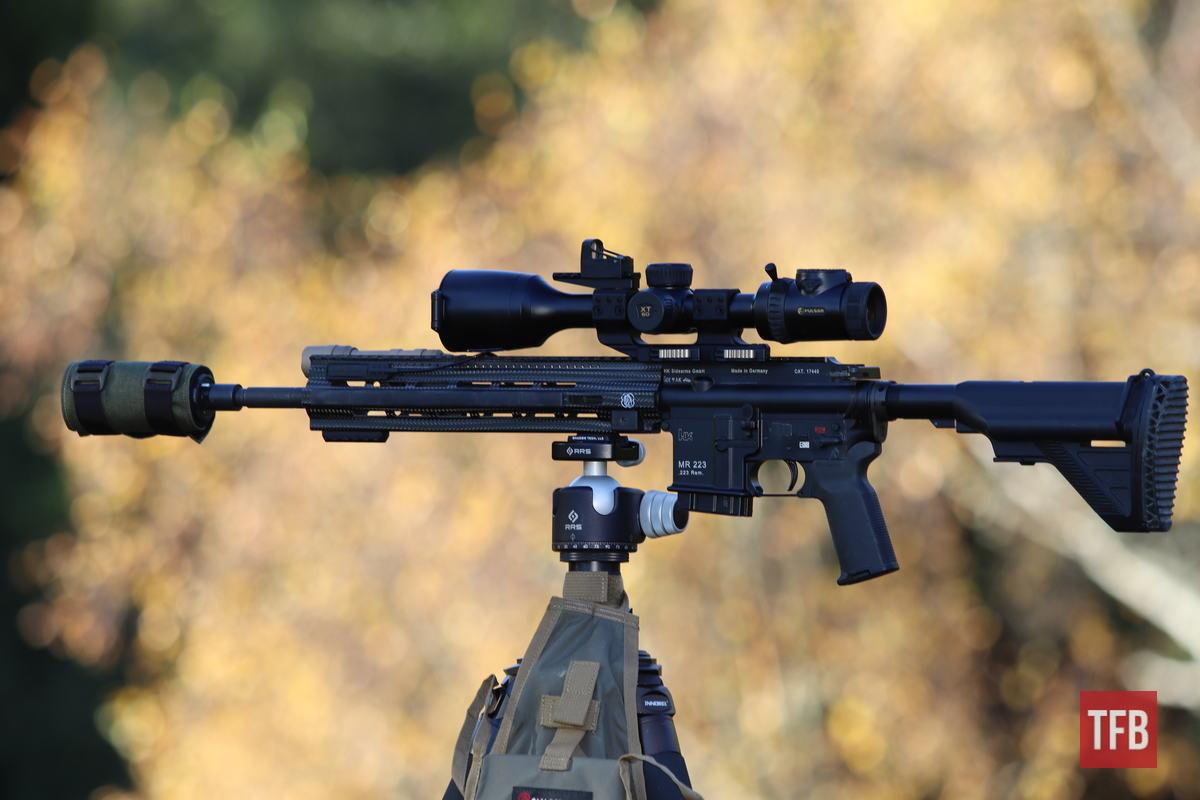
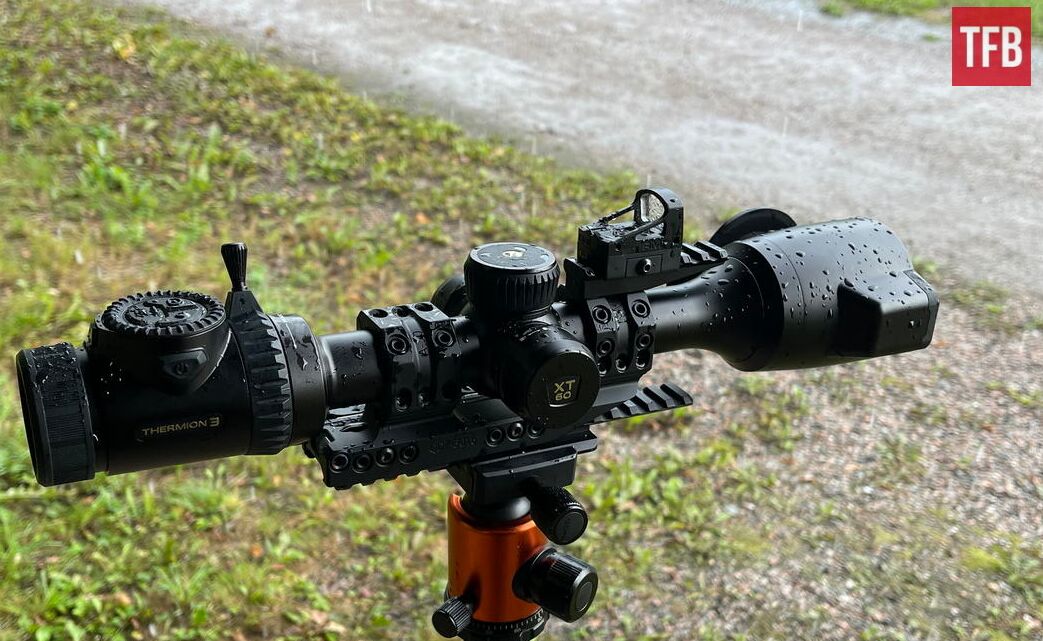
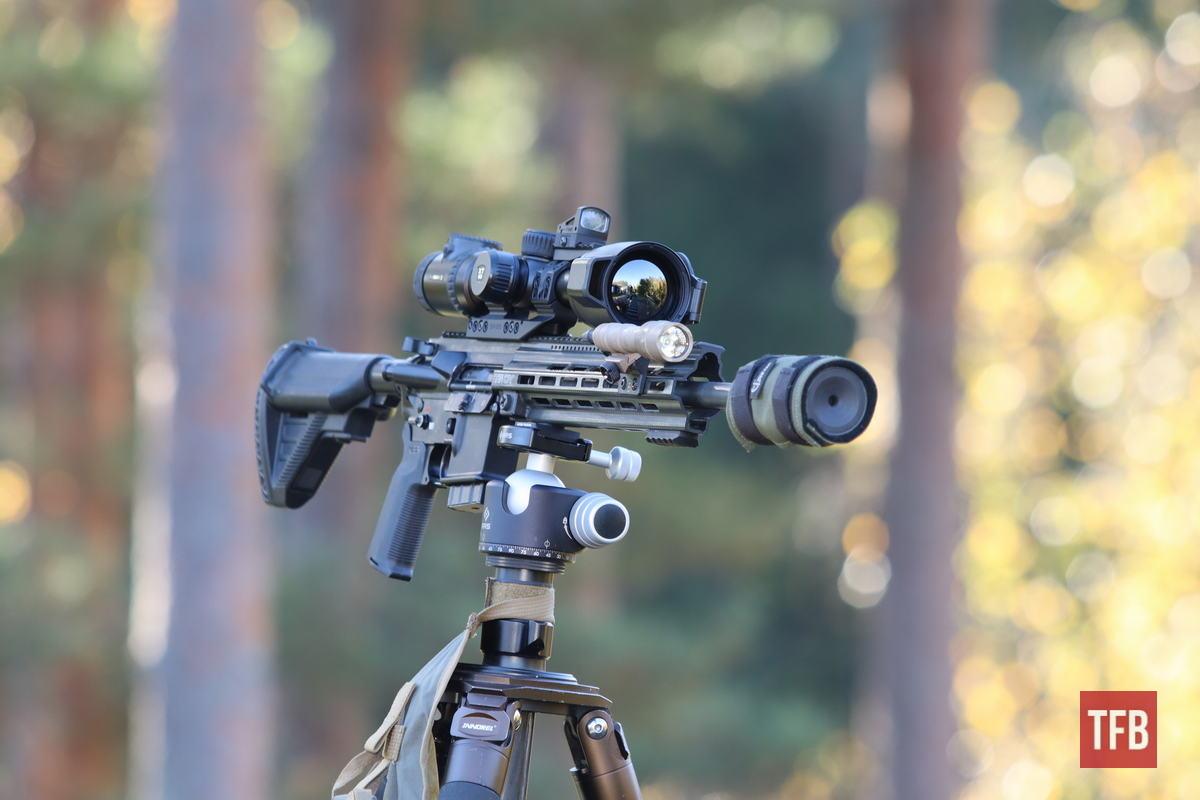
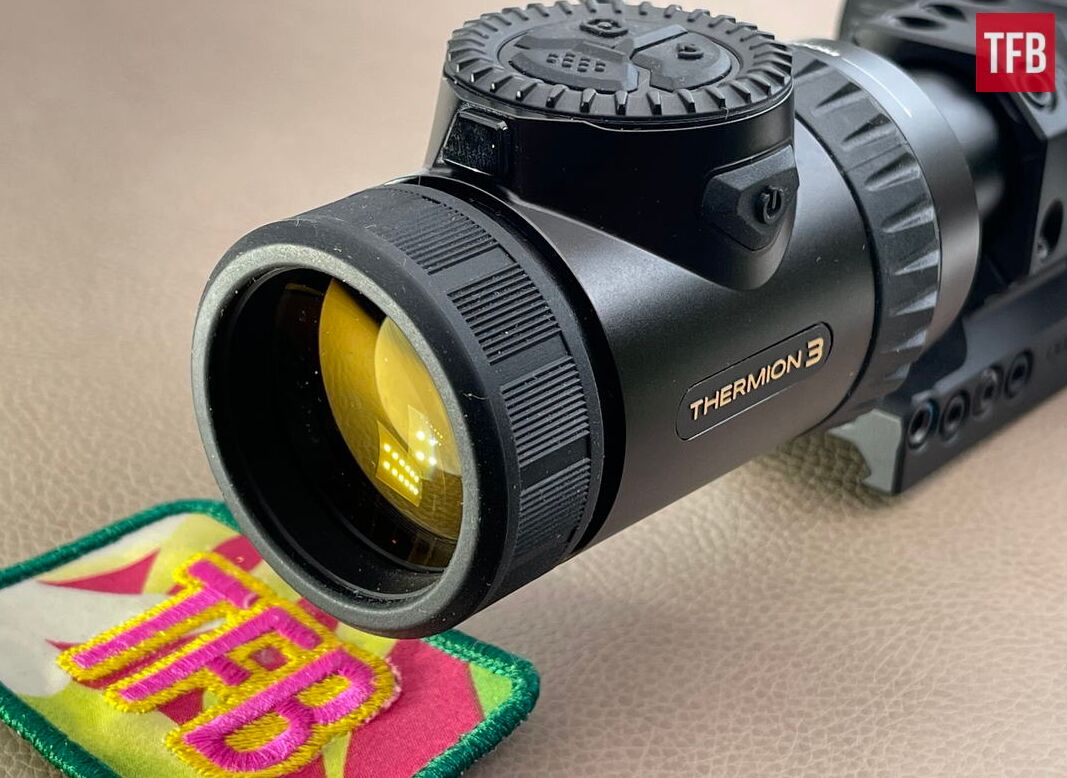
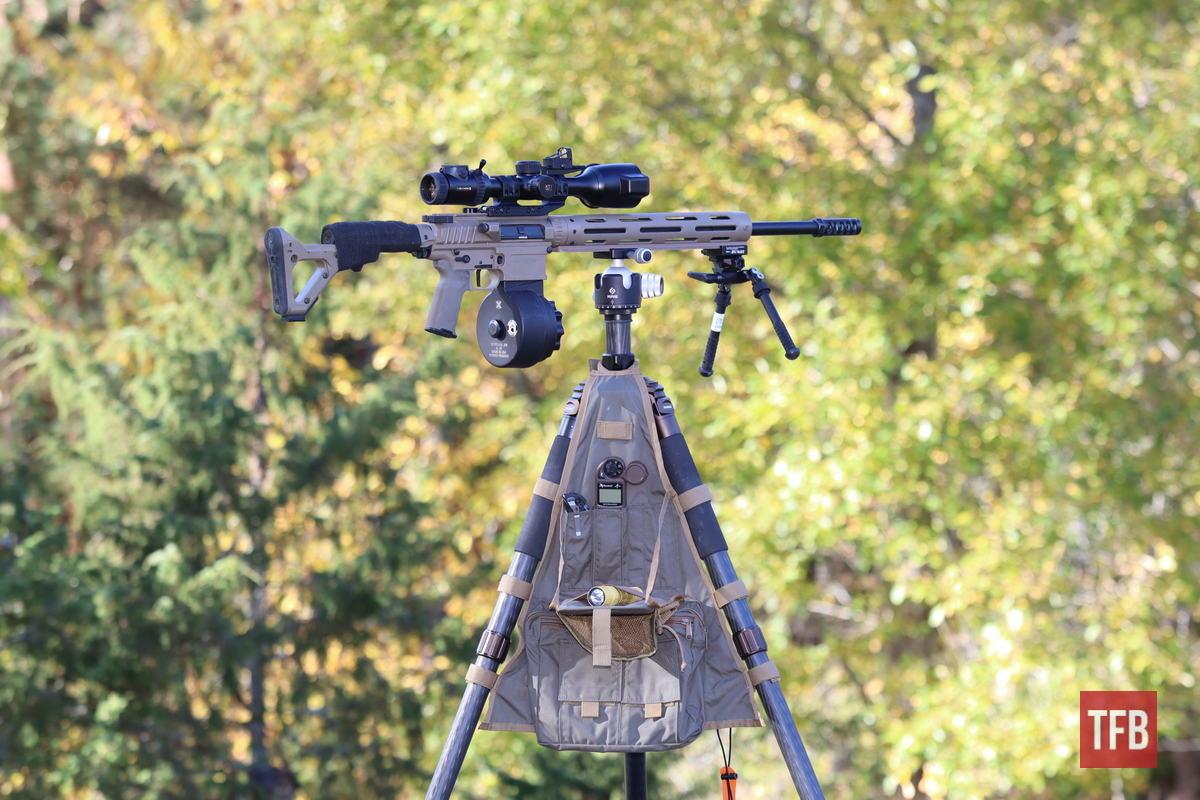
The rangefinder is integrated so discreetly that you have to know it's there to spot it. This is a big, and welcome, change from the somewhat bulky LRF found on previous Thermions. The classic scope lines stay intact, which matters more than you'd think if you hunt on land where neighbors, guests or landowners have opinions about "tactical" gear. This looks and feels like a long-range scope from any high-end supplier.
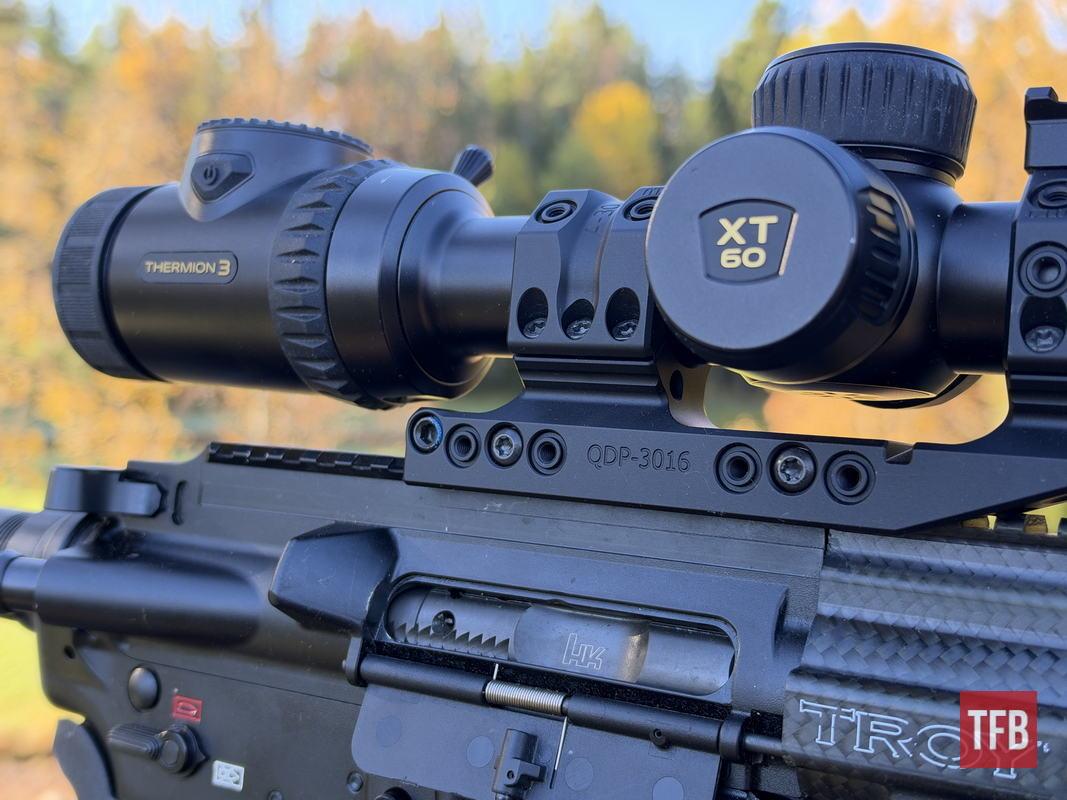
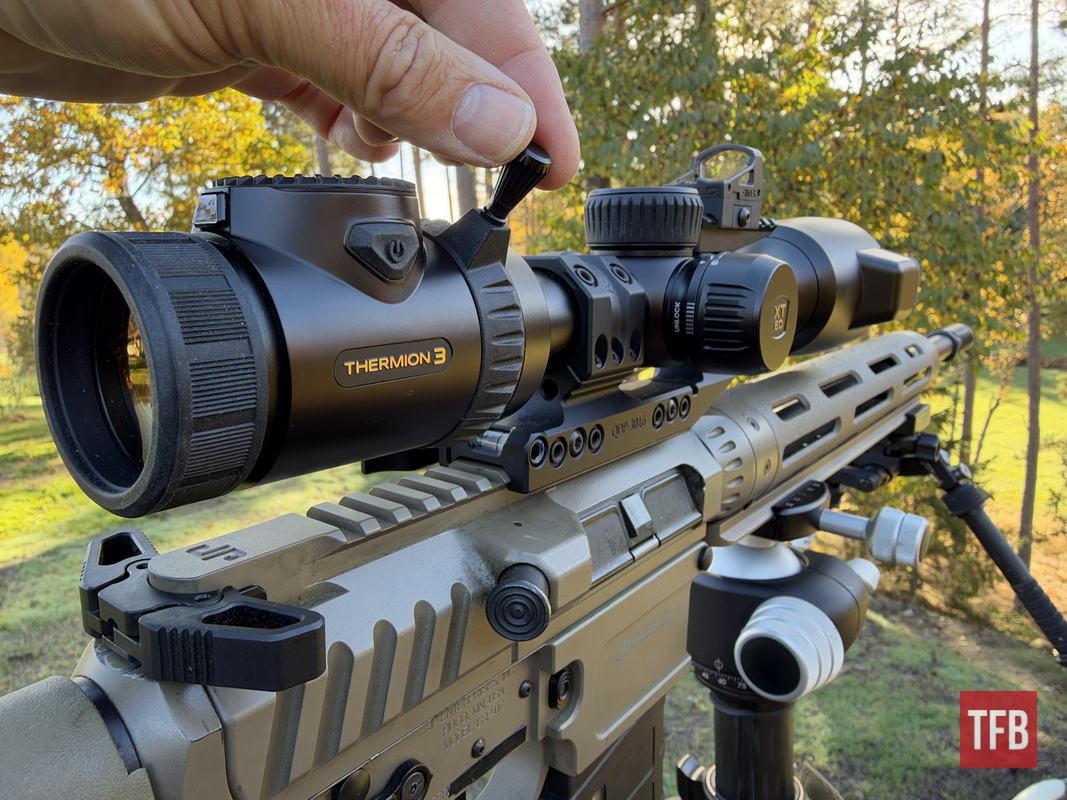
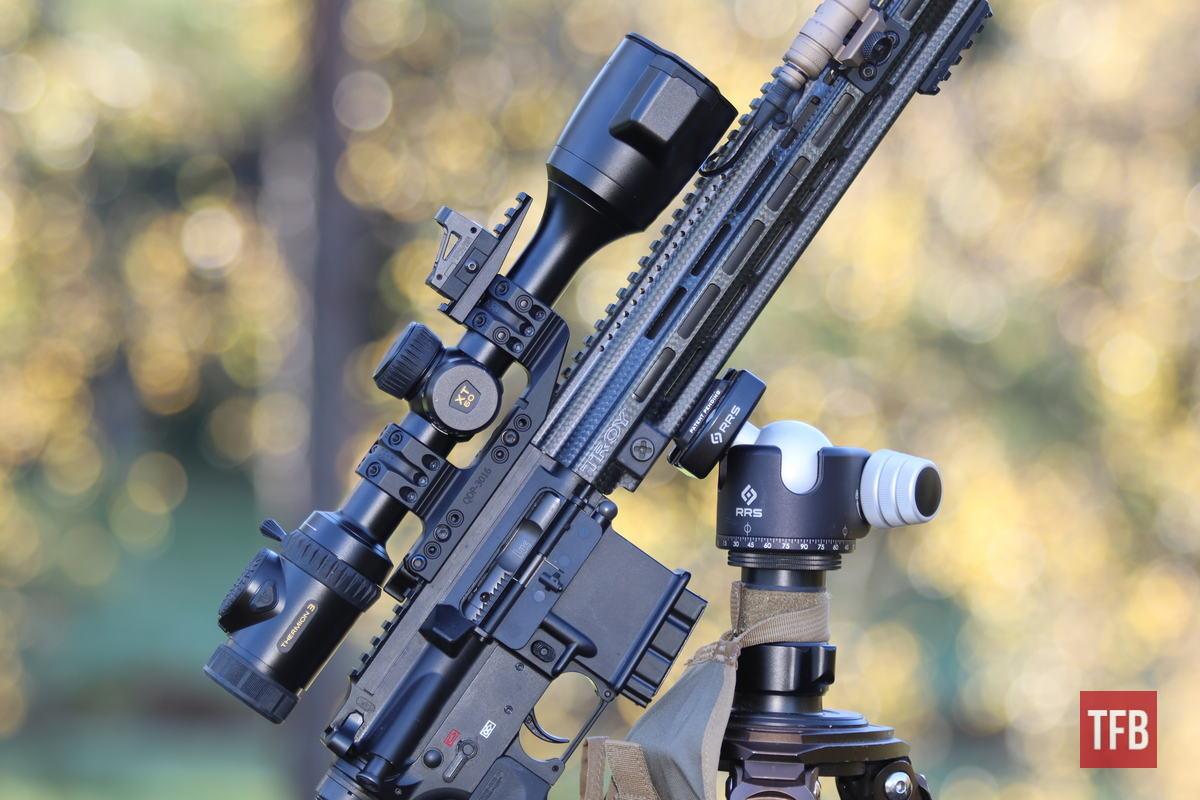
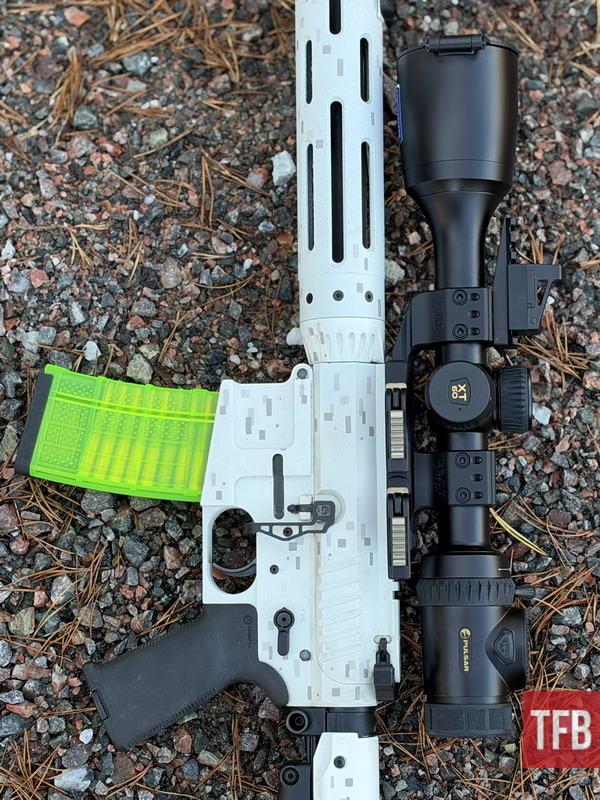
A few compatibility notes from my own setup: - Rings and mounts: Any quality 30 mm rings or one-piece mount works, and the mount is sold separately. I used a Spuhr QDP-3016 (Cantilever), so I can move the thermal from tripods to rifles for my testing.
- Objective clearance: With a 60 mm (2.4 in) objective, check that your rings give enough clearance over the barrel before you torque anything.
- Length: At 391 mm (15.4 in), check ring spacing on short actions and rifles with long bolt handles.
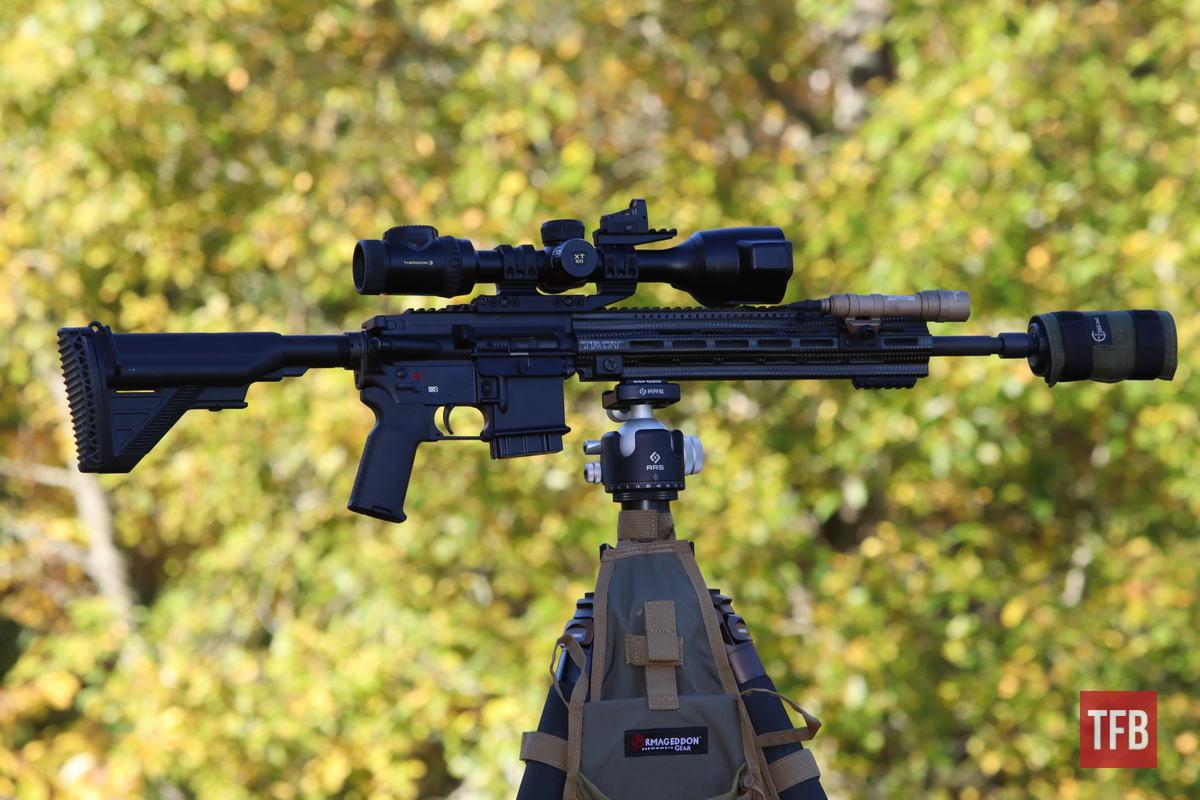
- AR-15 and AR-10: It works on a rail with a 30 mm cantilever mount, but a monoblock sight like the Trail 3 might be more at home there (more on that below).
- Eye relief: 65 mm (2.6 in) gives room for heavy calibers and awkward positions in a high seat, without worrying about the scope coming back at you.
It's still a heavy scope. At around 1.3 kg (46 to 48 oz) before the mount, it shifts the balance of a light rifle up and back like any other thermal would.
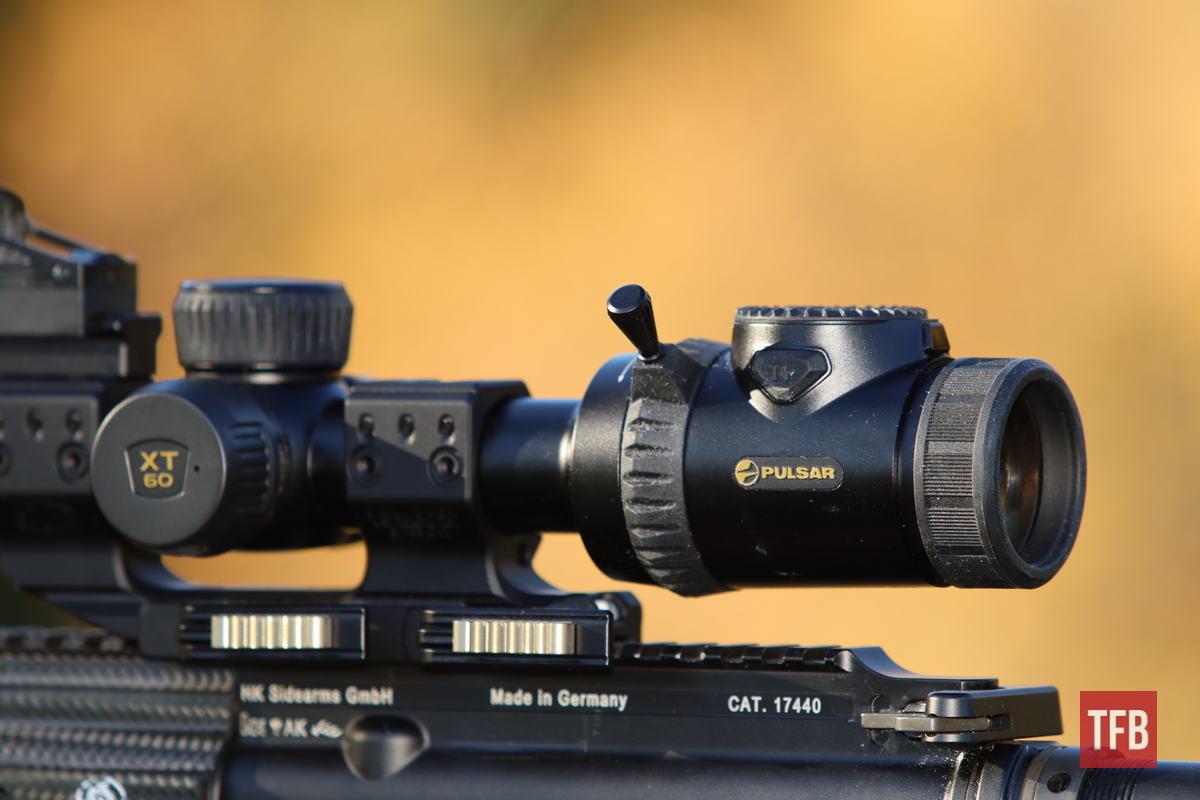
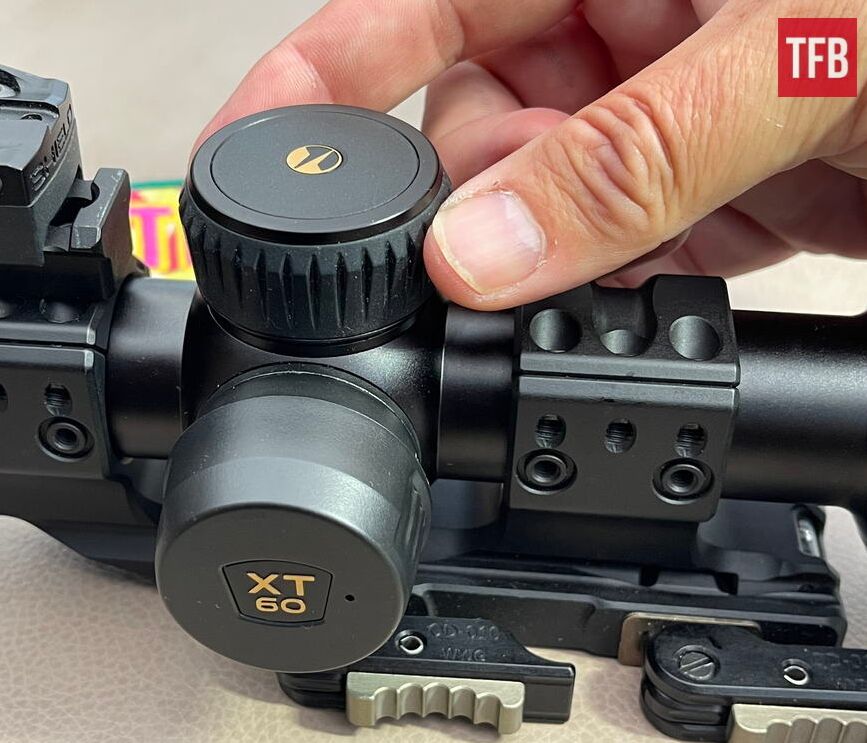
Controls: An LPVO Mindset at NightThe new zoom ring and the top-turret focus wheel are the best thing about this scope after the image. The new encoder, which moved from the side of the mid-turret to the ocular, is also a great improvement. As a competition shooter, I know split seconds matter, and that's just as true for hunters. The faster you can see clearly and decide on the right shot, the better.
The zoom works like the magnification ring on an LPVO (Low Power Variable Optic), and Pulsar includes a throw lever in the box. If you've run a 1-8x on a rifle or on a driven hunt, your hand already knows what to do. I can go from a wide landscape view to the one animal I'm interested in, and sharpen the image, without lifting my head from the stock. It felt natural from the first night. Focusing is just a fingertip away, on the rubberized wheel in the center tower. In fact, I’m still a bit mindblown how easy and well this worked.
The controls are rubberized, with just the right amount of friction and clear tactile feedback, so nothing turns by accident in a pack or a gun slip. They sit where your fingers expect them and respond the way you expect. My tip: zoom out and set focus for the distance where you expect the animals before they show up, but be ready for anything.
The menus are handled with a controller dial and three buttons for recording, palettes and the menu. If you only use 3 or 4 palettes, you can remove the others. A proximity sensor turns the display off when you take your eye away, so you don't light up your face or waste battery between looks.
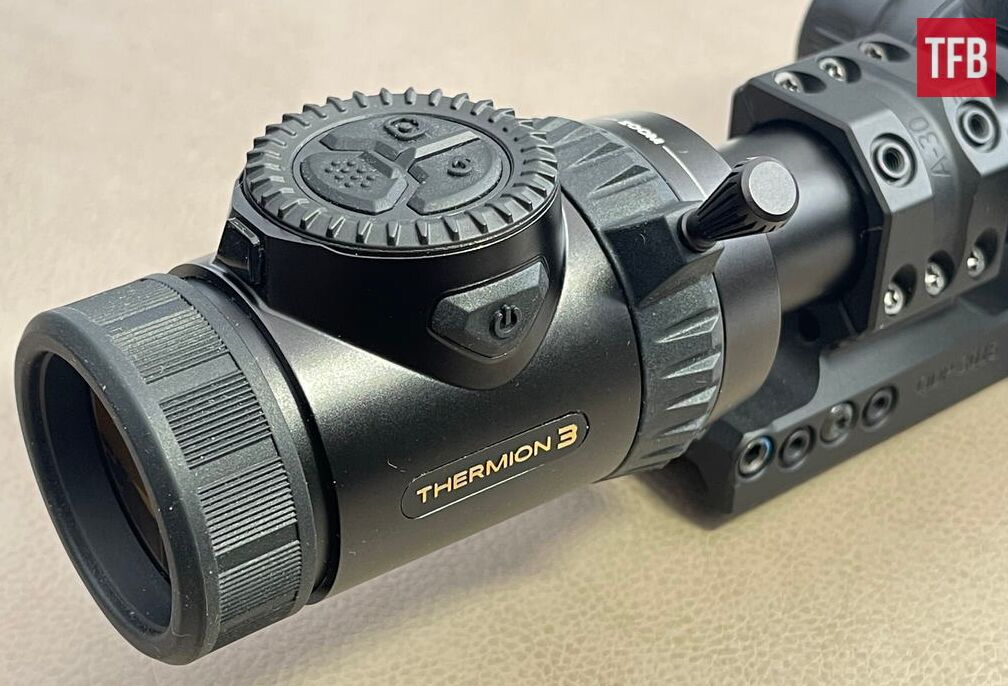
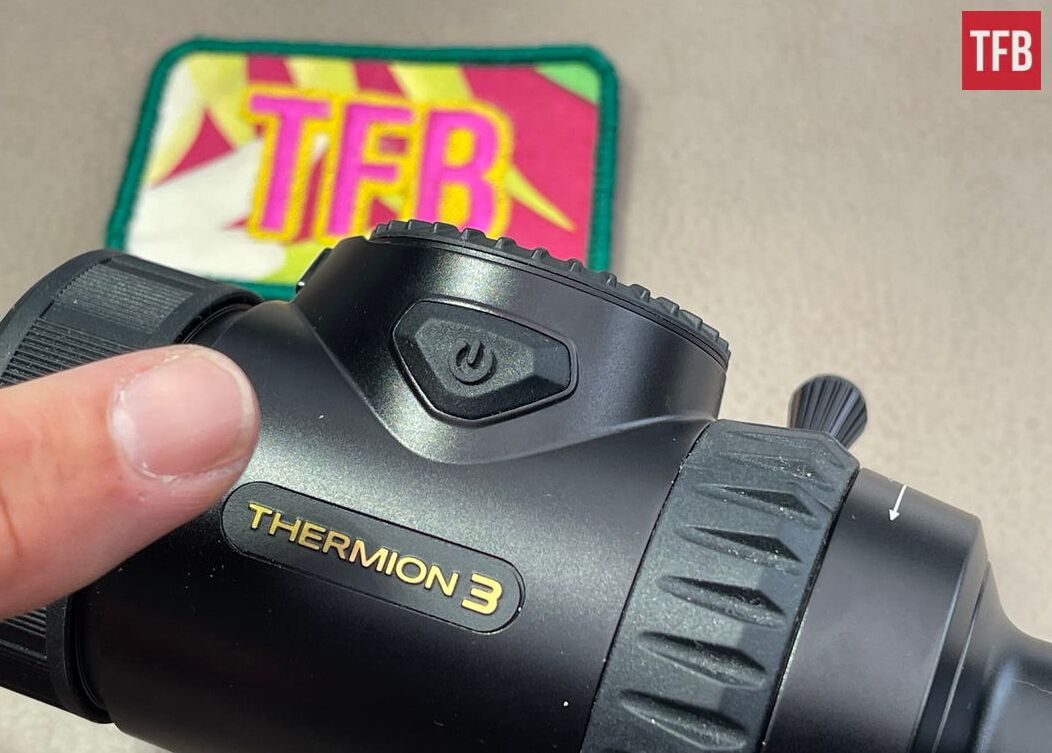
On this level, I’m going to be picky but that doesn’t mean you’re going to notice and feel the same. The On/Off button on the right side of the ocular, where a short press triggers a sensor calibration, and I hit it by accident a few times.
The image freezes while the sensor recalibrates, which is exactly what you don't want with an animal in the reticle. It could be because I had the scope on a tripod only, and not a rifle.
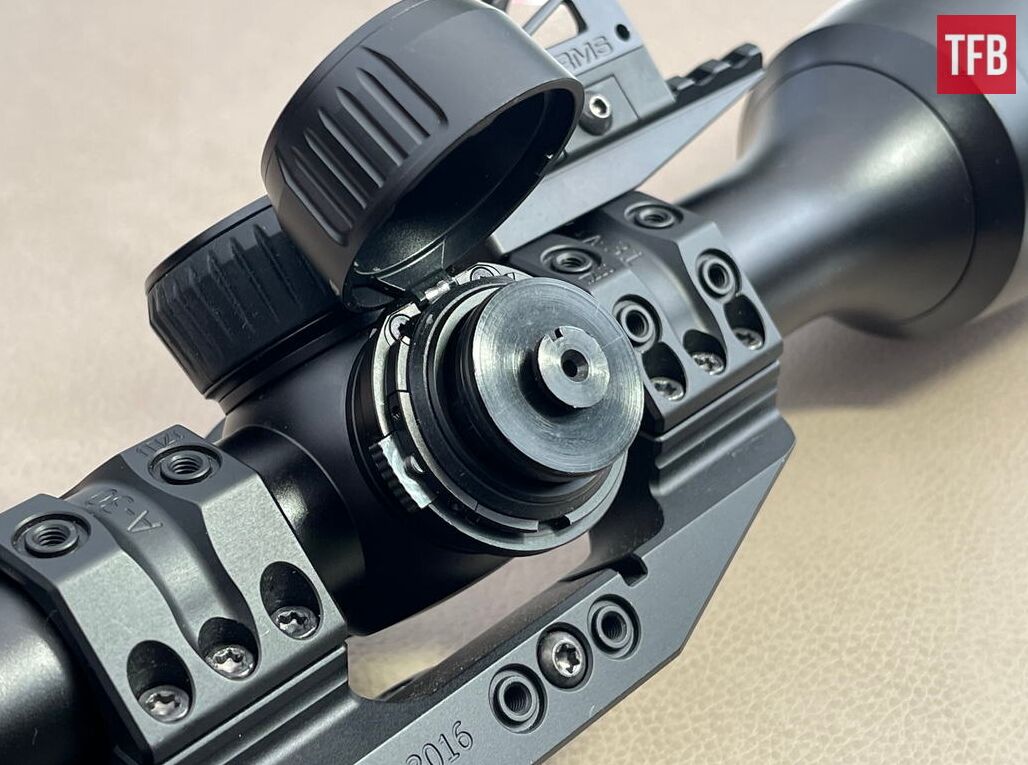
The LRF button on the left side (seen below) is harder to reach than on the Thermion 2, where it sat on top of the ocular. Neither is a deal breaker, and both are the kind of thing you train around.
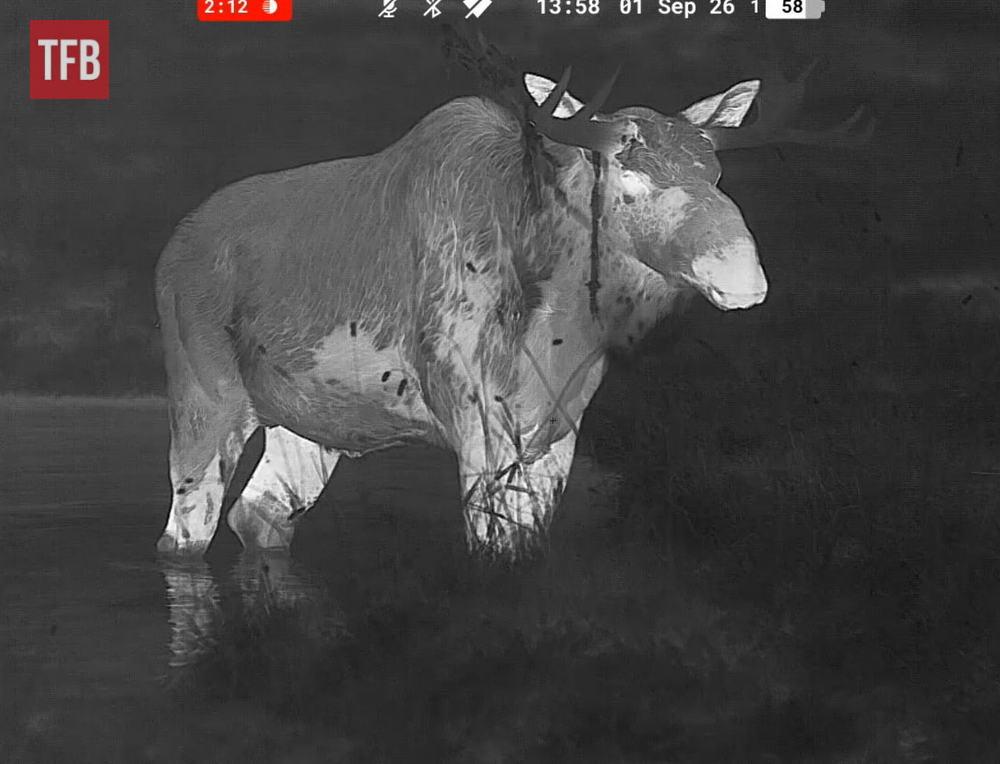
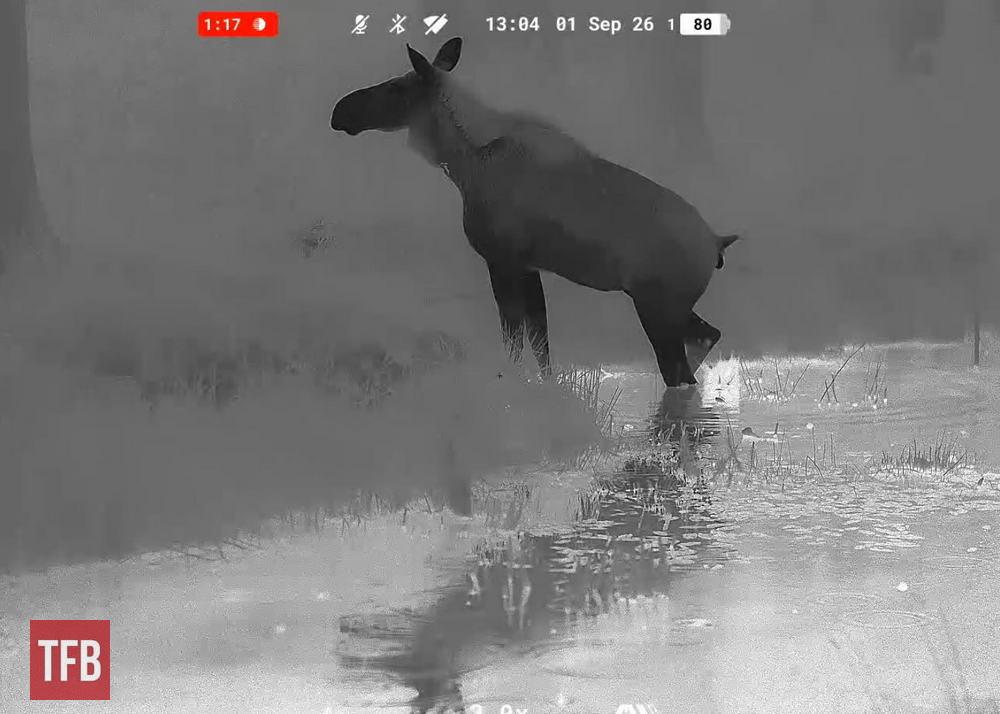
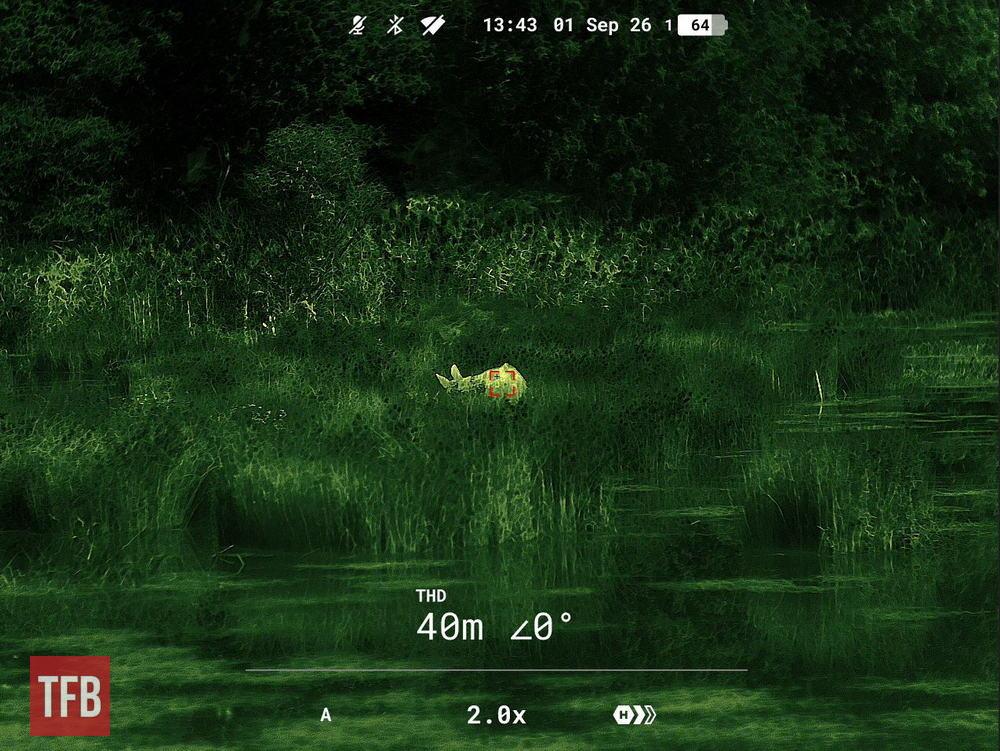
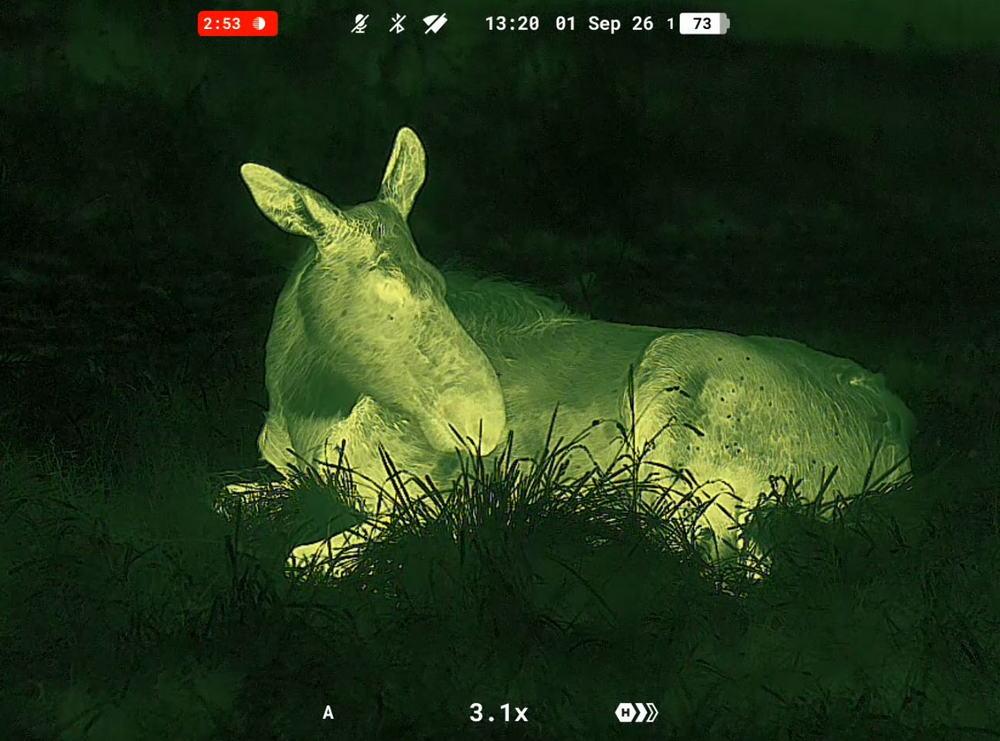
Image Quality: From Detection to IdentificationIn white hot or black hot, the XT60 renders the night like a black-and-white photograph. You don't get glowing blobs on a grey background. You get a landscape with texture and depth, where every animal has its own shape and posture. Depth, in particular, is something that didn’t exist years back on thermals; now it’s getting more and more realistic. Just look at this moose taking a dump in the pond while it rains - you even see the splash.
The image above might not be the real point of HD thermal, but any modern thermal will find a warm spot at 500 m (550 yd), so detection is no longer the hard part. In fact, you might as well neglect this figure completely. What matters is identification: what is it, and is it the right one?
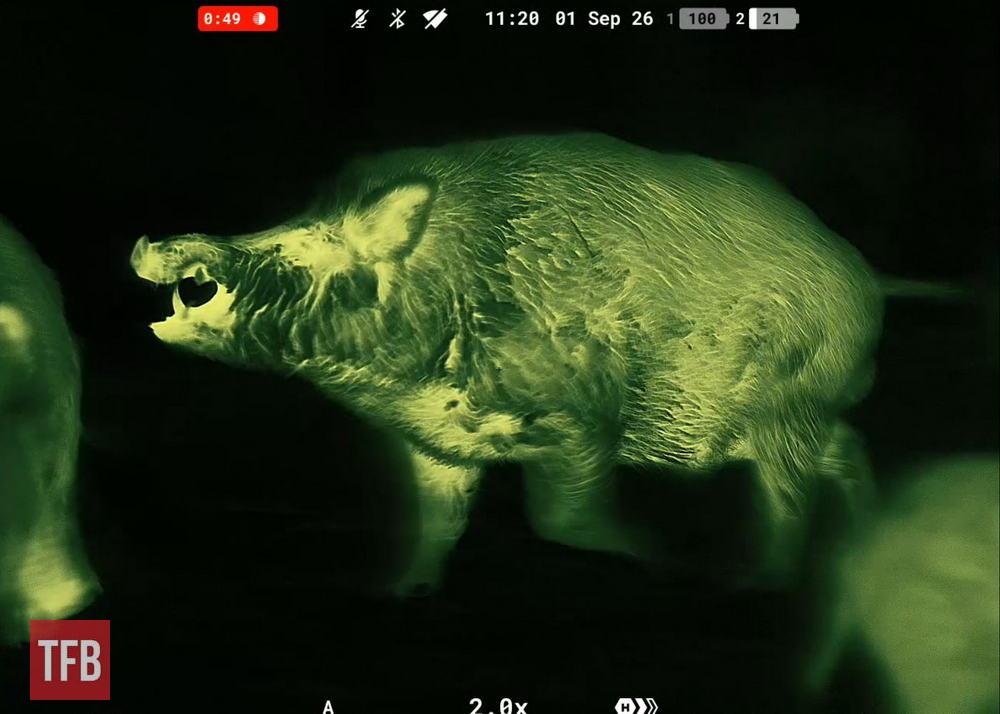
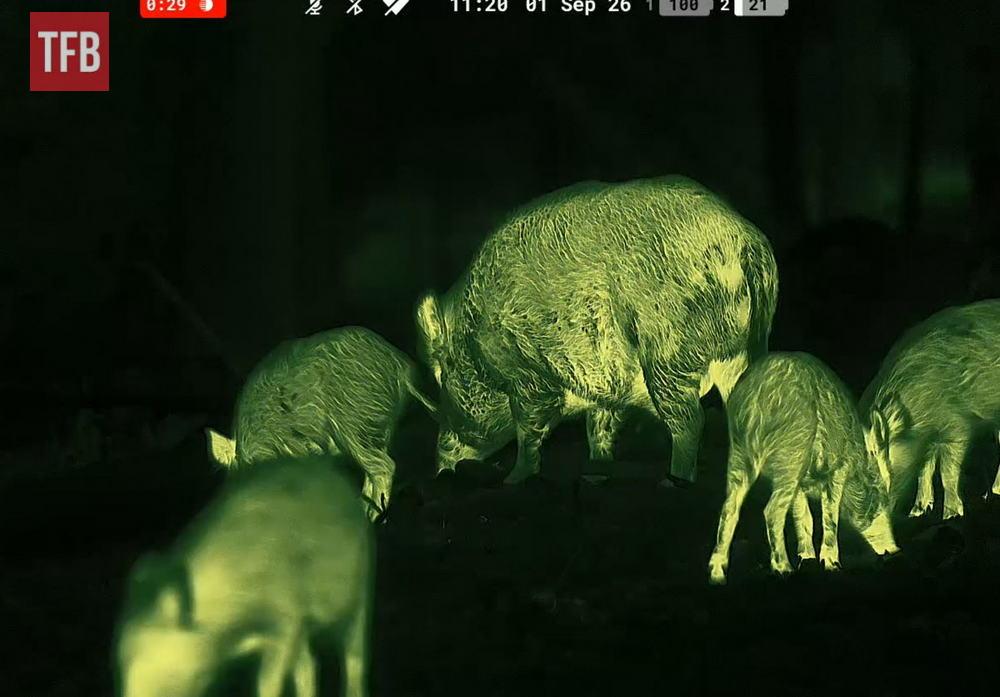
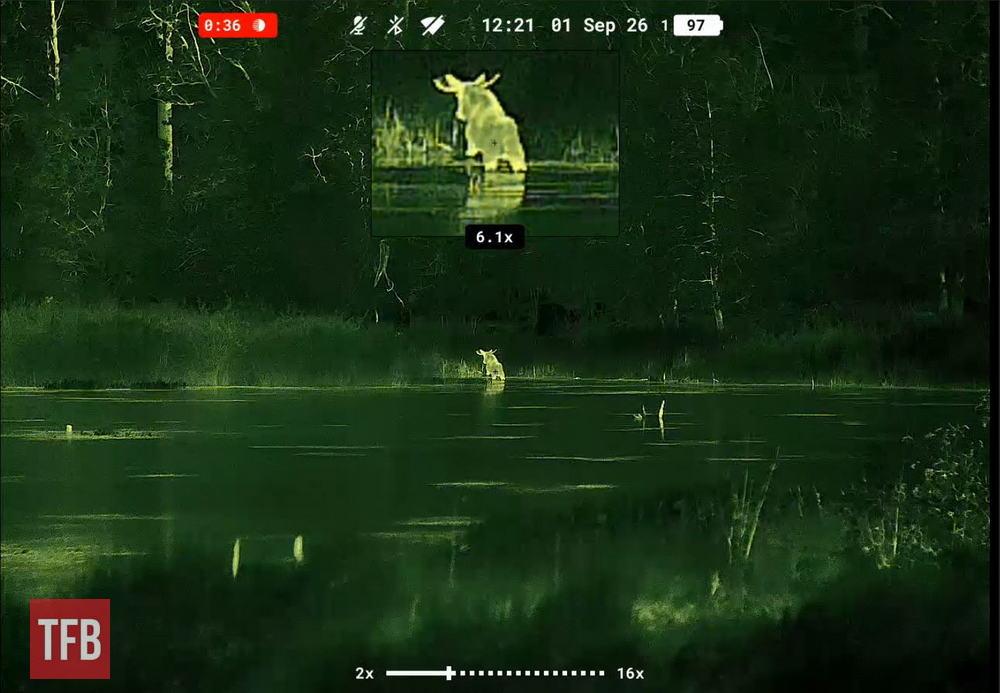
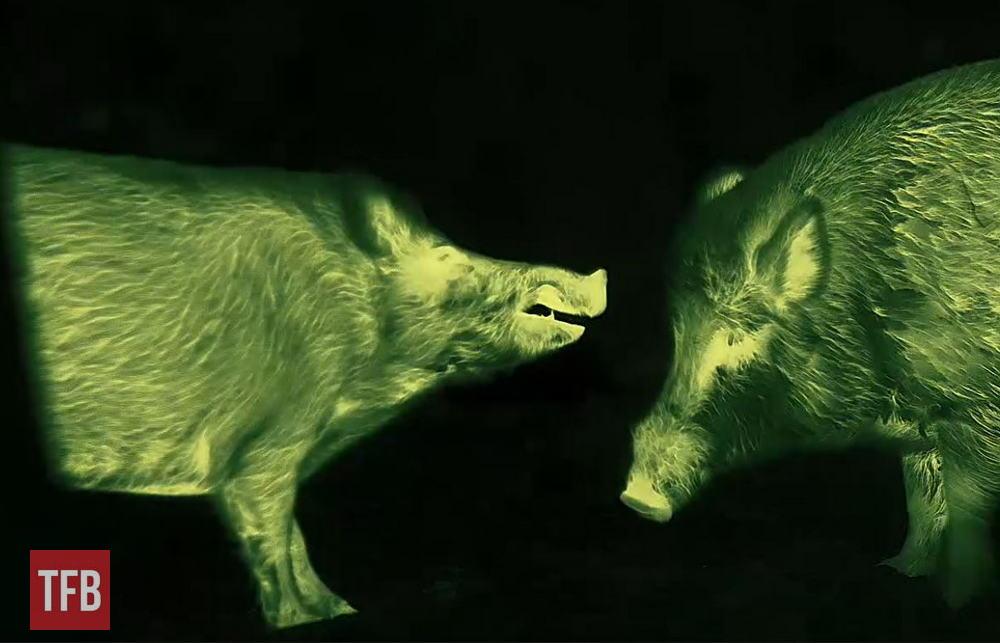
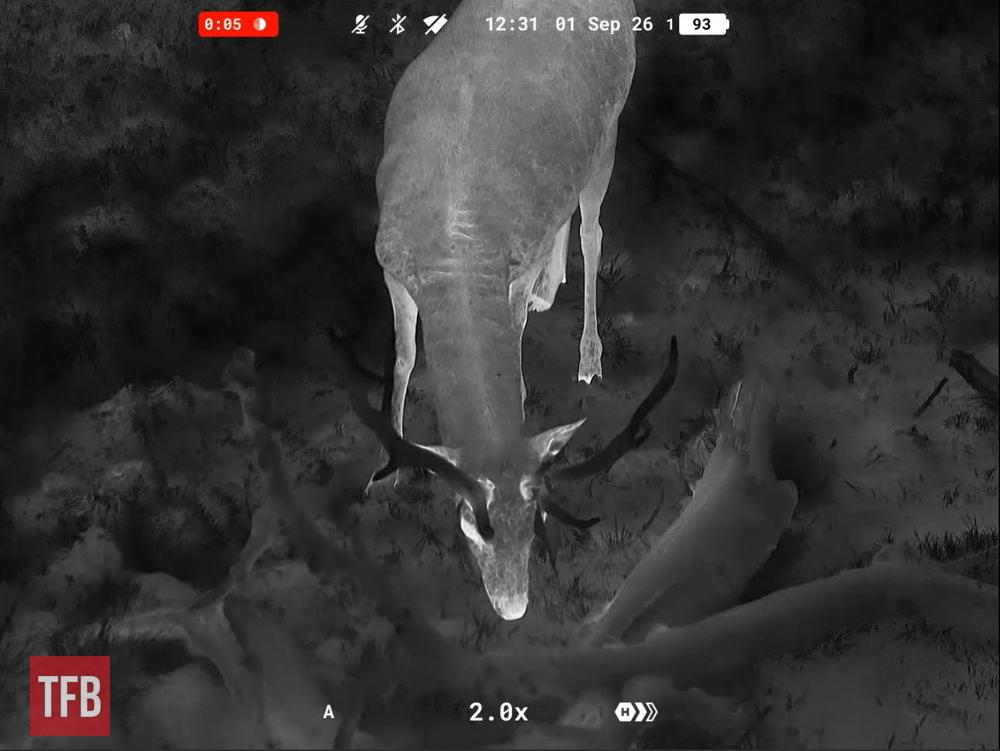
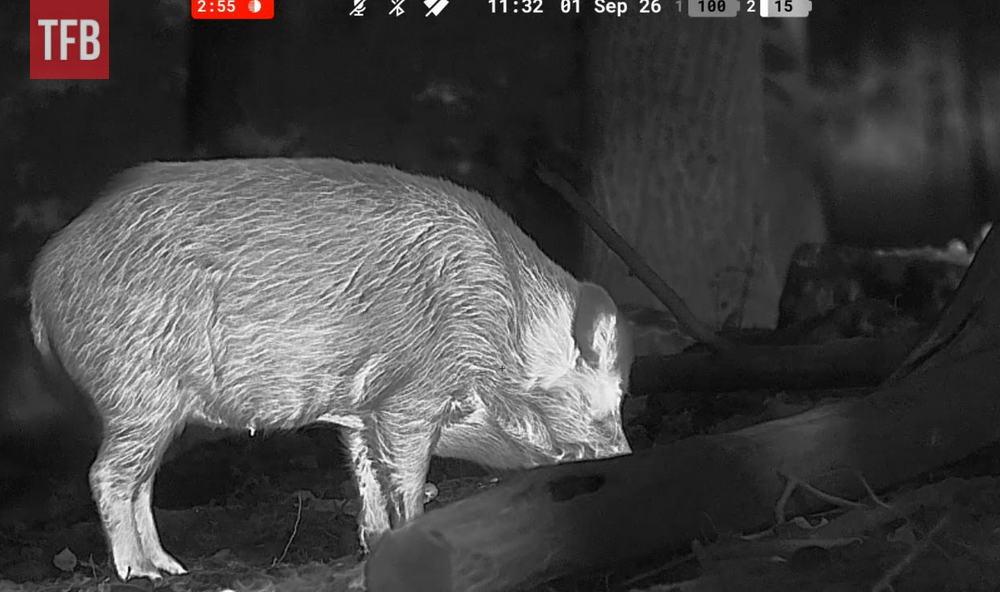
With the XT60 I can see the cold tips of a roe buck's antlers, tell a yearling boar from a sow, and count the piglets tucked against her flank. Earlier thermals told me something was there. This one tells me exactly what it is. Above, the distance is very close; normally you would see the surroundings and the backstop also. Below is a male moose, coming up from a lake with lots of reeds. It just started raining (the forecast said full sunshine and I packed accordingly - thanks!).
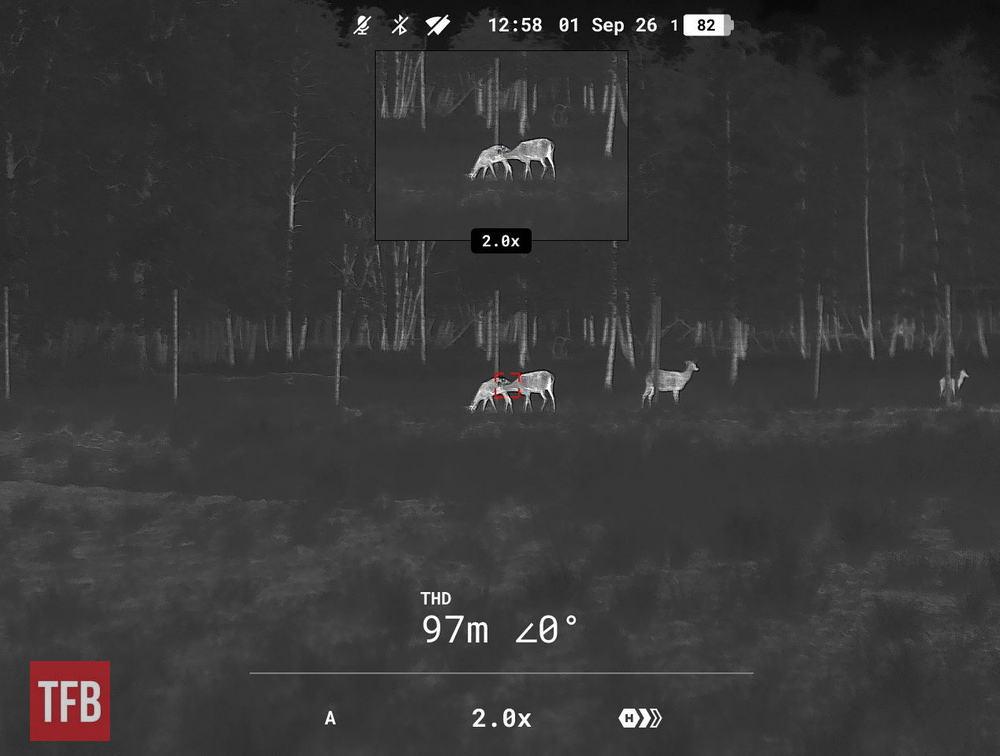
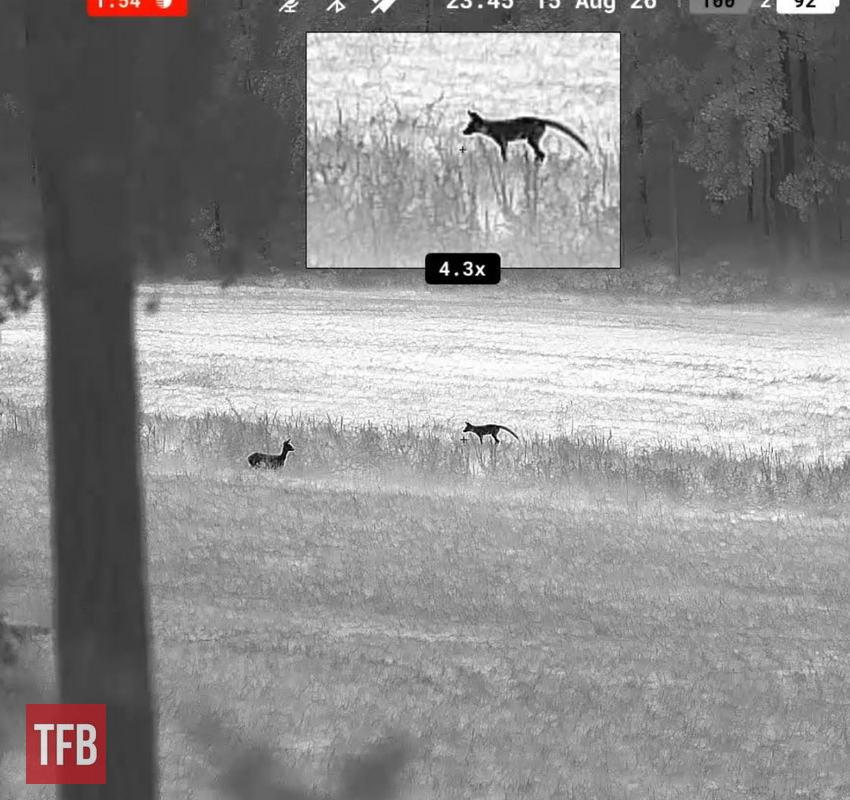
The wide field of view and the sensor work together, especially with the PiP in action (Picture in Picture). At the 2x base magnification, you see 25.7 m at 100 m (77 ft at 100 yd), enough to watch an entire field edge and every animal in a group. Then you roll in on the one you want without losing it from the image.
Here's why the zoom holds up: both Thermion 3 models use the same 12 µm pixels behind the same 60 mm lens. Zoom the XT60 to 4x and you're looking at roughly the same view, with the same pixels on the animal, as the 640-sensor XR60 at its native 4x. The first doubling of zoom costs you almost nothing in image detail.
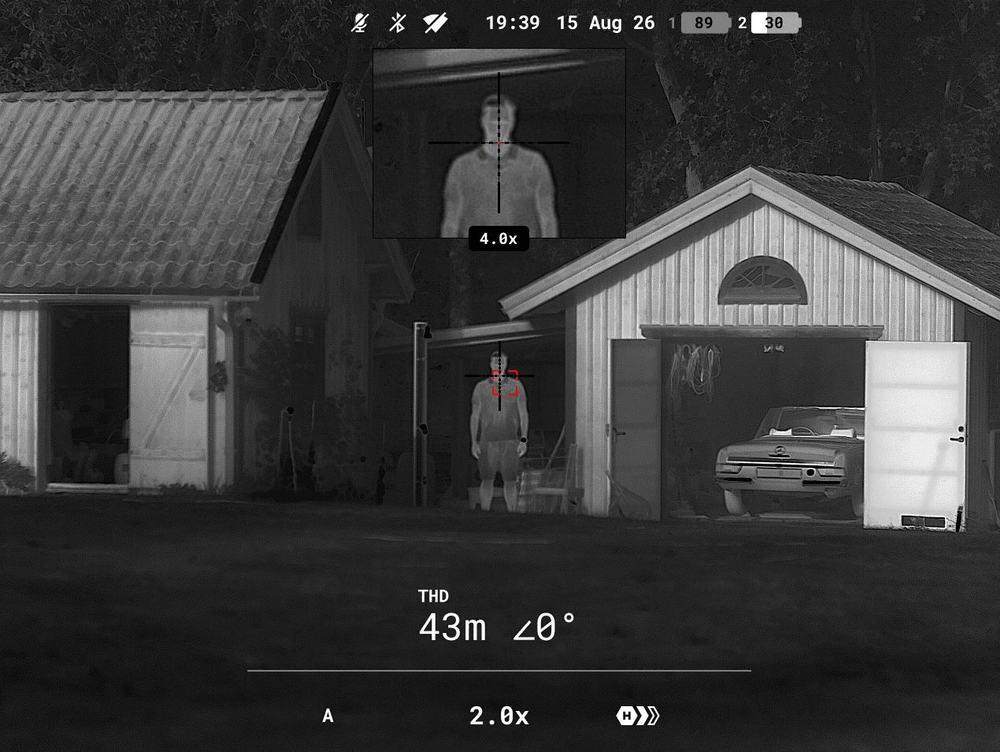
The display is fine enough that you stop thinking about pixels and start reading the animal. On a long night, that matters a lot more than weight. It's not the scope that wears me down, it's tired eyes and uncertainty, and a clean HD image means less strain and fewer doubts about what I'm looking at, even in the last hour. In the picture below, the Thermion 3 is on a tripod, without a firearm, and I’m filming myself. A warm day, where every small detail shows. You can even see how the buildings are constructed, almost like X-ray vision. Just look at the star on the vintage Mercedes-Benz SL280 Pagoda, or its steering wheel and some of the things inside the barn (hopefully they will come out after the image compression).
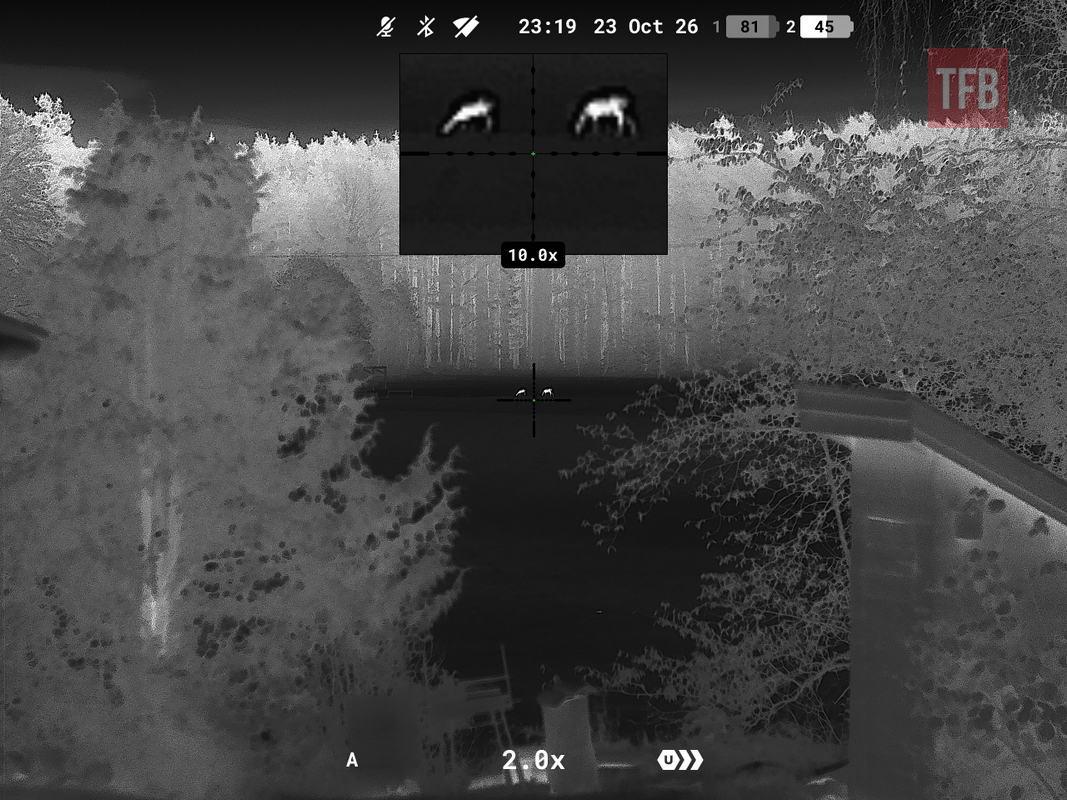
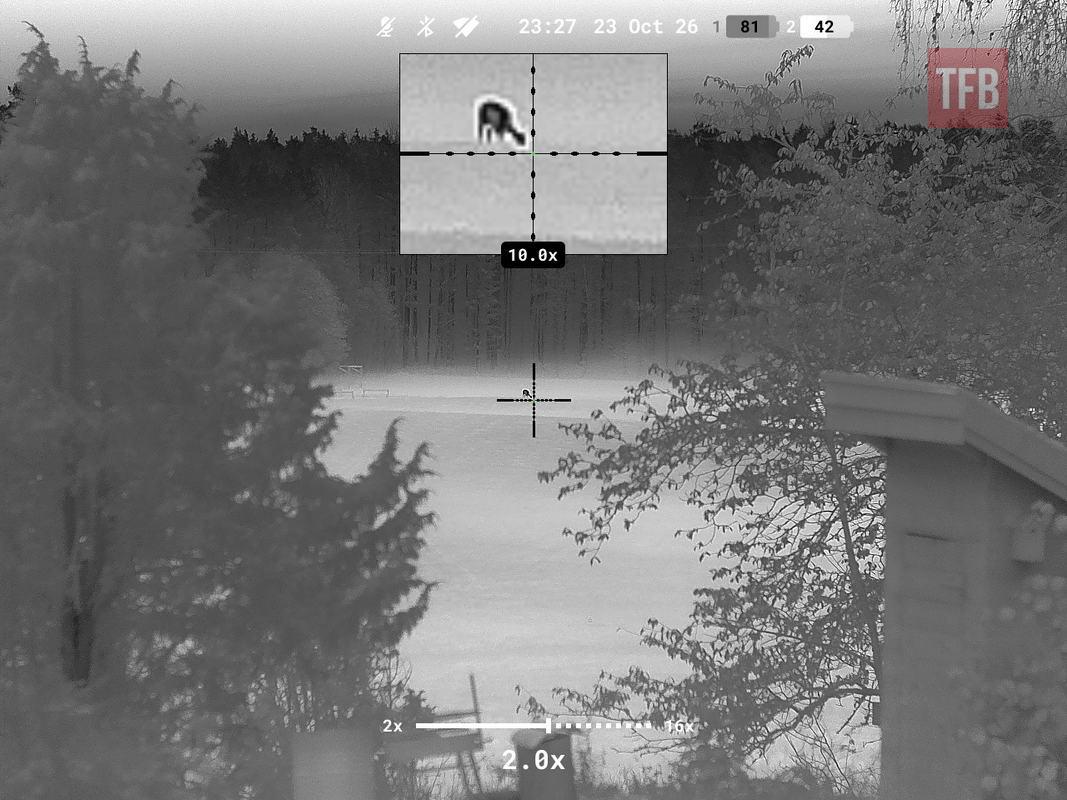
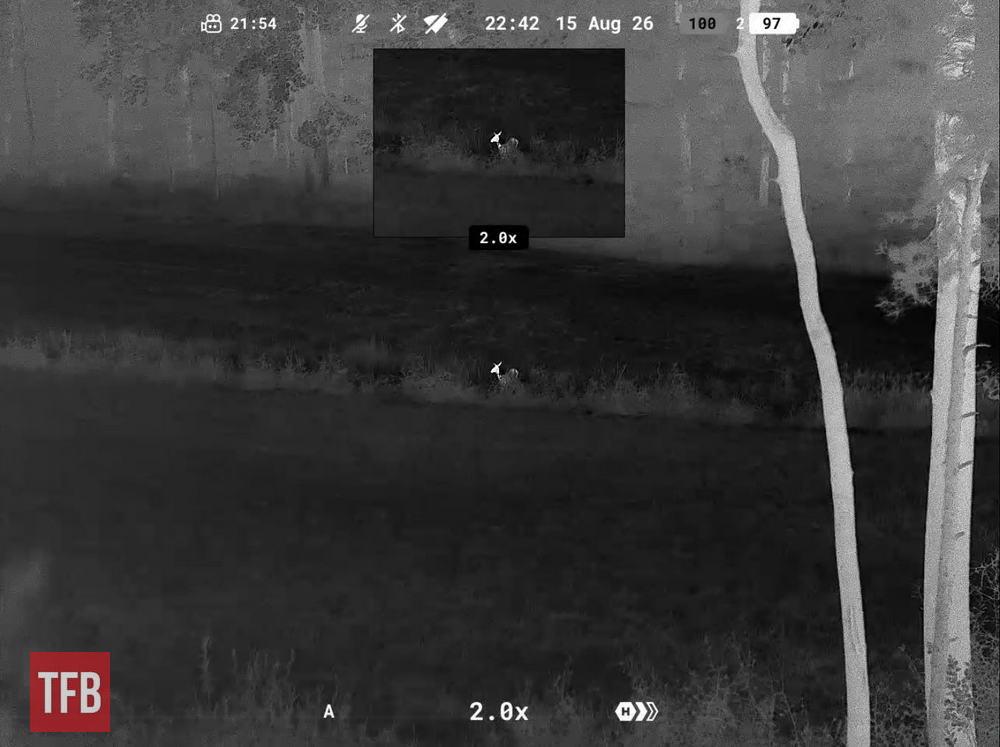
Rain, Fog and HumidityWet weather is where weak and cheap thermals fall apart. When everything trends toward the same temperature, contrast drops and the image goes flat. Pulsar has a good reputation for handling fog and humid nights, and the Thermion 3 lives up to it. Image quality in the dry was excellent, as you'd expect from this sensor. It’s easy to mistake the images for those from a B&W camera. To exemplify the Thermion 3’s performance in foggy conditions, I went out on a wet night looking for animals at a distance and did 2x and 10x PiP. Autumn is here for real, and it’s been cloudy and rainy for over a week, with little or no sunshine. We even had some nights with frost. I was lucky to find some fallow deer at around 350 meters, and below you can compare white and black hot. On a foggy field, I think black hot works really well. Green hot is another all-around favorite.
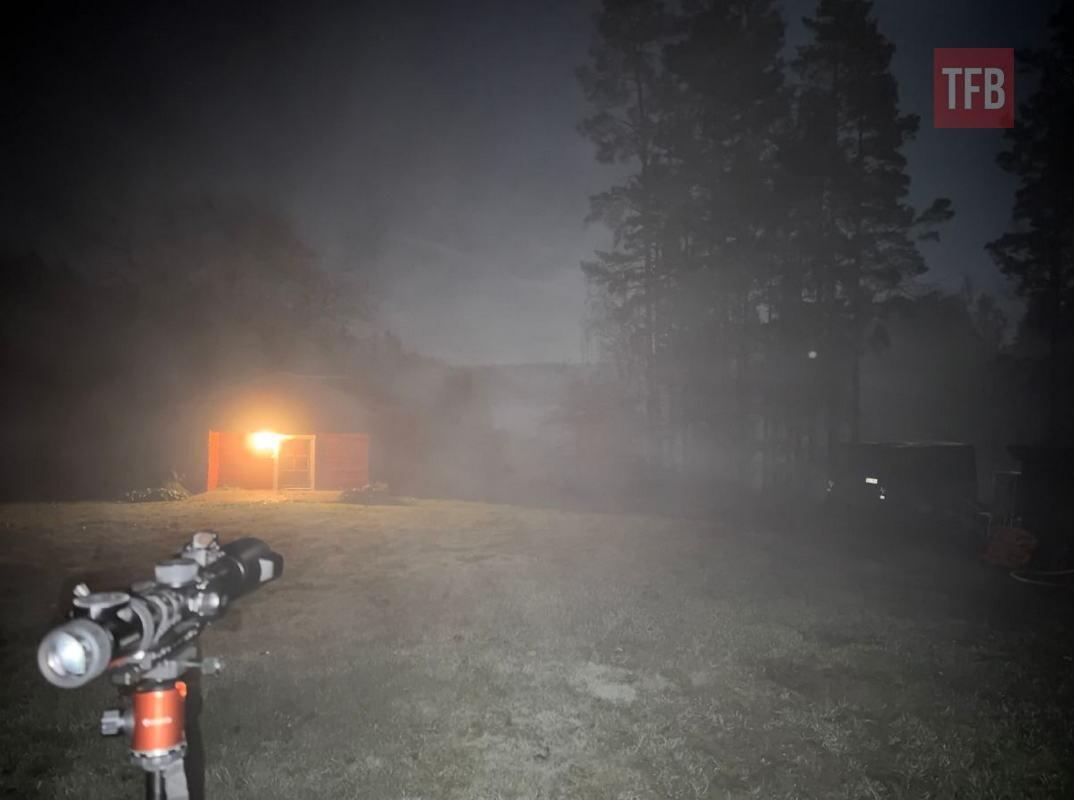
Here you can see how the photos were taken, with the Thermion 3 and from a tripod. The fallow deer is at around 350 meters (383 yards). The LRF didn’t work due to the fog, which is completely normal for all (civilian) LRFs, unfortunately, but it’s a known distance to me. With eyes and a flashlight, it was difficult to see anything beyond 20-30 meters - you can’t even see the outhouse at all.
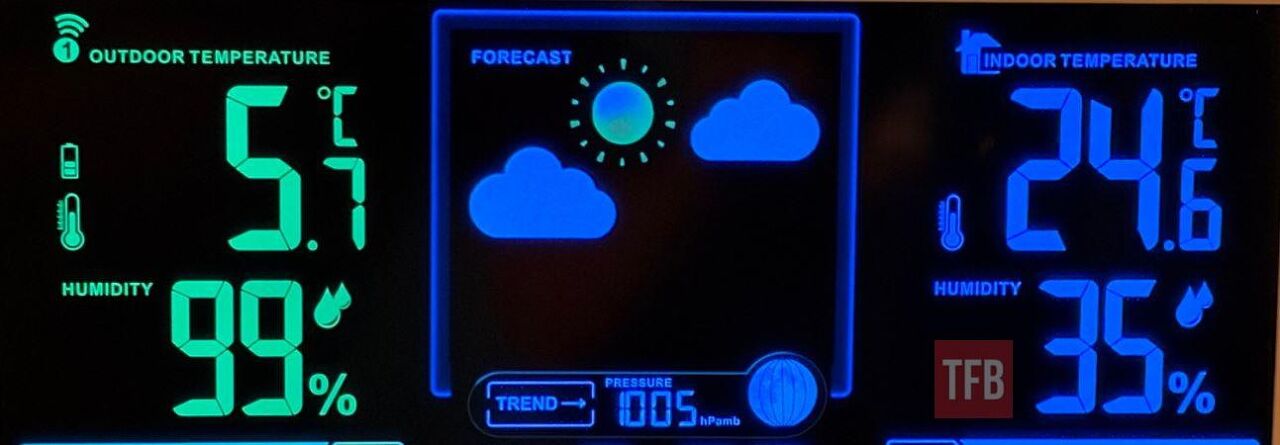
The temperature was +5.7C (42.6°F ), with a humidity of 99% according to my sensor.
Laser Rangefinder and BallisticsOne press wakes the rangefinder and gives you the aim, the next press gives you the distance with the holdover, and that's one less thing to guess about before the shot. Hold the button for 2 seconds and it switches to scan mode, which updates continuously as you move across the terrain. Some suppliers put the LRF inside the lens, but that’s just going to get you less energy on the sensor. Also, Germanium is brittle. Cutting it leaves edge stress and possible micro-cracks, and the hard outer coating can start lifting at the cut edge. Add a 6,000 J recoil rating and you have a stress point exactly where you least want one. Pulsar solved this by having a minimal LRF outside the lens.
Pulsar rates the new rangefinder to 1,200 m (1,312 yd), up from 800 m (875 yd) on the Thermion 2, with a faster reading time. In my use, readings were fast and consistent. I don’t remember the exact number, but I was able to range over the specified distance several times, but it’s more scientific than practical for hunting.
For ballistics, I build profiles in the Stream Vision Ballistics app and send them straight to the scope, and the app can factor in local weather. Long-range target shooting has taught me that a ballistic solution is only as good as the data you feed it. Measure your muzzle velocity, get the sight height right, and confirm at the distances you actually shoot. I rarely shoot long range when hunting, and I don't encourage it, but the system is accurate and trustworthy when your data is.
Recording starts on recoil if you enable it, so you get the shot on video without remembering to press anything. Footage and settings are managed through the Stream Vision 2 app, but I usually download to my laptop via USB C. Below: A moose fairly close, but all of the flies can be seen clearly as dark dots.
Battery and PowerThe XT60 runs on a removable APS5 pack (4,900 mAh), rated for up to 8.5 hours at 22 °C (72 °F). Wi-Fi, recording, Bluetooth and the rangefinder all cut into that, and so does cold. The XR60 gets 14 hours from the same pack, there’s a price of pushing more pixels.
In practice, I keep a spare APS5 in my pocket and never worry about runtime. The scope also takes USB-C power, so a power bank in the backpack works for a long night in a blind or a high seat.
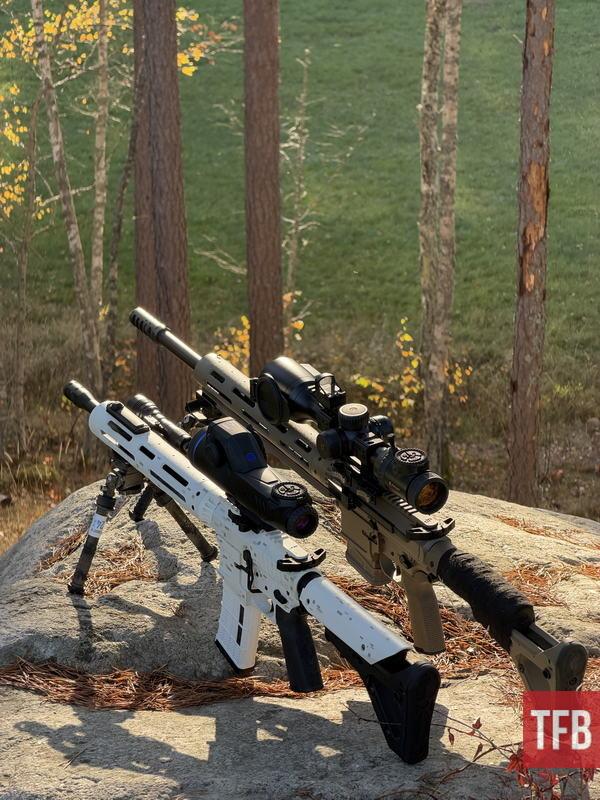
Most of the images of the Thermion 3 also show it with the Shield Sights red dot as a secondary day optic.
In the Field: Hogs and CoyotesThe typical hunt doesn't exist, and that's the most exciting part. A quiet night can turn into a lifetime moment in seconds, and that's when you need equipment that works the same every time. Hunting is hours of patience and a few seconds of decision. The Thermion 3 is built for those seconds. Below: A baby fox runs into a roe deer along the ditch. Distance: about 150 meters. To highlight the quality in the image, I run a reticle that’s not supposed to be seen.
My nights were mostly over fields and clearings, watching for wild boar and foxes, and that translates directly to the two kinds of night hunting most TFB readers do.
Hogs. A sounder coming out of the timber is exactly the situation where the XT60 earns its price. At 2x you watch the whole group cross the field edge, then zoom in to sort the boar from the sows and see who has piglets at her side. Whether you're culling for a landowner or picking one for the freezer, choosing the right animal in a group is the hard part, and this is where 1280 HD pays off. If this style sounds strange, it’s because the hunting laws in Europe are different and it’s illegal to shoot a sow with piglets.
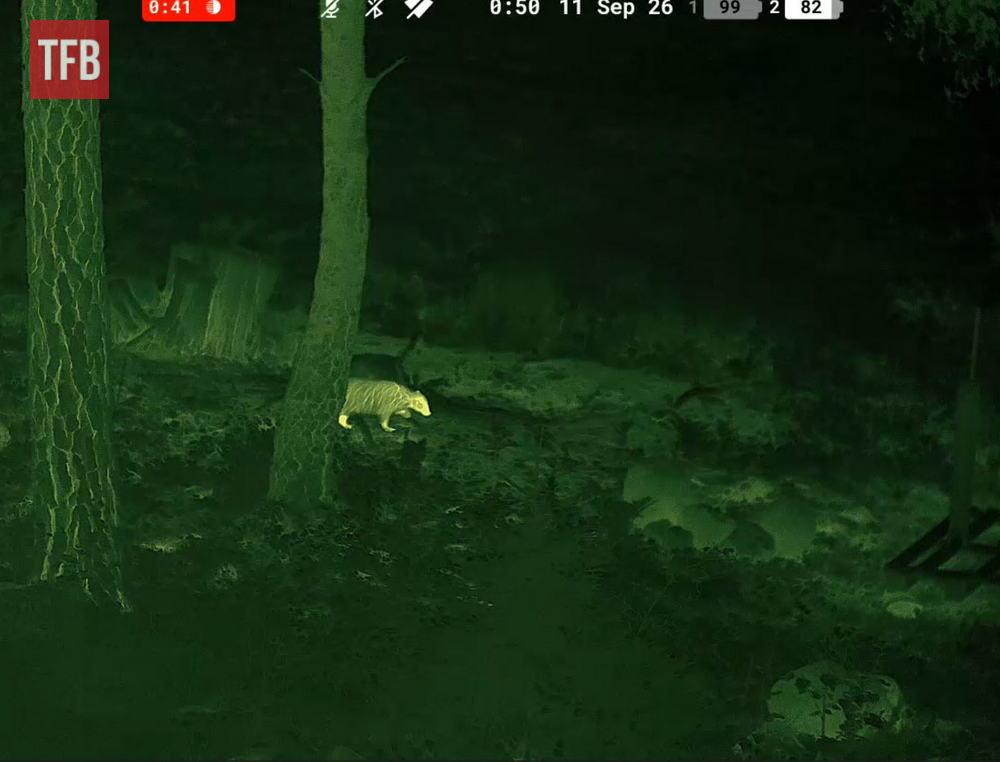
Coyotes (foxes, or similar). On a calling stand, the wide view lets you watch the whole field while the dogs circle in from the edges, and the zoom ring takes you from scanning to shooting in one movement. When a coyote stops broadside for a second, you don't want to be hunting for a button. Below is a badger at about 60 meters in the fog.
For a firearm from a stand or a high seat, I'd pick the Thermion 3. If you hunt on foot with a suppressed AR, read the Trail 3 comparison below first.
Thermion 3 vs Thermion 2: Should You Upgrade?If you own one of the newer Thermion 2s and shoot mostly inside 100 m (110 yd), you're probably not missing shots, and I wouldn't sell it just to upgrade. But the XT60 gives you at least 67% more pixels, a 25% wider view at a lower 2x base magnification, a rangefinder that reaches 400 m (437 yd) further, and an extra hour and a half of battery. It's also 51 mm (2 in) shorter, and there are many changes to the ocular, like the eye relief. If you upgrade, you will notice the difference. What you give up is roughly 100 to 160 g (4 to 6 oz) and, for me, a better-placed LRF button.
Upgrade if identifying animals in groups at distance is your daily problem, or if you range past 800 m. If you're coming from an older 640 Thermion 2 or an original Thermion, or similar type of thermal, the jump is going to be substantial. 1280x is the new 640x!
Thermion 3 XT60 or XR60?I haven't tried the XR60 yet, so take this as reasoning, not testing. Because both use 12 µm pixels behind the same 60 mm lens, the XR60 at 4x shows roughly what the XT60 shows when zoomed to 4x. The XT60 adds the other half of the picture around it. The XR60 gives you better battery life (14 vs 8.5 hours), a slightly lower NETD, more top-end zoom and a lower price. For long-range open-field hunting, it makes sense. For fields with timber edges and mixed distances, I'd pay for the XT60's width; it really is something special beyond all the numbers I use for my reasoning.
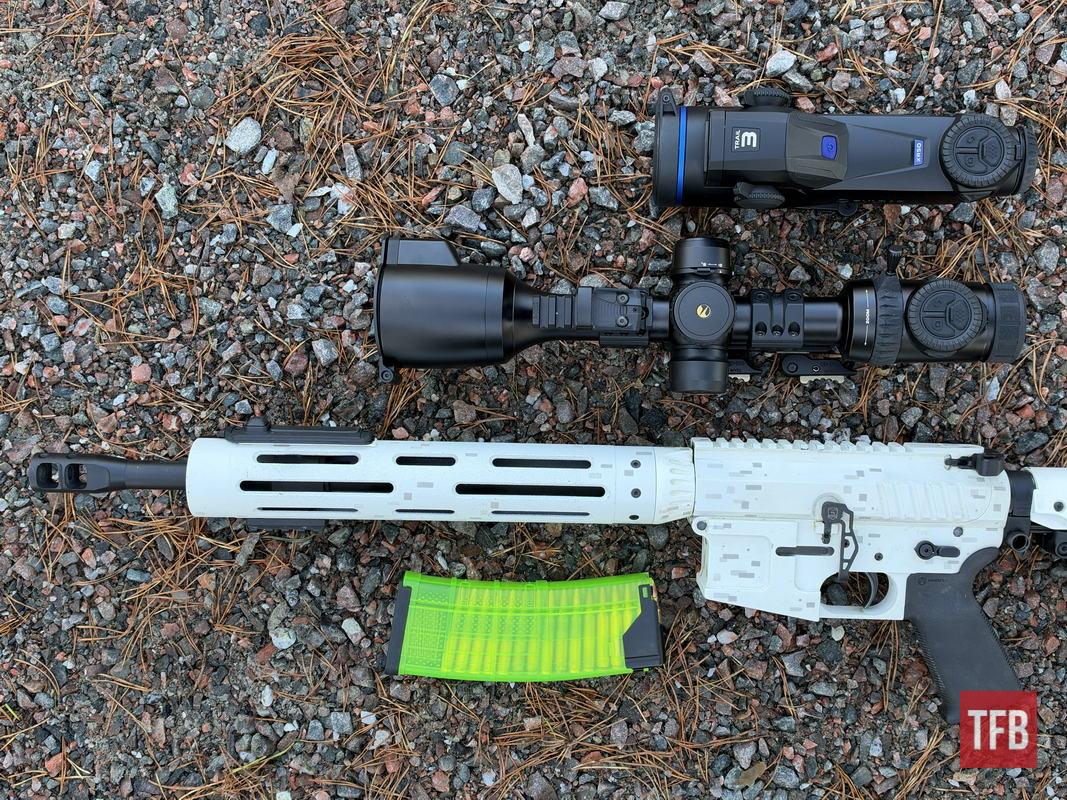
Thermion 3 vs Trail 3My own Trail 3 LRF XR50 is a compact monoblock with a 640 sensor behind a 50 mm lens, mounted on a Picatinny rail. In the field, the Thermion 3 shows almost 26 m at 100 m against 15 m on the Trail 3 (77 ft vs 45 ft at 100 yd), with much more detail at the same time, which makes it easier to follow a moving group and pick the right animal.
The Trail 3 is lighter and more compact, and it suits AR-15 and AR-10 rifles better. I'd reach for it when I'm moving a lot, or when I mostly hunt shorter forest distances. Budget is the other reason to choose it. But once you've looked through 1280 HD thermal in a riflescope, it's hard to go back. I also prefer most of the Thermion 3 controls over the Trail 3, especially for zooming.
Buy It If / Skip It If
Buy it if | Skip it if | You hunt field edges and clearings where picking the right animal out of a group matters | You mostly hunt short-range timber, where a 640 sensor already shows you everything you can shoot | You want a thermal that mounts in 30 mm rings and looks like a day scope on a traditional rifle | You want the lightest, most compact setup for a carbine or an AR-15 | You've run an LPVO with a throw lever and want the same fast zoom at night | Your budget stops well short of flagship money | You sit long nights and want less eye strain and fewer doubts in the last hour | You hunt mainly open fields at long range and value battery life over width (look at the XR60) |
Would I spend my own money? Yes. I'm the kind of hunter who will always choose image quality over weight, and this is the best image I've ever had in a rifle scope. I come from a Thermion 2 and a Trail 3, and this would be my first choice both for a bolt-action and a modern semi-automatic hunting rifle, both over any other Pulsar and the competitors.
Final Thoughts- 1280x1024 HD thermal that lets you identify animals, not just detect them.
- Wide Field of View: 25.7 m at 100 m (77 ft at 100 yd) view at 2x, and the zooming holds the details in the image.
- Classic 30 mm design that mounts like any scope and looks like a high-end day scope.
- LPVO-style zoom ring with throw lever and a top-turret focus wheel, with rubberized controls and good friction.
- Fast 1,200 m (1,312 yd) rangefinder tied into the ballistic calculator.
- 65 mm (2.6 in) eye relief for heavy calibers and awkward positions.
- Removable battery plus USB-C power delivery.
- Holds up in rain, fog and humidity.
- Starts in a few seconds.
The Thermion 3 LRF XT60 changes the question you ask at night. It's no longer "is something there?" but "which animal is this, and is it the right one?" Add a zoom and focus system that you will understand immediately, and you’ll feel right at home behind this scope from the first night.
Like most thermals, it's on the heavy side, and it will cost real money. But those are minor things next to the incredible image quality, and I'd rather train around a button than live with a scope that only tells me something warm is out there.
It's also good to see a European manufacturer (Pulsar is based in Lithuania) setting the pace in a market where more and more of the volume now comes from China. The fact that it’s “Made in Europe” means a lot to many.
If this post has you ready to hit the range, head over to gunranges.com - a free directory to help you find shooting ranges near you, wherever you are in the United States.
|