The Best Shotguns for Bird Hunting of All Time
You could shoot a lifetime of roosters with a beat up Remington 870 Express. And you could make a good argument that any gun you’re willing to carry and can shoot well in the uplands is an upland bird gun.
However, there are some shotguns that are better suited for the task. A good bird hunting gun should be pleasant to carry (meaning it’s light and well balanced), it should mount naturally, and it should swing through targets with ease. A bird gun should look nice too, because as longtime shotgun columnist Phil Bourjaily says, pheasants and grouse don’t like to be killed by ugly guns.
So for this story, and the video above, Bourjaily helped me assemble a list of our favorite bird hunting shotguns, both new and old. We carefully considered value when making our selections. None of the guns on our list are cheap, but they are still attainable for the working bird hunter. They are also the kind of gun that you will want to pass down to your kids one day.
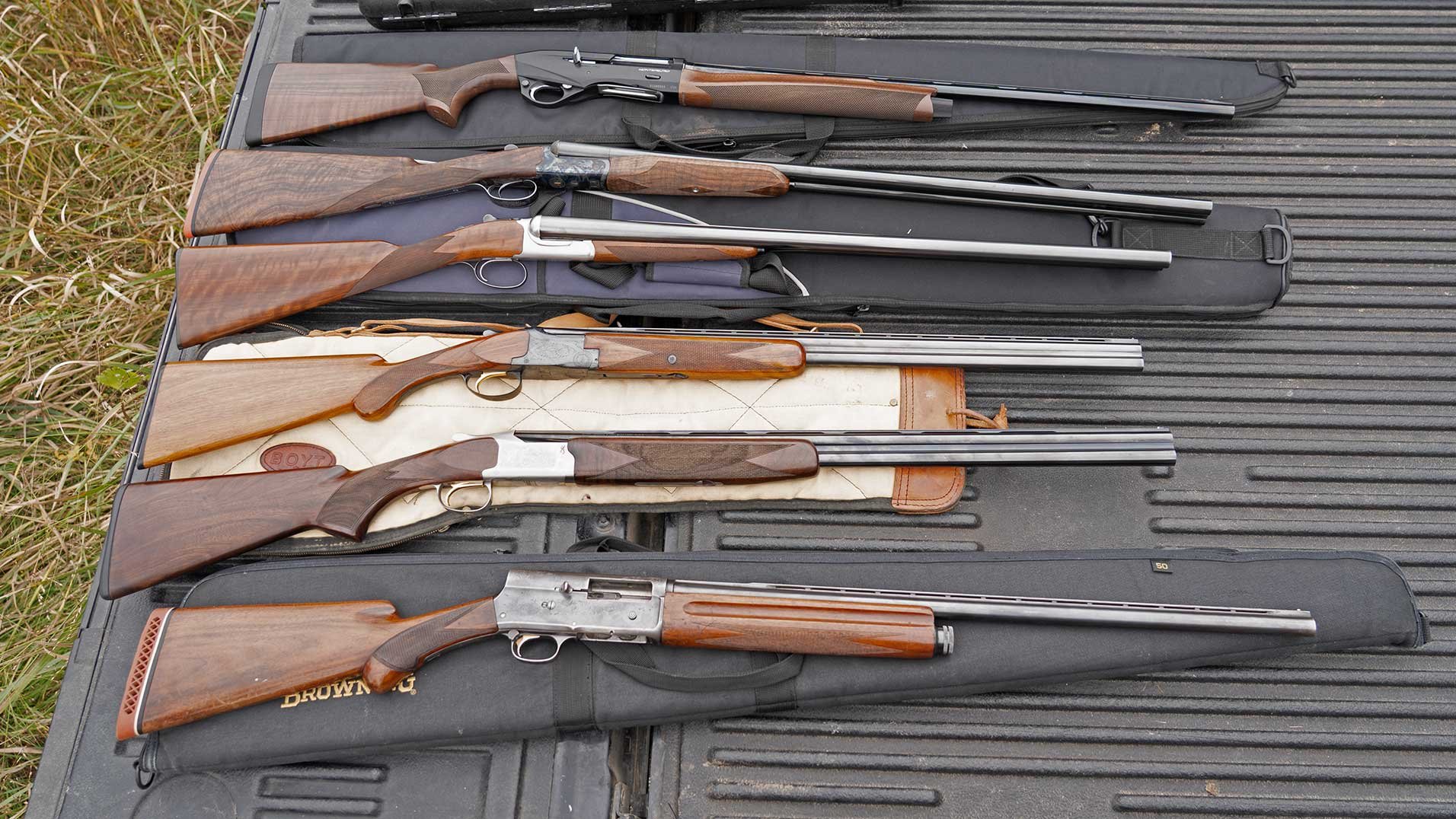
Modern Upland Bird Guns
- Best Over/Under: Browning Citori 825 Field
- Best Side-by-Side: Upland Gun Company Zeus
- Best Semi-Auto: Benelli Montefeltro
More Bird Guns to Consider
Best Classic Bird Guns
Modern Upland Bird Guns
Best Over/Under: Browning Citori 825 Field
Key Specs
- Gauge: 20
- Action: Break-action, O/U
- Weight: 6 pounds, 6 ounces
- Barrel length: 28 inches, Invector DS chokes
- Overall length: 45 inches
- Price: $3,389
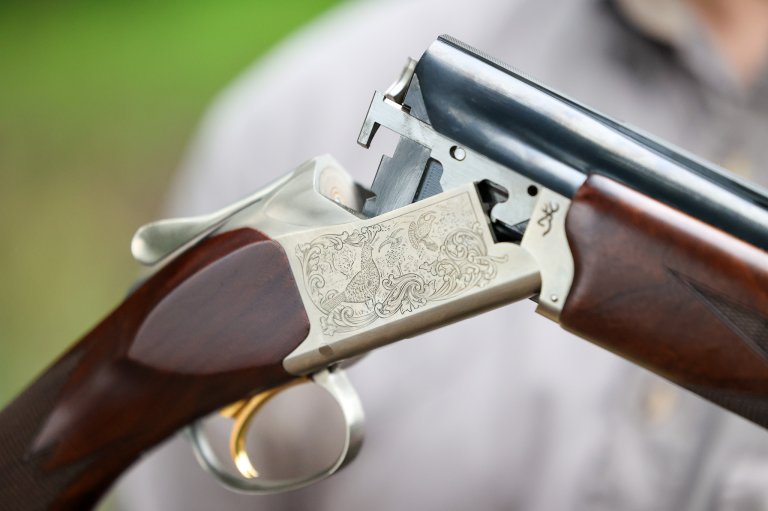
We picked the 12-gauge version of the 825 as our Editor’s Choice award-winning shotgun in 2025, but it’s quite possible that we like the 20 gauge version of the new Citori even better.
Shotgun nerds know that the Browning Citori was introduced in the early 1970s as a more affordable, Japanese-manufactured alternative to John Moses Browning’s Belgian-made Browning Superposed (which you’ll find in our list of classic guns). The modern Citori maintains that legacy of quality and attainability. The Citori 825 has very nice aesthetics. It features a glossy American walnut stock, quail and dove engravings on the receiver, blued barrel, and ivory bead.

With the 28-inch barrels I thought the gun handled perfectly. Even at just 6 pounds, it did not feel whippy at all. Compared to the 725, this upgraded Citori has a lower-profile receiver and lower-bore axis. This should mean less muzzle jump and faster recovery between shots. While shooting this gun on clays, I did notice that it recoiled very lightly.
Lastly, the Citori has a tapered locking bolt that is designed to self-adjust — in other words, tighten — with time. This is meant to prevent a very ambitious shooter from wearing out the action. If you are looking for a do-it-all upland bird gun, it’s hard to beat the Citori in this price range.
Best Semi-Auto: Benelli Montefeltro

Key Specs
- Gauge: 20
- Action: Semi-auto, inertia
- Weight: 6 pounds, 2 ounces
- Barrel Length: 28 inches
- Overall Length: 49.5 inches
- Price: $1,699
The Benelli Montefeltro is probably my all-time favorite pheasant hunting shotgun. It’s light, reliable, and it comes to my shoulder more naturally and quickly than any other semi-auto out there. And sometimes, two shots are just not enough. For Bourjaily’s part, he says that if he had to hunt pheasants for money, this is the gun he would shoot (luckily, or perhaps sadly, that is not the case for Phil).
The Montefeltro was first introduced in 1983, but it was updated most recently in 2023 with an easier-locking bolt system, a two-piece shell latch, and improved ergonomics and grip.

The inertia action in this shotgun allows for a wonderfully sleek and slender shotgun (because there is no need to make room for a gas system in the forend). I like inertia guns best for upland hunting. Typically, you will not be shooting very much, so punishing recoil is not as problematic as it is on a fast and furious duck hunt. Plus you’re less likely to encounter the mud, sand, and dirt that can jam an inertia gun on a waterfowl hunt.
The 20-gauge version of the Montefeltro with a 28-inch barrel weighs only 6.1 pounds. The 12-gauge version at the same barrel length weighs only 6.6 pounds. So take your pick and off to the cattail sloughs you go.
Best Side-by-Side: Upland Gun Company Zeus
Key Specs
- Gauge: 20
- Action: Break action, boxlock side-by-side
- Weight: 6 pounds, 2 ounces
- Barrel length: 30-inches, fixed IC/M chokes (barrel length and chokes per customer request)
- Overall length: 47 inches
- Price: starts at $3,499, many optional upgrades available
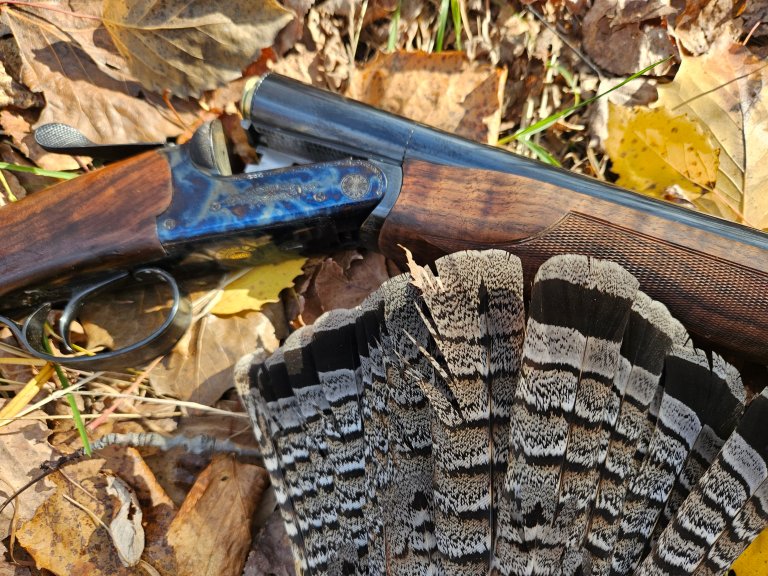
A custom-fitted gun is the ultimate dream for any upland hunter. A gun that has been stocked for you is one you can trust to shoot exactly where you look. The Upland Gun Company Zeus, our favorite modern side-by-side, is made one at a time, to each individual shooter’s specifications. You get to choose your stock dimensions, chokes, barrel length and wood. And you are able to do so at a price that’s not that far out of line with a good production double.
The guns are made by RFM, a small Italian maker, and imported by the Upland Gun Company, co-founded by Jerry Havel and Dan LaFond who once competed with each other in the Upper Midwest shotgun scene. Havel was a Remington rep and LaFond repped Mossberg. After years as rivals, they founded a company that made the side-by-side guns they both loved.
If you would like to own one of these guns, but don’t know your dimensions, you schedule a fitting with Upland Gun Company, which is based in Remer, Minnesota. Then you choose your options. Some options are free, some are upcharges — like higher-grade wood, double triggers, extra choke tubes, case color or blued frame. Then you wait for nine months to a year while RFM makes your gun.
For Bourjaily’s shotgun, he chose 30-inch barrels and fixed chokes, upgraded wood, case color, a straight grip, and a slight beavertail forend.
What you get with the Upland Gun Company is a gun that is yours, that fits you, and is truly one-of-a-kind. If you pick too many extras your gun can cost a lot but if you keep yourself under control, you get a custom gun at almost off-the-rack pricing, and that is worth the wait.
More Modern Bird Guns to Consider
Beretta Ultraleggero
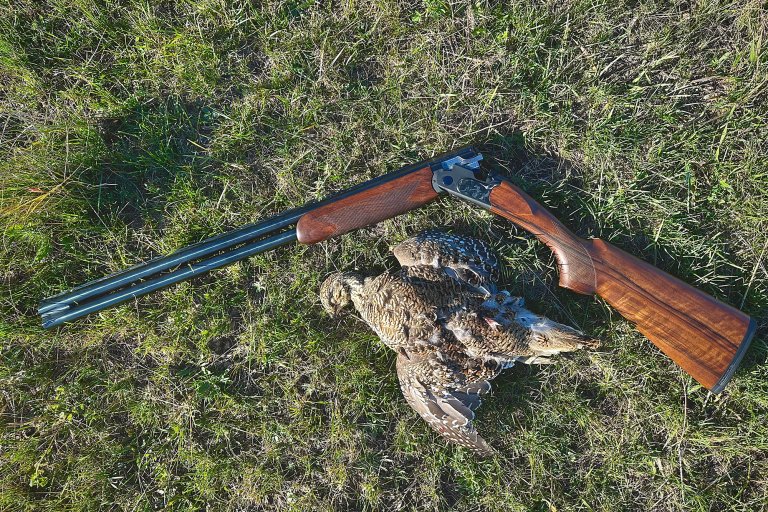
This is an incredibly light shotgun. The 12-gauge version I have weighs only 6.4 pounds. Beretta achieved this weight saving by modifying and skeletonizing its 690 action and using plastic inserts. To my eye the gun still looks great, despite the plastic. Beretta removed wood from the stock, selected a thin recoil pad, and skipped the side ribs between the barrels. Minimalist and non-traditional would be accurate descriptors for this shotgun.
Ruger Red Label III

This 20-gauge over/under has a history as an affordable, American-made shotgun for the blue-collar bird hunter. This resurrected version of the gun is made for Ruger by Connecticut Shotgun Manufacturing Company. If you are not familiar with that brand, CSMC is known for building fine, high-end shotguns in, you guessed it, Connecticut. And while the Red Label III is pricier than Bill Ruger’s original vision, it’s safe to say that it’s much nicer, too. Read my full review of the Red Label III here.
Dickinson Plantation

This Dickinson was our pick for the best affordable side-by-side. The Plantation is full of nice features, including the bone and charcoal finish, plus clean checkering that is as functional as it is good looking. The Plantation has snappy ejectors that send hulls flying with authority. In the field, the gun was easy to carry and came to the shoulder quickly. Everyone who shot it agreed the balance was ideal, and they liked the gun’s rib and brass bead.
Beretta A400 Upland

We reviewed the 28-gauge, 3-inch version of this gun and found it to be handy and light recoiling. The gun was a joy to shoot. The 28-inch barrel swung to targets well and the shotgun mounted quickly. With target loads, recoil was incredibly minimal and even with 3-inch game loads the gun was mild shooting. While it was fun testing the 28-gauge version, I would recommend getting this gun in 20 gauge for maximum versatility.
Classic Upland Bird Guns
Browning Auto 5 Sweet 16

Key Features
- Gauge: 16
- Action: Semi-auto, long recoil
- Gun weight: 7.51 pounds
- Barrel length: 26 inches
- Overall length: 45.75 inches
- Price: Approximately $2,000, depending on year and condition
The Auto 5 was a marvel in its day. It was the first successful mass-produced semi-auto shotgun and it was made in Belgium starting in 1902. The Auto 5 utilizes a long-recoil system, in which both the bolt and the barrel move to the rear to re-cock the hammer after a shell is fired. Then the barrel moves forward, the bolt follows and chambers the next shell from the magazine. Friction rings on the magazine tube were designed to allow the firing of light and heavy loads, which was a major hurdle at the time.
The 16-gauge version of this shotgun, aptly named the “Sweet 16,” was introduced in 1936. Browning lightened the gun by removing steel from the barrel ring and receiver and wood from the stock. The promise was a semi-auto shotgun that carried like a 20 gauge and hit like a 12 gauge. And on this promise, Browning delivered.
Today, 16-gauge shotguns are not quite as appealing, since modern 20 gauges can fire 3-inch shells delivering just as much payload in an even lighter platform. But our love for this gun is more about nostalgia than practicality. As Bourjaily wrote for us in his full review of the gun: “No other shotgun feels quite like an original Browning Auto 5 when it goes off. The entire barrel moves backward with the bolt, then forward as it picks up the next shell and returns to battery. That unique bouncing recoil sensation, the Auto 5’s many fans will tell you, is just one more way you know that you’re shooting the greatest semi-auto shotgun ever made.”
In the field, I shot this gun quite well. It came to the shoulder naturally and crushed clays and roosters alike. Unlike some old guns, it did not feel bulky or clunky at all. Loading a third shell into the magazine was a bit of a challenge, but perhaps back in the day, men had tougher thumbs and more resolve. In any case, after shooting this gun (which belongs to OL executive editor Natalie Krebs) I’ve been shopping for one of my own on the used market, where there are options ranging from about a grand to well over $2,000.
Browning Superposed

Key Features
- Gauge: 20
- Action: Break action O/U
- Gun weight: 6 pounds, 8 ounces
- Barrel length: 26 inches, fixed Sk/Sk chokes
- Overall length: 43.5 inches
- Price: $2,500 to $3,500 depending on year and condition
As Bourjaily writes, before the Browning Superposed, over/unders were handmade, bespoke sidelock shotguns priced far out of reach of the average person. John Browning saw the O/U and realized that American shooters, who were accustomed to looking down the single barrel of a pump or semi-auto, would like what he called the single sighting plane of an O/U shotgun. He set out to make an O/U that an average person could afford if they saved for it. Browning wanted to make an aspirational gun. He designed it to be simpler than an English gun, to be made with some mass-produced parts and he worked with FN in Belgium, as he did with many other guns.
Browning’s work on the Superposed began in the 1920s, when the economy was strong, skeet shooting was a fad, and there was a wide variety of game to hunt.
Browning died in 1926, literally while at work on the gun. His son Val finished it, but the Superposed was born into a global depression, then a world war that resulted in the occupation, then the destruction, of the factory where it was being built. In the 1950s, the Superposed became the gun that Browning always thought it would be, until the 70s when high cost of Belgian labor forced Browning to move production to Japan and simplify the design into the Citori, which is largely the same gun.
The Superposed is more than an artifact of shotgunning history. In its Lightning and Superlight configurations, John Browning’s O/U still makes a great upland bird gun as it nears its 100th birthday. The heavier 3-inch magnum guns have to be babied with bismuth, but they can drop ducks and pheasants as well as any modern gun. In any configuration, the Superposed is durable, reliable, well-made and good-looking. The 20-gauge version is especially well-suited for carrying in the uplands.
Ruger Gold Label
Key Features
- Gauge: 12
- Action: Round action side-by-side
- Weight: 6 pounds, 9 ounces
- Barrel length: 28 inches, thin-wall choke tubes
- Overall length: 45 inches
- Price: $2,500 to $4,000
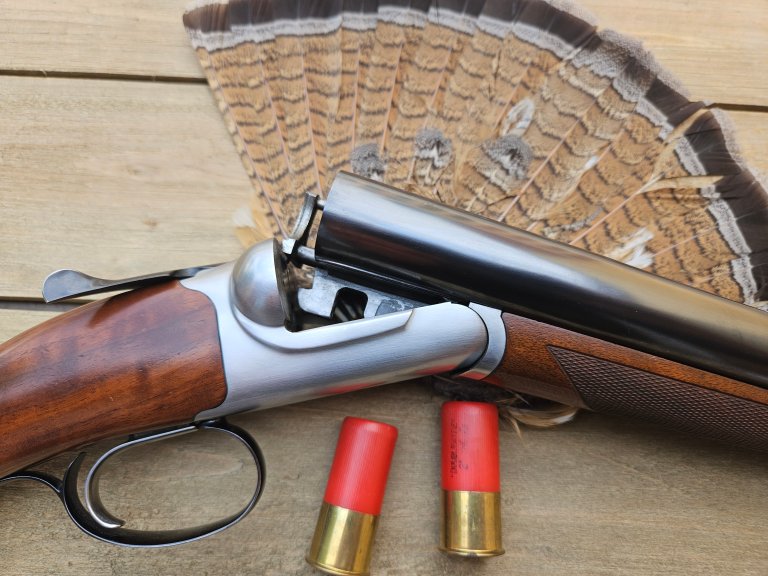
The Ruger Gold Label might not be everybody’s pick for the top classic side-by-side, but we have our reasons. The Gold Label was one of Bill Ruger’s last guns and it was only made for a short time. This gun might be the last classic American double.
All of the Foxes and Parkers and Ithacas became casualties of WWII. They became too expensive to produce, and no one wanted them in postwar America. Fifty years later, Ruger aimed to make an affordable, high quality side by side for American hunters, and the Gold Label was the result.
His design was inspired by Scottish round actions, in which all the parts of the lock sit on the trigger plate so the receiver can be rounded and petite.
Ruger guns were made with investment casting rather than machining to reduce costs.
Bill intended this gun to sell for $2,000 in 2004, which would be about $3,500 today. And that is about what these guns sell for on the used market. Unfortunately, Ruger had a hard time manufacturing the Gold Label under that price point and ultimately the guns lost money.
The Gold Label was introduced as a svelte 12 gauge that weighs only 6.5 pounds. Since the frame is so light, the gun has a very weight-forward balance, which makes it easy to shoot.
We shot Bourjaily’s Gold Label and he admits that he doesn’t love the stainless frame, but he does love the lines of the round action, which we agree are the most beautiful shotguns ever made. We can’t afford the great Scottish round actions — like a MacNaughton or a David McKay Brown — but we can afford this gun, and so can you if you really want one. Ruger eventually gave up Bill’s pet project after he died. There were only 3,000 Gold Labels made, which leaves 2,999 out there for you to find.
Read Next: Best Shotguns, Tested and Reviewed
Final Thoughts on the Best Bird Hunting Shotguns
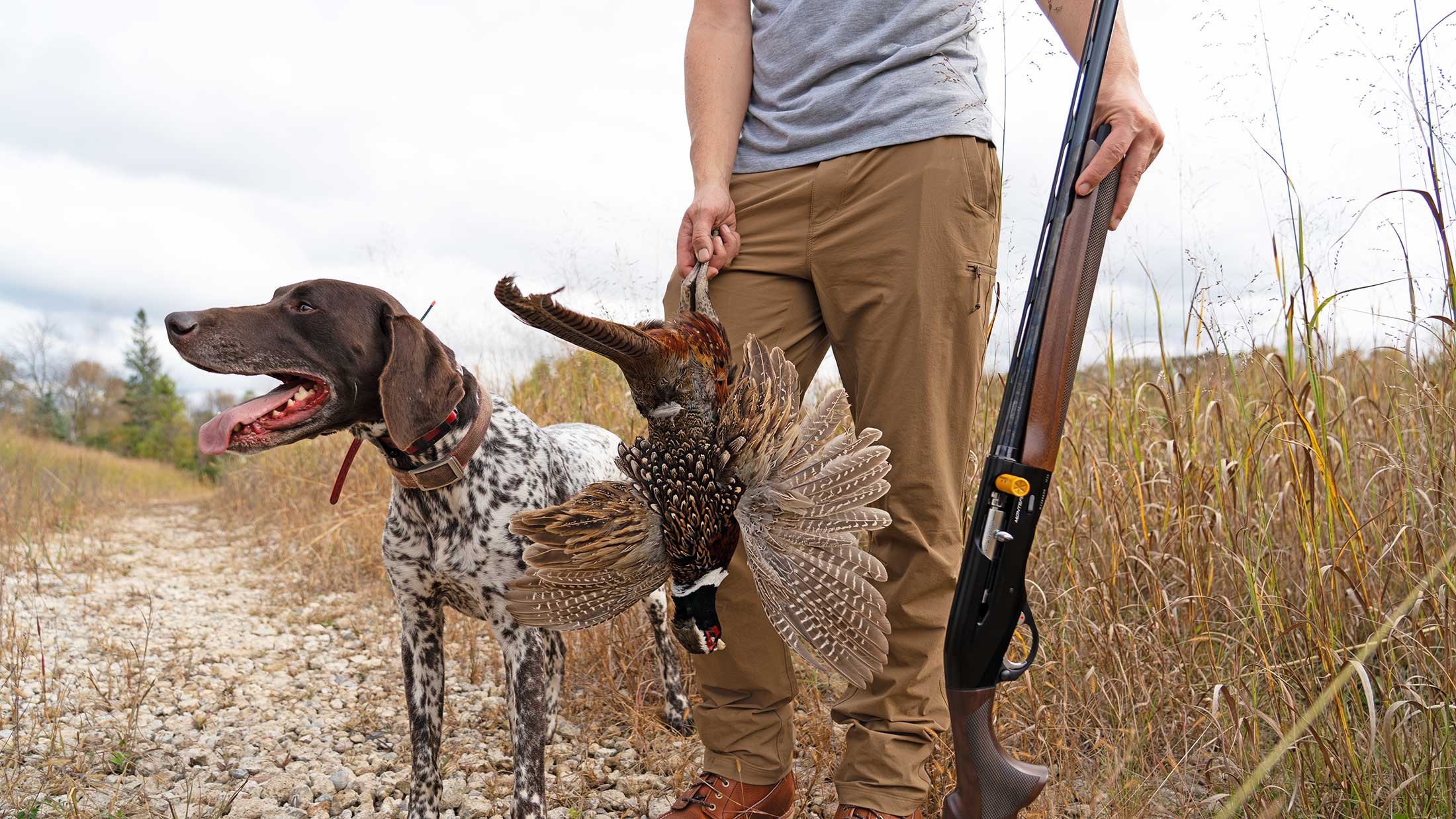
Our roster of shotguns represents the middle ground of upland bird guns. Of course there are much more expensive over/unders and side-by-sides out there that will turn heads at any hunt club. There are also a bunch of cheap Turkish-made guns that will drop birds for you without fuss.
But the guns on our list will get the job done with a little more style and reliability. They are not so nice that you’ll feel bad about putting a scratch or two in the stock. In other words, they are hard working shotguns that are easy to carry, shoot, and they look good while doing it.
The post The Best Shotguns for Bird Hunting of All Time appeared first on Outdoor Life.