The Browning Hi-Power: Why a 90-Year-Old Design Still Inspires New Generations of Shooters
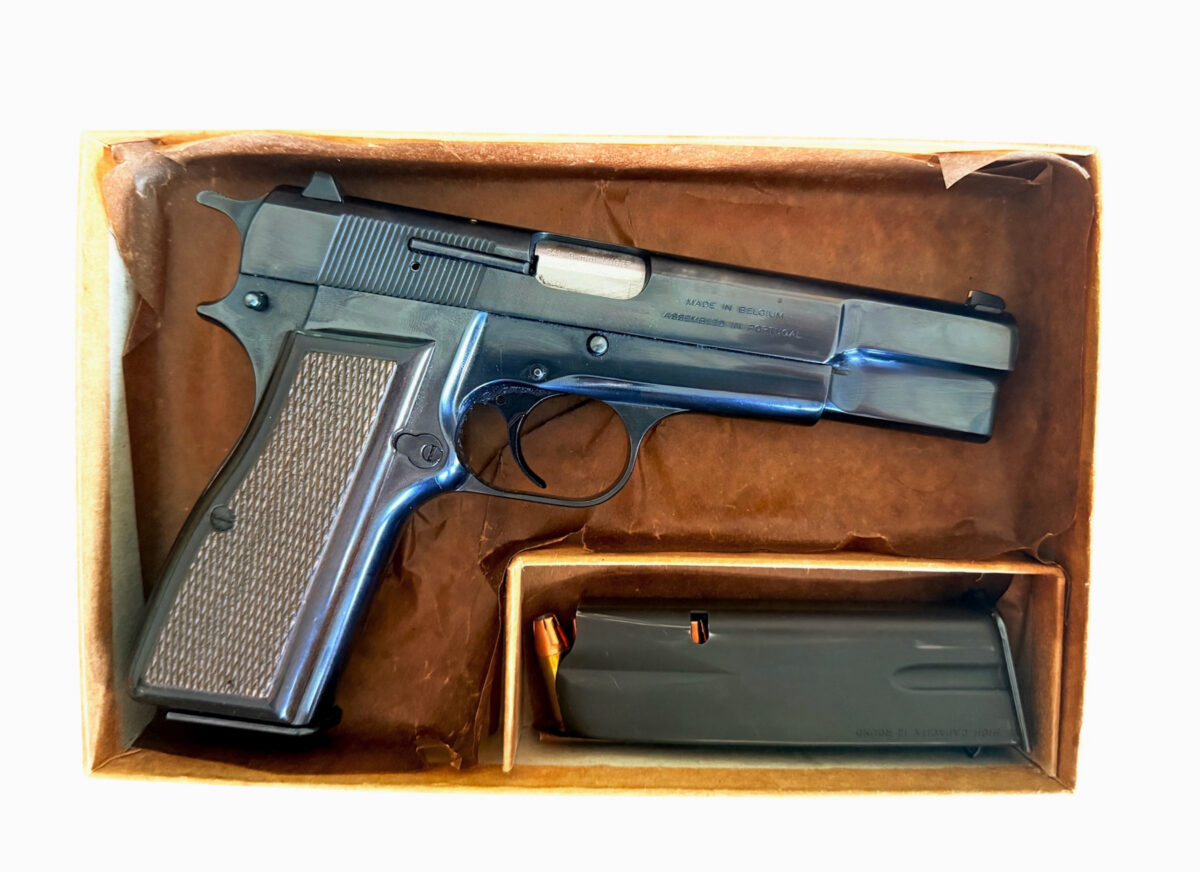
Few firearms designers have left a mark on history like John Moses Browning. Over a career spanning nearly six decades, he developed some of the most influential firearms ever created, including the Colt M1911 pistol, the Browning Auto-5 shotgun, and countless military and sporting arms that forever changed the firearms industry. Even today, Browning’s designs continue to serve soldiers, hunters, competitive shooters, and armed citizens around the world.
When Browning died in 1926, he was working on what would become his final handgun design: the Grande Puissance, or “High Power” in French. Although he would never see it completed, the pistol that eventually became known as the Browning Hi-Power would go on to become one of the most influential military sidearms of the twentieth century.
Nearly ninety years after its introduction , the Hi-Power remains remarkably relevant. It served on both sides of World War II, became one of the world’s most widely adopted military pistols, and helped establish the high-capacity 9mm service handgun long before it became the global standard. Today, with modern reproductions from multiple manufacturers fueling renewed interest among shooters and collectors alike, the Hi-Power has refused to fade into history.
France’s Search for More
The story of the Hi-Power began in 1921 when the French government issued a request for a new military sidearm capable of holding at least 10 rounds of 9×19mm ammunition. Additional requirements called for a compact design that was simple to disassemble and reassemble. These specifications were ambitious for the time, as most military handguns relied on single-stack magazines holding between six and eight rounds of ammunition.
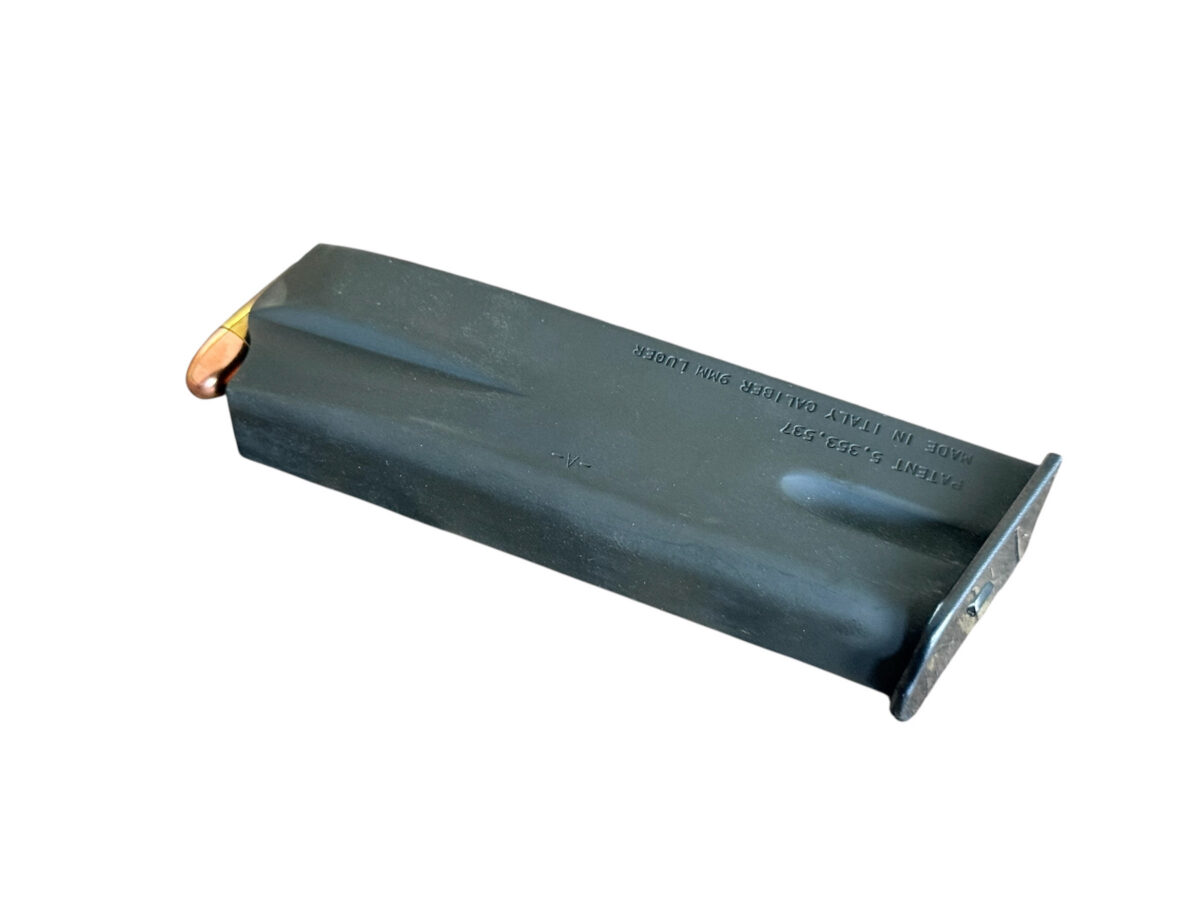
Browning’s M1911 had already proven itself during World War I, and many of the short-recoil operating principles pioneered in that design would serve as the foundation for the Hi-Power. In response to the French request, Belgian manufacturer Fabrique Nationale (FN) once again turned to John Browning, continuing a successful partnership that had already produced several iconic firearms. At the same time, FN engineer Dieudonné Saive was developing a revolutionary staggered-column, double-stack magazine capable of holding 13 rounds of 9mm ammunition.
Once Saive presented Browning with the magazine, the two men began working together to incorporate it into the new pistol. Browning developed two competing prototypes: one utilizing a simple blowback action and another featuring a short-recoil, tilting-barrel system. Both designs incorporated Saive’s innovative magazine while maintaining a comfortably slim grip profile. The short-recoil prototype ultimately proved to be the superior design, and Browning began preparing the final drawings for submission to the French government. The pistol’s eventual name, Grande Puissance—wasn’t a reference to the 9mm cartridge, but to its unprecedented magazine capacity.
Browning’s Final Project
On November 26, 1926, while working in his office at FN, John Browning suffered sudden heart failure and died at the age of 71. His passing could have marked the end of the Hi-Power before it ever reached production. Instead, Saive carried Browning’s vision forward, refining the design and ensuring his mentor’s final handgun became a reality.
After making several improvements, many of which were possible with the patent expiration of the Colt M1911, in 1935 the Grande Puissance GP-35 was ready for manufacture. In a surprising turn of events, France opted not to adopt the Hi-Power, despite all of its merits. Instead they would go on to take design elements from the Hi-Power and incorporate them into their own MAS 1935S handgun.
France’s rejection was not indicative of what was to come for the Hi-Power. The Belgian Army had become impressed by the new high-capacity handgun, and promptly awarded FN with it’s first military contract in 1935. It was not long until additional orders began filling in from other countries. With the outbreak of WWII, the Hi-Power saw almost immediate use in service. However, with the German blitzkrieg reaching Belgium in May 1940, it was about to see use on both sides of the conflict.
Wielded on Both Sides
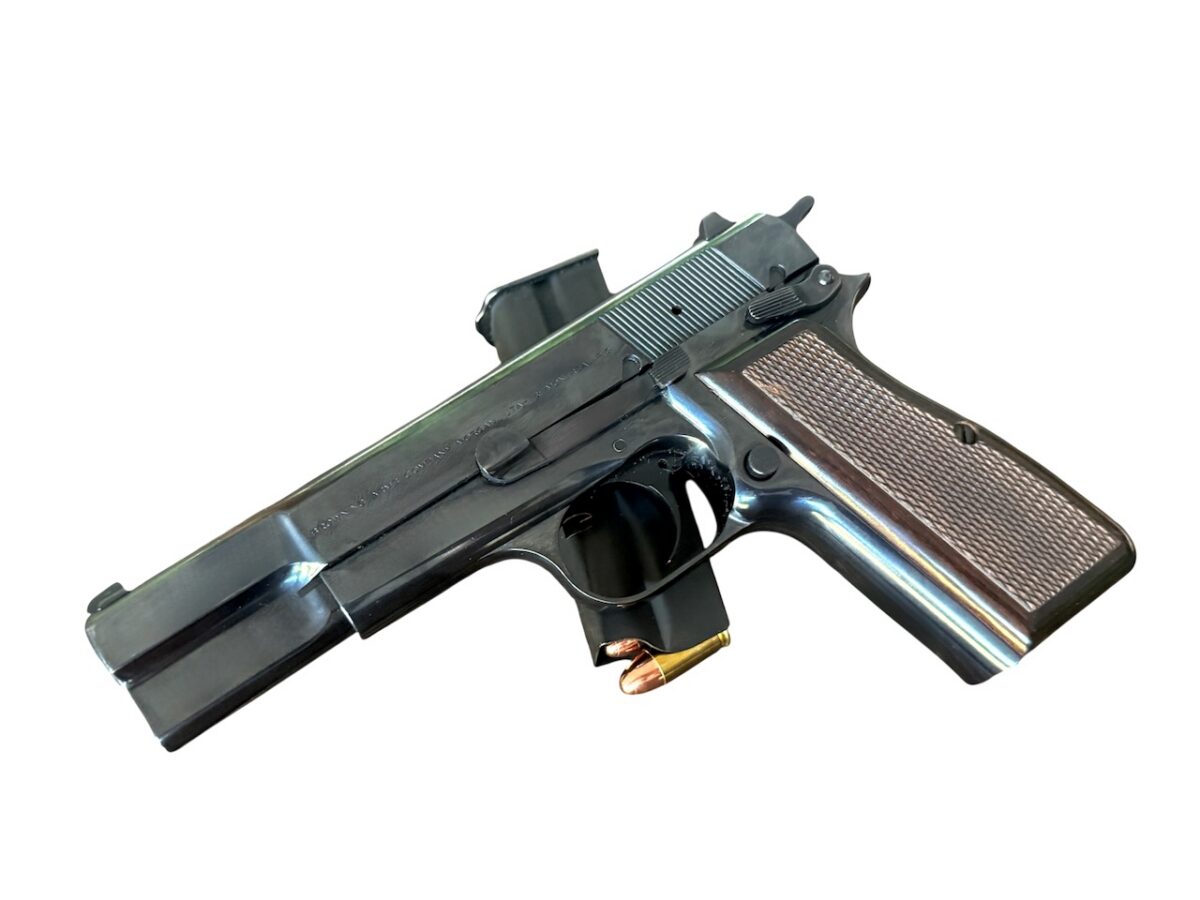
By the time Germany invaded Belgium in May 1940, approximately 50,000 Hi-Powers had already been produced. With the FN factory now under Nazi occupation, German authorities ordered production to continue under the designation Pistole 640(b). As a result, the Hi-Power found its way into the holsters of German soldiers, including members of the Waffen-SS and Fallschirmjäger, creating one of the most unusual chapters in the pistol’s history.
Fortunately, Dieudonné Saive escaped occupied Belgium in 1941, bringing with him the Hi-Power’s design drawings and invaluable knowledge of the pistol’s development. After reaching Great Britain, Saive worked to return the Hi-Power to Allied hands by helping recreate the design using the surviving drawings and details committed to memory. In April 1943, a contract was awarded to produce 200,000 Hi-Powers for the Chinese National Army. The task of manufacturing the pistols ultimately fell to John Inglis & Company of Toronto, Ontario.
Production did not begin until April 1944 following contractual negotiations surrounding the Chinese order. The original Chinese contract pistols featured an adjustable tangent rear sight and a slot for attaching a wooden shoulder stock, characteristics inherited from earlier Hi-Power designs. After the Chinese contract was cancelled, Inglis shifted production to a simplified fixed-sight model without the shoulder stock cut, supplying British and Commonwealth forces for the remainder of the war.
By the end of World War II, roughly 470,000 Hi-Powers had been produced by both Axis- and Allied-controlled factories. Few military sidearms can claim such a unique distinction.
From Service Pistol to Modern Classic
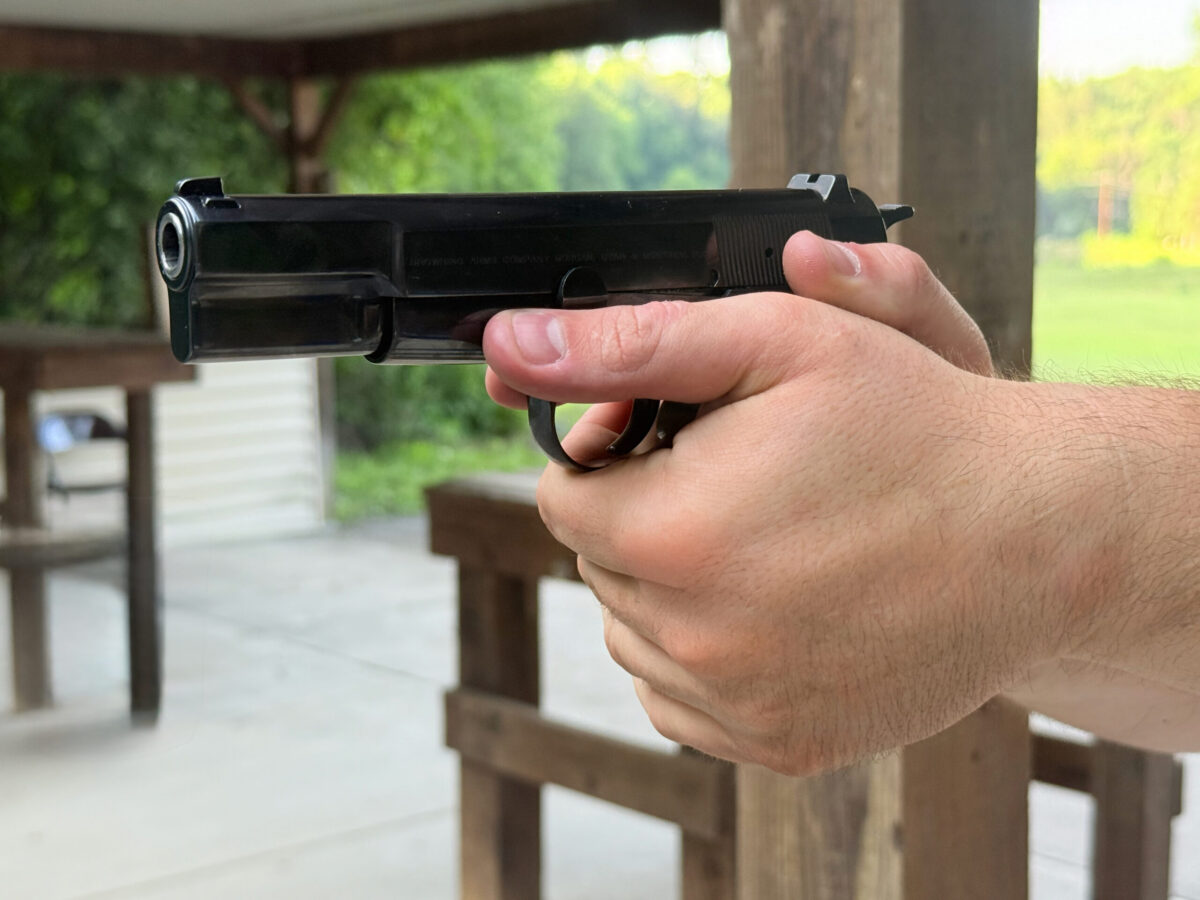
Following World War II, the Hi-Power remained in continuous production at FN for more than eight decades. During that time, it became one of the world’s most widely adopted military sidearms, serving with the armed forces and police agencies of more than 50 countries. That remarkable longevity is a testament to just how innovative the Hi-Power was for its era. While many military pistols are eventually adopted, replaced, and forgotten, the Hi-Power followed a very different path. Although advances in handgun design and the widespread adoption of polymer-framed, striker-fired pistols gradually brought an end to its military service with many nations, the Hi-Power itself never faded from the minds of shooters.
In 2018, FN announced it would discontinue production of the Hi-Power, ending an uninterrupted manufacturing run that had begun in 1935. The decision was largely driven by rising production costs and a market increasingly focused on modern polymer-framed handguns. Yet the demand for the Hi-Power never truly disappeared. Decades before high-capacity service pistols became the industry standard, the Hi-Power demonstrated that a fighting handgun could offer substantial magazine capacity while maintaining a comfortable grip, natural ergonomics, and practical dimensions. Those qualities remain just as appealing today as they were nearly a century ago.
The Hi-Power occupies a unique place in the firearms world. It blends historical significance, groundbreaking engineering, exceptional ergonomics, and timeless styling into a package that continues to resonate with shooters. It represents an era of gunmaking defined by polished steel, finely fitted walnut grips, and meticulous craftsmanship, while introducing innovations that helped shape the modern service pistol.
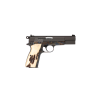
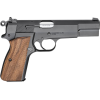
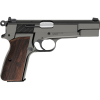
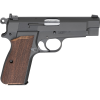
That enduring appeal did not go unnoticed. Following FN’s discontinuation of the original pistol, manufacturers such as Springfield Armory, Girsan, and Tisas introduced their own modern interpretations of the Hi-Power for a new generation of shooters. Even FN eventually reintroduced the platform with its redesigned High Power series, underscoring the lasting appeal of Browning and Saive’s original concept.
More than ninety years after its introduction, the Hi-Power’s continued revival is about more than nostalgia. It is proof that exceptional design endures, and that Browning and Saive’s contributions to the evolution of the modern handgun continue to inspire shooters around the world.
Live Inventory Price Checker
About Ryan Hodges
Ryan is an outdoorsman and firearms enthusiast with over a decade of experience in the industry. He holds a B.A. in History with a concentration in Public History from Roanoke College and was an intern at the Cody Firearms Museum in Cody, Wyoming where he contributed to exhibit development and public education initiatives. He later worked with Taylor’s & Co. in Winchester, Virginia for 9 years, building expertise in historical and reproduction firearms.
An avid hunter and shooter based in Northern Virginia and the West Virginia panhandle, Ryan has a deep appreciation for the intersection of history, firearms, and the natural world. His primary area of focus is 19th-century American firearms, particularly those used during the Civil War and the era of westward expansion. Through his writing, he aims to educate and engage readers by connecting the historical significance of firearms with their enduring legacy in the field today.