Viramontes Could Be The Beginning Of The End For AR-15 Bans
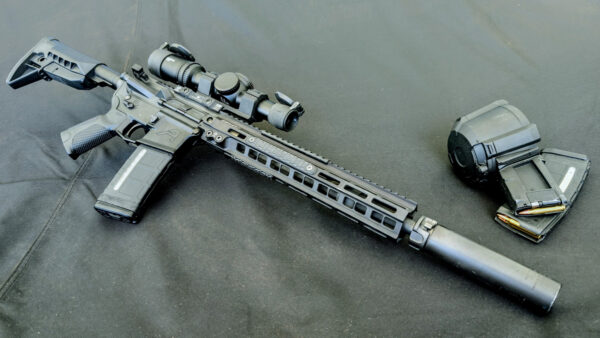
On June 30, 2026, the Supreme Court of the United States granted certiorari in Viramontes v. Cook County and Grant v. Higgins, consolidating the matters to directly confront a constitutional question that activist lower courts have spent years dodging: whether the Second Amendment protects modern semi-automatic rifles like the AR-15.
This historic announcement marks the end of the beginning. For over a decade, gun-control advocates have relied on judicial passivity and interest-balancing tests to sustain draconian bans on America’s most popular rifles. That era is over. Under the strict text, history, and tradition test established in New York State Rifle & Pistol Ass’n v. Bruen, 597 U.S. 1 (2022), these bans are constitutionally indefensible. The Supreme Court is poised to deliver a definitive victory for the Second Amendment, invalidating “assault weapon” bans nationwide.
The Mathematical Reality of “Common Use”
To understand why Viramontes will sound the death knell for these bans, one must look to the clear roadmap laid down in District of Columbia v. Heller. In Heller, the Court explicitly rejected the notion that the government can ban an entire class of arms chosen by the American public for lawful purposes. Id. at 628–29. The core constitutional threshold is whether an arm is “in common use” today.
Lower courts, eager to uphold categorical prohibitions, have intentionally twisted this standard. In the decisions below, the Second and Seventh Circuits treated the AR-15 as an “unusual” weapon, a premise that collapses under the weight of basic math.
- The Production Data: According to the National Shooting Sports Foundation (NSSF) and recent federal manufacturing data, there are now over 32 million Modern Sporting Rifles (MSRs)—overwhelmingly AR-15 platform rifles—in civilian circulation in the United States.
- The Ownership Metric: Empirical data from the National Firearms Survey indicates that between 16 million and 24.6 million individual Americans own an AR-15.
To assert that a rifle platform owned by upwards of 24 million citizens and numbering over 32 million units is “unusual” is a legal absurdity. As a point of legal comparison, the Supreme Court in Caetano v. Massachusetts, 577 U.S. 411, 420 (2016) (Alito, J., concurring), held that approximately 200,000 tasers nationwide was more than enough to satisfy the “common use” test. If 200,000 units triggers absolute Second Amendment protection, then 32 million modern sporting rifles command an unassailable constitutional shield.
The AR-15 outnumbers the Ford F-150, the best-selling vehicle in America, by a margin of more than two-to-one. Under any rational metric of jurisprudence, if an arm is the single most popular rifle in the nation, it is the absolute definition of common use. See Smith & Wesson Brands, Inc. v. Estados Unidos Mexicanos, 605 U.S. 280, 297 (2025) (acknowledging that “the AR-15 is the most popular rifle in the country”).
Dismantling the “Weapons of War” Fallacy
Under any rational metric of jurisprudence, if an arm is the single most popular rifle in the nation, it is the mathematical definition of common use. Even the Supreme Court itself has already abandoned the lower courts’ delusion, explicitly recognizing that “the AR-15 is the most popular rifle in the country.” Smith & Wesson Brands, Inc. v. Estados Unidos Mexicanos, 605 U.S. 280, 297 (2025).
Faced with an overwhelming mountain of math, gun-control proponents are forced to completely detach themselves from reality, relying instead on a highly dishonest talking point: that the AR-15 is a “weapon of war” that belongs only on the battlefield. This argument is a technical and historical fraud that lower courts have shoehorned onto the law. The Supreme Court has already drawn the line between protected civilian arms and unprotected military ordnance. In Heller, the Court noted that weapons that are “dangerous and unusual”—specifically citing M16 rifles and fully automatic machine guns—may be restricted because they are not in common civilian use. Heller, 554 U.S. at 627.
The state attempts to conflate the civilian AR-15 with the military M16 or M4, but the two are fundamentally distinct classes of technology:
- Fire Control: The military M16 is a selective-fire weapon capable of fully automatic fire or three-round bursts. The civilian AR-15 is strictly a semi-automatic firearm. It fires exactly one round per pull of the trigger, utilizing the exact same internal operating mechanism found in ordinary hunting shotguns and rimfire plinking rifles since the early 20th century.
- The Legislative Precedent: The Supreme Court recognized this exact distinction decades ago in Staples v. United States, 511 U.S. 600 (1994). In Staples, the Court observed that internal automatic parts are what characterize a weapon of war, whereas civilian semi-automatic AR-15s “traditionally have been widely accepted as lawful possessions.” Id. at 612.
- The Feature Fallacy: State bans do not target the kinetic power or lethality of the firearm; they target cosmetic, ergonomic features. Features like a telescoping stock (which adjusts the rifle to fit the physical stature of different shooters), a pistol grip (which provides an ergonomic hold), or a handguard (which keeps a shooter from burning their hands) do not alter the semi-automatic mechanics of the rifle.
The military has never deployed the civilian AR-15 to any combat theater in history. It is a purpose-built civilian platform. Calling it a “weapon of war” is a political slogan, not a constitutional argument.
The Hunting Red Herring and the True Purpose of the Second Amendment
Equally misleading is the standard political refrain that “you don’t need an AR-15 to hunt deer.” This argument fails on two distinct levels: one practical, and one deeply rooted in constitutional law.
Practically, the assertion that AR-15 style rifles are not used or needed for hunting is laughably ignorant. The modularity of the AR platform makes it the premier hunting rifle in modern America. Its adjustable stock accommodates shooters of varying physical sizes, including youth and female hunters, and its lightweight polymer and aluminum construction makes it highly portable across rough terrain. Furthermore, the standard chambering of the AR-15, the .223 Remington / 5.56x45mm NATO round, is the industry standard for varmint control, predator hunting (such as coyotes), and managing invasive feral hog populations that plague American agricultural lands. When chambered in larger calibers like the .300 Blackout, 6.5mm Grendel, or .350 Legend, the AR platform is widely and successfully utilized for medium-to-large game hunting.
Constitutionally, however, the hunting argument is a complete red herring. The Second Amendment was not ratified to protect a recreational right to harvest wild game. As the Supreme Court explicitly held in Heller, the right to keep and bear arms is an individual, pre-existing right rooted in the natural law of self-preservation. Heller, 554 U.S. at 581, 592. The Founders did not design the Bill of Rights to safeguard sport; they designed it to safeguard liberty against both criminal aggression and political tyranny.
The actual purpose of the Second Amendment, per the Founding Fathers, was to ensure that the citizenry possessed the material means to resist oppression. The historical record on this point is bulletproof.
“To disarm the people; that it was the best and most effectual way to enslave them.” — George Mason, 3 Elliot, Debates at 380.
The Founders recognized that an armed populace is the ultimate structural check against a government that oversteps its constitutional bounds. Alexander Hamilton made this explicit in The Federalist No. 28, writing that if the representatives of the people betray their constituents, the citizens must exert “that original right of self-defense which is paramount to all positive forms of government, and against the usurpations of the national rulers, may be exerted with infinitely better prospect of success.” The Federalist No. 28, p. 178 (C. Rossiter ed. 1961).
Similarly, James Madison in The Federalist No. 46 contrasted the American republic with the tyrannies of Europe by boasting of “the advantage of being armed, which the Americans possess over the people of almost every other nation.” The Federalist No. 46, p. 299. The European monarchies, Madison noted, were afraid to trust their citizens with arms because doing so would instantly smash their tyrannical rule.
To suggest that a modern firearm can be banned because it is not “necessary” for hunting is to completely wipe out the core principles of the American Founding. The Second Amendment protects the right of the people to possess the definitive, standard infantry rifle of the contemporary era, precisely because it ensures the preservation of a free state.
Because the AR-15 falls squarely within the Second Amendment’s plain text, the burden shifts entirely to the government under Bruen. To sustain a restriction, the state must affirmatively demonstrate that the regulation is consistent with this Nation’s historical tradition of firearm regulation. Bruen, 597 U.S. at 24. Historically, American law has never tolerated the categorical ban of an entire class of firearms commonly possessed by law-abiding citizens. The modern cosmetic features targeted by statutes in Illinois and Connecticut have absolutely no historical analogues in 1791 or 1868. Under Bruen, the absence of a founding-era analogue for banning a common, linear ancestor of the typical American rifle is fatal to the government’s case.
The Court’s recent adherence to historical methodology in United States v. Rahimi, 602 U.S. 574 (2024), confirms that while historical twins are not required, any modern restriction must still match the distinct why and how of an ancestral law. Because early America never banned rifles based on visual configurations or modular utility, modern “assault weapon” feature tests fail the Bruen inquiry entirely.
The Remedial Landscape Post-CASA
Crucially, the practical stakes of Viramontes have been dramatically heightened by another landmark decision from this past term: Trump v. CASA, Inc., 606 U.S. 831 (2025). In CASA, the Supreme Court severely restricted the equitable powers of lower federal courts, ruling 6–3 that universal or nationwide injunctions exceed traditional equitable authority. Id. at 835. Writing for the majority, Justice Barrett made clear that federal courts may only fashion relief “tailored to the parties before the court.” Id. This structural shift reshapes how Second Amendment litigation protects citizens moving forward.
Post-CASA, when a federal district court strikes down a gun control measure or issues a preliminary injunction, that relief does not automatically protect every citizen across the jurisdiction. Instead, under the strictures of CASA, the injunction provides complete relief exclusively to the named plaintiffs and the specific members of the organizational entities involved in the suit. Consequently, individual gun owners seeking immediate safe harbor under favorable lower court decrees must now rely heavily on direct association with these lawsuits to be covered by the judicial shield.
The convergence of Bruen’s unyielding historical command and CASA’s refined remedial boundaries sets the stage for a historic legal battle in Viramontes. The Supreme Court did not grant certiorari to rubber-stamp the contorted logic of the circuit courts. By consolidating these cases, the High Court intends to resolve the fractured landscape of Second Amendment jurisprudence once and for all.
When the historical record is read the way our Founders intended, and for that, thank you, Justice Thomas, the modern gun-control agenda completely falls apart. The AR-15 is the typical American rifle of our time, chosen by millions of citizens to exercise their birthright of self-preservation. By liberating the Second Amendment from decades of lower-court hostility, the Supreme Court will permanently dismantle these lawless bans. In doing so, they will ensure that the right to keep and bear arms remains secure for our children and grandchildren. For millions of law-abiding citizens, this case isn’t just about a rifle; it’s about defending the sacred right to protect our families, our homes, and our freedom for generations to come.
About Sean Maloney
Sean Maloney is a criminal defense attorney, co-founder of Second Call Defense, and an NRA-certified firearms instructor. He is a nationally recognized speaker on critical topics, including the Second Amendment, self-defense, the use of lethal force, and concealed carry. Sean has worked on numerous use-of-force and self-defense cases and has personally trained hundreds of civilians to respond safely and legally to life-threatening situations. He is a passionate advocate for restoring the cultural legitimacy of the Second Amendment and promoting personal responsibility in self-defense.