Why You Should Never Underestimate Mule Deer
If you head north and east out of Salt Lake City toward the Wyoming state line you end up in some of the most stunning country in the United States. At first glance, it looks like a semi-arid range of mountains with the exposed shelves of red rock, patches of sage, and grassy benches typical of the Intermountain West at this latitude.
But once you get past the view from the winding highways that snake through this land and gain some elevation on the dirt roads that take you back to more remote areas, you’ll notice something else. These mountains give birth to a surprising number of springs, providing water that ends up supporting a vast amount of life.
The wet country reveals itself in the stands of aspen that grow thick in places you wouldn’t expect, with waist-high grass that contrasts with the blanket of drought-resistant scrub oak that covers much of the terrain.
This almost contradictory mix of moisture, cover, food, and remoteness provides a recipe for great elk and mule deer, and is the reason I’ll return to this country whenever I can, as happened a few weeks ago this fall. I was there on an invitation from Winchester Ammunition to try its newest offering, Supreme Long Range, on my favorite North American game.
A Complex and Contradictory Creature
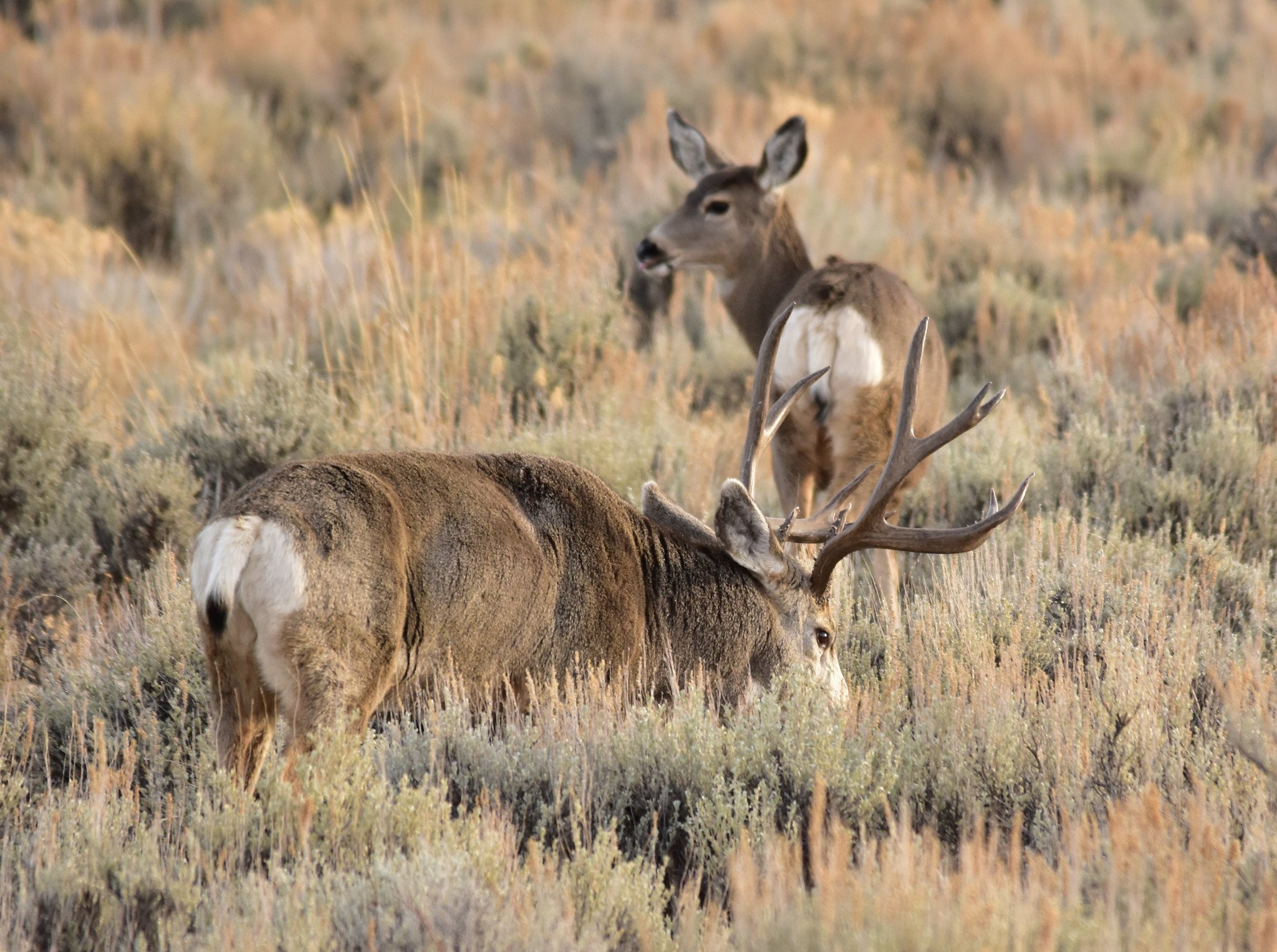
There are many reasons mule deer have such a strong claim on my psyche. I love the wild places they call home. The hours spent glassing them is about the most rewarding way to pass time. And I find it infinitely fascinating to watch and study their behavior.
You see, mule deer are a study in contradiction, too. Are their numbers in decline? In many places, without a doubt. They’ve certainly struggled to maintain their hold in much of their traditional range. Housing and energy development disrupt their winter grounds and migration routes. Diseases like CWD have taken their toll, especially with older bucks. We know that blossoming herds of elk and whitetails can outcompete mulies for food and water, putting more pressure on their numbers.
But they are also resilient and, in some areas, thrive. Good numbers of mule deer live in suburban areas throughout the mountain west. And you can find them in some of the most inhospitable desert regions of North America, and tucked away in other unlikely places.
Though they can seem more docile than their high-strung white-tailed cousins, I have witnessed mule deer put on incredible displays of strength, aggression, and John-Wick-caliber willpower — another contradiction.
Years ago in Colorado, I watched a hunter fail to follow up his shot on a mule deer. The high-shoulder shot dropped the buck where it stood, knocking it senseless. The hunter started celebrating, thinking he had killed it, and when the deer regained its feet the hunter wasn’t ready — and the buck disappeared into the alders. I helped track the deer for several hours through the snow, following a substantial blood trail. We kept going as long as we could after dark but eventually had to call it quits.
The hunter left for the airport and I kept looking for the deer with my good friend Cody while trying to fill my own tag. Two days later, Cody and I spotted the buck tending his does, despite the grievous wound in his upper chest and one ruined leg. He was 500 yards away, skylined on the ridge, and I couldn’t get a shot off before he fled over the mountain.
There was no doubt in my mind the buck was going to die from that injury, but procreation was his sole preoccupation. Despite the obvious pain, and the imminent certainty of death, he would not be deterred.
That buck spurned death, but I’ve also seen mule deer inflict it. I was hunting in southeast Montana a few years back in mid-November when the rut was in full swing. Bucks were bird-dogging does, scent-checking the ladies, cruising in search of mates, and squaring up against potential rivals.
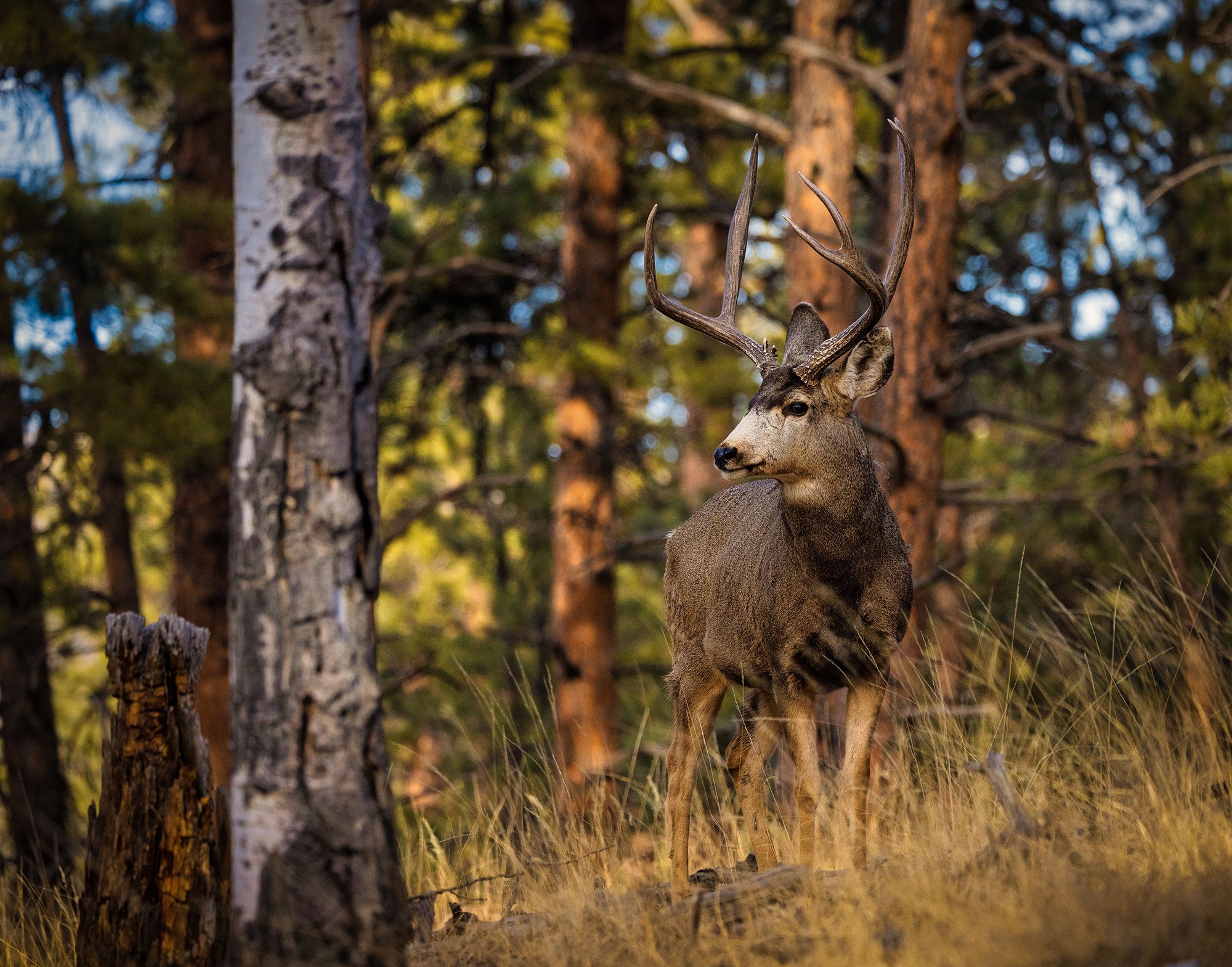
Usually when two bucks face off they will posture a bit and, after sizing each other up, one will back off before things get too heated. Sometimes they will fight — those antlers aren’t just for decoration — and the vanquished male will make his excuses to be elsewhere.
In this case, the smaller of the deer lost his footing during the scuffle and fell back, rolling on his side. The larger buck lowered his head and drove his antlers into the other’s exposed belly.
The deer on his side flailed his legs in a desperate attempt to get up and escape, but through my binocular I could see the spreading circle of red in the snow as the dominant buck continued the savage attack, never letting up.
After several minutes — it felt like an eternity from my vantage — the buck’s fury was spent and he lifted his head and walked off as the other deer lay still, surrounded by his own gore.
I relate this because it is one thing to enjoy hunting, which I do, but it is another to, on occasion, experience the wild at its most raw and profound.
So, when I got this latest opportunity to test my legs and lungs in the high-country in Utah, I had hopes of encountering a mature buck, and perhaps more.
Winchester’s New Long Range Ammunition
I was joined on the trip by Kyle Masinelli, the vice president of manufacturing operations at Winchester Ammunition, and a friend and work colleague of mine, Ed Friedman, the editor-in-chief of American Rifleman. Kyle was one of the architects of Winchester Supreme Long Range and a great source of information about it.
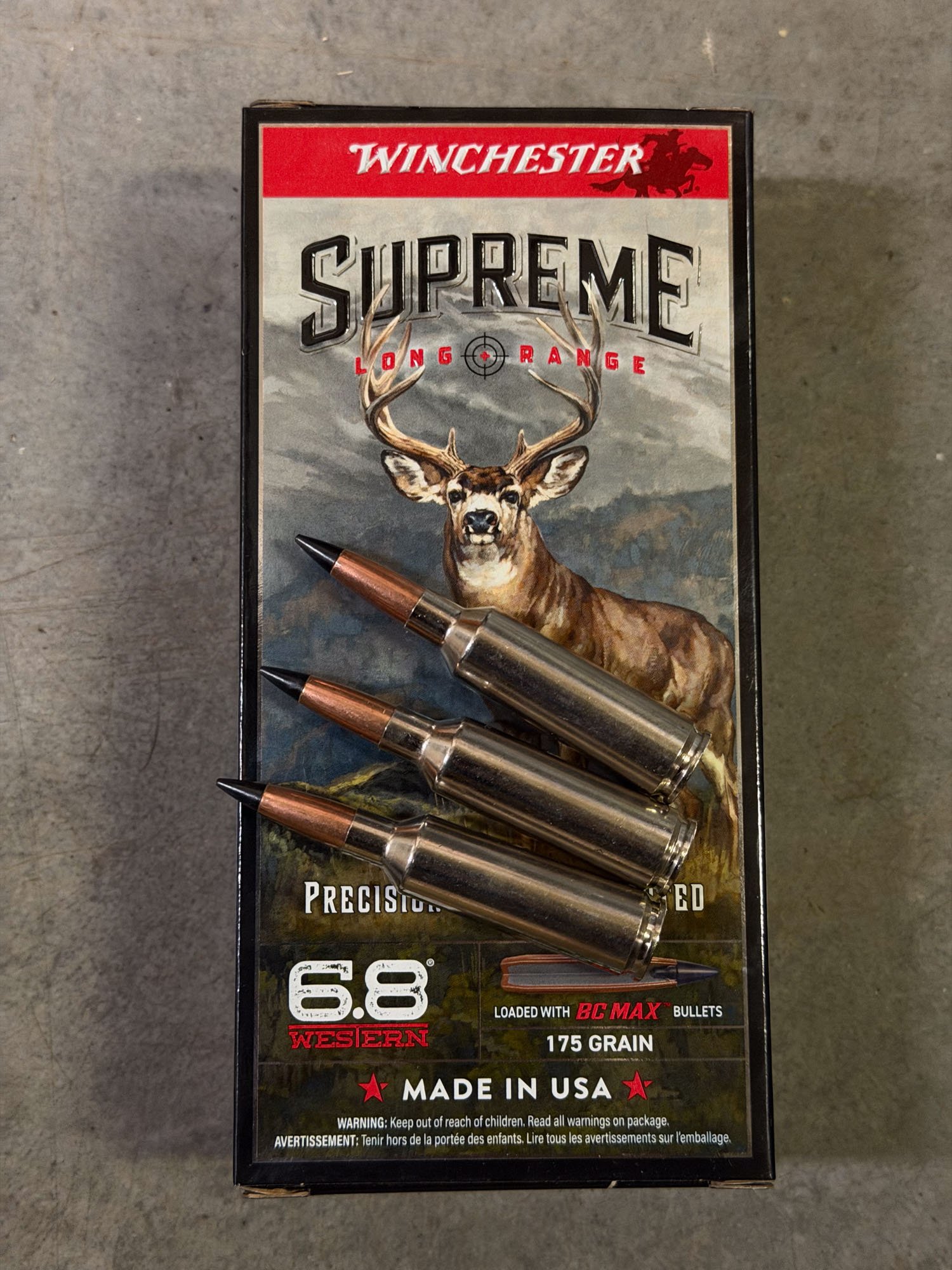
As the name implies, Supreme Long Range (SLR for short) is geared toward big-game hunting where longer shots might be in the offing, which is often the case when mule deer hunting. This new ammo uses what Winchester calls their “BC Max” bullet, which is a heavy-for-caliber cup-and-core design with an oversized polymer tip to initiate rapid expansion.
Over the summer, I shot several boxes of this new ammunition, chambered in 6.5 Creedmoor, with excellent results in terms of its precision and consistency.
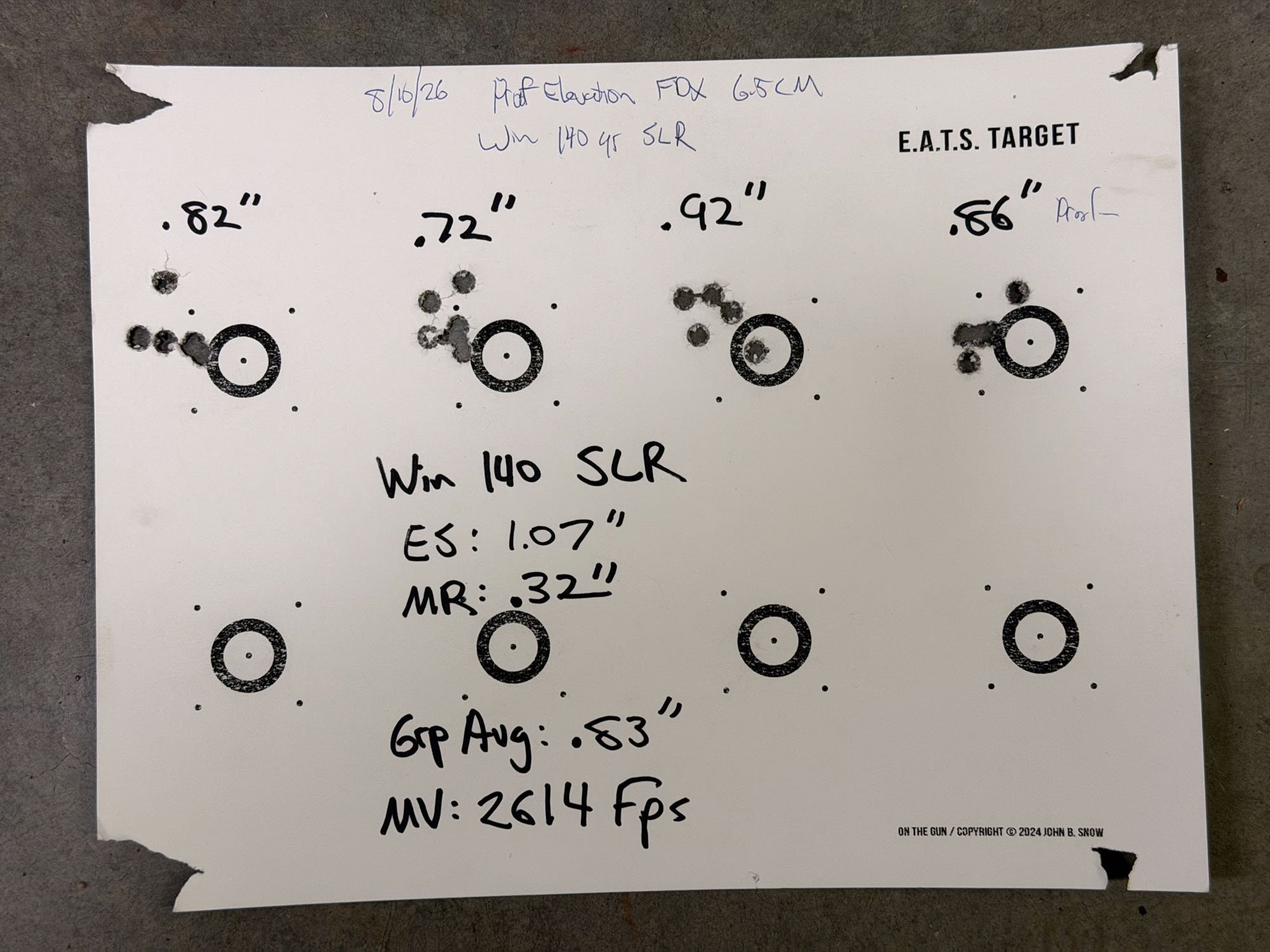
I gathered 20 shots of data with three different rifles, shooting four 5-shot groups with each. Those twelve 5-shot groups ranged in size from .53 inches to 1.10 inches. The overall average group size was .818 inches.
In a curious coincidence, the mean radius value for each of the three rifles was .32 inches, which is very good for hunting ammunition.
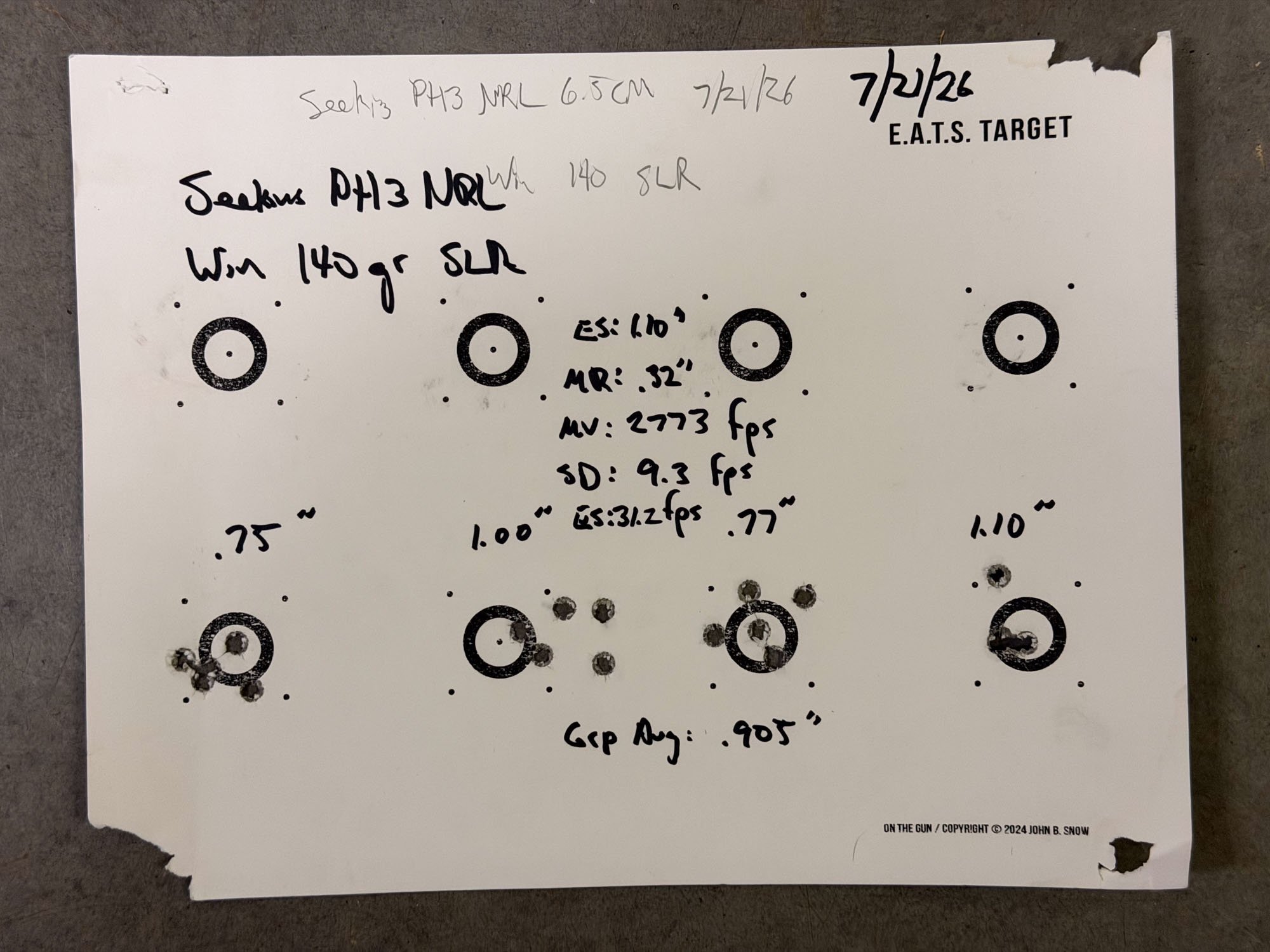
The three rifles I used to gather the data were Proof’s MTR Elevation FDX, which won an Editor’s Choice for best hunting rifle of the year; Seekins Precision’s latest PH3 NRL Hunter, which won an Editor’s Choice for best crossover rifle; and a Seekins Precision SIC Short Action, which won’t be officially launched until early 2027.
For the hunt itself, I went a different route, taking a Winchester XPR chambered in 6.8 Western. The XPR has been a perennial choice of ours for an entry-level hunting rifle. It is a no-frills bolt-action that delivers good performance. In its most basic black synthetic stock trim it can be had for less than $600 new.
While I’ve shot plenty of XPRs over the years, I hadn’t had as much time with the 6.8 Western. I shot this souped-up .270 Winchester a bit when it was first rolled out in 2021, but had never done a deep dive on the cartridge or taken it hunting.
I didn’t have as much trigger time with the XPR and the ammunition as I would have liked before rolling into camp, but I did establish a solid zero prior to making the drive from Montana to Utah and knew that the 175-grain 6.8mm SLR bullets were exiting my 22-inch barrel right at 2,700 fps.
We were hunting with the R&K Hunting Company, which has a base camp in Coalville, Utah, and I confirmed my dope on targets they had there. With three shots, I checked my point of impact at 200, 500, and 700 yards, the bullets ringing the center of the steel each time.
First Encounter
Our hunting camp was another hour’s drive into the mountains, most of it off-road, and much of it pitted with craters like small bomb impacts.
But the camp itself was an alpine Shangri-La. The main lodge was a cozy wood structure where the hunters stayed, with a series of small cabins for the guides, and other out buildings, all overlooking a post-card scene of a small lake surrounded by golden-leafed quakies and distant mountains.
Those mountains were where we hunted.
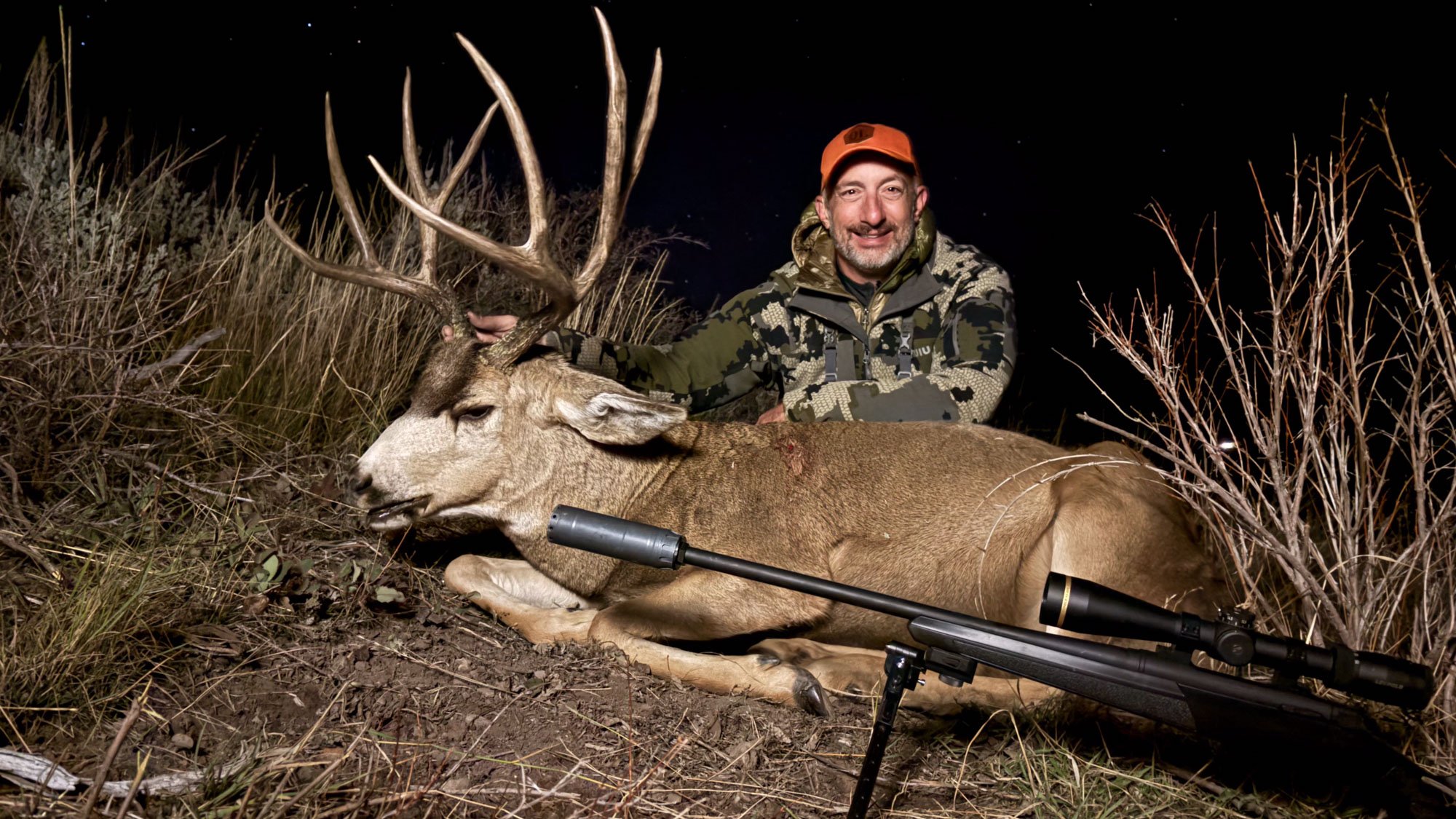
Kyle and I spent the first day with our guides, two young brothers named Keston and Kandon Mosher, glassing the heights. In the afternoon, we spotted two excellent bucks engaged in pre-rut posturing.
From nearly a mile away we watched the bucks through our optics. One of the bucks appeared to have a larger, darker body and a heavier rack. The other buck was mature as well, seemingly younger, but with larger antlers. Both were stunning.
We watched them circle each other a bit in a small clearing between stands of alders. We needed to move quickly, because the cover around them was thick, it was getting late, and we were losing light.
We grabbed our packs and guns and hoofed up the mountain as fast as we could. It took about half an hour of hard climbing to get to the knob we wanted to set up on. That put us within 800 yards of where we’d last seen the deer.
Assuming we spotted them again, we’d make a final plan. But that didn’t happen. We glassed the ridge until dark. We could see many of the other deer we’d been watching, but the bucks had vanished. As has happened to me so many times while going after big mule deer, they’d given us the slip.
Glassing Before Sunrise
We returned to the base of that mountain ahead of sunrise, peering into the cover as the light came up. With each passing minute, we took in more ground.
The mountain was actually a long, fairly flat ridge running north to south that topped out at 9,200 feet, and encompassed five separate large drainages. From end-to-end it spanned over three miles. The middle section seemed to hold the most animals, but we frequently spotted elk and deer at the northern and southern edges too.
Early on, Keston caught a flash of antler in an alder thicket not far from the top of the ridge. We all trained our optics on the spot and after a bit the lighter-colored buck stepped into the open. We easily identified him based on his coloration and the picture-perfect four-point frame he carried above his head.
He was feeding on his own about 350 yards from where we’d seen him the previous afternoon. About 30 yards below him was a doe and two fawns, also munching on grass. The other big buck was nowhere to be seen.
There was no way to get to him from below. Even if we could approach from that direction without busting him he’d be out of sight until we stepped into the same clearing. That clearly wouldn’t work. Plus it would take well over an hour and a half to hike up there at which point he’d certainly be gone even if we were as stealthy as ninjas.
Instead, we hiked back down to our side-by-side and took a long looping route to the top of the ridge. From this new vantage, the terrain presented more of a challenge than I would have guessed. Looking down, I could see benches and pockets of cover that were invisible from lower down. This included small natural ponds and abundant feed. An animal could move through that all day and never reveal itself to a hunter glassing from below.
We parked well away from where we saw the buck last and snuck along the spine until we were above his feeding spot. We crept toward the edge and peered down the slope.
At this point the wind shifted so it was coming from directly behind us. We saw the doe and her fawns scoot out of the pocket, having clearly caught our scent.
But the buck should have been between us and them, and if he followed a similar escape route, I would get a shot. We held tight for a quarter hour but saw no sign of him. He’d obviously slipped away in a safer, more hidden direction.
I wasn’t surprised. Mule deer get a bad rap for acting dumb during the rut. And it’s true that some bucks seem to throw caution to the wind when love is in the air. But in my experience I’ve seen more evidence of their clever and well-honed survival instincts preserving them from eager hunters, especially when it comes to truly mature bucks.
Third Time’s the Charm
That afternoon we returned to the base of the ridge. We set up beneath the knob from the previous night because we didn’t want to overcommit and potentially bust the bucks in case they had moved lower down the mountain.
It wasn’t long before we spotted a new buck working its way down a drainage to our right. He was a handsome 4×4 with eyeguards, and Kyle wanted to take him.
He set his .300 Win. Mag. in a tripod and shot the buck at 350 yards from a kneeling position. The bullet was perfectly placed and the buck ran a few steps and tumbled over. Kyle, Keston, and Kandon (which sounds not unlike a law firm) took off to recover the buck while I stayed behind to keep glassing.
By the time Keston returned we had about an hour left of shooting light. As luck would have it, we caught sight of the light-colored deer trying to sneak off to the south.
With the pressure we’d applied to the north half of the ridge that morning and afternoon (Kyle’s deer was in the same drainage as the bench where we spotted the buck after first light) I wasn’t surprised to see the older deer trying to put some distance between us and him.
Once again it was a race against the falling light. Keston and I took off up the mountain to get within range before dark.
We hiked for 20 minutes to an exposed point that gave us a good view. Keston found the deer again, walking to our left and down toward a thick stand of aspen in a steep draw, where he was about to disappear.
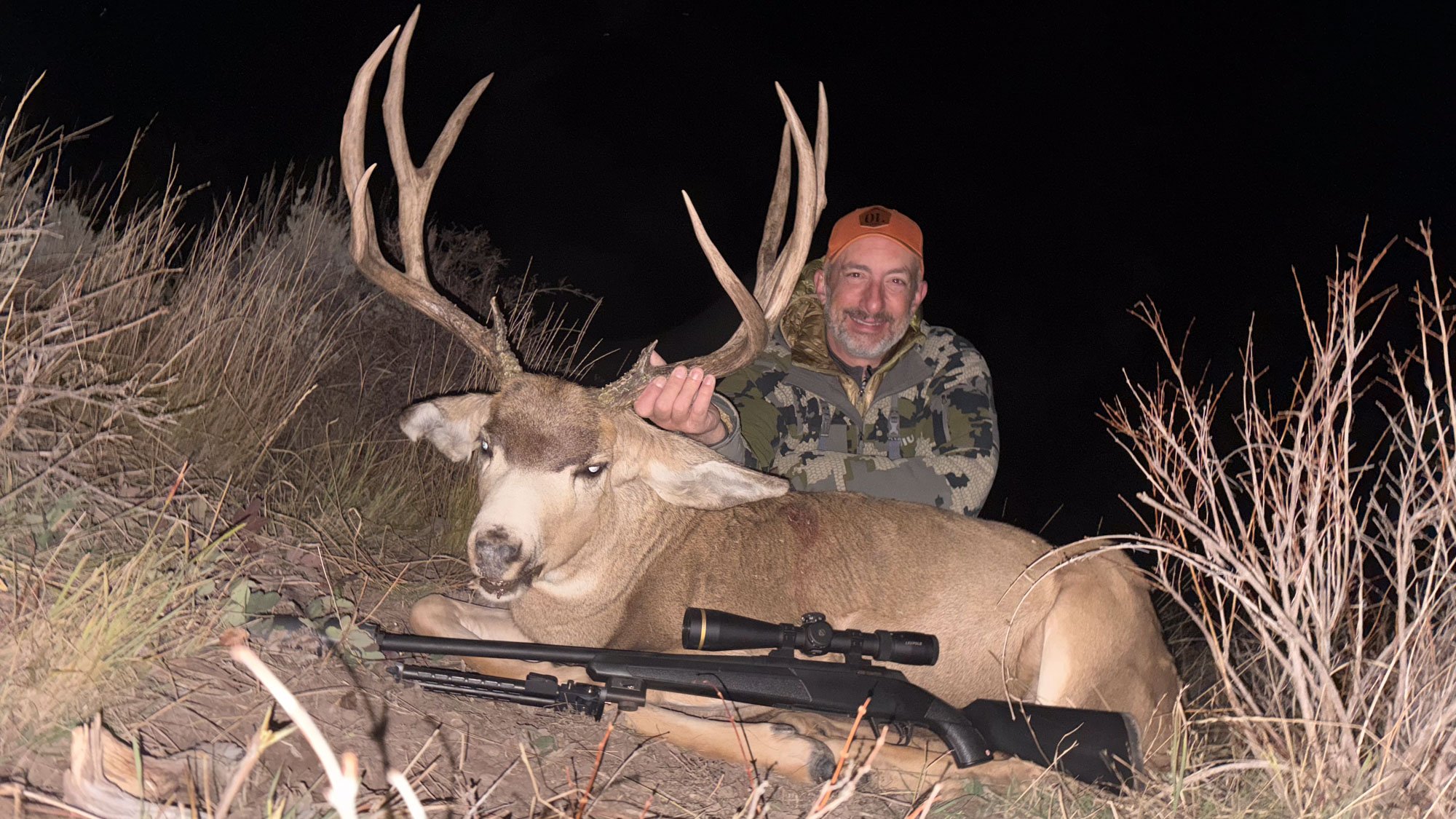
I ranged the deer at 616 yards and got prone, deploying my bipod and setting the butt of the XPR on my shooting bag. The wind, which had been howling earlier in the day, was calming down, but still needed to be accounted for.
I dialed elevation into my scope, held left .4 mil for the wind, and broke the shot. The deer dropped as if poleaxed, kicked a bit, and then lay still. I watched him through my scope with a fresh round chambered until I was sure he was dead.
Recovery
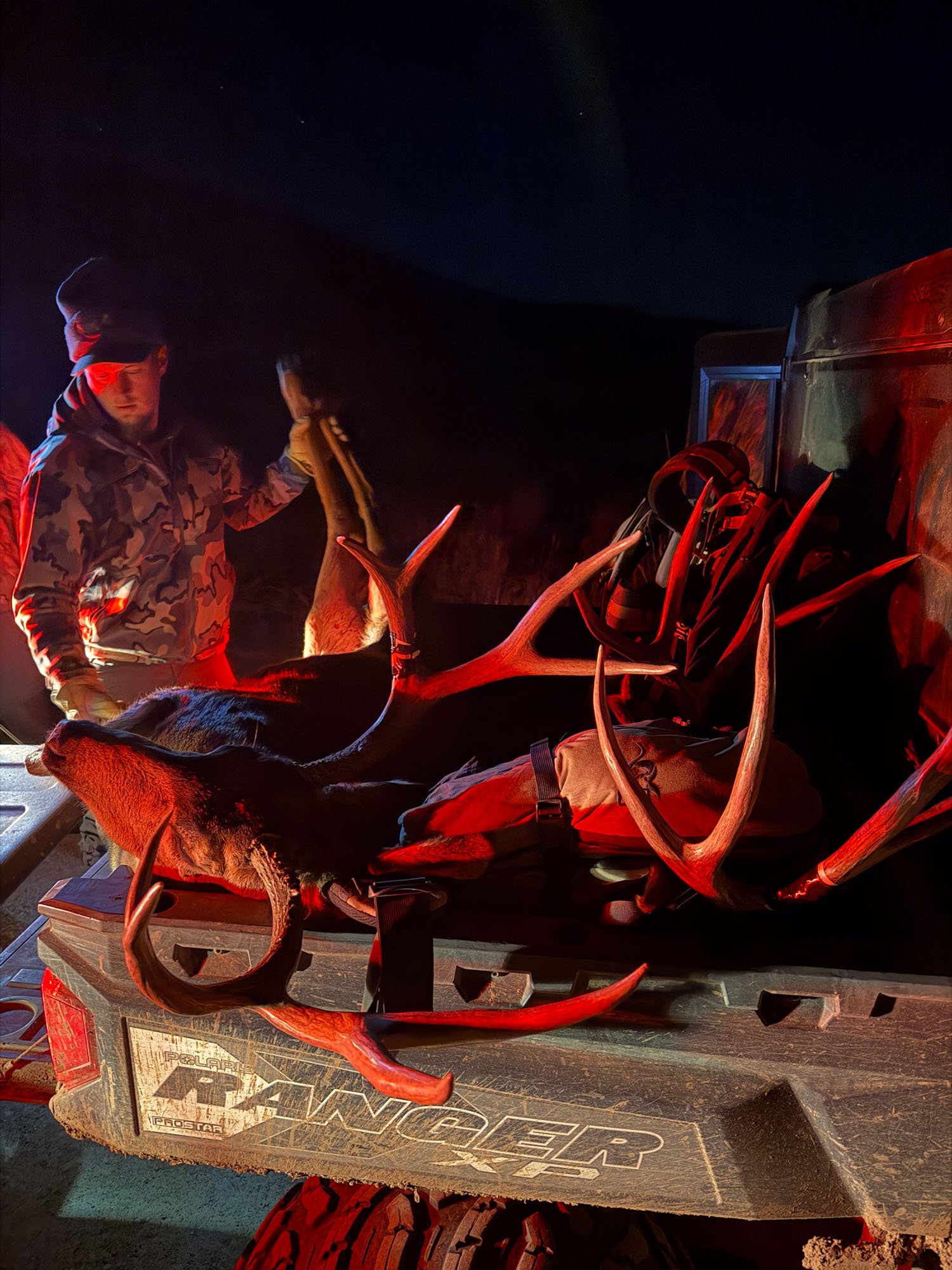
By the time we got to the vicinity of the deer it was pitch black. Finding an animal under these conditions can be difficult. And while technology is often a two-edged affairm in this case it was a godsend.
For the last year, I’ve been using Leupold’s BX-6 rangefinding binocular in shooting competitions and while hunting. I won’t go into all its virtues here, but one feature that’s a game changer is its ability to range a spot and have it drop a pin into a map, like onX Hunt.
That pin led us right to the buck, saving us who knows how much time stumbling around the dark.
Supreme Long Range Bullet Performance
Every hunting bullet has the same end goal, which is to inflict massive tissue damage so that the animal quickly bleeds out, shutting the central nervous system down. (Alternatively, a bullet can strike the CNS directly, with a brain or spinal shot, killing the animal that way.)
How a bullet accomplishes this depends heavily on its construction. Bonded bullets, for instance, are meant to mushroom to a degree, while retaining weight and penetrating deeply.
The BC Max bullet takes a different approach. The large polymer tip on the projectile initiated quick and violent bullet upset. The entrance hole, in the upper portion of the chest, was about two inches across and busted two ribs on the way in.
I could tell the bullet fragmented significantly based on three things: that large entrance wound, the massive tissue damage observed on the deer’s lungs, and the fact that the bullet didn’t penetrate the off side of the ribcage.
We quartered the deer and took backstraps, loins, and neck meat without gutting it, so I didn’t try to recover what was left of the bullet, though I doubt it would have been much.
A Fall Classic
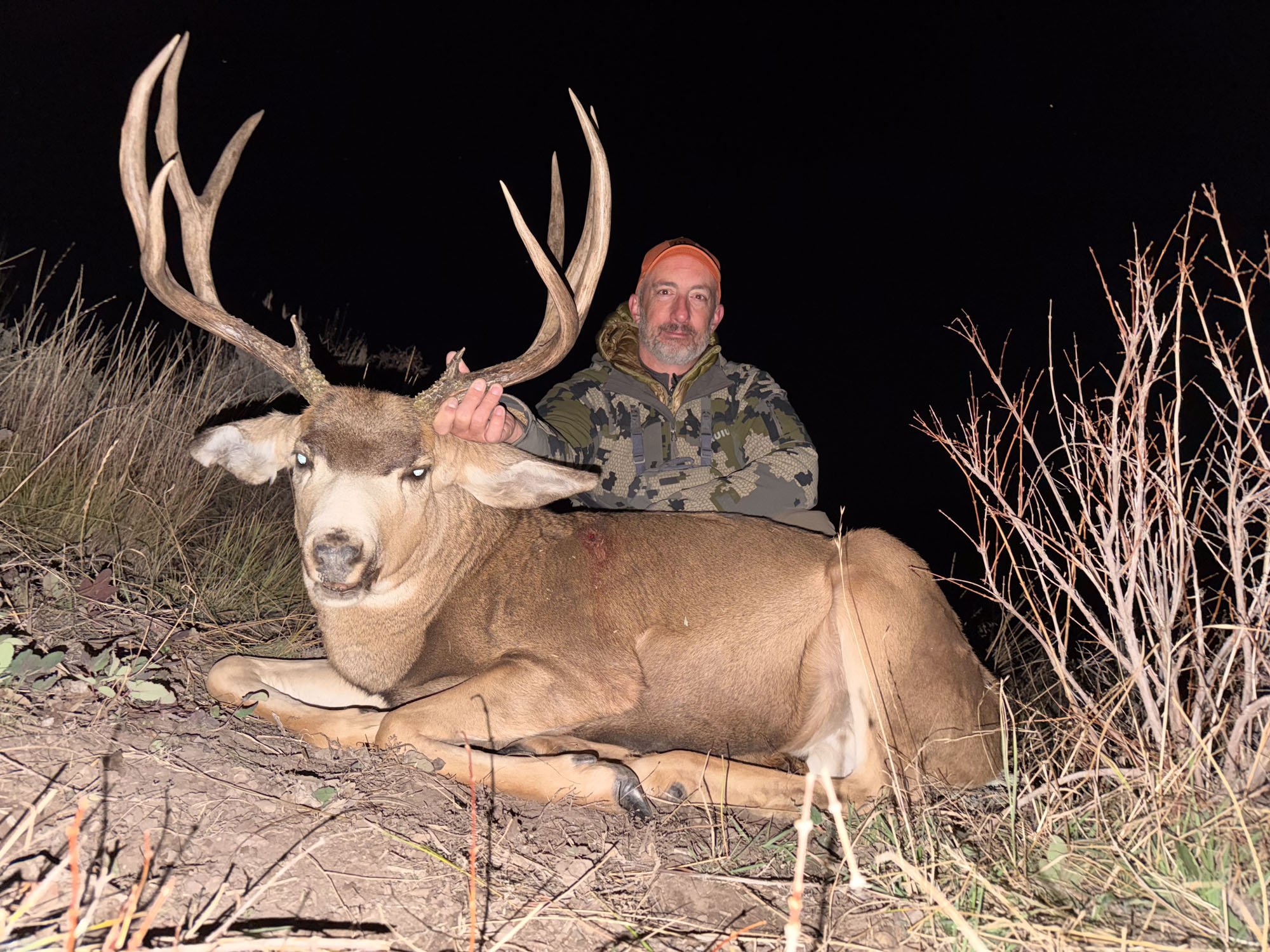
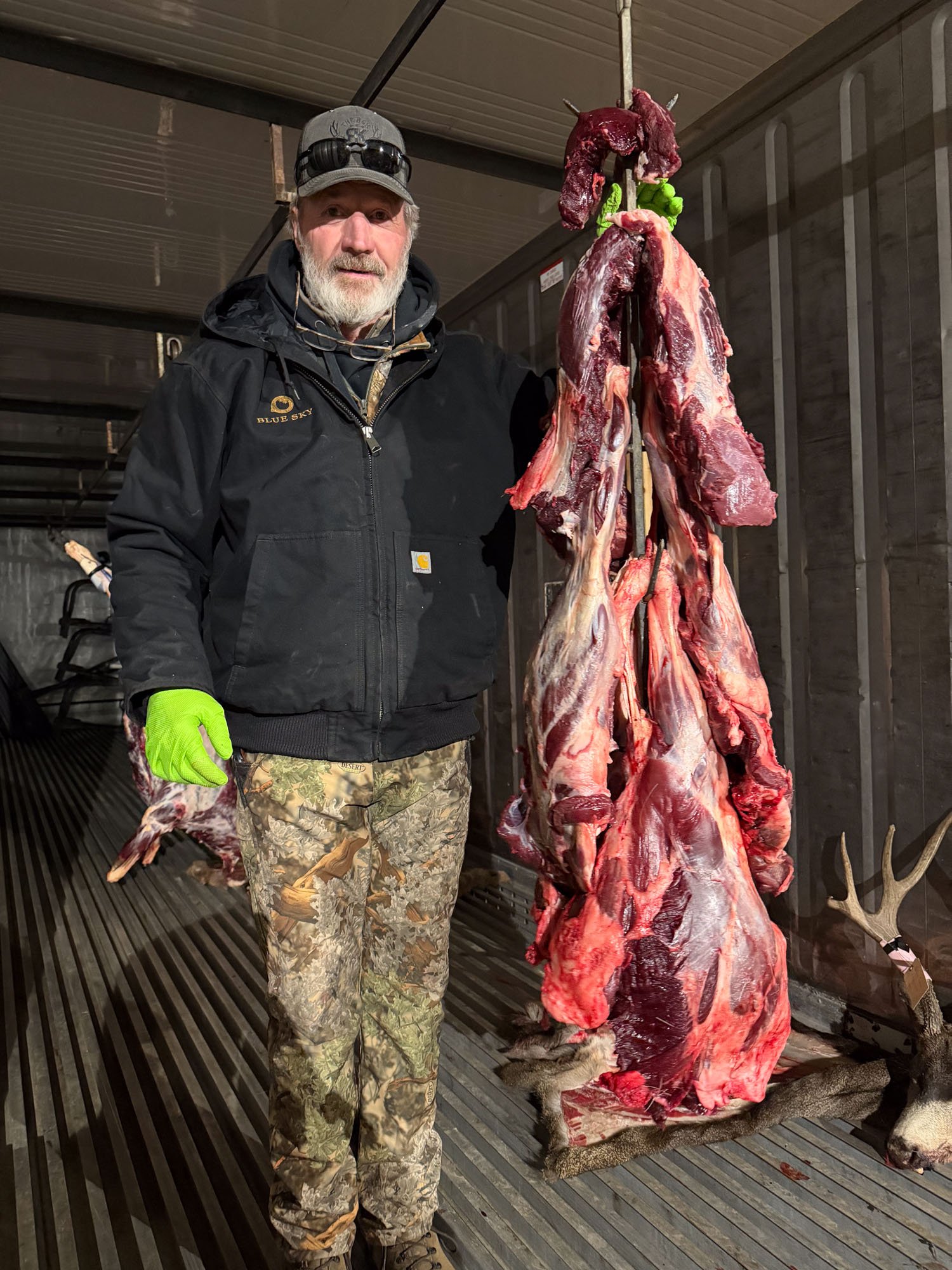
Of all the big mule deer I’ve shot over my career, this one comes closest to the Platonic ideal. He’s a large, clean four-point, with deep, nearly identical, forks front and back, has a tall boxy frame, carries good mass throughout his rack, and has nice eye guards to boot. If one were to draw an idealized symmetrical mule deer, it would look a lot like this one.
I never take an animal like this for granted. He was a wily deer and had given us the slip a couple times already, and was about to make it a third. And, of course, there was his older cousin, that darker, heavier brute, who only showed himself once.
We were the last deer hunters on that mountain this season. And my fingers are crossed that the other big buck, and his kin, make it through the winter.
I don’t say that because I expect to hunt that spot again. There’s very little chance that will happen. But I do hope some other hunter, who loves these animals the way I do, at least gets to encounter that buck and possibly take him home.
Read Next: Why Mule Deer (Not Whitetails) Are North America’s Greatest Game Animal
That’s the shared dream all avid mule deer hunters have, and is what draws us to the mountains each fall in pursuit of America’s most interesting, complicated, and magnificent species of game.
The post Why You Should Never Underestimate Mule Deer appeared first on Outdoor Life.