Zero Tax, Zero Justification: Can Congress Finish the Job on the NFA?
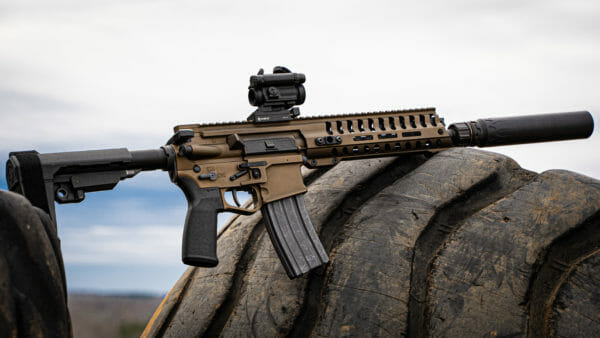
Could reconciliation be used to dismantle the rest of the National Firearms Act of 1934 (NFA) after the ruling in Silencer Shop Foundation v. Bureau of Alcohol, Tobacco, Firearms and Explosives (ATF)? That is the question many in the gun community are asking following a significant legal victory that has already hollowed out large portions of the nearly century-old law.
Last summer, Congress passed the “One Big Beautiful Bill” (OBBB) that lowered the tax stamp fees for short-barreled rifles (SBRs), short-barreled shotguns (SBSs), suppressors, and any other weapons (AOWs) from $200 to $0. The fee reduction called into question the constitutionality of the NFA’s regulation of these items. Under the United States Constitution, a tax must have a genuine revenue-generating purpose. With the Supreme Court already having ruled that the NFA is a tax law, the OBBB spurred numerous lawsuits, including one led by Gun Owners of America (GOA) known as the “One Big Beautiful Lawsuit.”
By eliminating the revenue stream for these categories, Congress effectively removed the constitutional foundation that has long justified the NFA’s registration and transfer restrictions.
A Federal Judge Gutted the Zero-Tax NFA Scheme
In Silencer Shop Foundation v. ATF, a federal district court judge in Texas ruled that the $0 tax stamp fee made the NFA unconstitutional as applied to SBRs, SBSs, suppressors, and AOWs. The ruling applies only to the named plaintiffs, including GOA, the Firearms Regulatory Accountability Coalition (FRAC), Silencer Shop, SilencerCo, and others. Still, the ATF cannot determine who is and isn’t a member, so as a practical matter, the law is unenforceable against a large and growing class of gun owners and businesses. The judge also said the ruling applies to all current and future members of the plaintiff organizations. The judge stayed the decision for seven days to give the government time to appeal and request a longer stay, leaving the immediate future of enforcement uncertain while the case moves through the appellate process.
Because of the victory, many are wondering if the strategy that dismantled the majority of the NFA could be used to put the final nail in the coffin of the controversial law. When the tax was zeroed out for SBRs, SBSs, suppressors, and AOWs, the $200 tax stamp remained on machine guns and destructive devices, thereby insulating those items from the lawsuits. That deliberate carve-out preserved the legal justification for the most heavily restricted categories under the NFA and left a clear path for further legislative action.
Boebert’s Bill Targets the Remaining NFA Taxes
In May, Representative Lauren Boebert (R-CO) introduced H.R. 8921, the Freedom from Taxes Act of 2026. The bill would change the tax stamp fee for machine guns and destructive devices from $200 to $0. It has been referred to the House Committee on Ways and Means and could be rolled into reconciliation. Doing so would subject the remaining NFA categories to the same constitutional challenge that succeeded against SBRs, SBSs, suppressors, and AOWs.
Reconciliation would be the only realistic way to dismantle the remaining portions of the NFA as long as the filibuster exists in the Senate. Because of the filibuster, a supermajority of senators (60 votes) is needed to pass most bills. A bill passed through reconciliation is exempt from the filibuster, meaning only a simple majority is required to pass. The Senate Parliamentarian, Elizabeth MacDonough, has already approved the lowering of the tax stamp fees for SBRs, SBSs, suppressors, and AOWs, so it would be difficult to walk back that decision with respect to machine guns and destructive devices. Precedent on the budget impact of zeroing out these fees already exists, strengthening the case for treating machine guns and destructive devices the same way.
Jason Smith and Republican Leadership Hold the Keys
The bill would need the support of House Ways and Means Committee Chairman Jason Smith (R-MO) before it could be included in reconciliation. Rep. Smith has already publicly stated support for the court’s decision in Silencer Shop Foundation v. ATF. With Republicans in control of both chambers of Congress and the White House, Democrats would not be able to stop the bill if leadership chooses to move it.
Since the Freedom from Taxes Act of 2026 could be passed through reconciliation, the only remaining question is whether the Republican Party has the backbone to push through a bill that proves they walk the walk and don’t just talk the talk. Completing the process would eliminate the last major revenue justification for the NFA and force a broader constitutional reckoning with a law that has restricted law-abiding gun owners for more than ninety years.
About John Crump
Mr. Crump is an NRA instructor and a constitutional activist. John has written about firearms, interviewed people from all walks of life, and on the Constitution. John lives in Northern Virginia with his wife and sons, follow him on X at @right2bear, or at www.crumpy.com.